Data centres
Luxembourg NGO threatens court action over Google's Bissen data centre
Mouvement Écologique says the approval process for Google's planned hyperscale campus breaches transparency law and ignores best available technology, and vows to go to court if permits are granted.
By Sophie Klein · · 4 min read
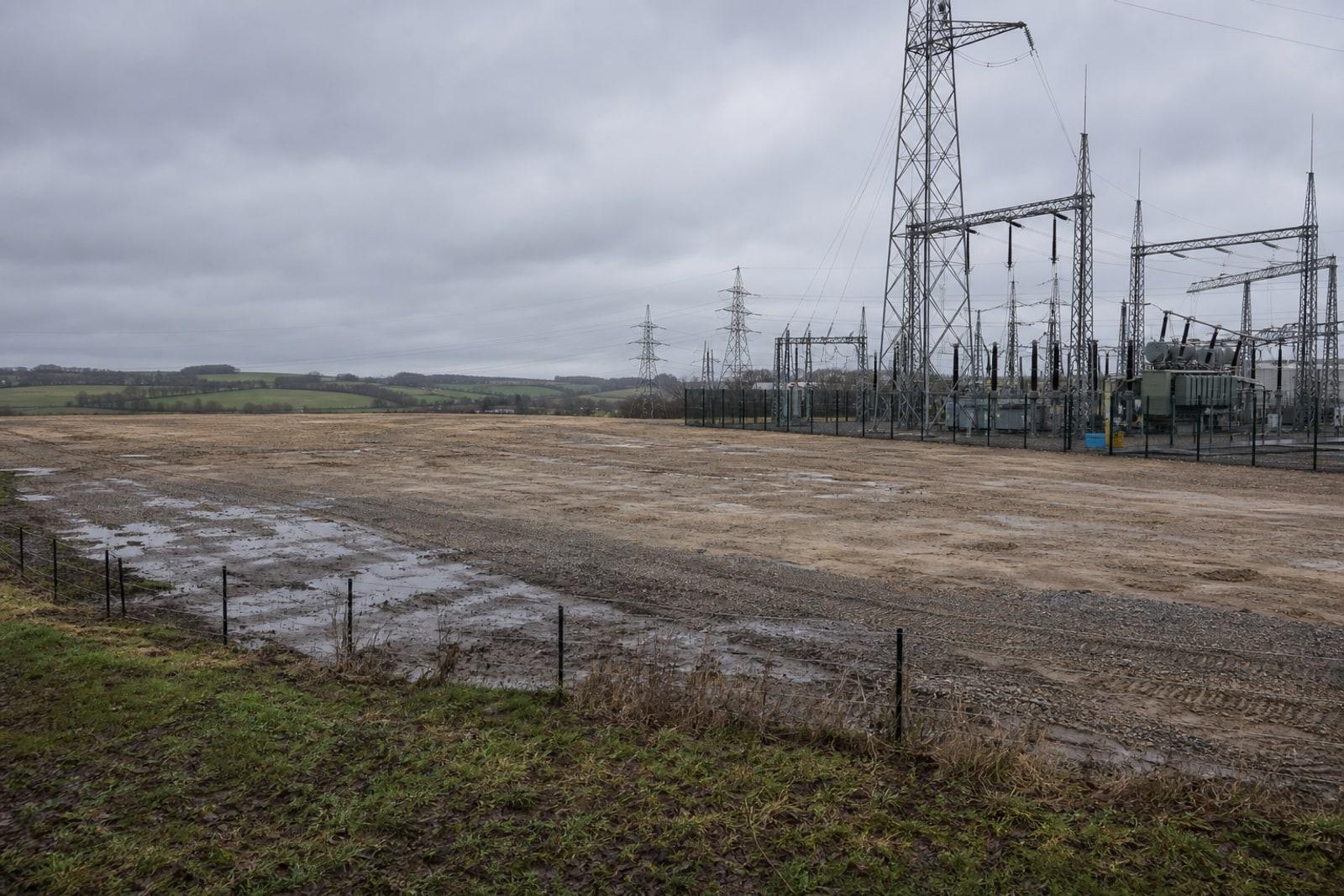
Luxembourg's largest environmental group is threatening to take the government to court over the approval process for Google's planned hyperscale data centre in Bissen, arguing that the review has been opaque, that resource demands are being waved through, and that the project falls short of the technology the law can require.
In a statement on 9 July 2026, Mouvement Écologique said virtually none of the concerns it raised during this year's environmental review had been reflected in the authorities' conclusions, and warned it would file administrative court proceedings if permits are issued. It is the sharpest escalation yet in a fight that has turned the Bissen site into a test case for how much energy- and water-hungry infrastructure the Grand Duchy is willing to host.
The grounds for the challenge
The dispute is as much administrative as environmental. The NGO's core complaint is transparency: it says Google has classified key data on energy use, carbon balances and cooling technology as trade secrets, making it impossible to independently verify the project's climate and environmental impact. Mouvement Écologique's lawyer argues that such secrecy is unlawful given the overriding public interest in the figures.
The group frames its case around two Luxembourg statutes — the Law of 15 May 2018 on environmental impact assessment and the Law of 25 November 2005 on public access to environmental information — and contends that 'best available techniques' rules give the state the power to impose conditions, such as mandatory waste-heat recovery, that it says are missing from the file. It submitted a roughly 31-page objection when the public inquiry on the environmental impact assessment closed on 27 March 2026, and in May its lawyer sent a formal warning to the Environment Ministry over the confidentiality question.
It is like issuing a building permit without then knowing whether six families or only two are going to live there.
That was how Mouvement Écologique president Blanche Weber described the incomplete picture regulators are being asked to sign off on. The NGO also objects to what it calls a decision to court a foreign giant on unfavourable terms. "It is incomprehensible that Luxembourg should virtually court a company like Google," the group said, adding that ministers should "act in the national interest and not accept the confidentiality clause imposed by Google."
A footprint the size of the country's appetite
The numbers explain the alarm. Google acquired roughly 34 hectares at a prime industrial site in Bissen, next to a Creos electricity substation, back in 2017; the local development plan was finalised in January 2025. According to figures cited by Mouvement Écologique and by Germany's Öko-Institut, the campus would draw an estimated 950 gigawatt-hours of electricity a year — on the order of 15% of Luxembourg's national consumption, more than all the country's households combined — with a capacity of around 100 megawatts.
Earlier designs implied the site could consume between 10% and 15% of Luxembourg's water, a demand later cut by drawing on treated wastewater and rainwater. Critics say the efficiency is still substandard: the planned power usage effectiveness (PUE) is 1.3, against a global average Google itself reports at around 1.09. Mouvement Écologique also flags 46 diesel backup generators, only marginal on-site solar generation, and a large stream of waste heat left unused.
- Electricity: around 950 GWh/year, roughly 15% of national consumption.
- Efficiency: a planned PUE of 1.3, versus Google's stated global average near 1.09.
- Waste heat: the Öko-Institut estimates about 40 GWh a year could heat some 20,000 residents in Bissen, Diekirch and Ettelbruck.
- Backup power: 46 diesel generators burning an estimated 200,000 litres of fuel a year.
An independent study lands on the sceptics' side
The campaign gained technical weight on 6 July 2026, when the Öko-Institut published an analysis concluding the project "does not yet reflect the current state of best available techniques" across several design elements. The institute estimated emissions could be cut by up to 97% through better choices: direct liquid cooling on the chip to push the PUE toward 1.1 and trim annual power use to about 800 GWh; battery storage instead of diesel; natural refrigerants such as propane or ammonia; and recovery of waste heat to feed district-heating networks in neighbouring communes.
Google and the government dig in
The government remains firmly behind the investment. Economy Minister Lex Delles, of the Democratic Party, has defended the campus as strategically important for Luxembourg and for European digital sovereignty, while saying its heat should be integrated into district-heating networks where possible. Officials have long courted the project even after it was written off as "dead" between 2022 and 2023; then-prime minister Xavier Bettel said in 2023 it was "not a priority" for Google before talks intensified.
Google, which markets its data centres as carbon-free, has not committed to a final go-ahead. A Google Cloud executive, Anthony Cirot, said in February 2025 the company could guarantee a fully decarbonised approach if it proceeded. The Environment Ministry says it is still examining observations from the public inquiry, and no final authorisation had been issued at the time of writing. Should permits be granted, Mouvement Écologique says the next stop is the administrative court — a step that could delay or reshape one of the largest single infrastructure bets in Luxembourg's recent history.
Frequently asked
- Why is Mouvement Écologique challenging the Google data centre?
- It says the approval process lacks transparency — with Google classifying energy and carbon data as trade secrets — and that the project ignores best available technology on cooling, backup power and waste-heat recovery, breaching Luxembourg's environmental-assessment and information-access laws.
- How much energy and water would the Bissen data centre use?
- Estimates cited by the NGO and the Öko-Institut put electricity at about 950 GWh a year, roughly 15% of Luxembourg's national consumption. Earlier designs implied 10–15% of national water use, later reduced by using treated wastewater and rainwater.
- What is the government's position?
- Economy Minister Lex Delles backs the project as strategically important for Luxembourg and European digital sovereignty, while urging that its waste heat feed district-heating networks. No final authorisation has been granted and Google has not committed to build.
Sources(6)
- 1Mouvement Ecologique Challenges Google Bissen Data Centre Approval ProcessChronicle.lu · chronicle.lu
- 2Google Data Centre: Lacking transparency in environmental impact assessment – best available technology disregardedMouvement écologique · meco.lu
- 3Data center de Bissen: une conception plus écologique exigéePaperjam · paperjam.lu
- 4Au Luxembourg, nouvelle offensive pour freiner le projet Google à BissenL'essentiel · lessentiel.lu
- 5Google à Bissen : le Méco menace de saisir la justice contre le projet de data centerLe Quotidien · lequotidien.lu
- 6Google's Luxembourg data center plans not totally dead, says Economy MinisterDatacenter Dynamics · datacenterdynamics.com
Related by topic