Iran
Iran buries slain leader Khamenei as an unseen successor leaves a vacuum at the top
A week of mass mourning ended with Ali Khamenei's burial in Mashhad — but the son proclaimed to replace him has not been seen since the strike that killed his father.
By Camille Reuter · · 4 min read
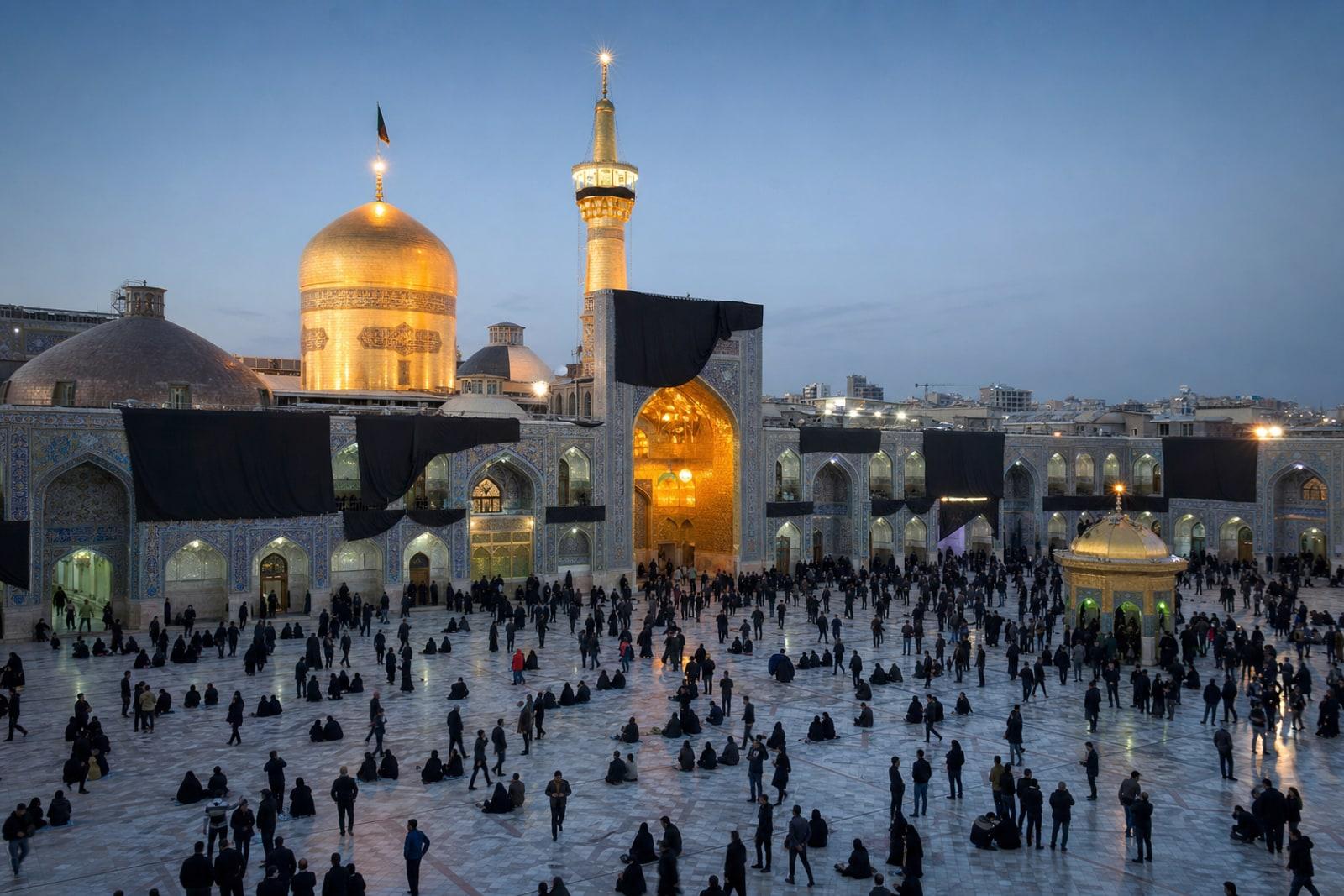
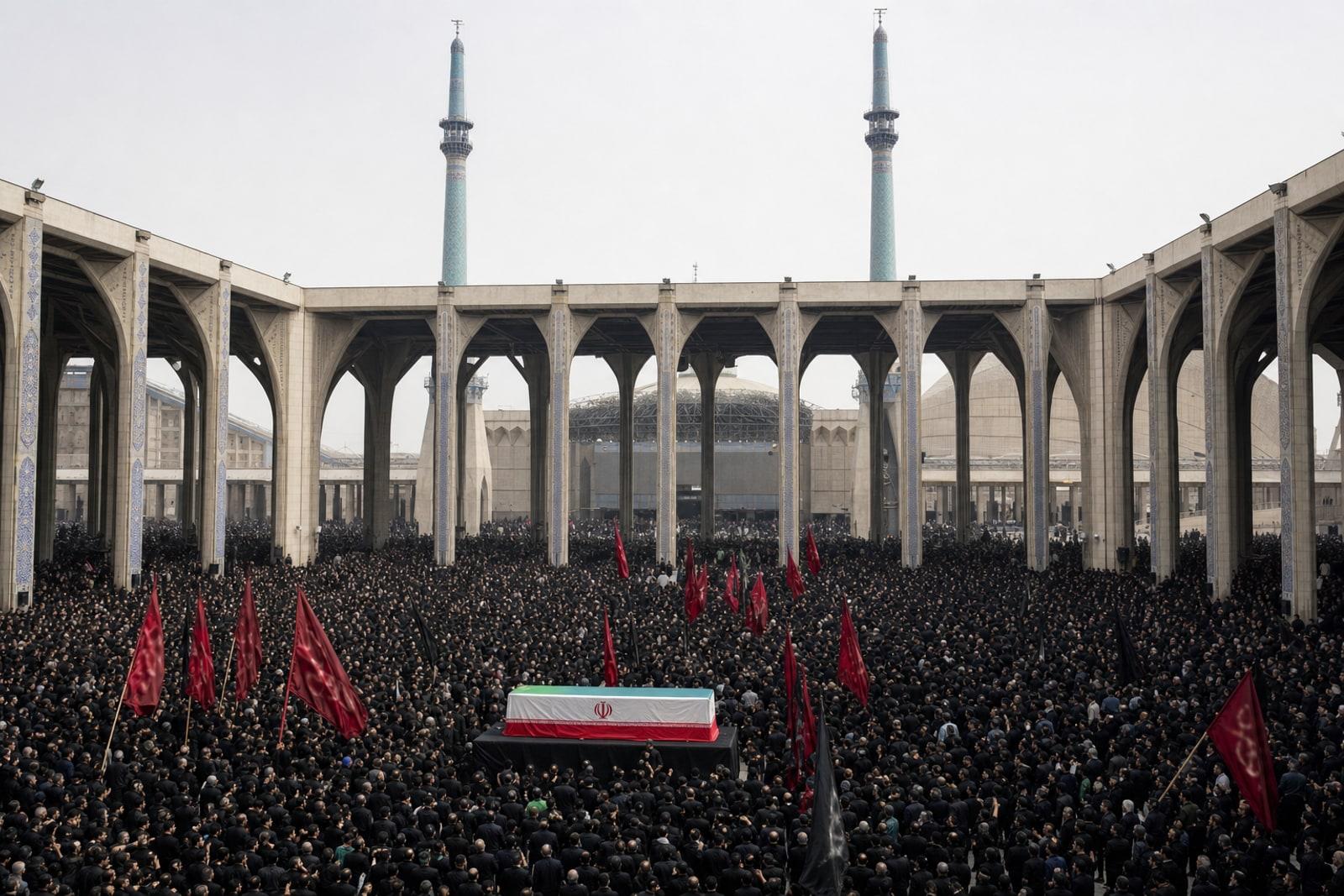
Iran buried its assassinated supreme leader in the early hours of Friday, lowering Ayatollah Ali Khamenei into a grave at the Imam Reza shrine in Mashhad and closing a week of state mourning that summoned some of the largest crowds the Islamic Republic has ever mobilised. Yet the rites, staged to project continuity, underscored the opposite. The man proclaimed to succeed him has not been seen in public since the strike that killed his father more than four months ago.
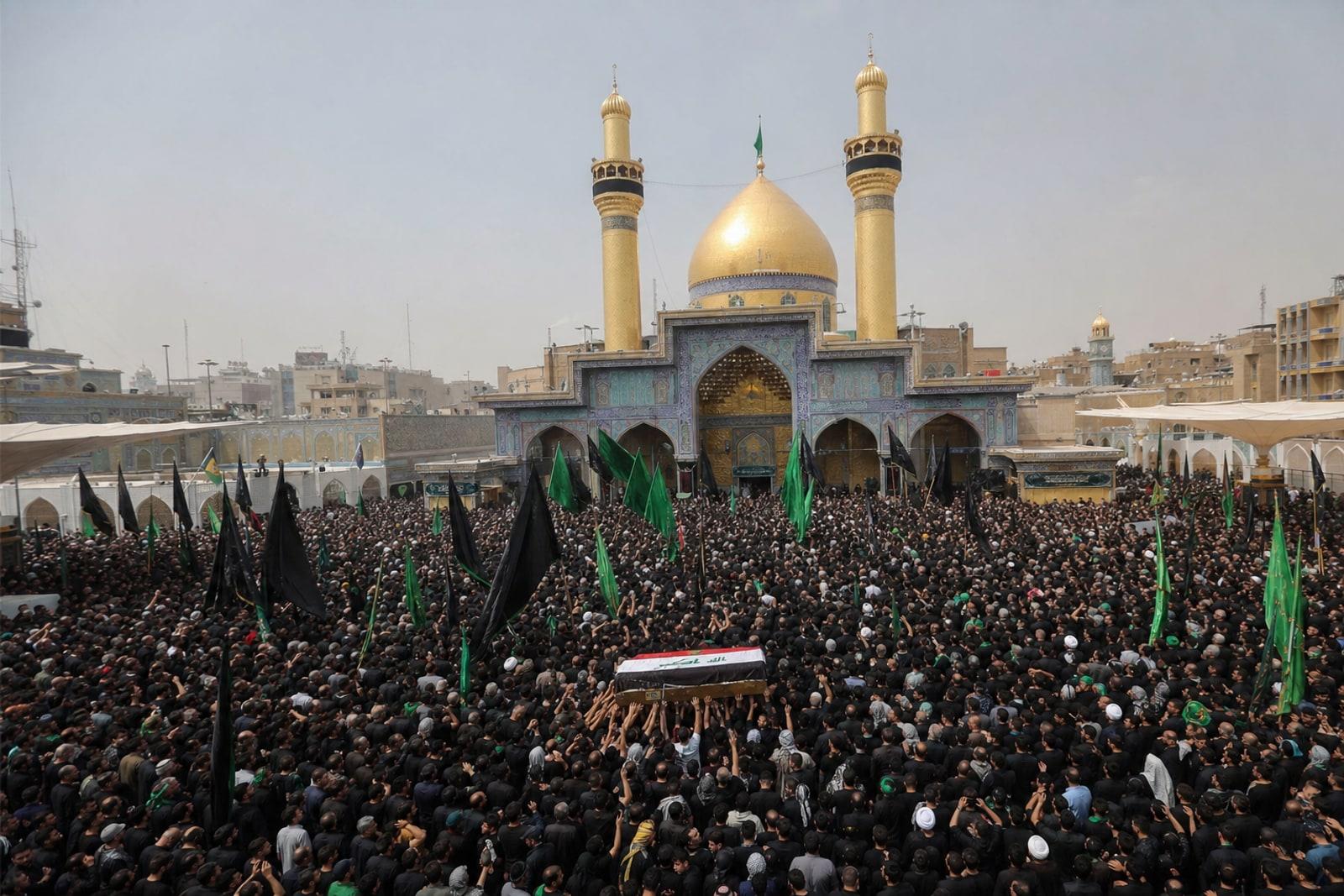
Khamenei, who was 86 and had ruled Iran since 1989, was killed on 28 February in a joint US-Israeli air raid on his fortified compound in Tehran, according to Iranian state media and Western accounts of the operation. Iran confirmed his death on 1 March. Several members of his family died in the same attack. The funeral moved across Tehran, the clerical centre of Qom and the Iraqi shrine cities of Najaf and Karbala before its culmination in Mashhad, the late leader's hometown and the holiest site in Shia Islam.
A burial meant to show strength
Iranian authorities declared a 40-day mourning period and a week-long public holiday, and the turnout was immense. Processions drew at least 15 million people and, by Iranian estimates, possibly more than double that; the Tehran procession alone was put at more than 12 million. Foreign delegations attended, among them Pakistan's prime minister Shehbaz Sharif, Russian and Chinese officials and the leaders of Hamas, Hezbollah and Yemen's Houthis. Western governments stayed away.
The grief on the streets was real. "I am here to say goodbye to my beloved leader Ali Khamenei," one mourner, Hananeh Mousavi, 27, told reporters. "I never expected to see such a day." President Masoud Pezeshkian, seeking to convey that the state endures, pledged fidelity to the dead leader's line.
I promise to continue the way of the martyred Imam.
A successor no one has seen
Beneath the choreography lies an unresolved question of power. Under Iran's constitution, the supreme leader is chosen by the Assembly of Experts, an elected clerical body; the post of deputy leader was abolished in 1989, so there is no automatic heir. In early March the Assembly proclaimed Mojtaba Khamenei, the late leader's son, as the new supreme leader.
He has not appeared since. Senior figures in Tehran say Mojtaba was seriously injured — reportedly suffering facial disfigurement and limb wounds — in the same raid that killed his father, and is still recovering. He was absent from the funeral, with officials citing fears that an appearance could expose him to assassination. The result is a supreme leader named but invisible: no photograph, video or voice recording has been released, only written statements attributed to him.
That absence has fed doubts, at home and abroad, about who actually governs. A hereditary handover from father to son had long been rumoured and long resisted inside a system that presents itself as a republic rather than a monarchy. Carrying it out with the designated leader out of sight has left the succession looking provisional rather than settled.
Who holds power now
In practice, day-to-day authority is visible through the offices of state — Pezeshkian, parliament speaker Mohammad Bagher Ghalibaf and the judiciary — while the Islamic Revolutionary Guard Corps, the armed force that answers to the supreme leader and built Khamenei's bunker, looms over the outcome. The IRGC had pressed for a swift, permanent appointment after the killing, and its weight in any leadership contest is hard to overstate.
The vacuum is contested from outside as well. Exiled figures moved quickly to claim the moment: Reza Pahlavi, son of the deposed shah, urged Iranians into the streets, while Maryam Rajavi of the opposition People's Mojahedin (MEK) called the death the end of "religious tyranny." Inside the country, reactions split sharply — mourning near the Mashhad shrine, muted celebration in other cities — a reminder that the funeral's numbers do not translate cleanly into consensus.
Oil and the wider region
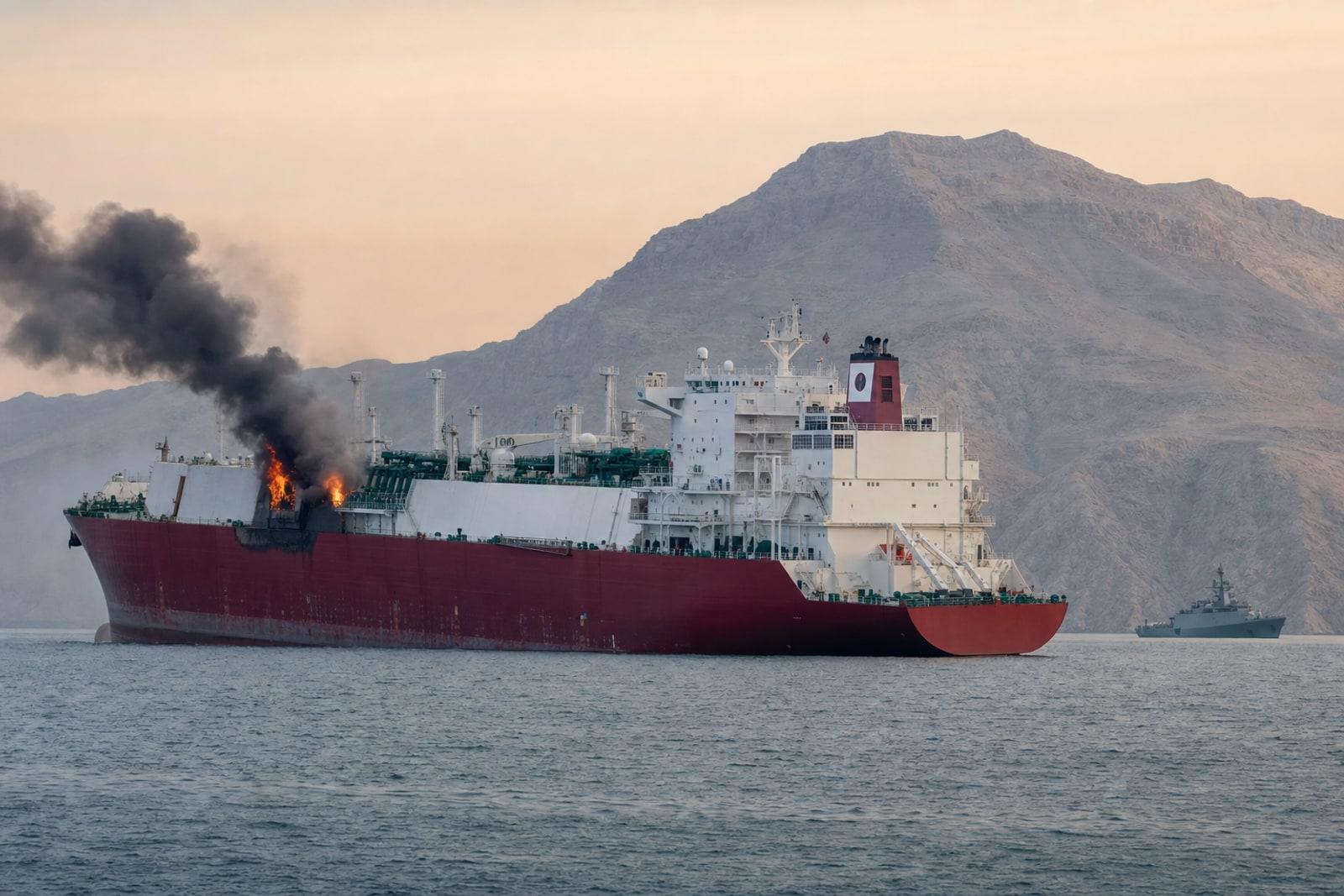
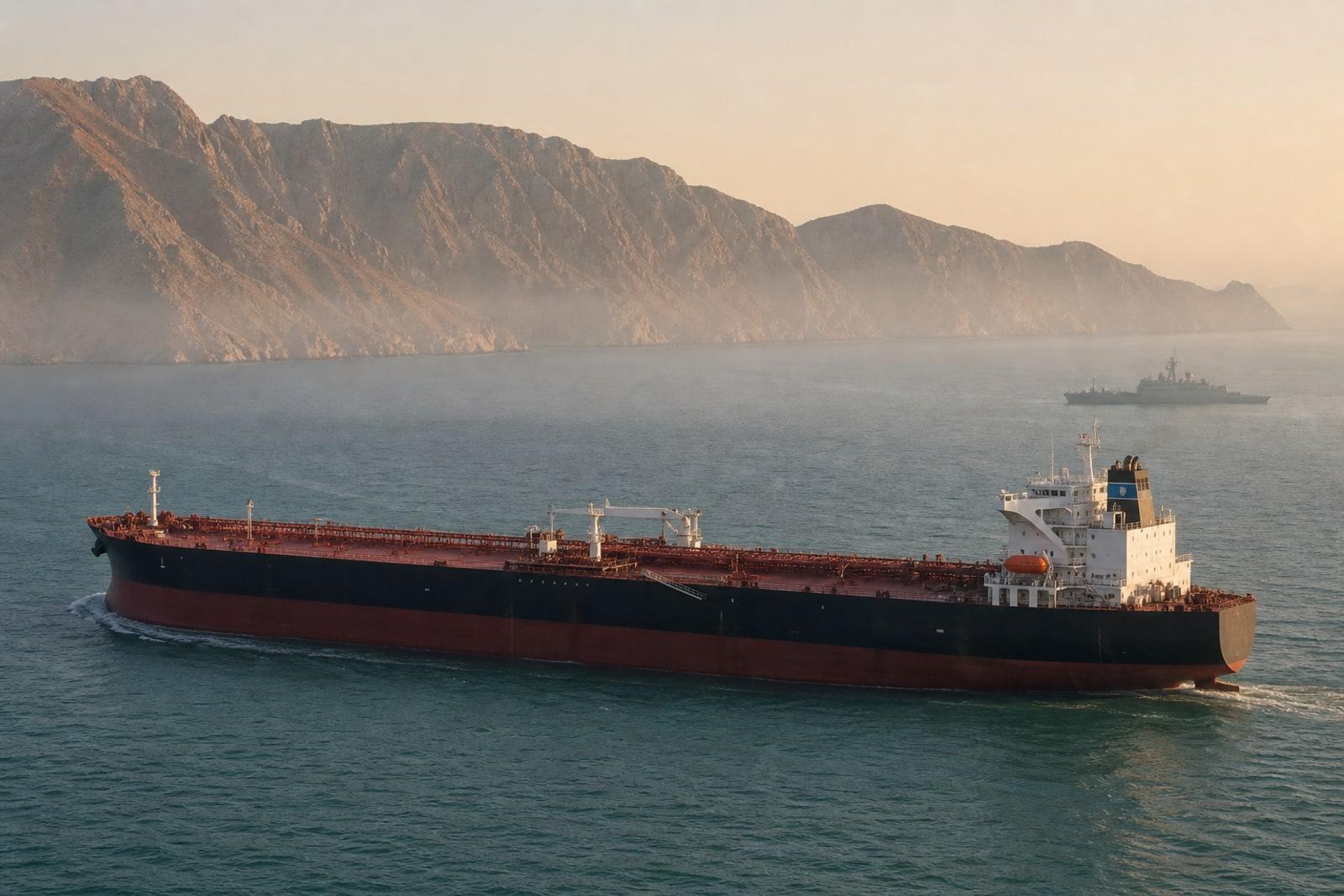
For markets and neighbouring states, the stakes are immediate. The crisis has repeatedly rattled the Strait of Hormuz, the chokepoint through which roughly a quarter of the world's seaborne oil and a fifth of its liquefied natural gas normally pass. Iran struck three tankers in the strait during funeral week, and oil rose again after the attacks.
- Brent crude jumped about 10–13% to roughly $80–82 a barrel by early March, then eased back toward $70 by July as fears of a wider war receded.
- Dubai crude spiked to a record near $166 a barrel on 19 March at the height of the disruption.
- The International Energy Agency has described the shipping halt through Hormuz as among the largest supply shocks in the history of the oil market.
Iran's messaging remained defiant. "The security of Hormuz lies with the coastal states — the crisis-makers will be held accountable for the consequences," the country's chief negotiator, Kazem Gharibabadi, wrote on X during the mourning period. For Europe, watching energy prices and a fragile ceasefire, the burial settles one question and opens another: the man is in the ground, but the succession he was meant to secure is not. Until Mojtaba Khamenei — or someone else — steps into public view with real command, Iran's direction, and the region's, stays uncertain.
Frequently asked
- How did Ali Khamenei die?
- Iranian state media and Western accounts say the 86-year-old supreme leader was killed on 28 February 2026 in a joint US-Israeli air raid on his fortified compound in Tehran. Iran confirmed his death on 1 March.
- Who is Iran's new supreme leader?
- The Assembly of Experts proclaimed Khamenei's son, Mojtaba Khamenei, as supreme leader in early March 2026. He has not appeared in public since the strike and is reported to have been seriously injured in it, leaving the succession looking unresolved.
- Where was Khamenei buried?
- He was buried in the early hours of Friday, 10 July 2026, at the Imam Reza shrine in Mashhad, the holiest site in Shia Islam and his hometown, after processions across Tehran, Qom and the Iraqi cities of Najaf and Karbala.
- How has the crisis affected oil prices?
- The conflict repeatedly disrupted the Strait of Hormuz. Brent crude surged about 10–13% to roughly $80–82 a barrel by early March before easing toward $70 by July, while Dubai crude hit a record near $166 in mid-March.
Sources(12)
- 1State funeral of Ali KhameneiWikipedia · en.wikipedia.org
- 2Assassination of Ali KhameneiWikipedia · en.wikipedia.org
- 3Iran begins dayslong funeral for the late Supreme Leader Ayatollah Ali Khamenei, killed in warPBS NewsHour · pbs.org
- 4Slain Supreme Leader Ali Khamenei buried at Iran's holiest shrineAl Jazeera · aljazeera.com
- 5Iran's supreme leader buried after a dayslong funeral that drew millionsNBC News · nbcnews.com
- 6Khamenei buried following dayslong funeral procession as successor remains out of sightThe Times of Israel · timesofisrael.com
- 7Slain Iranian leader buried as successor remains out of sightAl-Monitor · al-monitor.com
- 8Iran to Bury Slain Supreme Leader in Culmination of Mass FuneralU.S. News & World Report / Reuters · usnews.com
- 9Iran confirms Supreme Leader Ali Khamenei dead after US-Israeli attacksAl Jazeera · aljazeera.com
- 10Oil prices rise after attacks on tankers in Strait of Hormuz, U.S. revokes Iran sale authorizationCNBC · cnbc.com
- 112026 Iran war fuel crisisWikipedia · en.wikipedia.org
- 12Khamenei's Funeral Is Meant to Project Strength. But Iran's New Leader Has Yet to AppearTIME · time.com
Related by topic