Iran
Khamenei's Funeral Reaches Najaf and Karbala as Named Successor Stays Unseen
Four months after Ali Khamenei was killed in US-Israeli strikes, his cortege moves through Iraq's Shia holy cities — while the son named to replace him has still not been seen.
By Camille Reuter · · 4 min read
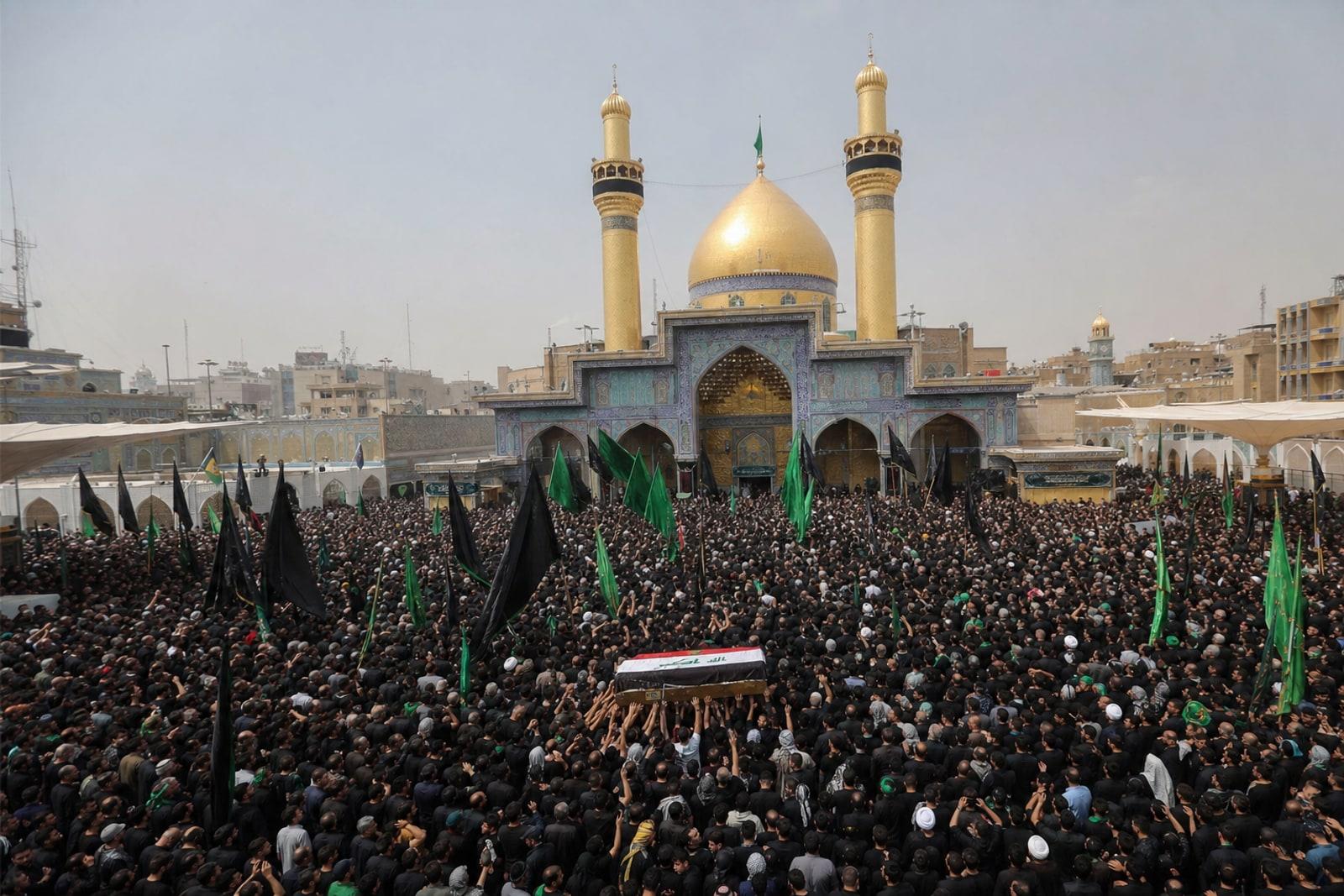
The funeral cortege of Ali Khamenei crossed into Iraq on Wednesday, drawing mass processions through the Shia holy cities of Najaf and Karbala more than four months after Iran's Supreme Leader was killed in US-Israeli airstrikes. The scenes abroad projected the strength of a wounded state — even as the man named to succeed him has yet to be seen in public.
Khamenei, who ruled Iran for 36 years, was killed on 28 February at his office in Tehran in coordinated US and Israeli strikes that opened a short, devastating war, according to Iranian state media and international outlets including Al Jazeera and France 24. He was 86. His six-day state funeral, delayed for months by the conflict, began on 3 July.
A funeral staged as a show of defiance
The ceremonies have been choreographed as an act of political theatre. After farewell rites in Tehran, an enormous procession moved through the capital on 6 July, followed by ceremonies in the clerical center of Qom. The Financial Times estimated crowds of 12 to 15 million in Tehran alone, with authorities providing transport, food and lodging to swell the turnout; officials have said they expect the overall mobilization to rival the funeral of revolutionary founder Ruhollah Khomeini in 1989.
Iran's parliament speaker and chief negotiator, Mohammad Bagher Ghalibaf, had urged the country to turn the mourning into a message to Iran's enemies.
The nation's call for vengeance must ring in the ears of the whole world.
That anger dominated the processions, which became charged displays of rage against the United States, Israel and their leaders. "Those who committed this crime must know that the nation of Iran and all of us will never cease in our pursuit of and demand for justice," army chief Major General Amir Hatami told mourners, according to Al Jazeera.
The route through Iraq's holy cities
The passage into Iraq carries deep symbolism, taking the body of Iran's leader through the twin pillars of Shia devotion in a country Iran fought for eight years in the 1980s. The published itinerary runs:
- 6 July — Tehran: a roughly 11-kilometre procession to Azadi Square.
- 7 July — Qom: a march from the Jamkaran Mosque to the Shrine of Fatima Masumeh.
- 8 July — Najaf and Karbala: a procession from the Sadr Hospital overpass, beginning around 6 a.m., toward the Shrine of Imam Ali, and then to the Shrine of Imam Hussein.
- 9 July — Mashhad: burial at the Imam Reza shrine, in Khamenei's home city.
Najaf and Karbala are the most sacred sites in Shia Islam, home to the tombs of Imam Ali and his son Imam Hussein. Routing the cortege through them frames Khamenei not merely as a head of state but as a religious martyr — a message aimed at Shia communities across Iraq, Afghanistan, Pakistan and beyond.
A successor no one has seen
Yet the spectacle has been shadowed by a striking absence. In March, the Assembly of Experts — the clerical body empowered to choose the Supreme Leader — named Khamenei's 56-year-old son, Mojtaba, to succeed him. Since then he has not appeared at a single public event, including the funerals, and did not attend the burial of his own wife, who was also killed in the February strikes.
Iranian officials attribute his seclusion to security concerns and to injuries sustained in the attack that killed his father; a Reuters report in April said he was recovering from severe facial and leg wounds, though none of these accounts has been independently confirmed. Three of Khamenei's other sons have appeared at mourning ceremonies. The silence has fed speculation about who is actually running Iran.
"We have no clue about his physical or mental state, besides hearsay," Nazenin Ansari, managing editor of Kayhan London, told Newsweek, noting that neither his voice nor a current photograph had emerged. Analysts have suggested a collective leadership council may be steering the state in the interim.
The Hormuz shadow over the region
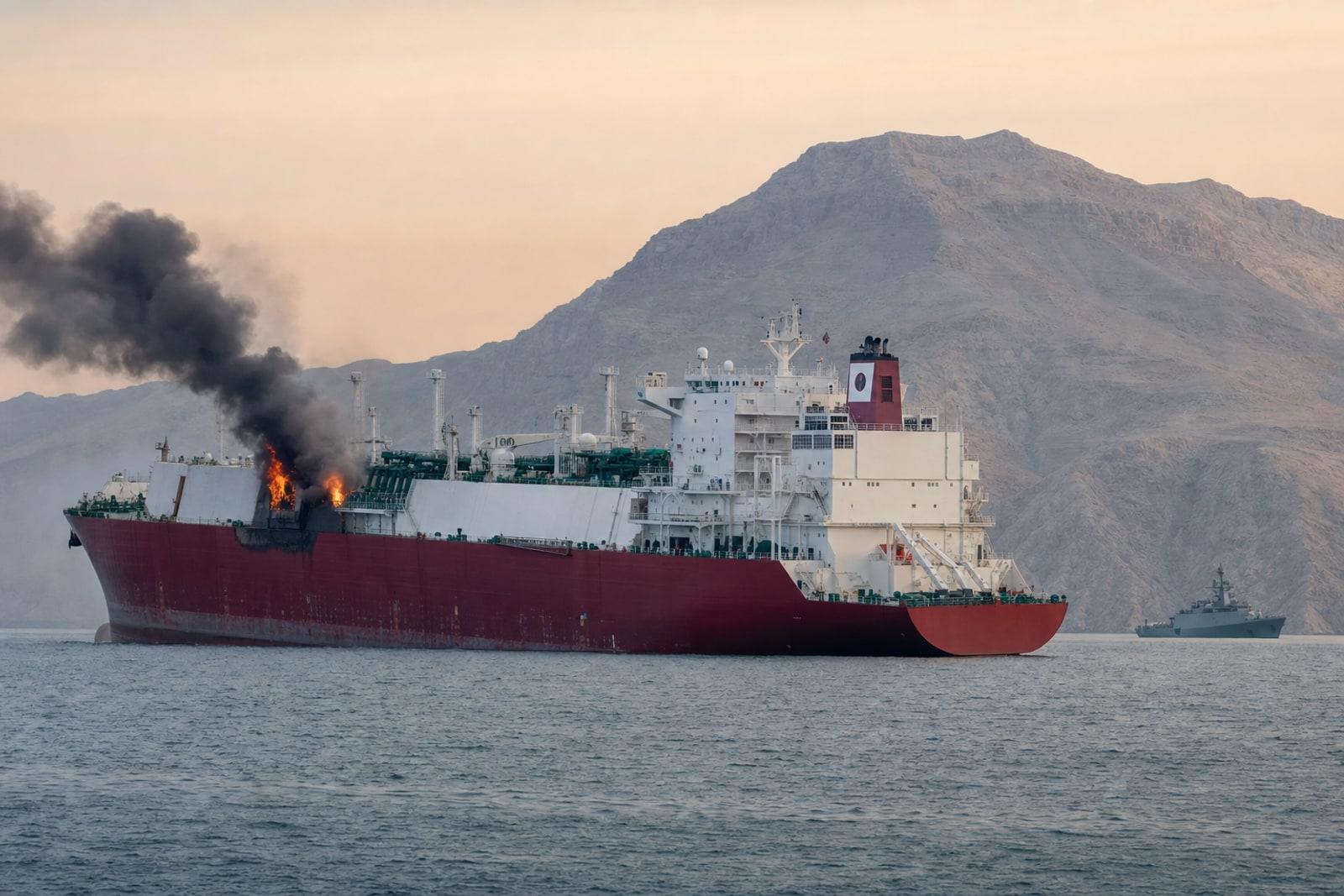
The funeral closes a chapter that convulsed global energy markets. Days after Khamenei's death, on 4 March, the Islamic Revolutionary Guard Corps declared the Strait of Hormuz — the chokepoint through which roughly a quarter of the world's seaborne oil and a fifth of its liquefied natural gas passes — closed to shipping. Brent crude surged past $100 a barrel on 8 March for the first time in four years and peaked near $126, in what analysts described as the largest disruption to world energy supply since the 1970s.
A ceasefire took hold on 8 April, and on 17 June President Masoud Pezeshkian and US President Donald Trump signed a memorandum of understanding to end the war and the blockade, after which traffic through the strait rebounded. But the settlement leaves an unresolved question at the heart of the Middle East: whether an Iran without the man who defined it for a generation, and without a visible successor, can hold the region's most consequential balance of power. As the coffin moves toward Mashhad, that answer remains as hidden as the leader named to give it.
Frequently asked
- When and how did Ali Khamenei die?
- Iran's Supreme Leader was killed on 28 February 2026, aged 86, in coordinated US and Israeli airstrikes on his office in Tehran at the start of a war, as confirmed by Iranian state media and international outlets.
- Why does the funeral pass through Najaf and Karbala?
- The Iraqi cities are the holiest sites in Shia Islam, home to the shrines of Imam Ali and Imam Hussein. Routing the cortege through them on 8 July frames Khamenei as a religious martyr and appeals to Shia communities across the region.
- Who is Iran's new Supreme Leader?
- The Assembly of Experts named Khamenei's son Mojtaba as Supreme Leader in March 2026, but he has not appeared in public. Officials cite security concerns and reported injuries from the February strike, leaving his condition and role unclear.
- How did the war affect the Strait of Hormuz and oil prices?
- Iran declared the strait closed on 4 March 2026. Brent crude rose above $100 for the first time in four years and peaked near $126 before a ceasefire on 8 April and a US-Iran deal on 17 June reopened shipping.
Sources(12)
- 1Iran confirms Supreme Leader Ali Khamenei dead after US-Israeli attacksAl Jazeera · aljazeera.com
- 2Ayatollah Ali Khamenei, Iran's hardline supreme leader, is dead at 86France 24 · france24.com
- 3Iran's Ayatollah Ali Khamenei is killed in Israeli strike, ending 36-year iron ruleNPR · npr.org
- 4State funeral of Ali KhameneiWikipedia · en.wikipedia.org
- 5Iran begins six-day funeral for Ayatollah Khamenei nearly four months after his deathCNBC · cnbc.com
- 6Huge crowd joins funeral procession for Iran's Supreme Leader KhameneiAl Jazeera · aljazeera.com
- 7Iran's Ghalibaf calls for massive Khamenei funeral turnout to sound 'nation's call for vengeance'The Times of Israel · timesofisrael.com
- 8Khamenei Funeral: Questions Over Location Of Supreme Leader's SuccessorNewsweek · newsweek.com
- 92026 Strait of Hormuz crisisWikipedia · en.wikipedia.org
- 10Khamenei's Funeral Is Meant to Project Strength. But Iran's New Leader Has Yet to AppearTIME · time.com
- 11Funeral ceremonies for Iran's slain supreme leader (live updates)CNN · cnn.com
- 12Assassination of Ali KhameneiWikipedia · en.wikipedia.org
Related by topic