AI and climate
AI's power hunger pushes Google and Amazon further from their climate goals
New sustainability reports show emissions climbing at both tech giants as data-centre electricity demand outpaces the grid's shift to clean power.
By Jonas Thill · · 4 min read
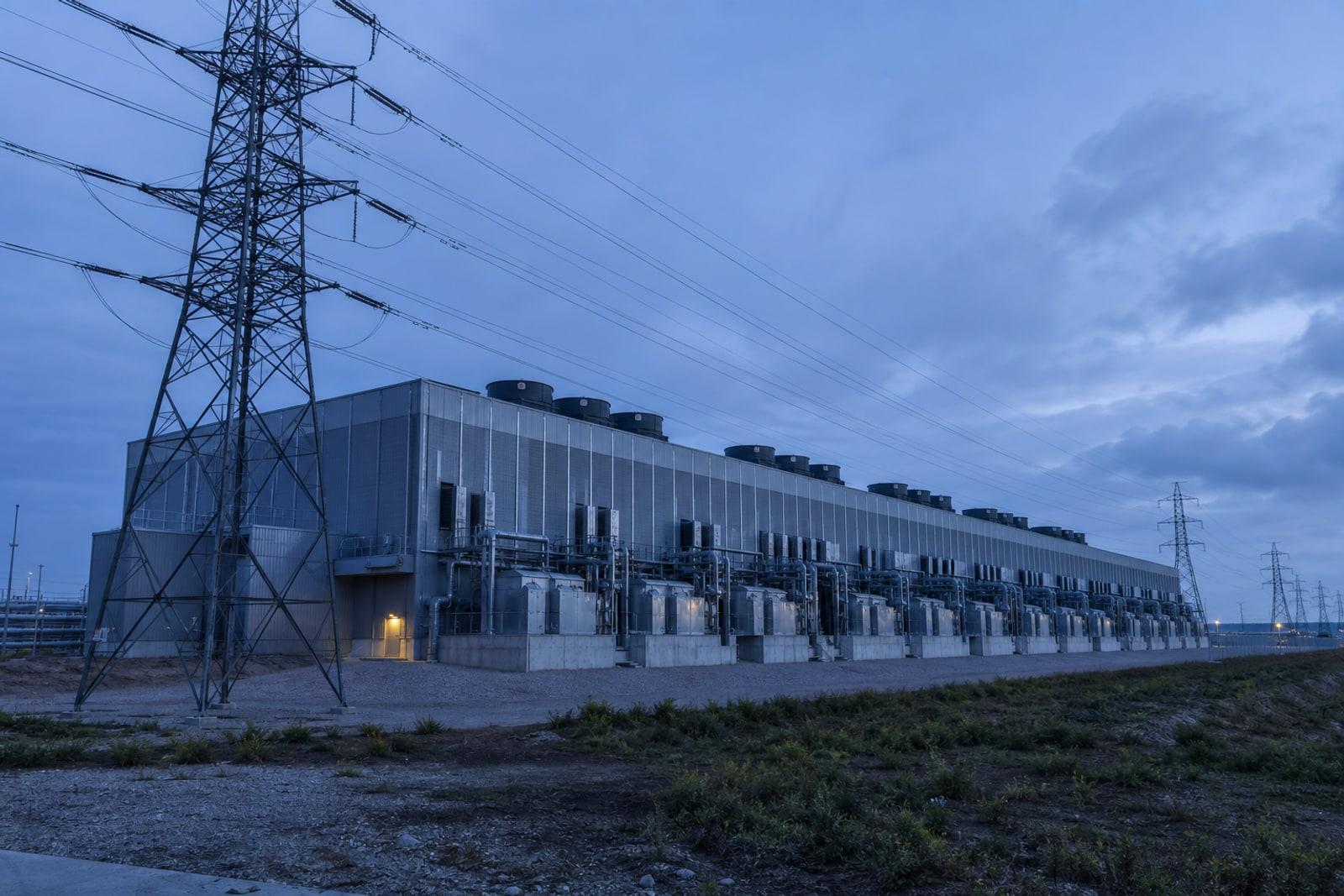
The world's two largest cloud-computing companies used their latest environmental reports to deliver the same uncomfortable message: the artificial-intelligence boom is driving their carbon emissions up, not down, and the electricity their data centres consume is growing faster than the power grid is turning green.
Amazon disclosed on 1 July that its greenhouse-gas emissions rose 16% in 2025 to roughly 81 million tonnes of carbon-dioxide equivalent — the highest annual total the company has reported. A day earlier, Google said the emissions it counts toward its climate goal climbed 18% year on year, leaving them about 81% above the 2019 level against which it is measured. Both increases were traced substantially to the construction and operation of data centres built to train and run AI.
Amazon: a record year, a widening gap
Amazon's 2025 sustainability report put total emissions at about 81 million tonnes of CO2e, up 16% on 2024 and 58% higher than in 2019 — the year the company co-founded The Climate Pledge and committed to reaching net-zero carbon by 2040, according to figures reported by Bloomberg, GeekWire and public broadcaster KUOW.
Indirect emissions from the electricity Amazon buys rose 34% over the year, which the company attributed to "electricity use in data centers, electrification of our delivery network, and building electrification." Amazon is midway through a data-centre expansion it has valued at up to $150 billion, and has signed deals for nuclear, geothermal and battery power to feed it.
The company stressed its efficiency gains: it says carbon intensity — emissions per dollar of sales — has fallen 38% since 2019, and that it matched 100% of its electricity use with renewable-energy purchases in 2023, seven years ahead of a 2030 target. By Amazon's own figures, however, that intensity measure ticked up in 2025 for the first time since it began tracking it. Critics also argue that matching purchases on paper does not erase the emissions from power actually drawn off carbon-heavy grids, and that the only figure that matters for the climate is the absolute total — which is rising.
Google: operational gains, supply-chain pain
Google's 11th annual environmental report, released 30 June, painted a more mixed picture. The company said it cut operational emissions — the Scope 1 and market-based Scope 2 categories — by 2% in 2025, helped by matching 100% of its electricity consumption with renewable purchases for a ninth consecutive year and signing more than 12 gigawatts of new clean-energy contracts.
But its supply-chain (Scope 3) emissions jumped 25%, pushing the total that counts toward its target up 18% to about 14.5 million tonnes, according to analyses of the report by Trellis and Carbon Credits. Google attributes much of that to the steel, concrete, semiconductors and other hardware needed to build data centres, often manufactured on carbon-heavy grids in Asia. Its electricity use rose 37% in a single year — its largest jump ever, and more than 250% above 2019.
The path to achieving our climate ambitions will not be linear — given our AI infrastructure buildout is currently accelerating faster than the grid is decarbonizing.
Google is sticking, for now, with its pledge to reach net-zero across its operations and value chain by 2030, a goal it has itself described as a "moonshot."
The collision between AI and climate promises
The two reports crystallise a tension the whole industry is grappling with. AI data centres need vast amounts of reliable, round-the-clock power at the very moment when the fastest-growing sources of new electricity — wind and solar — are intermittent, and when new nuclear plants and grid connections take years to build. The result is that even companies spending record sums on clean energy are watching their absolute emissions climb.
- Amazon: emissions up 16% in 2025 to about 81 million tonnes CO2e; up 58% since 2019; net-zero target of 2040.
- Google: target-relevant emissions up 18% to about 14.5 million tonnes; up roughly 81% since 2019; net-zero target of 2030.
- Both: surging power demand — Amazon's purchased-electricity emissions up 34%, Google's electricity use up 37% in a year.
The gap has strained relations with some of the companies' own staff. Eliza Pan of the group Amazon Employees for Climate Justice told KUOW that "our members have lost trust in Amazon's ability to actually voluntarily do the right thing." Executives, meanwhile, insist the long-term direction still bends downward. Amazon's chief sustainability officer, Kara Hurst, said she remains "confident and optimistic in the overarching vision and the long-term progress we continue to make toward it" — while acknowledging, in remarks to Semafor, that the rising footprint is "not a one-year story."
For now, the numbers point one way. The biggest names in technology built their reputations partly on being climate leaders — Amazon as the founder of a net-zero pledge, Google as one of the first companies to claim carbon neutrality. The AI race is testing whether those promises can survive the electricity bill that comes with it.
Frequently asked
- Why are Google's and Amazon's emissions rising despite their climate pledges?
- Both companies are rapidly building and running AI data centres, which require huge amounts of round-the-clock electricity. Demand is growing faster than clean power can be added to the grid, and the steel, concrete and chips used to build the facilities also generate emissions, so absolute totals are climbing even as the firms buy record volumes of renewable energy.
- How much did each company's emissions increase in 2025?
- Amazon reported a 16% rise to about 81 million tonnes of CO2-equivalent, up 58% since 2019. Google said the emissions counted toward its target rose 18% to roughly 14.5 million tonnes, about 81% above its 2019 baseline, as supply-chain emissions jumped 25%.
- Are Google and Amazon abandoning their net-zero targets?
- No. Amazon reaffirmed its Climate Pledge to reach net-zero carbon by 2040, and Google says it is sticking with its net-zero-by-2030 goal. Both, however, acknowledge the path has become harder, with Google stating its AI build-out is outpacing the grid's decarbonisation.
Sources(12)
- 1Read Google's 2026 Environmental ReportGoogle (blog.google) · blog.google
- 2Google's AI boom sends emissions, power use soaringAxios · axios.com
- 3Google Reports 37% Rise in Electricity Use Driven by AI BuildoutLet's Data Science · letsdatascience.com
- 4Google sticks with 2030 net-zero goal despite big emissions increaseTrellis · trellis.net
- 5Google's Carbon Emissions Fall, But AI Makes Its Net-Zero 'Moonshot' Goal Harder Than EverCarbon Credits · carboncredits.com
- 6The cost of the AI boom: Amazon emissions jump 16% as company stands by net-zero pledgeGeekWire · geekwire.com
- 7Amazon's carbon emissions jumped 16% in 2025. The driver: massive data center buildoutKUOW · kuow.org
- 8Amazon's Carbon Emissions Rose 16% in 2025 Amid Data Center BoomBloomberg · bloomberg.com
- 9Amazon emissions rose 16% in 2025Transport Topics (TT News) · ttnews.com
- 10Amazon's rising carbon footprint 'not a one-year story,' CSO saysSemafor · semafor.com
- 11Amazon meets its 100% renewable energy goal 7 years earlyAbout Amazon · aboutamazon.com
- 12How is Kara Hurst Leading Amazon to Net Zero by 2040?Sustainability Magazine · sustainabilitymag.com
Related by topic