Gulf shipping
Attack on UAE tankers keeps Hormuz energy risk in focus for Luxembourg
Two ADNOC-linked crude carriers were damaged in the Strait of Hormuz. Europe has no immediate supply shortfall, but renewed attacks keep fuel and market risks acute.
By Jonas Thill · · 4 min read
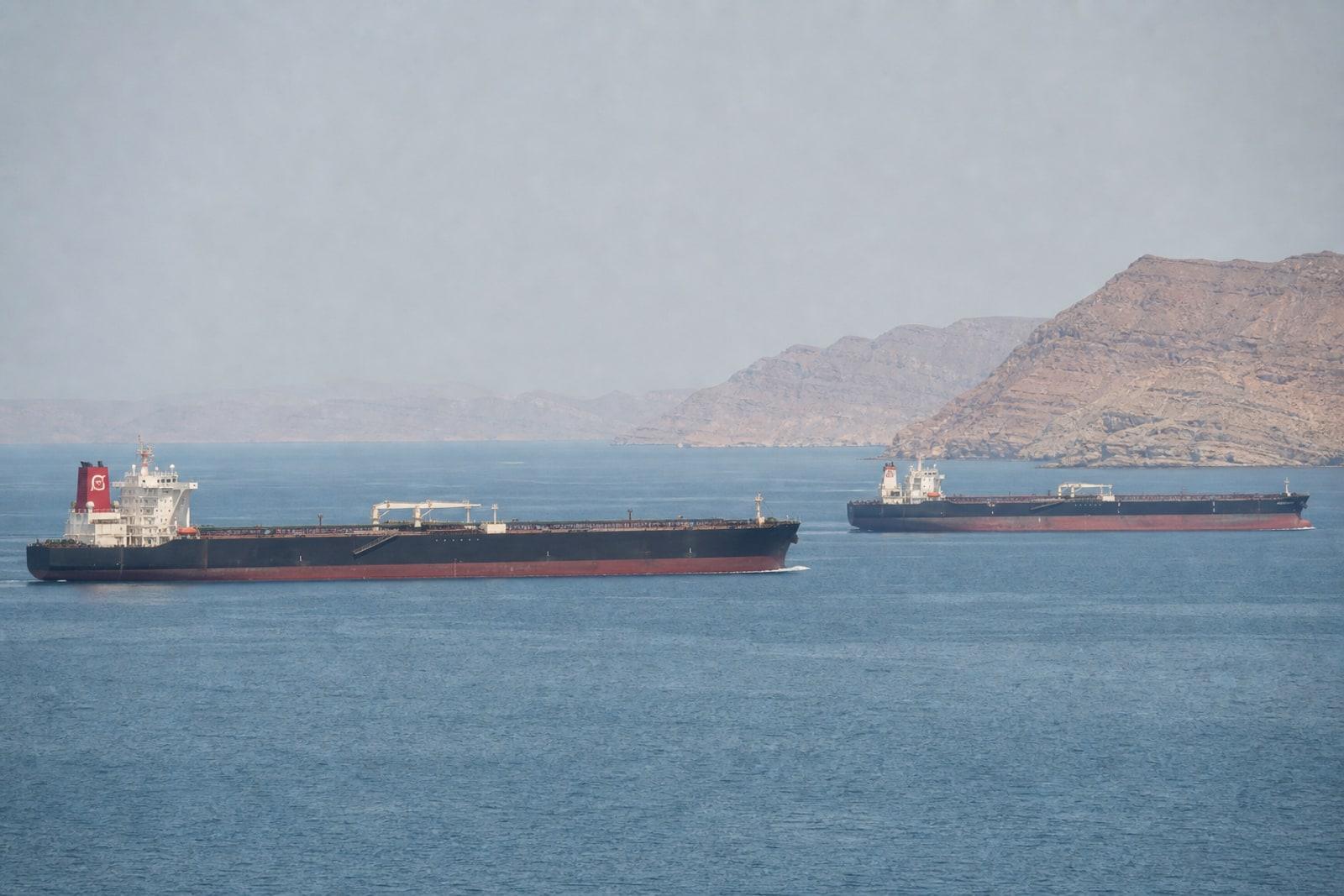
Two very large crude carriers linked to Abu Dhabi’s ADNOC were struck while transiting the Strait of Hormuz on 14 July, an attack that killed one seafarer, injured eight people and underlined how quickly maritime insecurity can spill into energy markets far beyond the Gulf.
The vessels were Al Bahyah, owned by ADNOC Logistics & Services, and Mombasa B, which the company operates under a time-charter arrangement. ADNOC L&S confirmed that both ships had been hit by projectiles and suffered significant damage. The UAE said two Iranian cruise missiles struck the tankers in the southern shipping lane, within Omani territorial waters. Its Foreign Ministry said one Indian national was killed and eight people were injured, including four seriously.
The basic incident is corroborated by ADNOC L&S, the UAE government, Associated Press reporting and a Reuters report. AP and Reuters said fires broke out aboard both ships and were brought under control.
What is confirmed—and what remains an allegation
ADNOC L&S did not identify the attacker in its statement, but said the ships were struck by projectiles and that it was working with emergency responders. The UAE attributed the attack to Iran. Iran’s Islamic Revolutionary Guard Corps separately said it had hit two supertankers that it described as having ignored warnings; Reuters reported that the Guard did not name the vessels. Public reporting reviewed by Status does not provide an independent forensic finding establishing the origin of the projectiles.
That distinction matters. The human toll and ship damage are confirmed by the operator and Emirati authorities. Responsibility is, at this stage, based on the UAE’s attribution and the Guard’s claim. The episode is nevertheless another direct threat to civilian shipping in a route that is central to oil and liquefied-natural-gas trade.
“But our exposure to volatile global market is clear,” Dan Jørgensen, the European commissioner for energy and housing, said in March.
The vessels’ scale also explains the market sensitivity. ADNOC L&S describes Al Bahyah as a very large crude carrier, or VLCC, and Mombasa B as a VLCC it operates. Such ships can carry roughly 2 million barrels of crude, although neither company nor the authorities said what cargo, if any, the two vessels had aboard at the time of the attack.
A chokepoint with few workarounds
The International Energy Agency estimates that 19.87 million barrels a day of oil and oil products passed through Hormuz in 2025—about a quarter of global seaborne oil trade. It also estimates that nearly 20% of global LNG trade used the route. Most oil volumes head to Asia, but pricing is global: disruption changes the cost of the marginal barrel and intensifies competition for alternative cargoes.
- Saudi Arabia and the UAE have pipelines that can bypass part of the strait, but the IEA puts available alternative capacity at only 3.5 million to 5.5 million barrels a day.
- Qatari and Emirati LNG has no comparable seaborne bypass, making a sustained interruption especially consequential for global gas prices.
- The IEA says a prolonged disruption would quickly create physical shortages and make a sharp oil-price rise unavoidable.
There is no verified evidence in the sources reviewed that the 14 July attack alone caused a new Europe-wide physical supply interruption. On 24 July, the European Commission’s Oil Coordination Group said there was “no supply problem at this stage”, citing commercial stocks and alternative global supplies. It cautioned, however, that a longer conflict could tighten markets in the following weeks and months.
Why Luxembourg still feels the shock
For Luxembourg, the immediate issue is price rather than a verified shortage. The country is a small, open euro-area economy: oil, gas, freight and financial-market risk are priced internationally. STATEC said in March that the earlier rise in Brent had already passed through to Luxembourg pump prices. Separately, RTL Today’s reporting on STATEC’s May scenarios said a prolonged disruption could take diesel above €2 a litre. Those scenarios are conditional, not a forecast of the effect of this particular attack.
The wider EU risk is also relevant to Luxembourg’s households and businesses. In the Commission’s downside analysis, a prolonged constraint on Hormuz trade would keep oil and gas prices elevated, weaken confidence and raise risk premia and borrowing costs. That is a modelled adverse scenario, not a central forecast—but it describes the channels through which a Gulf shipping crisis can reach a financial-services economy as well as transport firms, manufacturers and consumers.
The test is duration, not one voyage
The tankers’ damage is a grave event in its own right. Economically, its importance lies in whether attacks deter owners, insurers and charterers from using the route, and whether alternative capacity can compensate. Each additional security incident makes those decisions harder and may add insurance, routing and financing costs before any physical shortfall reaches Luxembourg.
For now, the responsible conclusion is measured: Europe’s authorities have not identified an immediate supply emergency, while the latest confirmed tanker attack has added to a persistent and potentially inflationary risk. Luxembourg’s exposure will be determined by the duration of the disruption, the reaction of shipping and insurance markets, and whether global oil and LNG flows can be rerouted.
Frequently asked
- Which vessels were attacked in the Strait of Hormuz?
- ADNOC L&S identified the vessels as the VLCCs Al Bahyah and Mombasa B.
- Who was responsible for the attack?
- The UAE attributed it to Iran, while the IRGC said it struck two supertankers without naming them. The public sources reviewed do not provide a separate forensic attribution.
- Was there an immediate fuel shortage in Europe or Luxembourg?
- No. The European Commission said on 24 July that Europe had no immediate oil supply problem. That does not remove the risk of higher prices if disruption persists.
- Why does Hormuz matter to Luxembourg?
- Oil and LNG are globally priced. A prolonged disruption can raise fuel costs, inflation and financial-market risk even where physical supply remains available.
Sources(9)
- 1UAE Condemns in the Strongest Terms the Iranian Hostile Attacks Targeting Two National Tankers in the Strait of HormuzUAE Ministry of Foreign Affairs · mofa.gov.ae
- 2ADNOC L&S Update Following Attacks on the Al Bahyah and Mombasa B VesselsADNOC Logistics & Services · adnocls.ae
- 3US attacks Iran as Tehran fires at tankers in straitAssociated Press · apnews.com
- 4UAE says Iranian missiles struck oil tankers in Strait of Hormuz, one sailor killedReuters · investing.com
- 5Strait of HormuzInternational Energy Agency · iea.org
- 6Oil Coordination Group confirms no immediate supply concerns in the EUEuropean Commission · energy.ec.europa.eu
- 7Scenario AnalysisEuropean Commission · economy-finance.ec.europa.eu
- 8Conjoncture Flash March 2026: Growth remains weak in 2025… and fears loom for 2026STATEC · statistiques.public.lu
- 9Energy outlook: Prolonged conflict could push fuel prices above €2 per litre, STATEC warnsRTL Today · today.rtl.lu
Related by topic