Energy markets
Oil retreat offers Luxembourg relief, but Hormuz risk has not disappeared
Brent has fallen from above $100 to about $88, yet the strait remains restricted and Luxembourg's pump prices still reflect July's supply shock.
By Jonas Thill · · 4 min read
Oil prices extended a steep retreat on Tuesday as a pause in attacks between the United States and Iran revived hopes that diplomacy could reduce the danger to shipping through the Strait of Hormuz. For Luxembourg, the move offers the prospect of cheaper fuel and weaker inflation pressure—but not yet the certainty of either.
Brent crude was trading at $87.82 a barrel at 0046 GMT on 28 July, down 0.6%, while US West Texas Intermediate was 0.8% lower at $81.95, Reuters reported. The declines followed Monday's much larger sell-off: Brent settled 8.7% lower at $88.36 and WTI lost 7.5% to $82.61. Brent had traded above $100 the previous week.
A large move, but not yet a peace dividend
The scale of the fall shows how much geopolitical risk traders had built into crude prices. The Associated Press independently recorded a retreat of nearly 7% in early Monday trading as attacks paused and world share markets advanced.
The physical market remains considerably less reassuring. Iran halted attacks after the American pause, but Tehran said the strait remained closed. Regional mediators were still discussing a mechanism for vessel traffic, while the United States maintained its naval restrictions against Iran, according to AP's account of the negotiations. President Donald Trump has said talks were progressing but also threatened renewed military action if diplomacy fails.
“However, the conflict remains a major source of uncertainty.” — European Central Bank, 23 July 2026
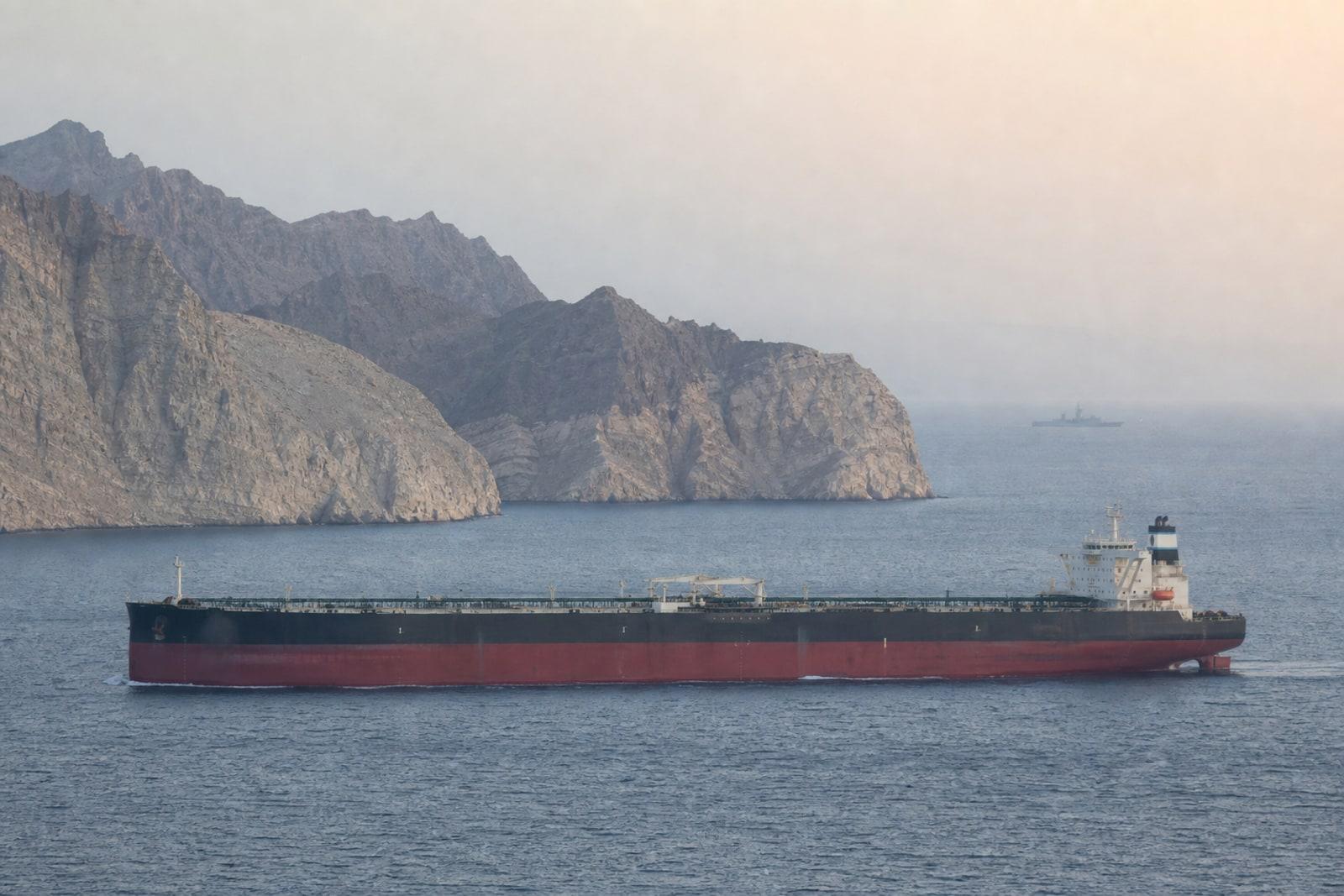
That distinction—between a pause in firing and a secure shipping corridor—is central to whether the price fall lasts. The International Energy Agency says around 20 million barrels a day of crude and refined products crossed Hormuz in 2025, equivalent to about one-quarter of global seaborne oil trade. Limited bypass capacity means even a partial obstruction can remove substantial supply or force producers to cut output as storage fills.
Luxembourg's pumps still carry the July shock
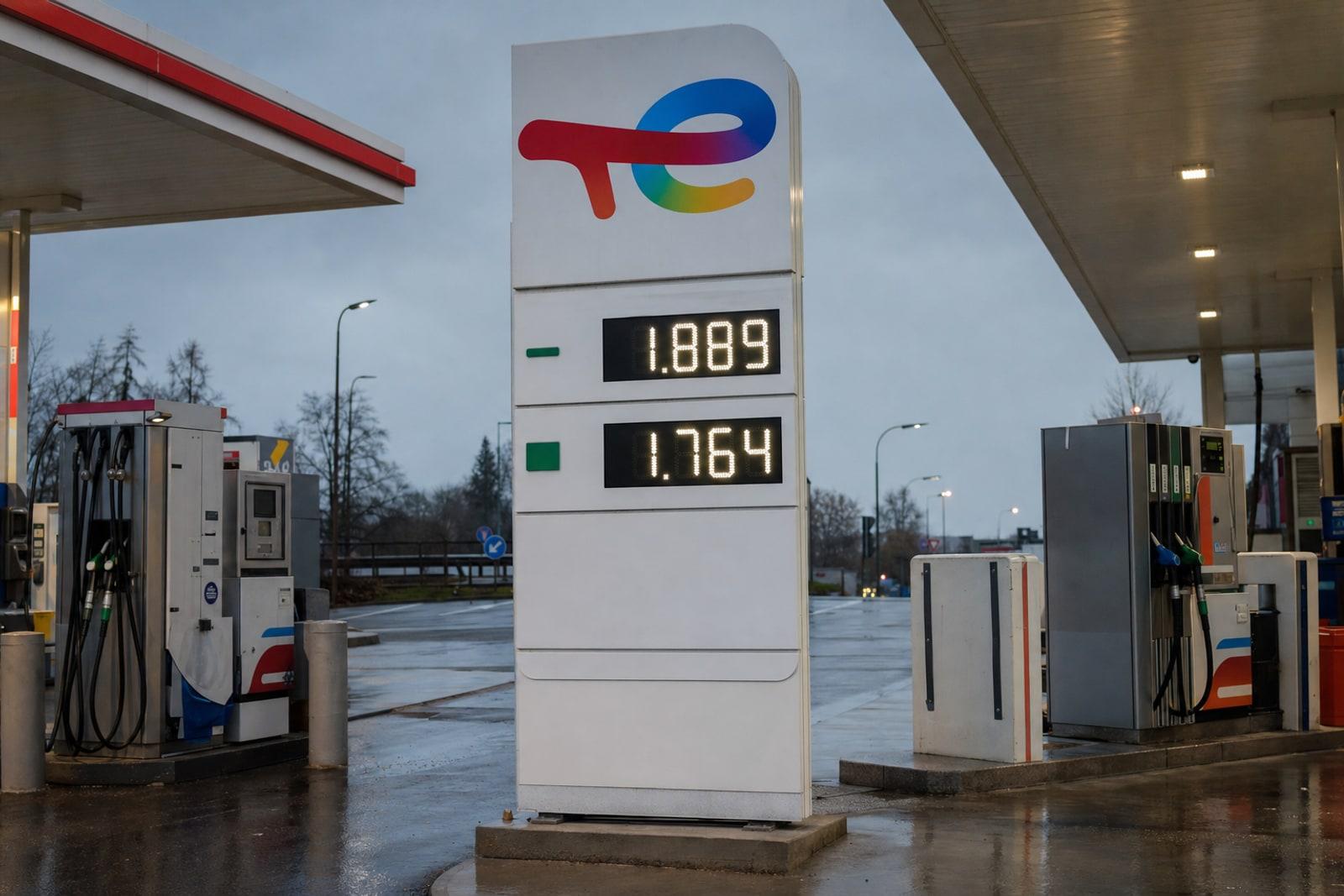
Relief in crude futures will not appear instantly at filling stations. Luxembourg's regulated maximum prices applicable from 24-25 July were €1.889 a litre for diesel, €1.764 for EuroSuper 95 and €1.903 for Super 98. Those figures are reported by both the Groupement Pétrolier Luxembourgeois and the Automobile Club du Luxembourg.
The current caps already incorporate government intervention. A temporary excise reduction is intended to lower petrol and diesel prices by five cents a litre from 1 July through 31 December. The measure forms part of the 2026 resilience package and was confirmed during the parliamentary implementation process by RTL Today.
- For motorists: sustained crude-price declines should eventually pull regulated maxima lower, although refining costs, product availability and the euro-dollar exchange rate also matter.
- For households: cheaper oil would ease heating-fuel costs as well as the indirect transport costs embedded in goods and services.
- For the state: lower market prices would reduce the pressure for additional broad energy support, while the existing five-cent fuel measure remains in force.
Luxembourg's national inflation rate eased to 2.2% in June, according to reporting based on STATEC data by Chronicle.lu and Tageblatt. Yet energy was still 16% more expensive than a year earlier, while motor fuels were up 18.7%. The higher July pump prices have not yet been captured in a completed July consumer-price reading.
Earlier data show how quickly the shock can pass through. In March, motor-fuel prices jumped 15.6% in one month—the largest monthly increase recorded in Luxembourg's national consumer-price index—and annual inflation accelerated to 2.4%, STATEC figures reported by RTL Today showed.
What the retreat means for Luxembourg funds
The financial-market channel is important for a country whose domiciled investment funds held about €8.61 trillion in assets in April, according to ALFI's compilation of CSSF and central-bank statistics. A durable fall in oil would reduce inflation and interest-rate risk, generally supporting bonds and energy-sensitive equities. It would also reverse some gains in oil producers and commodity-linked strategies.
The ECB's June projections illustrate the range. Its baseline foresaw euro-area inflation averaging 3.0% in 2026 and 2.3% in 2027. In a milder scenario, where oil fell to about $88 in the third quarter, inflation was 2.9% this year and 1.8% next year. The present Brent price is near that milder assumption, but the ECB explicitly presented the scenarios as illustrations, not forecasts.
Luxembourg's exposure is magnified by the fund industry's international reach. The International Monetary Fund warned in May that abrupt repricing, fund outflows and tighter financial conditions could spill into banks and the real economy. Conversely, the Banque centrale du Luxembourg notes that positive foreign-equity market movements feed directly into investment-fund net asset values.
Monday's market relief therefore matters, but its durability depends less on diplomatic language than on observable shipping. For Luxembourg, the decisive signals will be safe tanker transits through Hormuz, continued declines in regulated pump prices and evidence that July's energy rise is not spreading into wages and services.
Frequently asked
- How far have oil prices fallen?
- Brent settled 8.7% lower at $88.36 on 27 July and traded at $87.82 early on 28 July, after exceeding $100 the previous week.
- Has the Strait of Hormuz reopened?
- No. Attacks have paused and mediators are discussing vessel transit, but Iran says the waterway remains closed and shipping flows remain restricted.
- Will Luxembourg fuel prices fall immediately?
- Not necessarily. Lower crude should eventually feed into regulated prices, but refining margins, product supply, exchange rates and timing can delay or alter the pass-through.
- Why does this matter to Luxembourg's investment sector?
- Luxembourg is a major cross-border fund centre. Changes in inflation, interest-rate expectations, equities and commodity prices directly affect fund valuations, flows and risk management.
Sources(17)
- 1Oil prices fall 1% as investors weigh pause in US strikes on IranReuters · au.investing.com
- 2Oil prices settle at lowest in over a week, as US pauses attacks on IranReuters · live.euronext.com
- 3Oil prices plunge nearly 7% and world shares mostly gainAssociated Press · apnews.com
- 4Mediators make progress in US-Iran talks to prevent Middle East warAssociated Press · apnews.com
- 5Introduction and context — Sheltering From Oil ShocksInternational Energy Agency · iea.org
- 6Monetary policy statement, 23 July 2026European Central Bank · ecb.europa.eu
- 7Eurosystem staff macroeconomic projections for the euro area, June 2026European Central Bank · ecb.europa.eu
- 8Official Prices & HistoryGroupement Pétrolier Luxembourgeois · petrol.lu
- 9Fuel prices in Luxembourg and EuropeAutomobile Club du Luxembourg · acl.lu
- 10Resilienzpak 2026Luxembourg Government · gouvernement.lu
- 11Your Daily Brief: Luxembourg energy price cutsRTL Today · today.rtl.lu
- 12Luxembourg's Annual Inflation Falls to 2.2% in JuneChronicle.lu · chronicle.lu
- 13Inflationsrate in Luxemburg geht weiter zurückTageblatt · tageblatt.lu
- 14Annual inflation jumps to 2.4% in March as energy prices surgeRTL Today · today.rtl.lu
- 15Luxembourg fund market overviewAssociation of the Luxembourg Fund Industry · alfi.lu
- 16Luxembourg: Staff Concluding Statement of the 2026 Article IV MissionInternational Monetary Fund · imf.org
- 17International investment position at the fourth quarter of 2025Banque centrale du Luxembourg · bcl.lu
Related by topic