EU–US trade
Trump threatens EU tariffs over Google fine, raising risks for Luxembourg
Washington is preparing a formal trade probe after Brussels fined Google €890 million, raising risks for Luxembourg’s export, finance and technology sectors.
By Camille Reuter · · 4 min read
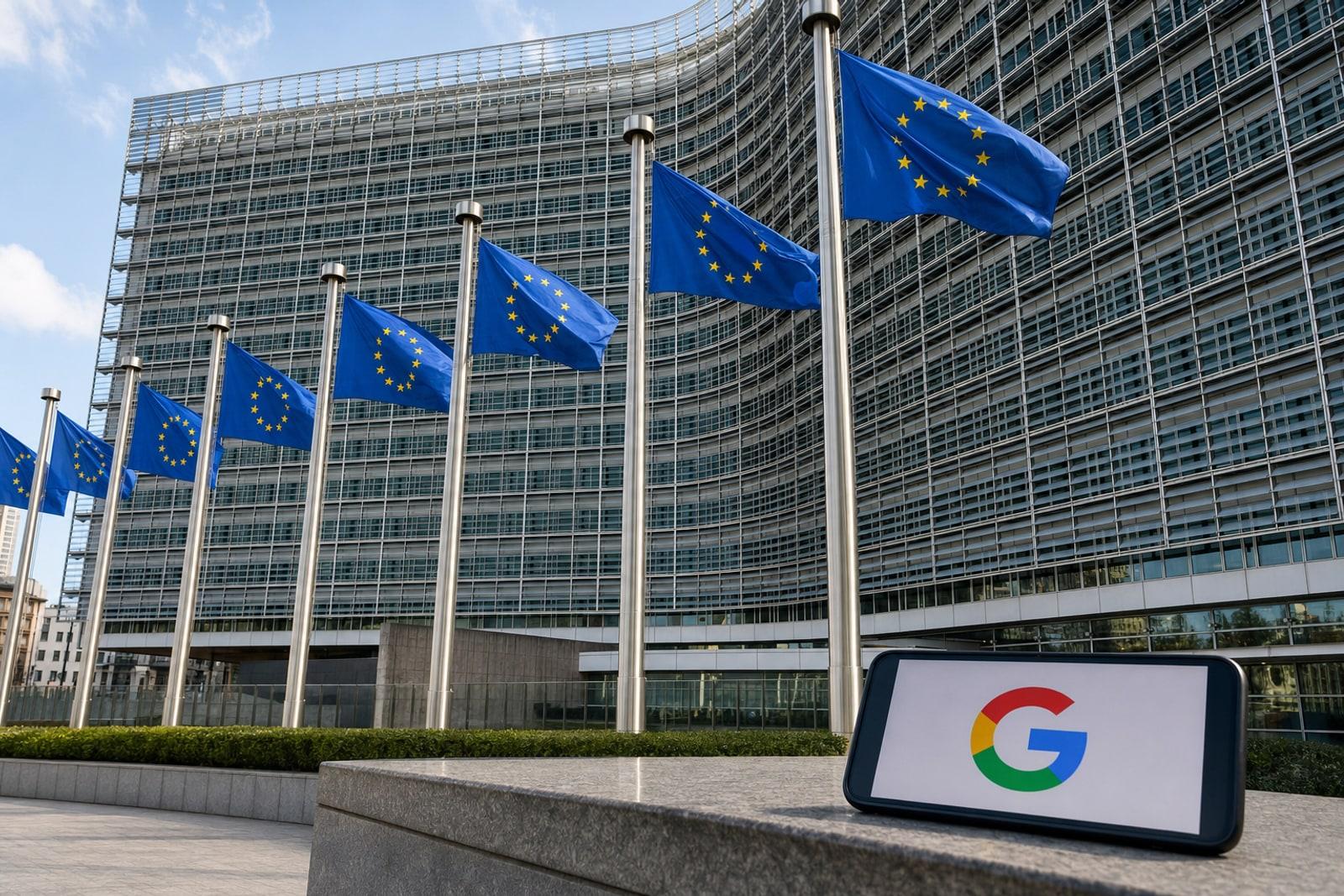
US President Donald Trump has threatened the European Union with a “substantial” tariff and said Washington will open a formal trade investigation after Brussels fined Google €890 million for breaching the bloc’s rules for powerful digital platforms.
The warning turns a dispute over the European Union’s authority to regulate technology companies into a potential trade confrontation. For Luxembourg, the immediate value of exports to the United States is relatively modest, but the risk extends through European supply chains, financial markets and investment by American technology groups.
What Brussels decided
On 23 July, the European Commission adopted two non-compliance decisions under the Digital Markets Act. It imposed a €460 million fine after finding that Google Search treated the company’s shopping, hotel, transport and sports services more favourably than comparable third-party services.
A separate €430 million fine concerned Google Play. Regulators found that its terms restricted app developers’ ability to tell customers about alternative, often cheaper, offers and complete transactions through other websites or app stores. Google was ordered to treat rival search services fairly and allow developers to communicate and contract with users outside its store.
Google has 60 days to comply. Continued non-compliance could expose it to periodic penalties of as much as 5% of worldwide daily turnover. The company disputes the findings and may appeal, although the Commission said Google had begun testing changes and had made progress in its compliance discussions.
Teresa Ribera, the Commission executive vice-president responsible for competition, said the institution’s obligation was to ensure that EU law was respected. Google argues that the required changes will degrade search features and weaken protections in its app store.
A legal route to retaliation, but no tariff yet
Trump responded on 24 July by accusing Europe of taking money from American companies. His threat was explicit:
The European Union will pay a very big price.
He said the United States would immediately initiate an investigation under Section 301 of the Trade Act of 1974. That mechanism allows the US Trade Representative to examine foreign practices alleged to be unjustifiable, unreasonable or discriminatory and burdensome to American commerce. Possible remedies include tariffs and other import restrictions.
This is a concrete escalation, but it is not yet a completed tariff decision. As of 26 July, Washington had not identified a rate, a list of European products or an implementation date for the Google-related measure. US Trade Representative Jamieson Greer separately accused the EU of creating uncertainty for American exporters but said the administration was still seeking dialogue.
The threat also tests the Turnberry trade framework agreed in 2025. Under that arrangement, most EU goods entering the United States face a 15% tariff, while the EU removed duties on US industrial products from 1 July 2026. A new technology-related levy could reopen a settlement intended to stabilise the world’s largest bilateral trade and investment relationship.
Luxembourg’s exposure is wider than its export figures
Luxembourg’s direct trade dependence on the US is limited by national standards. STATEC estimates that America receives about 3% of Luxembourg’s goods exports and 4-5% of its services exports. The OECD reports almost identical shares.
- Goods: Metals and metal products account for about 40% of Luxembourg’s shipments to the US, making exporters particularly sensitive to changes in American tariff policy.
- Services: A dispute extending beyond goods could reach financial and non-financial services, where Luxembourg’s US exposure is proportionally larger.
- Indirect effects: Weaker American demand for products made by Luxembourg’s European partners could pass through regional supply chains, while trade uncertainty can unsettle markets.
The last channel may be the most consequential. Finance generates about one-quarter of Luxembourg’s economic output, according to the OECD and France’s Treasury. The IMF describes the financial system as large, outward-oriented and highly interconnected, leaving it vulnerable to abrupt asset-price changes, investment-fund outflows and tighter financial conditions.
The technology and investment dimension also matters. Luxembourg has promoted financial technology, data infrastructure and digital services, and it hosts Amazon’s European headquarters. There is no evidence that the Google decision or Trump’s threat has changed any company’s Luxembourg plans. But a sustained conflict over EU digital rules could make regulatory predictability and transatlantic investment more difficult.
What happens next
The first test is whether the US Trade Representative formally publishes the investigation’s scope and begins the consultation process normally associated with Section 301. Any proposed product list or tariff rate would show whether the threat is designed mainly as negotiating leverage or as the opening of a broader trade action.
Google must meanwhile decide whether to appeal and how to comply within the Commission’s deadline. For Luxembourg, the narrow direct exposure offers some protection. It does not insulate the country from weaker European demand, market volatility or a deterioration in the technology investment relationship on which parts of its services economy depend.
Frequently asked
- Why did the EU fine Google €890 million?
- The Commission found that Google favoured its own services in Search and restricted app developers from directing users to alternative purchasing channels outside Google Play.
- Has the United States imposed a new tariff on the EU?
- No. As of 26 July 2026, Trump had promised a Section 301 investigation and predicted a substantial tariff, but no rate, product list or implementation date had been announced.
- How exposed is Luxembourg to the United States?
- STATEC and the OECD put the US share at about 3% of Luxembourg’s goods exports and 4-5% of services exports. Indirect exposure through European demand and financial markets could be more significant.
- Why could Luxembourg’s financial sector be affected?
- Finance accounts for about one-quarter of Luxembourg’s GDP, and the country’s cross-border investment-fund industry is sensitive to market repricing, capital flows and tighter financial conditions.
Sources(16)
- 1Commission fines Google €890 million for breaches of the Digital Markets ActEuropean Commission · digital-strategy.ec.europa.eu
- 2Google hit with $1 billion EU fine, in ‘constructive’ talks to avoid more penaltiesReuters · investing.com
- 3EU hits Google with $1 billion fine over its Play app store and searchAssociated Press · apnews.com
- 4Trump says the US will investigate EU trade practices, claiming the bloc unfairly fined tech giantsAssociated Press · apnews.com
- 5Trump says US to launch EU probe over ‘illegal’ Google fineReuters · investing.com
- 6Ambassador Greer Issues Statement on the European Union Creating Uncertainty in our Transatlantic Trade RelationshipOffice of the United States Trade Representative · ustr.gov
- 7Fact Sheet: USTR Initiates 60 Section 301 Investigations Relating to Failures to Take Action on Forced LaborOffice of the United States Trade Representative · ustr.gov
- 8EU trade relations with the United StatesEuropean Commission · policy.trade.ec.europa.eu
- 9Conjoncture Flash March 2025: US policy casts a cloud of uncertaintySTATEC · statistiques.public.lu
- 10Conjoncture Flash October 2025: How have exports of goods to the United States developed?STATEC · statistiques.public.lu
- 11Luxembourg: OECD Economic Outlook, Volume 2025 Issue 2OECD · oecd.org
- 12Luxembourg: Staff Concluding Statement of the 2026 Article IV MissionInternational Monetary Fund · imf.org
- 13OECD Economic Surveys: Luxembourg 2025OECD · oecd.org
- 14Situation économique et financière du LuxembourgFrench Treasury · tresor.economie.gouv.fr
- 15Decision (EU) 2025/2405 concerning Amazon’s Luxembourg entitiesOfficial Journal of the European Union · eur-lex.europa.eu
- 16Martine Hansen on a working visit to AmazonLuxembourg Government · cad.gouvernement.lu
Related by topic