Trade
India–UK trade pact takes effect, but its biggest gains will take years
Most Indian exports gain immediate UK duty-free access, while British whisky, cars and services face a more gradual and conditional opening.
By Jonas Thill · · 4 min read
India and the United Kingdom have begun trading under their new economic agreement, cutting duties across thousands of products and establishing new rules for services between two of the world's largest economies.
The Comprehensive Economic and Trade Agreement entered into force on 15 July, less than a year after it was signed. Its implementation offers an unusually visible counterpoint to the broader turn towards tariffs, industrial subsidies and managed trade. Yet its benefits are deliberately uneven: Indian exporters receive extensive access to the British market immediately, while much of India's opening will unfold through quotas and staged reductions lasting a decade or more.
The first cuts favour Indian goods
Britain immediately removed duties on 96.8% of tariff lines, covering 97.7% of the affected trade value, according to Reuters. Indian and British official documents describe the result more broadly as duty-free access for roughly 99% of Indian export lines.
The change gives Indian producers of textiles, clothing, leather, footwear, marine products, gems and jewellery, processed foods and engineering goods an immediate price advantage. Parliamentary scrutiny found that Indian clothing previously facing a 12% British tariff and textiles charged at 8% became eligible for zero-duty entry on the first day.
India's concessions begin from a more protected starting point. About 64% of its tariff lines became duty-free immediately. Once staging is complete, 85% will be duty-free, while 90% will have received some reduction or elimination. The UK government estimates that cuts on existing British exports are worth about £400 million a year initially, rising to £900 million after ten years.
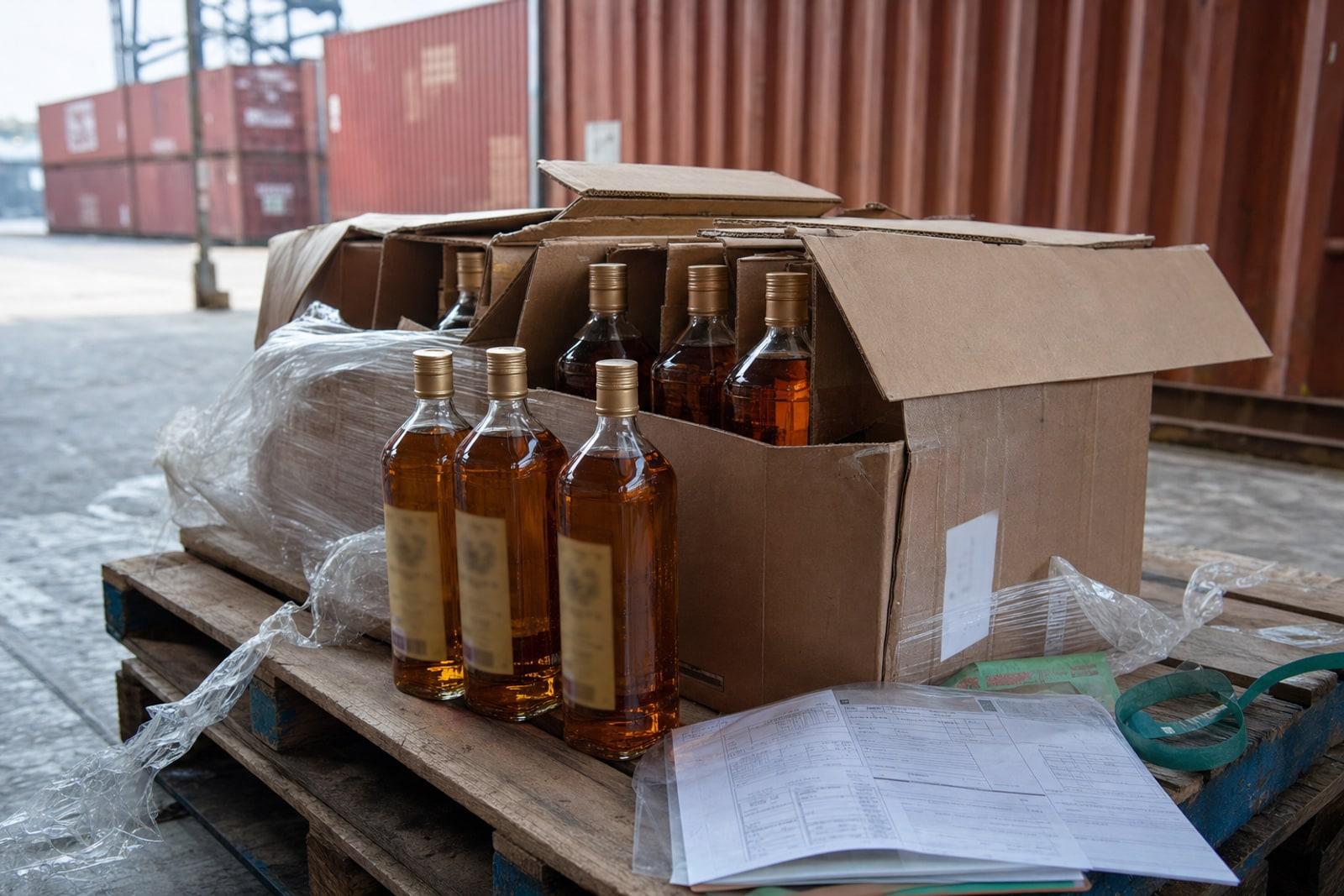
- Spirits: India's tariff on Scotch whisky and gin fell from 150% to 75% immediately and is scheduled to reach 40% in year 10.
- Lamb: The tariff falls from 33% to zero, although demanding Indian animal-health certification still restricts commercially viable shipments.
- Industrial goods: Machinery, aircraft parts, medical devices, cosmetics and selected electrical products receive immediate or staged relief, depending on the tariff line.
- Cars: The headline 10% tariff is not immediate or unlimited. In year one, 20,000 British-made combustion-engine cars can enter under quotas at duties of 30–50%. The quota reaches 37,000 vehicles and the tariff reaches 10% in year five.
Electric, hybrid and hydrogen passenger vehicles receive no Indian concession until year six and reach the 10% in-quota rate in year 10. Vehicles outside the quotas remain subject to higher duties. Those limits illustrate the agreement's central bargain: Britain opens a market where tariffs were already comparatively low, while India reduces much higher barriers gradually and protects sensitive sectors.
Services gain certainty more than freedom
The pact covers 137 services sub-sectors, including information technology, business services, telecommunications, finance and education. It also makes provisions for temporary entry by business visitors, investors, company transferees, contractual suppliers and specified independent professionals.
That breadth should not be confused with full liberalisation. The House of Lords International Agreements Committee concluded that the agreement mostly locks in existing access and provides relatively little new market opening beyond India's current commitments. Legal services were omitted, while financial and professional services gained rules on equal treatment and regulatory transparency but limited additional access.
The digital chapter recognises electronic signatures and promotes paperless trade. Independent analysis by the UK Trade Policy Observatory, however, found no binding commitment to permit cross-border data flows or prohibit data-localisation requirements. A separate bilateral investment treaty also remains unfinished.
A linked Double Contributions Convention took effect alongside the trade pact. It generally allows eligible employees temporarily posted between the countries, and their employers, to pay social-security contributions in only one country for up to five years. It is reciprocal and operates through existing mobility and visa routes; it does not itself create a general immigration route.
Large numbers, significant uncertainty
The most comprehensive macroeconomic estimates remain those produced by the UK government rather than an independent forecasting body. Its model suggests that, relative to a 2040 baseline without the agreement, annual UK gross domestic product could be 0.13% or £4.8 billion higher. It estimates a 0.06% or £5.1 billion increase for India, £25.5 billion in additional bilateral trade and a £2.2 billion rise in UK real wages.
Those figures describe a permanent change in the projected level of output, not an additional growth rate every year. The impact assessment also cautions that its results are scenarios rather than forecasts and are particularly uncertain because India's economy, industrial structure and trade relationships are changing rapidly.
A narrower independent assessment offers a useful comparison. A refereed working paper by three Indian Institute of Foreign Trade researchers used partial-equilibrium modelling to estimate that tariff changes could raise Indian goods exports to Britain by $1.59 billion. It placed the largest gains in textiles and apparel, aluminium and prepared foods, but stressed that tariffs only create a favourable price environment: exporters must still meet standards, develop commercial links and strengthen supply chains.
“a beacon of hope amidst the specter of protectionism”
That was how Confederation of British Industry chief Rain Newton-Smith described the agreement when it was concluded. The political signal is real: two major economies have accepted legally binding reductions while protectionism is spreading elsewhere.
The commercial test is harder. Rules-of-origin paperwork, product standards, health certificates, automobile quotas and India's complex regulatory environment can still prevent nominal preferences from becoming sales. The agreement has opened the gate; whether companies can move goods and services through it will determine if its modelled gains survive contact with the market.
Frequently asked
- When did the India–UK trade agreement enter into force?
- The agreement entered into force on 15 July 2026 after both countries completed their domestic legal and operational procedures.
- Which products received immediate tariff relief?
- Indian textiles, clothing, leather, footwear, marine products, processed foods and several manufactured goods received broad UK duty-free access. British whisky, gin, lamb, machinery, aircraft parts and selected industrial goods received immediate Indian reductions, although many cuts are phased.
- Will British cars immediately face a 10% Indian tariff?
- No. The first-year quota covers 20,000 combustion-engine cars at tariffs of 30–50%. The in-quota rate reaches 10% in year five, when the quota reaches 37,000 vehicles. Preferential treatment for electric and other alternative-fuel cars begins in year six.
- How large are the expected economic gains?
- UK government modelling estimates a long-run annual UK GDP gain of £4.8 billion, or 0.13%, relative to a 2040 baseline without the pact. These are modelled scenarios, not forecasts. A narrower independent study estimated a $1.59 billion increase in Indian goods exports.
Sources(12)
- 1India-UK trade pact takes effect, promising tariff cuts and services boostReuters · investing.com
- 2United Kingdom–India Comprehensive Economic and Trade AgreementUK Parliament · hansard.parliament.uk
- 3India and the United Kingdom Unleash a Next Generation Economic CorridorPress Information Bureau, Government of India · pib.gov.in
- 4UK-India Free Trade AgreementHouse of Commons Library · commonslibrary.parliament.uk
- 5Impact assessment of the Free Trade Agreement between the UK and India: executive summaryUK Department for Business and Trade · gov.uk
- 6UK-India Comprehensive Economic and Trade Agreement (CETA)House of Commons Business and Trade Committee · publications.parliament.uk
- 7Scrutiny of international agreements: UK-India CETA — Trade in goodsHouse of Lords International Agreements Committee · publications.parliament.uk
- 8Scrutiny of international agreements: UK-India CETA — Services, mobility and professional qualificationsHouse of Lords International Agreements Committee · publications.parliament.uk
- 9India-UK CETA: Estimating Market Access Opportunities for IndiaIndian Institute of Foreign Trade · cc.iift.ac.in
- 10UK and India sign a 'landmark' trade agreement after years of tough negotiationsAssociated Press · apnews.com
- 11New chapter in UK-India trade relations as Free Trade Agreement enters into forceUK Department for Business and Trade · business.gov.uk
- 12Submission from the UK Trade Policy Observatory and Centre for Inclusive Trade PolicyUK Parliament · committees.parliament.uk
Related by topic