Trade tensions
Trump threatens 100% tariffs on EU goods over digital taxes
The US president says any country taxing American tech firms will face blanket duties overriding the 15% trade deal — days before the pact takes effect, with Luxembourg's economy watching closely.
By Jonas Thill · · 4 min read
US President Donald Trump has threatened to impose 100% tariffs on goods from any country that taxes American technology companies, an ultimatum that would override the freshly agreed European Union trade deal just days before it is due to take effect — and that lands squarely on the open, trade-dependent economy that underpins Luxembourg's prosperity.
In a post on his Truth Social platform on Friday, Trump took aim at European governments he said were discussing the "imminent" introduction of digital services taxes on US firms such as Meta, Alphabet and Amazon. He said such levies were "all designed to harm, or discriminate against, American Technology," and warned that any country adopting one would face sweeping duties on everything it ships to the United States.
Please let this statement serve to represent that any Country that imposes such a Tax will immediately be met with a 100% TARIFF on any and all Goods sent to the United States of America.
Trump added that the tariff would "supersede" any trade arrangement with the country in question, "whether implemented, signed, or not." It was not clear how he intends to enforce the threat, or whether it would be applied to all such countries at once or one at a time.
What triggered the threat
Digital services taxes — levies on the gross revenue that large tech platforms earn in a country — have been one of the most persistent irritants in transatlantic trade. They were deliberately left out of the EU-US trade agreement and remain unresolved.
Within the EU, France, Spain, Italy, Austria, Denmark, Hungary, Poland and Portugal already operate a digital services tax, according to the Tax Foundation; rates run at 3% in France, Italy and Spain and 5% in Austria. Outside the bloc, the United Kingdom has charged a 2% levy since 2020. Luxembourg does not impose such a tax, leaving it among the EU members not directly in Trump's line of fire.
Why Brussels did not flinch
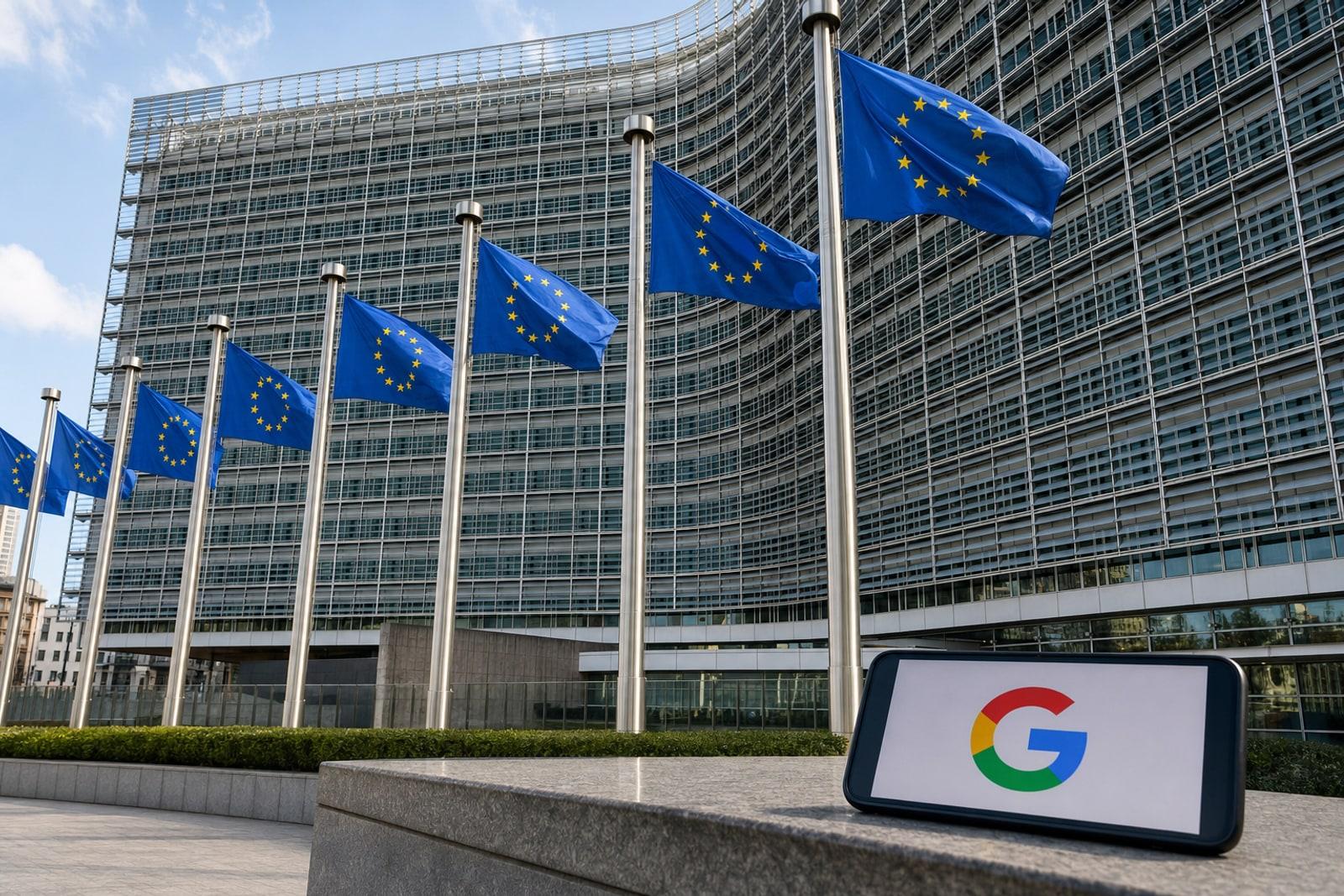
The European Commission rejected the threat. Its trade spokesperson, Olof Gill, said the taxes were "non-discriminatory" and applied to "all large companies, regardless of their origin."
"Unilateral measures targeting such legitimate policies are unjustified," Gill said. "If pursued, the EU will respond swiftly and decisively to defend its rights and regulatory autonomy."
The muted market reaction reflects a hard legal reality. In February, the US Supreme Court ruled 6-3 that the International Emergency Economic Powers Act does not give the president the authority to impose tariffs, striking down the "reciprocal" duties Trump had announced in 2025. Those IEEPA-based tariffs were terminated on 24 February. The decision left the White House reliant on narrower trade tools — chiefly Section 301 and Section 232 investigations — that are slower and more legally constrained. Washington has opened Section 301 inquiries into digital taxes, but a 100% across-the-board duty would be far harder to deliver than a social-media post suggests.
A deal days from taking effect
The timing is pointed. The threat arrived just ahead of a 4 July deadline for the EU and US to begin implementing their trade deal, which caps tariffs on most EU exports at 15%. The framework was struck between Commission President Ursula von der Leyen and Trump in July 2025; EU lawmakers and member states agreed the implementing legislation on 20 May 2026.
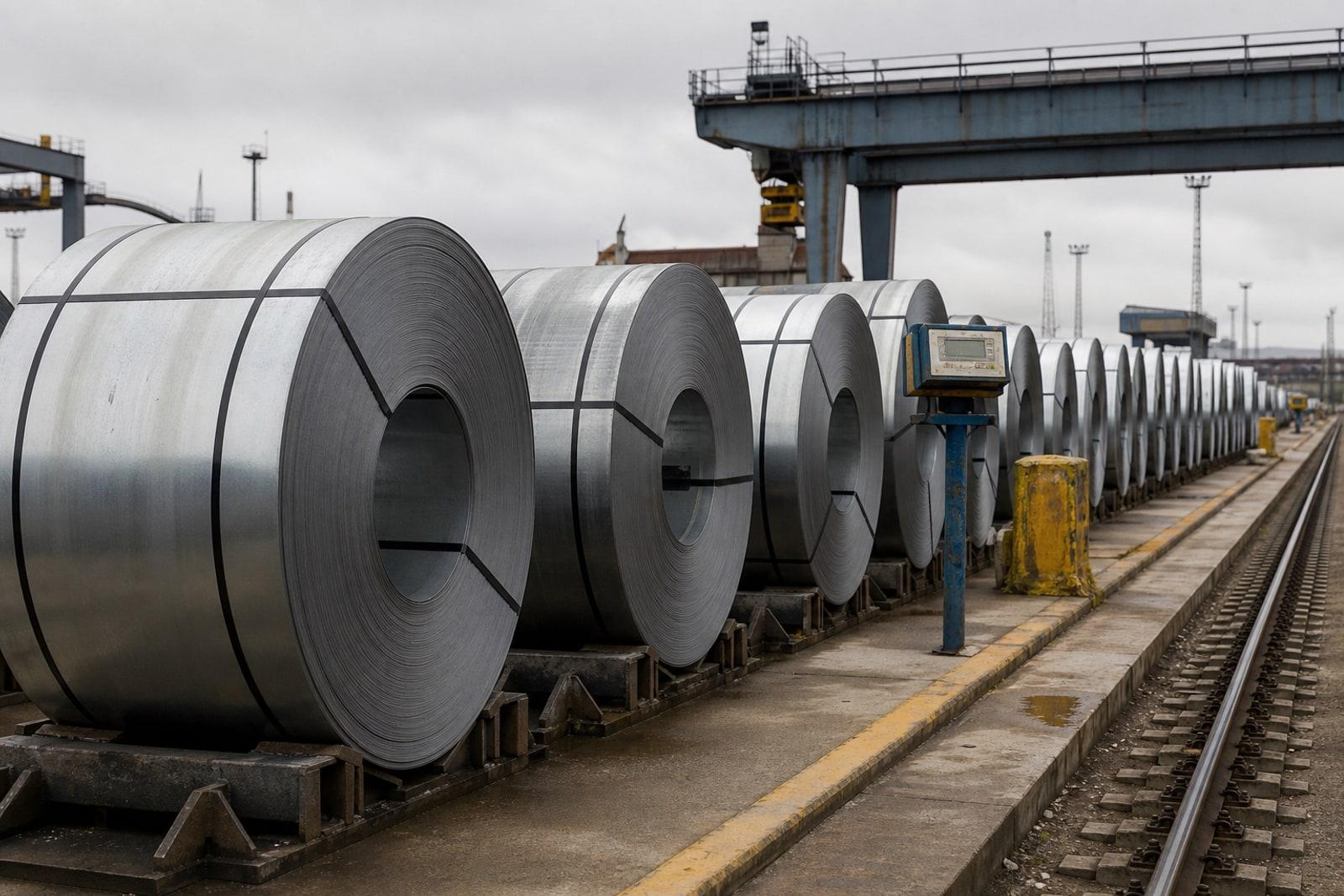
That 15% ceiling does not cover everything. Steel, aluminium and copper are excluded and continue to face 50% tariffs under Section 232 — a direct concern for a country whose single biggest category of goods sold to the US is metals. The Commission has reserved the right to suspend its own concessions on steel and aluminium if Washington still applies above-15% rates on those products by the end of 2026.
What blanket tariffs would mean for Luxembourg
Luxembourg's direct exposure to the US market is modest. The national statistics institute STATEC estimates the United States accounts for roughly 3% of the Grand Duchy's goods exports and a similar share of imports. But the exposure is concentrated: metals and metal products make up 30-40% of the goods Luxembourg ships to the US and represent a 6-7% export share, while textiles account for about 10%. Services exports to the US — split between financial and non-financial activities — add a further 4-5%.
The bigger danger, STATEC has warned, is indirect. As one of Europe's most open economies, Luxembourg is highly sensitive to a slowdown among its trading partners — above all Germany, its largest, whose car industry has already been a tariff target. A blanket 100% duty that overrode the 15% deal would ripple through the Greater Region's tightly integrated cross-border supply chains, where components and finished goods cross frontiers with France, Belgium and Germany before reaching export markets.
The statistics office has also flagged a financial channel: Luxembourg's vast fund and banking sector is exposed to any "contagion via financial markets" that a sharp escalation could set off. For now, the threat remains conditional — triggered only if a government actually adopts a digital tax — and constrained by the courts. But it is a reminder of how exposed a small, trade-reliant economy is to decisions taken in Washington.
For Luxembourg, which levies no digital tax of its own, the risk is not being singled out. It is being caught in the blast radius of a fight between its single market and its largest external trading partner.
Frequently asked
- What exactly did Trump threaten?
- In a 26 June 2026 Truth Social post, Trump said any country that imposes a digital services tax on US technology companies would face a 100% tariff on all goods it sends to the United States, and that the duty would override existing trade deals.
- Does this affect the EU-US trade deal?
- Potentially. The threat came days before the 4 July deadline to implement the deal capping most EU exports at 15%. Digital taxes were deliberately excluded from that agreement, and Trump said the new tariff would supersede it.
- Is Luxembourg directly targeted?
- No. Luxembourg does not levy a digital services tax, unlike France, Italy, Spain or Austria, so it is not directly in scope. But a blanket transatlantic tariff would still hit its export-exposed economy.
- How exposed is Luxembourg's economy?
- Directly, only modestly: STATEC estimates the US takes about 3% of Luxembourg's goods exports, though metals are more exposed. The larger risk is indirect — weaker demand in partners like Germany and possible financial-market contagion.
Sources(12)
- 1Trump threatens 100% tariffs over EU digital taxEuronews · euronews.com
- 2Trump threatens 100% tax on European imports if countries impose tax on digital servicesPBS NewsHour (Associated Press) · pbs.org
- 3Trump threatens 100% tax on European imports if countries impose tax on digital servicesABC7 News (Associated Press) · abc7news.com
- 4Trump threatens 100% tariffs on countries putting 'Digital Services Tax on American Companies'CNBC · cnbc.com
- 5Trump threatens 100% tariffs on Europe if countries impose tax on US digital servicesFrance 24 · france24.com
- 6Supreme Court Strikes Down IEEPA Tariffs: What Importers Need to Know NowHolland & Knight · hklaw.com
- 7Supreme Court strikes down tariffsSCOTUSblog · scotusblog.com
- 8EU-US trade: Council and Parliament strike a deal to implement the tariff elements of the Joint StatementCouncil of the EU (Consilium) · consilium.europa.eu
- 9The EU-US trade deal: Restoring stability and predictabilityEuropean Commission · commission.europa.eu
- 10Digital Services Taxes in Europe, 2026Tax Foundation Europe · taxfoundation.org
- 11STATEC Warns of Indirect Risks to Luxembourg from US Tariff PolicyChronicle.lu · chronicle.lu
- 12The exposure of global and EU trade to US tariffsEuropean Commission, Economy and Finance · economy-finance.ec.europa.eu
Related by topic