Auto market
Chinese car brands double their share of Luxembourg’s new-car market
Chinese brands reached 4.1% of new-car registrations in Luxembourg in the first half of 2026. The data show more choice and volume, but not yet whether fleets, price or private buyers are behind it.
By Marc Weber · · 4 min read
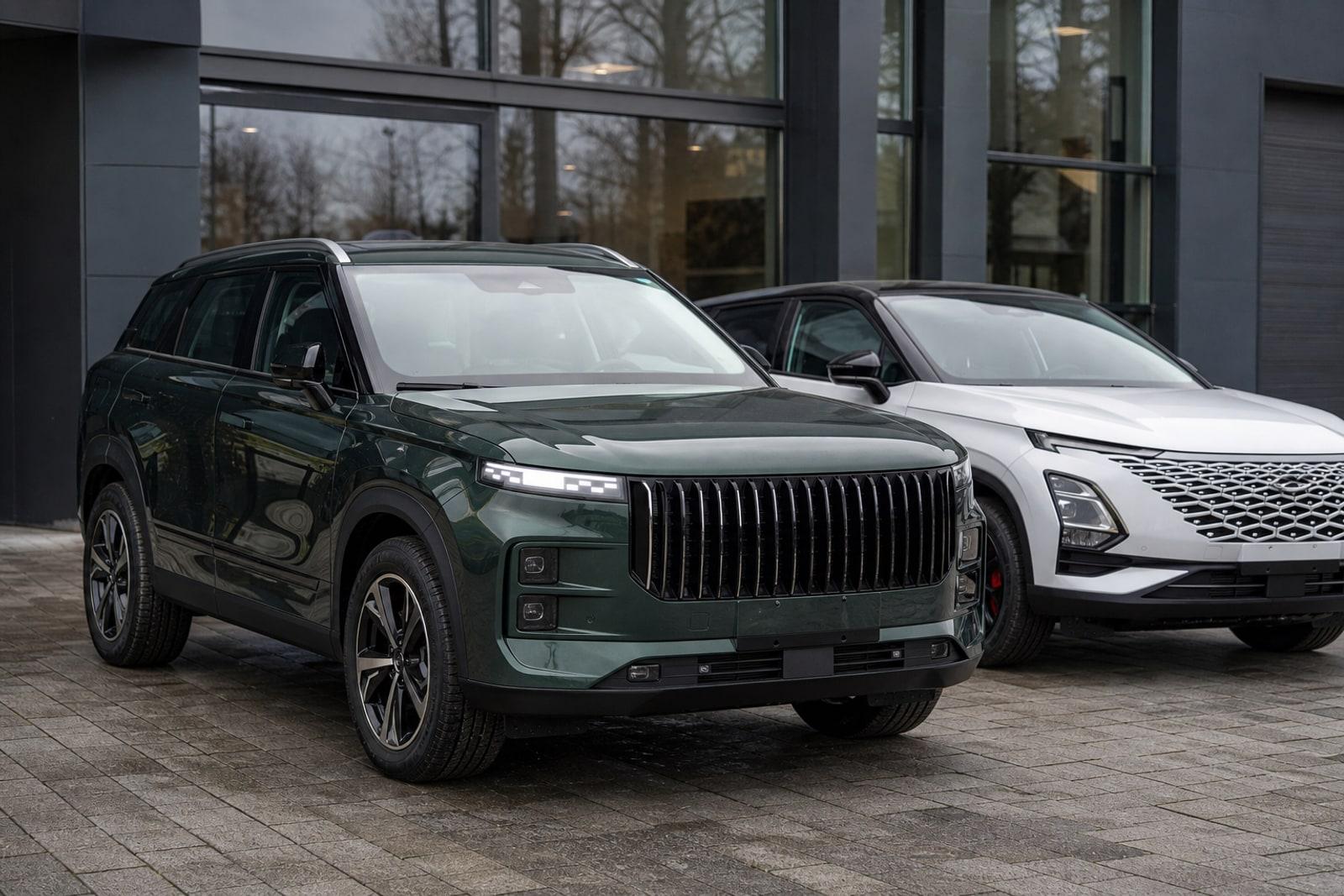
Chinese car brands more than doubled their share of Luxembourg’s new-car market in the first half of 2026, a small but conspicuous shift in a country where German premium marques and company leasing have long set the tone.
There were 1,052 new registrations for Chinese brands from January through June, compared with 517 in the same period of 2025, according to an Autotouring analysis of the national vehicle authority’s data. That lifted their share to 4.1% from 2.1%, as the wider new-car market grew 5% to 25,966 vehicles.
The figures should be read precisely. They document registrations, rather than retail orders or household spending; and the published breakdown does not identify the purchaser, the finance method or the powertrain for the Chinese-brand total. It therefore cannot prove that lower prices, a fleet contract or a surge in consumer demand caused the advance. What it does establish is that the market is becoming less dependent on a single Chinese badge and that the change has arrived while the European Union’s dispute with Beijing over electric-vehicle imports remains live.
A broader Chinese field, not one runaway brand
MG remained the largest Chinese brand in the six-month tally, with 233 registrations, but the gain was more widely spread. Jaecoo registered 204 cars, up from 17 a year earlier; BYD added 176, up 63%; and Omoda rose to 173 from 41. XPeng, Forthing, Leapmotor and BAIC also recorded sales. The analysis excludes Volvo and Polestar, European-origin brands controlled by Chinese groups, an important boundary when measuring the presence of explicitly Chinese marques.
The Jaecoo 7 was the leading model, with 169 registrations across all powertrains. It was followed by the Omoda 5 with 128, the MG3 with 75 and the battery-electric BYD Dolphin Surf with 68. That mix matters: the growth is not demonstrably an electric-only story. The available model ranking spans conventional, hybrid, plug-in hybrid and battery-electric offerings, but does not give a sufficiently detailed Chinese-brand powertrain split to assign the increase to any one technology.
Earlier data also show how quickly the hierarchy has moved. Over the first five months of 2026, Chery’s Omoda and Jaecoo brands together overtook MG in Luxembourg, according to a separate Autotouring review based on SNCA figures.
“They are slowly coming, but we see that they are coming, and people are also interested; we see that in the registration numbers.” — Manuel Ruggiu, operations director at the SNCA, speaking before the 2026 Autofestival
Leasing is central, but causation is unproven
Luxembourg’s wider market gives a reason to resist easy explanations. Operational leasing accounted for 8,682 new registrations in the first half, or 33.4% of the total, up from 28.8% a year earlier. It accounted for 67.4% of battery-electric registrations. Full hybrids were the largest powertrain category at 8,624 registrations, or 33.2% of the market, ahead of 7,731 battery-electric cars.
Those figures underline the influence of business-car and leasing channels, but they do not reveal what proportion of Chinese registrations entered through them. Nor do they prove a household-led boom. Private individuals accounted for 58.4% of all new registrations in the half-year, a rise from 52.4%, but no equivalent figure is published for the Chinese-brand subset.
Reporting from the 2026 Autofestival offers a further caution. RTL Lëtzebuerg reported that electric-car purchasing decisions were strongly dependent on lease offers, and that finance was less attractive for some Chinese electric models. BYD’s showroom, it said, was busy and sales were progressing. That is evidence of interest and the significance of finance, not a market-wide test of price competition.
For households, the practical comparison is consequently broader than a list price: monthly payments, insurance, service access and expected resale value can all matter. For dealers, the immediate task is to decide which newer brands can be supported with demonstrators, technicians, parts and credible used-car values.
Luxembourg feels a European trade contest
The local shift is unfolding against an EU policy designed specifically for battery-electric vehicles made in China. The European Commission finalised definitive countervailing duties ranging from 7.8% to 35.3% in October 2024, following its anti-subsidy investigation. The range and selected company rates were also reported independently by Associated Press: 17% for BYD, 18.8% for Geely and 35.3% for SAIC, MG’s owner.
In January, the Commission issued guidance for exporters proposing price undertakings, including possible minimum import prices, while retaining the duties. Its guidance makes clear that any offer is assessed individually. The measures do not automatically apply to Chinese hybrids, a distinction that makes Luxembourg’s powertrain mix commercially important.
What the next data must show
The first-half results are meaningful, but 4.1% is still a minority position. Luxembourg’s four largest German brands alone accounted for 42.3% of new registrations. The next test is whether the newer entrants can make durable inroads into fleet and leasing portfolios without depending on one-off delivery batches or promotional finance.
- Registration data confirm rapid volume growth and a wider roster of Chinese brands.
- They do not yet establish whether price, fleets or private demand was the principal driver.
- Battery-electric trade duties create a different competitive environment from that faced by hybrid models.
That distinction is central to the policy debate. The EU-China contest may be argued in tariffs and subsidies, but in Luxembourg it will be decided vehicle by vehicle: on the dealer forecourt, in a lease quotation and, eventually, in the used-car market.
Frequently asked
- What period does the registration comparison cover?
- It compares new passenger-car registrations from 1 January to 30 June 2026 with the same six months of 2025.
- Which Chinese brands led in Luxembourg?
- MG registered 233 new cars, followed by Jaecoo with 204, BYD with 176 and Omoda with 173 in the first half of 2026.
- Did electric cars drive the Chinese-brand increase?
- The published data identify leading models but do not provide a verified Chinese-brand-only powertrain breakdown, so that conclusion cannot be drawn.
- Are Chinese EVs subject to EU duties?
- The EU’s definitive countervailing duties apply to battery-electric vehicles imported from China and range from 7.8% to 35.3%; they do not automatically cover hybrids.
Sources(7)
- 1Parc Automobile du LuxembourgSociété nationale de circulation automobile / Luxembourg Open Data Portal · data.public.lu
- 2Opérations Delta des véhicules au LuxembourgSociété nationale de circulation automobile / Luxembourg Open Data Portal · data.public.lu
- 3The new CLA dethrones the GolfAutotouring / Automobile Club du Luxembourg · autotouring.acl.lu
- 4Chinese brands are gaining groundAutotouring / Automobile Club du Luxembourg · autotouring.acl.lu
- 5Automag: Bilan vum Autofestival 2026RTL Lëtzebuerg · rtl.lu
- 6Commission issues Guidance Document on submission of price undertaking offers for battery electric vehicles from ChinaEuropean Commission · policy.trade.ec.europa.eu
- 7The EU is imposing duties on electric vehicles from China after trade talks failAssociated Press · apnews.com
Related by topic