Global economy
BIS warns converging 'pressure points' leave global economy exposed
The central banks' bank says high public debt, sticky inflation, trade fragmentation and stretched valuations are colliding — risks that transmit directly to Luxembourg's fund-heavy economy.
By Jonas Thill · · 4 min read
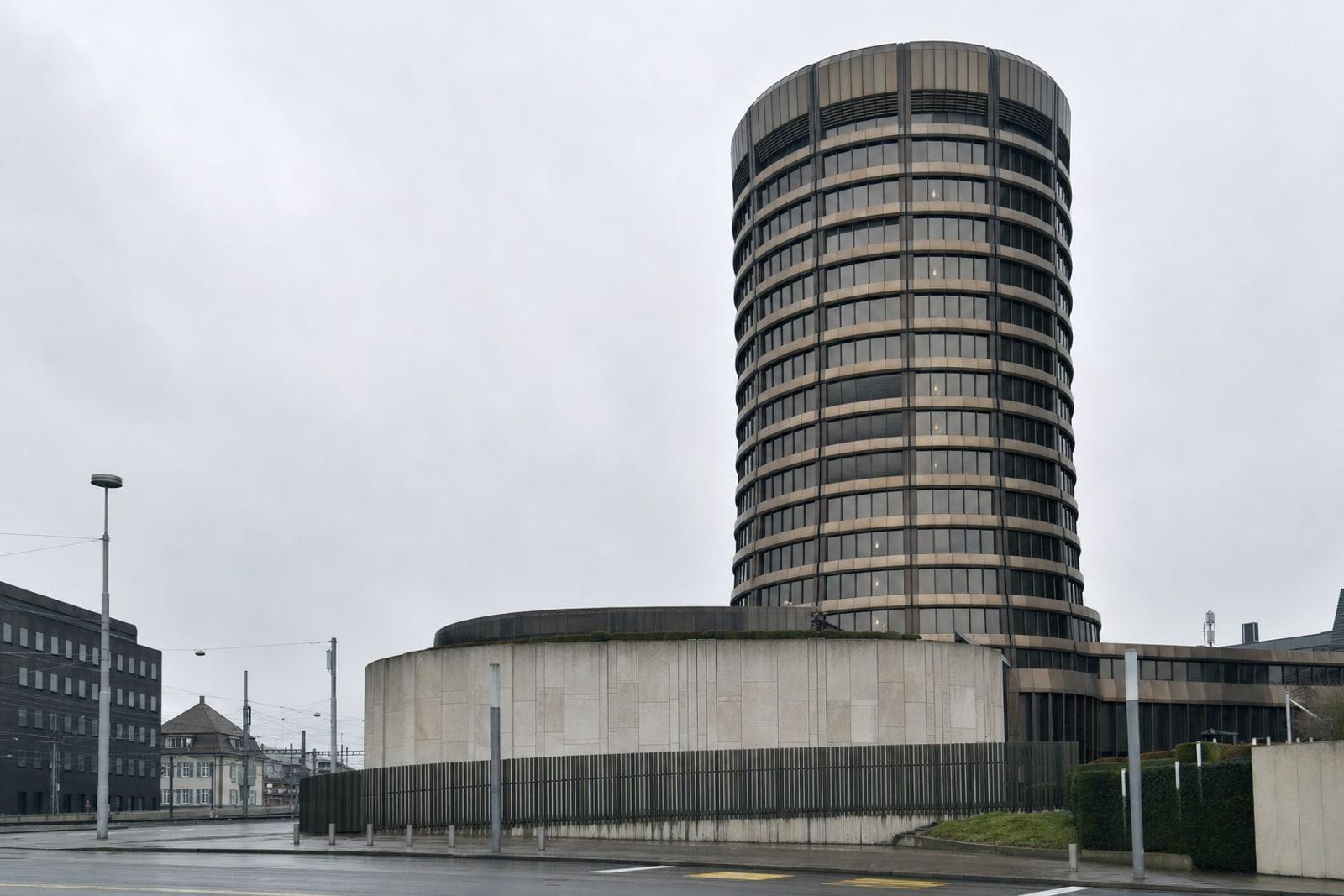
The institution that serves as the central banks' own bank delivered an unusually blunt message on Sunday: the calm on the surface of the global economy is masking a build-up of risk underneath it. In its Annual Economic Report, the Bank for International Settlements (BIS) said a set of converging "pressure points" — high public debt, the threat of renewed inflation, a fragmenting trade system and stretched asset valuations — are colliding in ways that leave the world economy badly exposed to the next shock.
The Basel-based body, owned by central banks around the world, framed its 133-page report under the banner "Global economic pressure points call for policy discipline." Its core warning is that resilience to date should not be mistaken for safety, and that the room to respond to a crisis has narrowed.
"Policymakers must act now," said BIS General Manager Pablo Hernández de Cos. "Delay will only make the necessary adjustments more costly."
The pressure points
The report identifies several vulnerabilities that, individually manageable, become dangerous in combination. According to the BIS and wire coverage of the launch, they include:
- Near-record public debt and strained government finances, leaving little fiscal space to cushion the next downturn.
- The risk of a renewed bout of stubbornly high inflation, amid lingering supply shocks and the danger that price expectations come unanchored.
- Trade fragmentation and geopolitical tension, which reduce the flexibility of global supply.
- Stretched asset valuations and investor complacency, with particular unease about prices in artificial-intelligence-related sectors.
- Fragile bond-market liquidity and hidden leverage built up through non-bank financial intermediaries.
On the AI boom, the BIS struck a note of caution rather than triumph. While the technology has lifted confidence and supported growth on hopes of productivity gains, the bank warned that supply bottlenecks and intense competition could tip the surge into the kind of overinvestment seen in past boom-and-bust cycles — even as it stokes fears about jobs.
A new 'fiscal-financial stability nexus'
The most novel part of the diagnosis is what the BIS calls a new "fiscal-financial stability nexus." As governments borrow more, the global financial system has shifted from financing the private sector toward financing the state — and a growing share of that debt now sits with non-bank players such as hedge funds and asset managers, often funded through short-term markets that allow leverage to accumulate.
That makes sovereign-bond markets, long treated as the bedrock of the financial system, a potential transmission channel for stress.
"The new fiscal-financial stability nexus may mean more frequent and sharper drops in sovereign bond values," said Frank Smets, acting head of the BIS Monetary and Economic Department — swings that could rapidly tighten financial conditions.
The policy prescription follows from the diagnosis. The BIS urged governments and central banks to prioritise price stability, restore fiscal sustainability by bringing debt down, extend financial-stability oversight beyond the banking sector to the fast-growing non-bank world, pursue structural reforms and coordinate their actions so they reinforce one another rather than pull in opposite directions.
Why this lands on Luxembourg
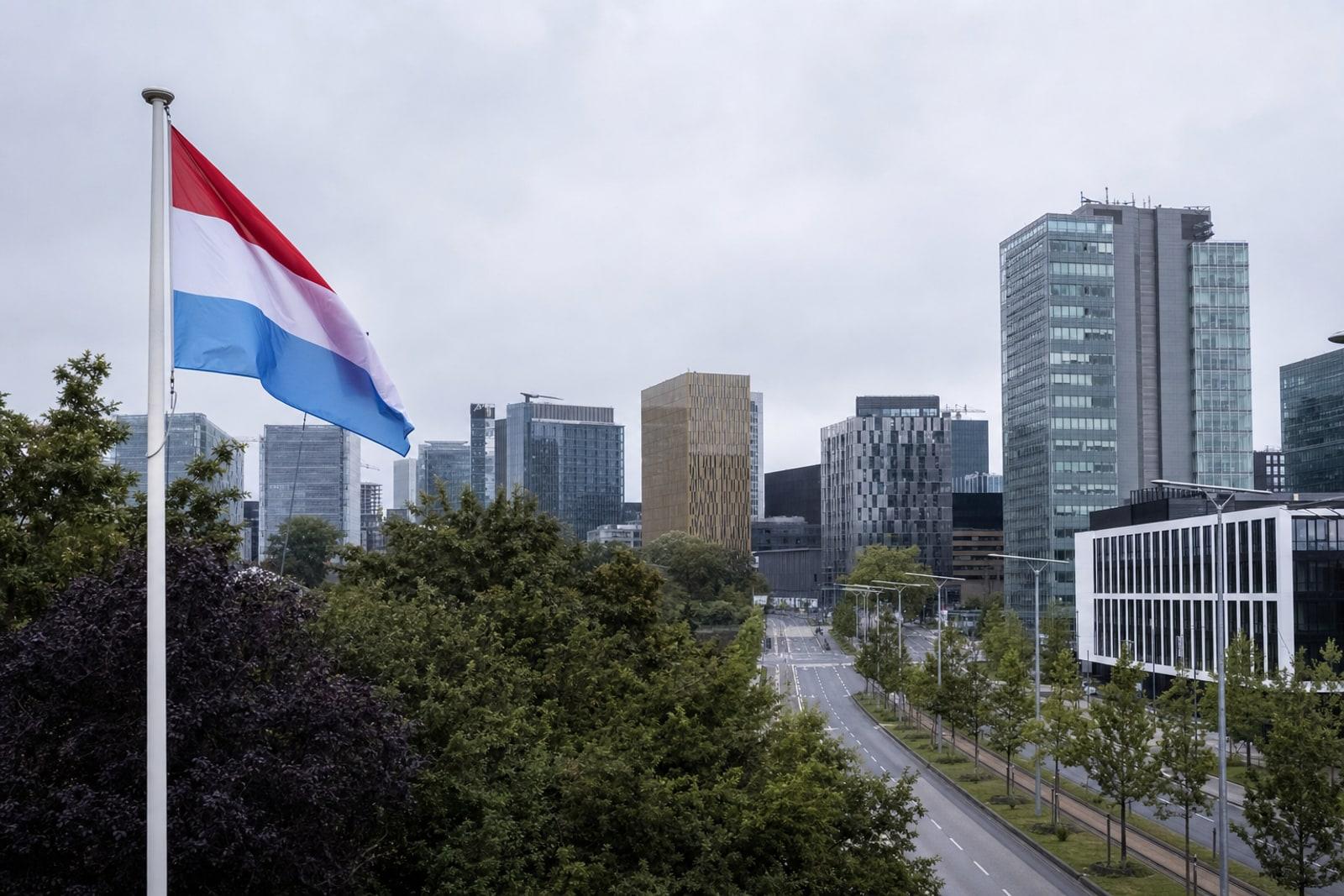
For most readers the report is an abstraction. For Luxembourg it is close to a description of the local economy's risk profile. The Grand Duchy is the world's second-largest investment fund domicile after the United States and Europe's leading cross-border fund centre — precisely the non-bank financial machinery the BIS is now urging supervisors to watch more closely.
The scale is striking for a country of fewer than 700,000 people. Assets under management in Luxembourg-domiciled funds surpassed 8 trillion euros for the first time, reaching about 8.2 trillion euros at the end of 2025, according to figures from Luxembourg for Finance — more than half again as large as five years earlier. Alternative funds now make up roughly 35 percent of that total, and consultancy PwC has projected the industry could reach 10.4 trillion dollars by 2030.
Because so much of that money is invested in bonds and other globally traded assets, the channels the BIS flags — moves in interest rates, sudden repricing of sovereign debt and gaps in market liquidity — feed straight through to Luxembourg's funds and the fee income, jobs and tax receipts that depend on them. A sharp, BIS-style drop in bond values would be felt first in the kind of portfolios that the Grand Duchy administers on behalf of investors worldwide.
The exposure is rising in step with the risk. New European Union rules for loan-originating funds, taking effect from mid-2026, will cap leverage at 175 percent for open-ended vehicles and 300 percent for closed-ended ones — an implicit acknowledgement that private credit and leverage, two of the BIS's concerns, have become central to the business Luxembourg hosts.
De Cos returned repeatedly to the debt theme, noting that borrowing is high and increasingly "financed through non-bank financial intermediaries." His message to finance ministers and central bankers gathered in Basel was that the window to fix weak foundations is open now, but will not stay open indefinitely. For an economy built on managing the world's savings, that is less a distant warning than a forecast for its own balance sheet.
Frequently asked
- What is the BIS Annual Economic Report?
- It is the flagship yearly report of the Bank for International Settlements, the Basel-based institution owned by central banks. The 2026 edition, released on 28 June 2026, assesses risks to the global economy and recommends policy responses.
- What are the 'pressure points' the BIS identified?
- High and near-record public debt, the risk of renewed high inflation, trade fragmentation and geopolitical tension, stretched asset valuations (notably in AI sectors), and fragile bond-market liquidity tied to leverage among non-bank financial intermediaries.
- Why does the report matter for Luxembourg?
- Luxembourg is the world's second-largest investment fund domicile, with about 8.2 trillion euros in fund assets at end-2025. Its economy is built on cross-border funds and bond holdings, so the global rate, sovereign-debt and market-liquidity risks the BIS highlights transmit directly to it.
Sources(6)
- 1Annual Economic Report 2026Bank for International Settlements · bis.org
- 2Global economic pressure points call for policy discipline (press release, 28 June 2026)Bank for International Settlements · bis.org
- 3Rising debt, AI boom and financial fragilities raise global risks: BISBusiness Standard (Reuters wire) · business-standard.com
- 4Luxembourg financial centre records strong growth across sectors in 2025ETF Express · etfexpress.com
- 5Luxembourg Fund Assets Could Reach $10.4trn by 2030, PwC ReportsChronicle.lu · chronicle.lu
- 6Luxembourg tops Europe in sustainable fund assetsIFC Review · ifcreview.com
Related by topic
US Supreme Court Expands Presidential Firing Power but Shields the Fed