Central bank independence
US Supreme Court Expands Presidential Firing Power but Shields the Fed
In Trump v. Slaughter, a 6-3 Court overturned the 1935 Humphrey's Executor precedent — but a separate 5-4 ruling kept Fed Governor Lisa Cook in her seat, signalling the central bank stands apart.
By Jonas Thill · · 5 min read
WASHINGTON — The US Supreme Court on Monday handed President Donald Trump sweeping authority to dismiss the leaders of independent federal agencies, overturning a 90-year-old precedent that had shielded regulators from at-will firing — while pointedly carving out the one institution global markets watch most closely: the Federal Reserve.
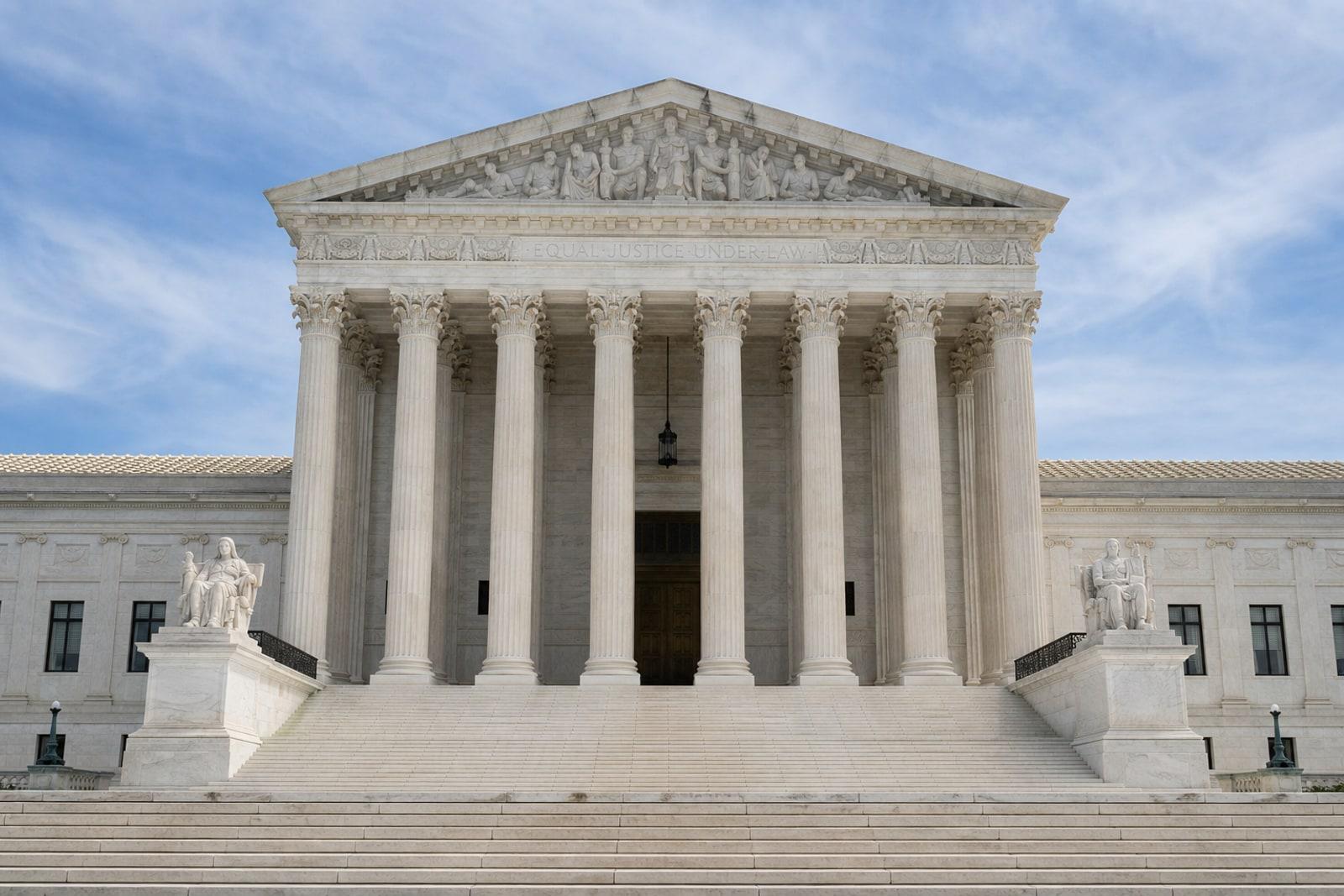
In a 6-3 decision in Trump v. Slaughter, the Court's conservative majority ruled that the for-cause protections Congress wrote for Federal Trade Commission members are unconstitutional, validating Trump's March 2025 removal of Democratic commissioner Rebecca Kelly Slaughter. In a separate 5-4 ruling the same day, the Court refused to let the president remove Fed Governor Lisa Cook, allowing her to stay on the central bank's board while her lawsuit proceeds.
Together the two rulings redraw the boundary between the White House and the agencies that regulate American life — and try to fence the central bank off on the far side of it.
A 90-year precedent overturned
The decision discards Humphrey's Executor v. United States, the 1935 ruling that let Congress insulate multi-member regulatory boards by allowing removal only for cause. The FTC's founding statute had limited dismissals to cases of "inefficiency, neglect of duty, or malfeasance in office." The majority held that such restrictions intrude on the president's constitutional control of the executive branch.
Chief Justice John Roberts, writing for the majority, framed the question as one of presidential trust and accountability.
The President must have the assistance of officers he can trust. Although it is up to the Senate to decide whether to confirm those with whom the President would prefer to work, neither Congress nor the courts may saddle him with those with whom he cannot work.
The ruling reaches far beyond the FTC. Congress has created more than two dozen multi-member agencies whose leaders could previously be removed only for cause. Among those now exposed:
- the National Labor Relations Board, which oversees union and workplace disputes;
- the Merit Systems Protection Board, which adjudicates federal-employee cases;
- the Consumer Product Safety Commission, which polices product safety.
Justice Sonia Sotomayor read a summary of her dissent from the bench — a rare gesture of disagreement — joined by Justices Elena Kagan and Ketanji Brown Jackson.
"Put simply, today the majority reshapes our Government," Sotomayor wrote. "Dozens of independent commissions are now likely to become purely executive agencies, shifting tremendous power over broad swaths of American life into the President's hands."
Why the Fed was carved out
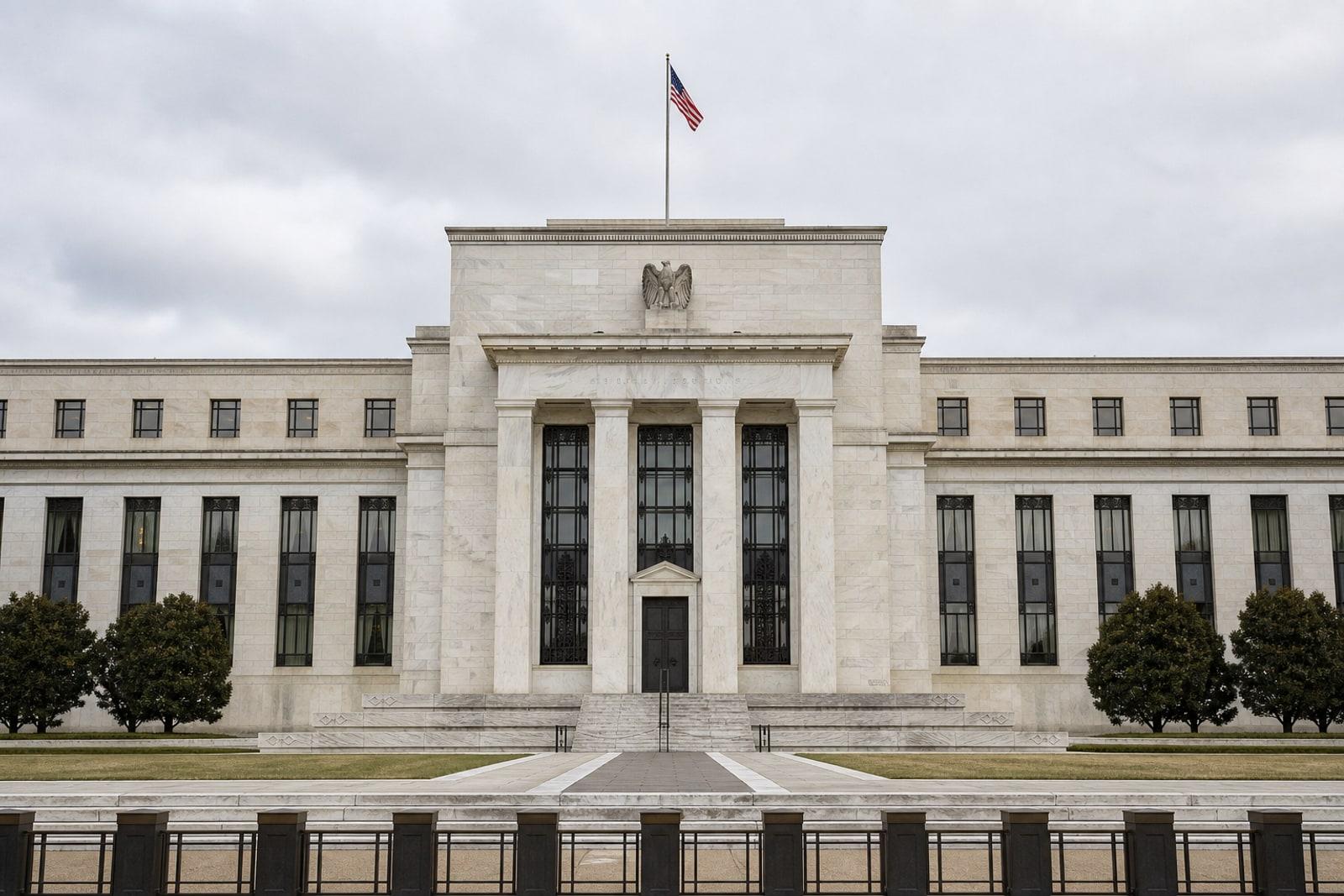
The same majority drew a sharp line around the central bank. The Court has described the Federal Reserve as a "uniquely structured, quasi-private entity" that follows "in the distinct historical tradition of the First and Second Banks of the United States" — a lineage the justices used to set monetary policy apart from ordinary executive agencies.
In the Cook case, Roberts wrote for a 5-4 majority that included Justice Brett Kavanaugh and the three liberal justices. The Court did not rule on whether Trump ultimately had cause to remove the governor; it held that he failed to give her the process the law requires before firing her.
Trump had moved to dismiss Cook in August 2025, citing alleged misrepresentations on mortgage filings for properties in Michigan and Georgia made before her 2021 confirmation to the board. Cook denies any wrongdoing and has not been criminally charged. The Court found she was denied basic due process.
"At minimum, Cook was entitled to some explanation of the evidence at issue, some avenue for a response, and a deadline by which a response would be due," Roberts wrote.
Markets read a firewall, intact for now
For investors, the Fed exception was the headline. US stocks rose on Monday, with the tech-heavy Nasdaq Composite up about 1.2%, the S&P 500 about 0.7% and the Dow Jones Industrial Average roughly 0.4%, helped both by the central-bank carve-out and by reports that Washington and Tehran had agreed to halt tit-for-tat attacks.
The logic is straightforward. A central bank that can be reshaped at will by an incumbent president is, in the eyes of markets, a central bank whose interest-rate decisions might bend to the political calendar. That prospect tends to push up long-term borrowing costs and weigh on a currency. By keeping Cook in place and treating the Fed as a special case, the Court left the assumption of an insulated US monetary policy — for now — in place.
The reprieve is partial. The Court resolved Cook's case on procedural grounds and left for another day the deeper question of whether the Fed's tenure protections are themselves constitutional. The carve-out is a strong signal, not a settled doctrine.
The stakes for Luxembourg and the euro
The reverberations do not stop at the US border. The Federal Reserve sets the price of the world's reserve currency; its credibility underpins the dollar, US Treasuries and the global cost of capital. Any erosion of its independence would ripple through every financial centre — Luxembourg's included.
The Grand Duchy is Europe's largest investment-fund hub: the country's regulator, the CSSF, reported total net assets of about 6.4 trillion euros at the end of April 2026, much of it invested in dollar-denominated equities and bonds whose valuations move with US rates. Luxembourg is also a leading venue for international bond listings, a market acutely sensitive to shifts in US monetary credibility.
European policymakers have long insulated their own central bank more explicitly: the European Central Bank's independence is written into the EU treaties, which bar it and national central banks from seeking or taking instructions from governments. Monday's rulings underline why that firewall matters — and why a US case about who can fire a regulator is read closely from Kirchberg to Frankfurt.
Frequently asked
- Did the Supreme Court let Trump fire Federal Reserve officials?
- No. In a separate 5-4 ruling the Court refused to let President Trump remove Fed Governor Lisa Cook, keeping her in place while her lawsuit continues, and signalled the Federal Reserve is constitutionally different from other agencies. It decided her case on due-process grounds rather than settling whether the Fed's job protections are constitutional.
- What is Humphrey's Executor and why does overturning it matter?
- Humphrey's Executor was a 1935 Supreme Court decision that allowed Congress to shield members of independent agencies from being fired without cause. Overturning it gives the president far broader power to remove the leaders of agencies such as the FTC, NLRB and CPSC at will, expanding executive control over US regulation.
- Why does a US ruling matter for Luxembourg?
- The Federal Reserve anchors the dollar, US Treasuries and global borrowing costs. Luxembourg is Europe's largest fund centre, with about 6.4 trillion euros in net assets and a major bond-listing market, much of it exposed to US rates — so any threat to Fed independence affects valuations and risk across the Grand Duchy's financial sector.
Sources(12)
- 1Trump v. Slaughter, No. 25-332 (opinion, 06/29/2026)Supreme Court of the United States · supremecourt.gov
- 2Trump v. Cook, No. 25A312 (06/29/2026)Supreme Court of the United States · supremecourt.gov
- 3Supreme Court expands presidential firing power, overturning 90-year-old rulingCBS News · cbsnews.com
- 4Supreme Court rejects Trump's attempt to fire Fed's Lisa Cook as legal battle continuesCBS News · cbsnews.com
- 5Supreme Court allows Trump to fire FTC member, major win for presidential powerCNBC · cnbc.com
- 6Supreme Court rules Trump cannot fire Fed Governor Lisa Cook for nowCNBC · cnbc.com
- 7Supreme Court cements Trump's power over agencies long considered independentNPR · npr.org
- 8Supreme Court rules Trump cannot fire Fed member Lisa Cook; grants him more power over other independent agenciesNBC News · nbcnews.com
- 9Trump didn't establish cause to fire Lisa Cook from Federal Reserve board, Supreme Court rulesCBC News · cbc.ca
- 10Court allows Trump to fire FTC commissioner and overturns major restraint on presidential powerSCOTUSblog · scotusblog.com
- 11Sonia Sotomayor Bashes Supreme Court Decision on Firing of FTC's Rebecca SlaughterNewsweek · newsweek.com
- 12Global situation of undertakings for collective investment at the end of April 2026CSSF (Luxembourg) · cssf.lu
Related by topic