United States
US Supreme Court upholds birthright citizenship, striking down Trump order
In a 6-3 ruling in Trump v. Barbara, the justices reaffirmed that nearly everyone born on US soil is a citizen, blocking the president's bid to rewrite the 14th Amendment by decree.
By Léa Hoffmann · · 4 min read
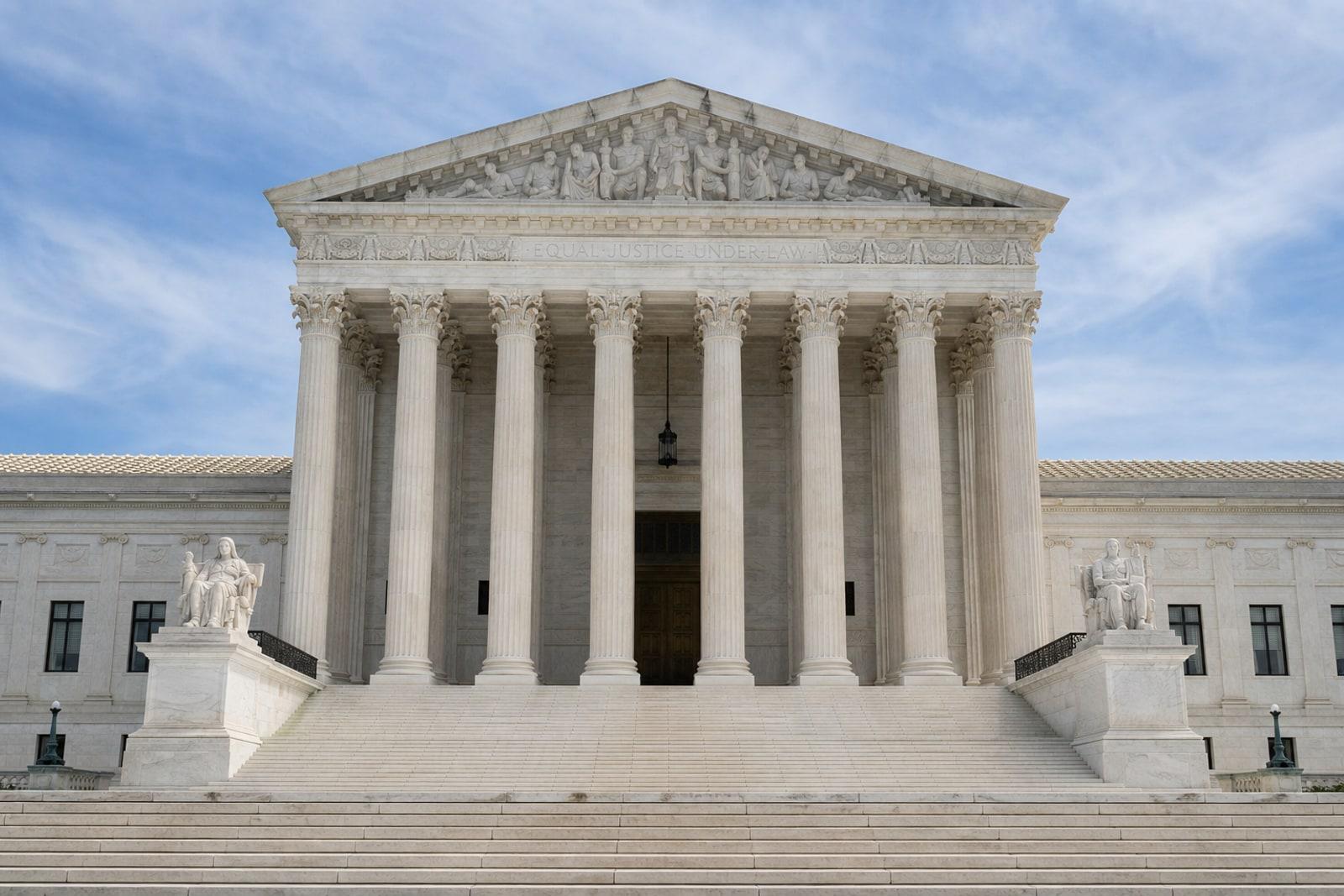
The US Supreme Court on Tuesday reaffirmed that almost everyone born on American soil is a citizen, striking down President Donald Trump's attempt to end birthright citizenship in one of the most consequential constitutional rulings of his second term.
By a vote of 6-3 in Trump v. Barbara, the justices held that children born in the United States to parents who are in the country unlawfully or only temporarily are nonetheless "subject to the jurisdiction" of the United States, and therefore citizens at birth under the Fourteenth Amendment's Citizenship Clause. The decision invalidates Executive Order 14160, which Trump signed on his first day back in office, and hands the president a rare and pointed judicial defeat on a signature policy.
Chief Justice John Roberts wrote for the majority, describing citizenship as a foundational right rather than a privilege the executive can withdraw.
Citizenship, then and now, was the right to have rights — to freely participate in our political community.
Roberts found "scant evidence" for the administration's reinterpretation of a rule that has been settled for more than a century, adding that the Citizenship Clause "incorporated the common law and granted citizenship to nearly all children born in the United States."
What the executive order tried to do
Executive Order 14160, titled "Protecting the Meaning and Value of American Citizenship," was signed on 20 January 2025. It instructed federal agencies to stop recognising US citizenship for babies born to undocumented immigrants and to parents present on temporary visas, restricting automatic citizenship to children with at least one parent who is a US citizen or lawful permanent resident.
The order collided directly with the text of the Fourteenth Amendment, ratified in 1868 to overturn the Dred Scott decision, and with the Supreme Court's 1898 ruling in United States v. Wong Kim Ark, which affirmed the citizenship of a man born in San Francisco to Chinese immigrant parents. A May 2025 study by the Migration Policy Institute and Penn State's Population Research Institute estimated that roughly 250,000 babies a year would have been born in the United States without citizenship had the order taken effect, according to figures reported by CBS News and Al Jazeera.
A divided but decisive court
Although the headline vote was 6-3, the justices split over their reasoning. Five members of the majority — Roberts, along with Justices Sonia Sotomayor, Elena Kagan, Amy Coney Barrett and Ketanji Brown Jackson — rejected the order on constitutional grounds. Justice Brett Kavanaugh agreed that the order was unlawful but rested his conclusion on federal statute rather than the Constitution, noting that Congress could amend the immigration laws if it chose. That distinction leaves the core constitutional holding backed by five justices.
The three dissenters diverged among themselves. Justice Clarence Thomas, joined by Justice Neil Gorsuch, argued that earlier precedent extended only to the children of permanent residents. Justice Samuel Alito wrote separately and would have gone further, urging the Court to overturn Wong Kim Ark outright. Gorsuch, in his own opinion, would have allowed the order to stand for the children of parents present only temporarily. Thomas opened his dissent by accusing the majority of taking "the extraordinary step of holding facially unconstitutional the President's Order."
Reactions from both sides
The plaintiffs were represented by the American Civil Liberties Union, whose national legal director, Cecillia Wang, argued the case before the justices. She cast the ruling as a defence of a promise woven into the country's founding text.
- Wang said the decision "reaffirms a fundamental American promise — if you are born here, you are a citizen," and that "a president cannot change the Constitution by executive fiat."
- Trump responded on his Truth Social platform, calling the outcome "too bad for our Country" and urging Congress to take up the issue. "Congress should start TODAY to work on ending expensive and unfair to our Country, Birthright Citizenship," he wrote.
The president's call to legislate signals that the fight is unlikely to end here. But amending the Constitution — the route many scholars say would be required to override Tuesday's holding — demands supermajorities in Congress and ratification by three-quarters of the states, a far steeper path than an executive order.
Why it resonates beyond America
The ruling is a marker in a broader contest over how far a president can reshape long-settled law by decree, a question watched closely well beyond US borders. It is distinct from the Court's June 2025 decision in Trump v. CASA, which curbed the power of lower courts to issue nationwide injunctions but did not resolve whether the underlying policy was lawful. Tuesday's judgment answers that second question directly, and against the administration.
For international readers, the decision also underscores how unusual the American approach remains. Automatic citizenship by birth on the territory — jus soli — is common across the Americas but rare in Europe, where states including Luxembourg base nationality primarily on descent. What the United States debated this week is a principle most of the continent never adopted, making the outcome as much a statement about American constitutional identity as about immigration policy.
Frequently asked
- What did the Supreme Court decide in Trump v. Barbara?
- On 30 June 2026 the Court ruled 6-3 that children born in the United States to parents present unlawfully or temporarily are citizens at birth under the Fourteenth Amendment, striking down President Trump's Executive Order 14160.
- How did the justices vote?
- Chief Justice Roberts wrote the majority. Five justices (Roberts, Sotomayor, Kagan, Barrett and Jackson) rejected the order on constitutional grounds; Justice Kavanaugh concurred on statutory grounds, making the judgment 6-3. Justices Thomas, Alito and Gorsuch dissented.
- Can President Trump still end birthright citizenship?
- Not by executive order. Trump has urged Congress to act, but overriding the ruling would likely require a constitutional amendment, which needs supermajorities in Congress and ratification by three-quarters of the states.
Sources(10)
- 1Supreme Court strikes down Trump's order ending birthright citizenshipSCOTUSblog · scotusblog.com
- 2Supreme Court upholds birthright citizenship on constitutional groundsNPR · npr.org
- 3Supreme Court upholds birthright citizenship, striking down Trump's orderCBS News · cbsnews.com
- 4US Supreme Court rules against Trump order to end birthright citizenshipAl Jazeera · aljazeera.com
- 5US Supreme Court upholds birthright citizenship: Who wins, who loses?Al Jazeera · aljazeera.com
- 6Trump v. BarbaraWikipedia · en.wikipedia.org
- 7Groups Representing Plaintiffs Respond to Supreme Court Birthright Citizenship RulingAmerican Civil Liberties Union · aclu.org
- 8Explainer: Supreme Court Reaffirms Birthright Citizenship in Trump v. BarbaraNational Immigration Forum · forumtogether.org
- 9Supreme Court upholds birthright citizenship, blocks Trump orderCNBC · cnbc.com
- 10Takeaways from the Supreme Court's rebuke of Trump on birthright citizenshipCNN · cnn.com
Related by topic