Big Tech
Apple sues OpenAI, alleging a systematic theft of hardware secrets
The iPhone maker accuses its one-time AI partner and Jony Ive's io of a scheme reaching from junior staff to OpenAI's hardware chief, in a suit that lays bare fracturing alliances in the AI industry.
By Marc Weber · · 4 min read
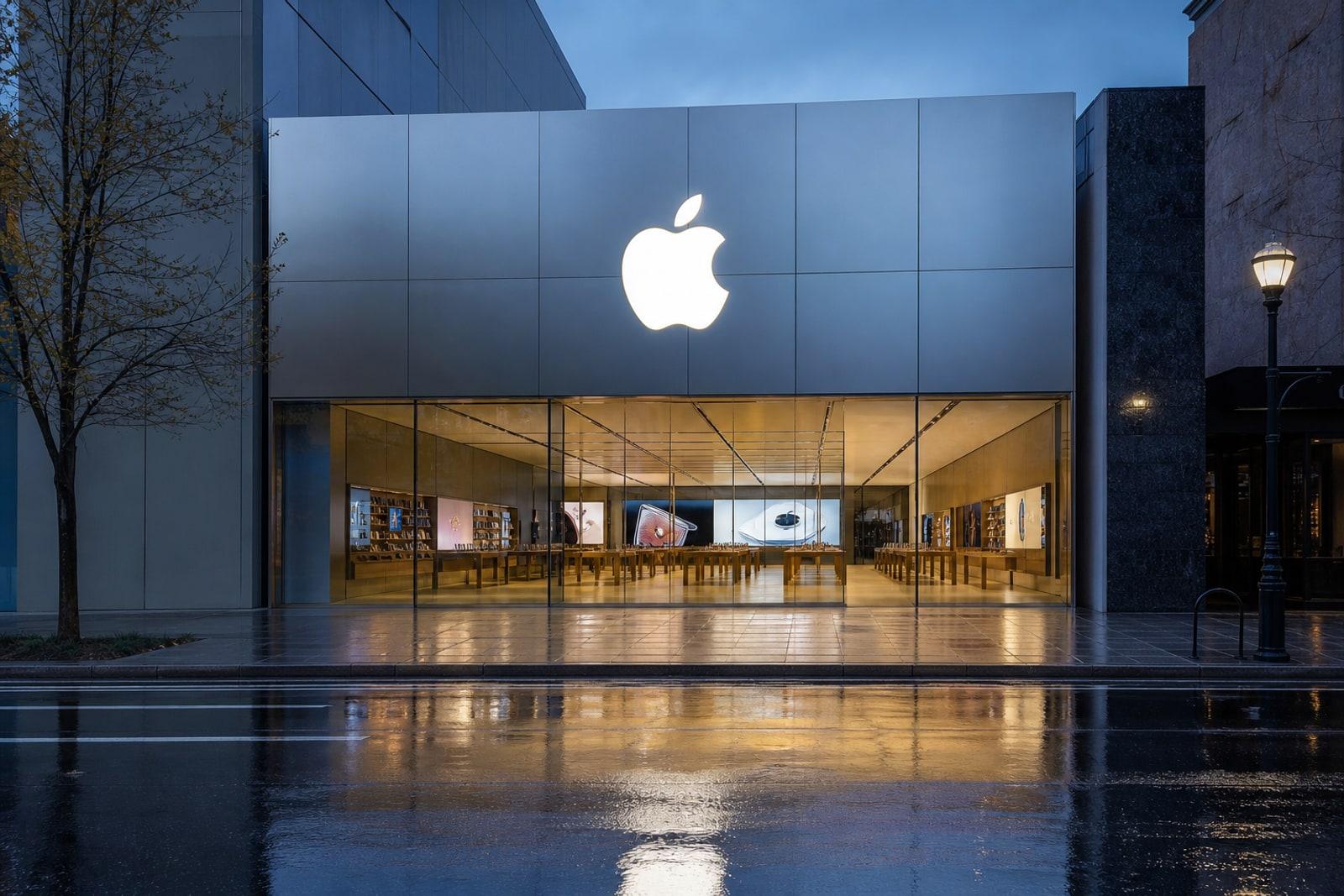
Apple has sued OpenAI, transforming one of the technology industry's most closely watched partnerships into open legal warfare. In a complaint filed on July 10 in the U.S. District Court for the Northern District of California, the iPhone maker accused the artificial-intelligence company and the hardware startup io Products of a coordinated campaign to steal Apple's confidential designs in order to build OpenAI's own consumer gadgets.
The suit is a striking reversal for two companies that, barely two years ago, stood on stage together as allies. It arrives just as OpenAI races to bring its first physical device to market, and it reframes the contest between the world's most valuable hardware maker and the best-known name in generative AI as a courtroom fight over who owns the ideas behind the next generation of consumer technology.
What Apple alleges
Apple's central claim is that the alleged misconduct was not the work of a rogue individual but a pattern that ran through OpenAI's ranks. The company frames it in sweeping terms in its filing.
At every level, from members of its Technical Staff to its Chief Hardware Officer, and in coordination with business partners, OpenAI has been stealing Apple's trade secrets and confidential information.
The complaint singles out two former Apple employees. The most senior is Tang Tan, now OpenAI's chief hardware officer, who spent roughly two decades at Apple and rose to vice president of product design, overseeing the look of the iPhone and Apple Watch before departing in early 2024. Apple alleges that Tan turned OpenAI's recruiting process into an intelligence-gathering operation, instructing candidates who still worked at Apple to smuggle proprietary components into their job interviews.
According to the complaint, Tan "has directed job candidates still working for Apple to bring 'actual parts' from Apple to their interviews for 'show and tell' sessions in which he and his team at OpenAI can elicit still more Apple confidential information." The filing says he used Apple's own confidential information during those conversations to draw out yet more insider knowledge.
The second named figure is Chang Liu, a former Apple electrical engineer of about eight years who left for OpenAI in early 2026. Apple accuses him of downloading confidential hardware files, holding on to a company-issued laptop, and coaching a departing colleague on how to slip past Apple's exit-security checks. The company says more than 400 of its former employees now work at OpenAI, a talent drain it casts as the backdrop to the alleged theft.
From partners to adversaries
The rupture is all the more dramatic given how the relationship began. In June 2024, Apple and OpenAI unveiled a headline partnership at Apple's Worldwide Developers Conference, folding ChatGPT into the new Apple Intelligence system and a reworked Siri. For OpenAI, it was validation on the largest stage in consumer technology; for Apple, it was a way to catch up in a field it had been slow to enter.
That warmth did not last. Apple has since moved to lean on Google's Gemini models for parts of Apple Intelligence, and the two companies have drifted into direct competition over hardware. Notably, Apple's complaint states that the ChatGPT-Siri arrangement "is not at issue here" — a signal that Apple is trying to wall off a commercial relationship even as it accuses its counterpart of industrial espionage.
Also named as a defendant is io Products, the design startup co-founded by Jony Ive, Apple's celebrated former design chief. OpenAI acquired io in 2025 in a deal valued at roughly $6.4 billion, betting that Ive's team could give it the physical products to rival the iPhone. Ive himself is referenced in the filing but is not named as a defendant. Apple is seeking monetary damages, injunctive relief and a court order barring OpenAI from using its trade secrets.
What it signals for the AI race
OpenAI rejected the accusations. In a statement responding to the suit, a spokesperson said the company had done nothing improper.
"We have no interest in other companies' trade secrets," the spokesperson said. "We remain focused on building innovative technology that empowers people everywhere."
Beyond the specific allegations, the case captures a broader unraveling. The AI boom was built on a web of partnerships, licensing deals and shared infrastructure among rivals who needed one another to move fast. As those companies push into each other's core markets — AI labs into hardware, device makers into models — the alliances are fraying into competition, and increasingly into litigation.
- Apple, long the industry's most disciplined guardian of its secrets, is now willing to air an internal talent exodus in public court filings.
- OpenAI, valued as one of the most important companies of the decade, faces a legal challenge that strikes at its ambition to become a hardware maker in its own right.
- The dispute puts a spotlight on how freely engineers and executives move between the industry's giants — and how much proprietary knowledge travels with them.
Trade-secret cases are notoriously fact-intensive and can take years to resolve, and Apple's complaint reflects only one side of a contested story that OpenAI denies. But the mere filing marks a turning point. Two of the most powerful companies in technology, once partners in reshaping the smartphone, are now adversaries in a fight whose outcome could shape who controls the devices — and the data — of the AI era.
Frequently asked
- Where and when did Apple file the lawsuit?
- Apple filed the complaint on July 10, 2026, in the U.S. District Court for the Northern District of California, naming OpenAI and hardware startup io Products as defendants.
- What exactly does Apple allege?
- Apple accuses OpenAI of misappropriating its trade secrets to develop consumer hardware, citing former staff including hardware chief Tang Tan and engineer Chang Liu, and claiming candidates were asked to bring Apple components to interviews.
- Does this affect the ChatGPT-in-Siri partnership?
- Apple's complaint states the ChatGPT-Siri arrangement 'is not at issue here.' The two announced that partnership in 2024, though Apple has since moved toward Google's Gemini for parts of Apple Intelligence.
- How has OpenAI responded?
- OpenAI denied the claims, saying it has 'no interest in other companies' trade secrets' and remains focused on 'building innovative technology that empowers people everywhere.'
Sources(10)
- 1Apple sues OpenAI alleging trade secret theft, says scheme was 'at every level'CNBC · cnbc.com
- 2Apple sues OpenAI over alleged trade secret theftTechCrunch · techcrunch.com
- 3Apple sues OpenAI for trade secret theftAxios · axios.com
- 4Apple sues OpenAI, alleging the AI company stole trade secretsThe Washington Post · washingtonpost.com
- 5Apple accuses OpenAI of using stolen trade secrets to create its upcoming AI gadgets in new lawsuitCNN Business · cnn.com
- 6Apple accuses OpenAI, and former design star Jony Ive's io Products firm, of stealing hardware trade secrets in blockbuster lawsuitFortune · fortune.com
- 7Apple sues OpenAI over alleged theft of trade secretsTom's Hardware · tomshardware.com
- 8Apple sues OpenAI, accuses ex-employees of stealing trade secrets9to5Mac · 9to5mac.com
- 9Apple announces OpenAI partnership, Siri and iOS 18 upgrades at WWDC 2024Semafor · semafor.com
- 10Apple unveils long-awaited AI strategy, partnership with OpenAI at WWDCAl Jazeera · aljazeera.com
Related by topic