Press freedom
Luxembourg gives journalists a legal right of access to official information
The Chamber of Deputies adopted Bill 8421 by 53 votes to none, for the first time obliging public bodies to release documents to professional journalists.
By Léa Hoffmann · · 4 min read
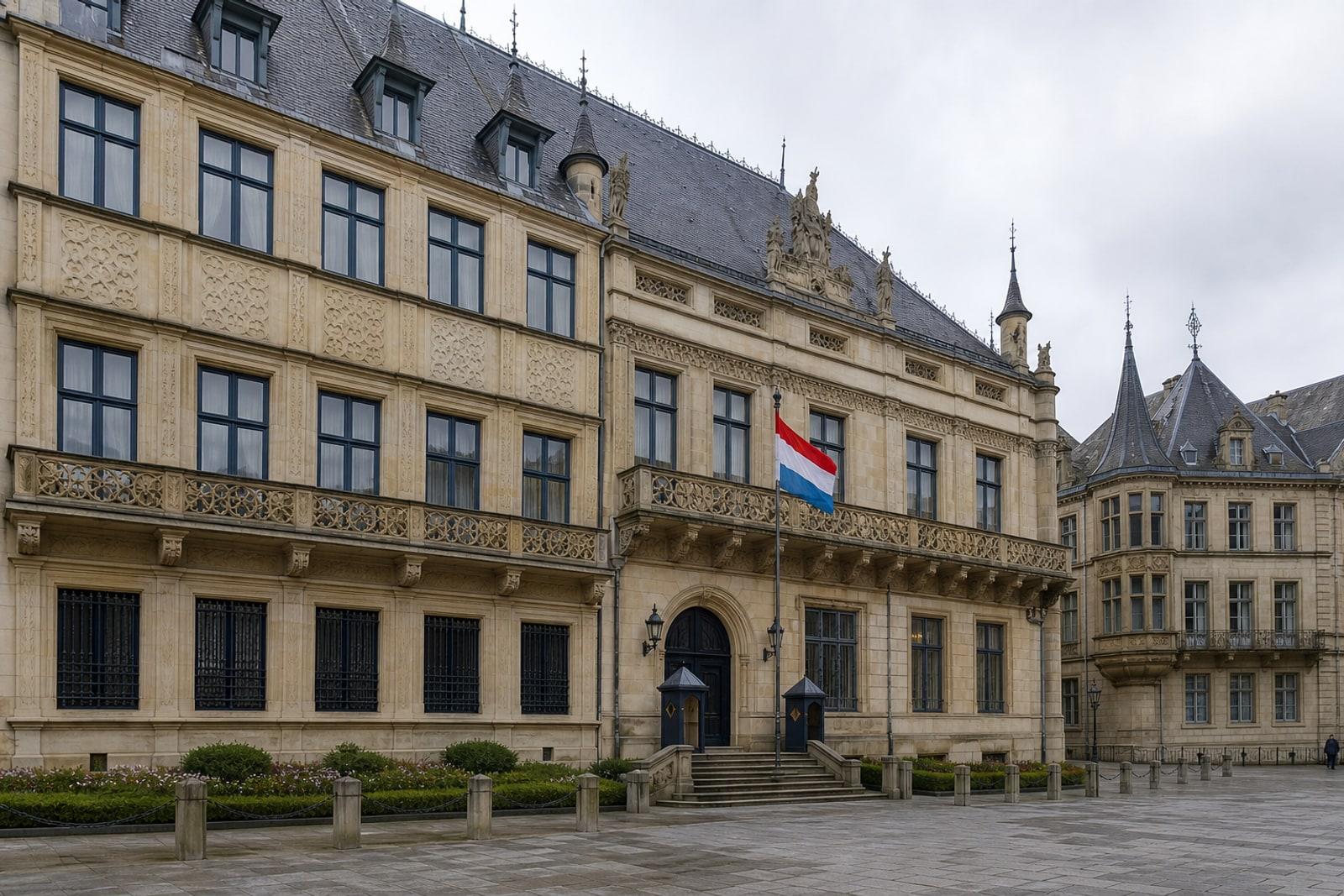
Luxembourg's parliament has written into law a right that journalists in the Grand Duchy had long asked for but never held: a codified entitlement to obtain information from the state. On Tuesday 7 July 2026, the Chamber of Deputies adopted Bill 8421 on the promotion of professional journalism and democratic debate by 53 votes in favour, none against and seven abstentions, according to the parliament's own record of the ballot. Deputies also moved to waive the customary second vote, clearing the text for enactment.
The reform is a rare, concrete expansion of press freedom at a moment when the trend across much of the world runs the other way. Rather than a declaration of principle, it creates specific obligations that public administrations will have to meet when a reporter asks for a document — and a framework for challenging them when they refuse.
What the law changes
Bill 8421 does not stand alone. It amends three existing texts at once: the 2004 law on freedom of expression in the media, the 2018 law on transparent and open administration, and the 2021 law on aid to professional journalism. Together the changes recognise, for the first time, the particular role of professional journalists who need access to information to carry out a public-interest mission, and they place a corresponding obligation on public bodies to hand over the documents required.
Practically, the text widens what counts as a public record and tightens how requests are handled. Among the concrete obligations on administrations:
- A broader definition of a "document", covering any recorded information regardless of its format.
- A duty to help applicants identify the documents they are seeking.
- An acknowledgement of receipt that states an estimated processing time for each request.
- Clearer procedures for refusals and for appealing them.
- An expanded list of bodies bound by the transparency rules.
- Priority for requests coming from journalists.
Where information is protected by law, a body may still release a document with the sensitive passages redacted, rather than withholding it in full.
Deadlines, exemptions and the fine print
The law stops short of imposing a single fixed statutory deadline. Response times, the parliamentary file notes, "may vary depending on the research to be carried out", with information to be provided within reasonable limits given the time pressures under which journalists work. Crucially, the text treats prolonged silence from an administration as a refusal to communicate — a trigger that opens the door to appeal rather than leaving a request to lapse unanswered.
Not every safeguard survived the drafting unchanged. During committee work, some deputies pushed for refusals to be obligatorily justified and for a form of emergency appeal procedure when a journalist contests a decision to withhold documents on a time-sensitive story. Those debates underline that the new right, while real, will be tested in practice by how administrations interpret "reasonable" delay and how readily they invoke the exemptions the law preserves.
How the government frames it
Ministers cast the reform as a response to the Luxembourg Press Council, which had campaigned for a dedicated access right, and as a step to bring national law into line with the Council of Europe's Convention on Access to Official Documents, known as the Tromsø Convention. Prime Minister Luc Frieden, who tabled the bill together with Media Minister Elisabeth Margue, framed access to information as a democratic foundation.
A strong democracy relies on free, pluralistic and accessible information.
Presenting the package when it was introduced, Frieden argued that press freedom is "a keystone of our democratic system" and that the government had a duty to keep protecting journalists' work while allowing them access to information "that respects the principle of a transparent and open administration". Margue described the measures as "a coherent package" answering both the Press Council's demands and the government's aim of a pluralistic media environment.
Money, definitions and where Luxembourg stands
The bill also reshapes the state's financial support for the sector, five years after the 2021 aid law took effect. It introduces a de minimis aid stream for innovative or smaller-scale projects, removes the different aid ceilings that had applied depending on the type of publication, indexes all aid amounts, and loosens eligibility for media start-ups. In parallel, it updates the definition of a professional journalist on the Press Council's recommendation: journalism must be the applicant's main profession, practised for at least three months before a press card is issued, and it is incompatible with any advertising-related activity.
The reform lands as Luxembourg sits near the top of international press-freedom rankings. In the 2026 World Press Freedom Index compiled by Reporters Without Borders, the Grand Duchy ranked 9th of 180 countries with a score of 84.14, up from 13th place and a score of 83.04 a year earlier. Access to public information has been one of the softer spots behind those headline figures — the gap the new law is meant to close. Whether it does will depend less on the text than on the first administrations that receive a formal request under it, and on how quickly, and how fully, they answer.
Frequently asked
- What does Bill 8421 give journalists in Luxembourg?
- It creates a statutory right for professional journalists to access information and documents held by public bodies, backed by obligations on administrations to help identify records, acknowledge requests with an estimated processing time, and set out clearer refusal and appeal procedures.
- Is there a deadline for public bodies to respond?
- The law sets no single fixed deadline; response times may vary with the research required, but they must stay within reasonable limits, and prolonged silence is treated as a refusal that can be appealed.
- How was the law passed?
- The Chamber of Deputies adopted it on 7 July 2026 by 53 votes in favour, none against and seven abstentions, and deputies moved to waive the second constitutional vote.
- How does Luxembourg rank on press freedom?
- In Reporters Without Borders' 2026 World Press Freedom Index, Luxembourg ranked 9th of 180 countries with a score of 84.14, up from 13th place in 2025.
Sources(9)
- 1Luxembourg Adopts Law Strengthening Journalism, Access to InformationChronicle.lu · chronicle.lu
- 2Introduction of a draft law to grant journalists access to information and to promote professional journalism and democratic debateThe Luxembourg Government (gouvernement.lu) · gouvernement.lu
- 3Dépôt d'un projet de loi visant à introduire l'accès à l'information pour les journalistes (communiqué, quotes FR)The Luxembourg Government (gouvernement.lu) · gouvernement.lu
- 4Séance publique du 7 juillet 2026 — journalisme, gardiennage, femmes en prisonChambre des Députés du Grand-Duché de Luxembourg · chd.lu
- 5Dossier parlementaire 8421 (vote result)Chambre des Députés du Grand-Duché de Luxembourg · chd.lu
- 6L'accès des journalistes aux informations des institutions publiquesChambre des Députés du Grand-Duché de Luxembourg · chd.lu
- 7Un accès à l'information pour les journalistesLe Quotidien · lequotidien.lu
- 8World Press Freedom Index (Luxembourg rankings 2025/2026)Wikipedia / RSF · en.wikipedia.org
- 92026 RSF Index: press freedom at a 25-year lowReporters Without Borders (RSF) · rsf.org
Related by topic