EU consumer law
EU Parliament approves air passenger rights overhaul, keeps three-hour delay payout
MEPs backed the first revision of the bloc's flight-compensation rules in over a decade by 646 to 12, preserving the three-hour delay threshold and adding baggage, rebooking and 'no-show' protections.
By Camille Reuter · · 4 min read
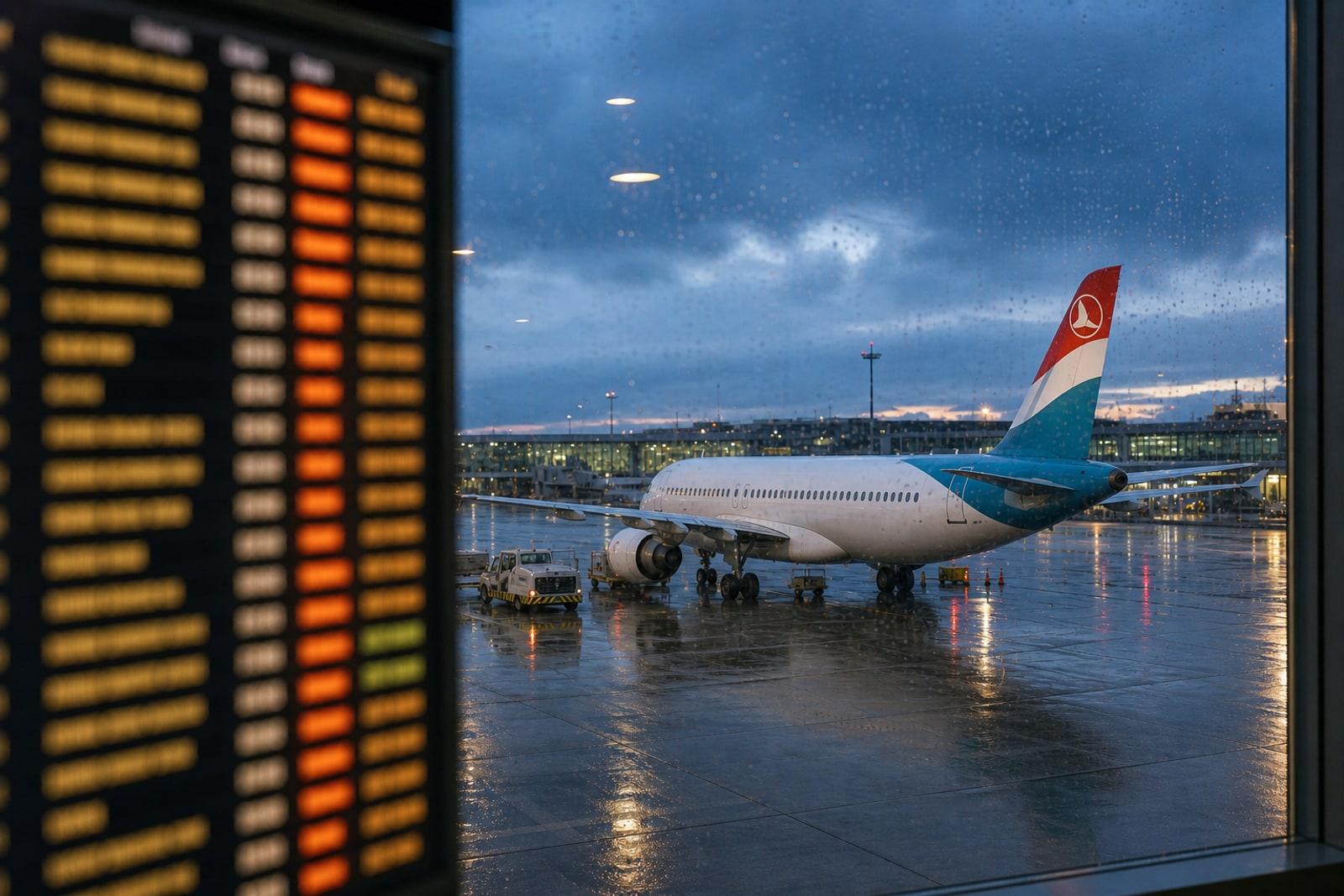
The European Parliament on Tuesday approved the first major overhaul of the European Union's air passenger rights in more than two decades, ending a 13-year deadlock and preserving the right to compensation for flights delayed by three hours or more.
Meeting in Strasbourg, MEPs backed the revised regulation by 646 votes to 12, with three abstentions. The reform updates Regulation (EC) No 261/2004, the rulebook in force since 2005 that entitles travellers to cash compensation, care and re-routing when flights are badly disrupted. The revision had been stuck since the European Commission first proposed it in 2013, and was unblocked only when Parliament and member states struck a provisional deal on 15 June.
For Luxembourg, where the Findel airport carried more than five million passengers for the first time in 2024, the outcome matters to cross-border commuters and holidaymakers alike: the rules apply to every flight departing an EU airport and to flights into the bloc on EU carriers such as Luxair.
What stays and what changes on compensation
The most closely watched question was whether the three-hour threshold would survive. Member states had earlier pushed to raise it to four or even six hours, a change consumer groups said would have stripped compensation rights from most delayed passengers. Parliament held firm, and the shorter threshold remains.
Distance-based compensation levels are unchanged:
- €250 for flights up to 1,500 km;
- €400 for flights of 1,500–3,500 km and intra-EU flights over 1,500 km;
- €600 for other longer flights.
On the longest routes, over 3,500 km, airlines may halve the payout to €300 where they offer prompt re-routing or the delay is no more than four hours; the full €600 applies once a delay passes four hours. Compensation is still owed for cancellations and denied boarding, unless a carrier proves "extraordinary circumstances" — a category now set out in a defined list covering severe weather and natural disasters, war, unruly passengers and certain strikes affecting airports, air navigation or ground handling.
The reform also tightens the claims process. Airlines must send passengers electronic information on how to claim within four days of a disrupted journey; travellers then have nine months to lodge a claim, and carriers have 30 days to pay or explain why nothing is due.
Baggage, rebooking and 'no-show' penalties
Passengers keep the right to carry one free personal item measuring up to 40 by 30 by 15 centimetres. To curb hidden fees, airlines will have to display the fare inclusive of carry-on baggage from the start of the booking process, on their own sites and on third-party platforms, though cheaper tickets remain permitted for travellers who choose to fly without hand luggage.
The rules also outlaw the so-called "no-show" practice: carriers can no longer cancel the return leg of a two-way ticket, or charge an extra fee, simply because a passenger missed the outbound flight. When a flight is cancelled, travellers retain the right to reimbursement or re-routing, and families gain the right to have young children seated next to an accompanying adult at no additional cost.
"Today's vote is a win - for both passengers and European aviation. After more than 13 years of deadlock, we are finally replacing uncertainty with clear rules, stronger rights and confidence. When people take a plane, their rights will not be left behind on the ground," said Andrey Novakov, the Bulgarian MEP who steered the file through Parliament.
What it means at Findel
For travellers passing through Luxembourg's only airport, the practical effect is continuity on the headline right — a three-hour delay still triggers compensation — alongside clearer procedures and firmer baggage transparency. That reassurance is significant for a country whose labour market draws in more than 200,000 cross-border workers and whose residents are frequent flyers to European hubs and holiday destinations.
Virginijus Sinkevičius, a Lithuanian MEP and vice-chair of Parliament's transport committee, framed the vote as a defensive win. "We have good news for everyone who flies. We worked hard to make sure passengers did not lose the rights they already had, while securing better protection for families, people with reduced mobility, and others who need it most," he said.
Consumer advocates welcomed the retention of the three-hour rule but warned that rights on paper mean little without enforcement. "Now, we need to make sure these rights are respected and that consumers have access to redress because only 38 percent of eligible passengers exercise their rights today," said Agustín Reyna, director general of the European consumer group BEUC. Airline lobby Airlines for Europe, by contrast, has criticised the new hand-luggage transparency requirements.
Where the reform stands
Tuesday's vote is not the final step. The text must still be formally adopted by the Council of the EU, expected in the coming weeks, before publication in the bloc's Official Journal. The regulation then enters into force 20 days after publication but applies only 12 months later, giving airlines and national authorities a year to prepare. On that timetable, the new protections are set to reach passengers in 2027.
European Commissioner for Sustainable Transport and Tourism Apostolos Tzitzikostas had earlier called the June agreement "a major step forward for European passengers and for Europe's aviation sector." For now, the rights travellers already know remain in place — with the biggest changes still a year or more away from the check-in desk.
Frequently asked
- Does the three-hour delay rule for compensation still apply?
- Yes. Parliament rejected proposals to raise the threshold to four or six hours, so passengers remain entitled to compensation when a flight arrives at least three hours late, subject to extraordinary-circumstances exceptions.
- How much compensation can I claim?
- €250 for flights up to 1,500 km, €400 for flights of 1,500–3,500 km (and intra-EU flights over 1,500 km), and €600 for other longer flights. On routes over 3,500 km the payout can be halved to €300 if the airline offers prompt re-routing or the delay is no more than four hours.
- When do the new rules take effect?
- After Parliament's approval, the Council must formally adopt the text. The regulation enters into force 20 days after publication in the Official Journal but applies 12 months later, meaning the changes are expected to reach passengers in 2027.
- Do the rules apply to flights from Luxembourg's Findel airport?
- Yes. The regulation covers all flights departing an EU airport and flights into the EU on EU carriers, so departures from Findel and services by carriers such as Luxair are included.
Sources(8)
- 1European Parliament achieves upgrade to air passenger rightsEuropean Parliament · europarl.europa.eu
- 2Commission welcomes landmark agreement on revised air passenger rightsEuropean Commission — Mobility and Transport · transport.ec.europa.eu
- 3Council and Parliament reach landmark agreement on stronger EU air passenger rightsCouncil of the European Union · consilium.europa.eu
- 4European Parliament approves free cabin luggage and new delay compensation rules for air passengersEuronews · euronews.com
- 5What Europe's new deal for airline passenger rights means for youThe Local · thelocal.fr
- 6EU countries are pushing to a rollback of key air passenger rights, consumer groups warnBEUC — The European Consumer Organisation · beuc.eu
- 7Findel Airport on the rise: passenger traffic reaches record levelsLuxtoday · luxtoday.lu
- 8Annual Reportslux-Airport · lux-airport.lu
Related by topic