Disaster
Venezuela earthquake toll climbs to 3,535 as recovery falters
Two weeks after twin quakes struck north-central Venezuela, the official death toll has reached 3,535, with nearly 18,000 people homeless and criticism mounting over the state's response.
By Léa Hoffmann · · 4 min read
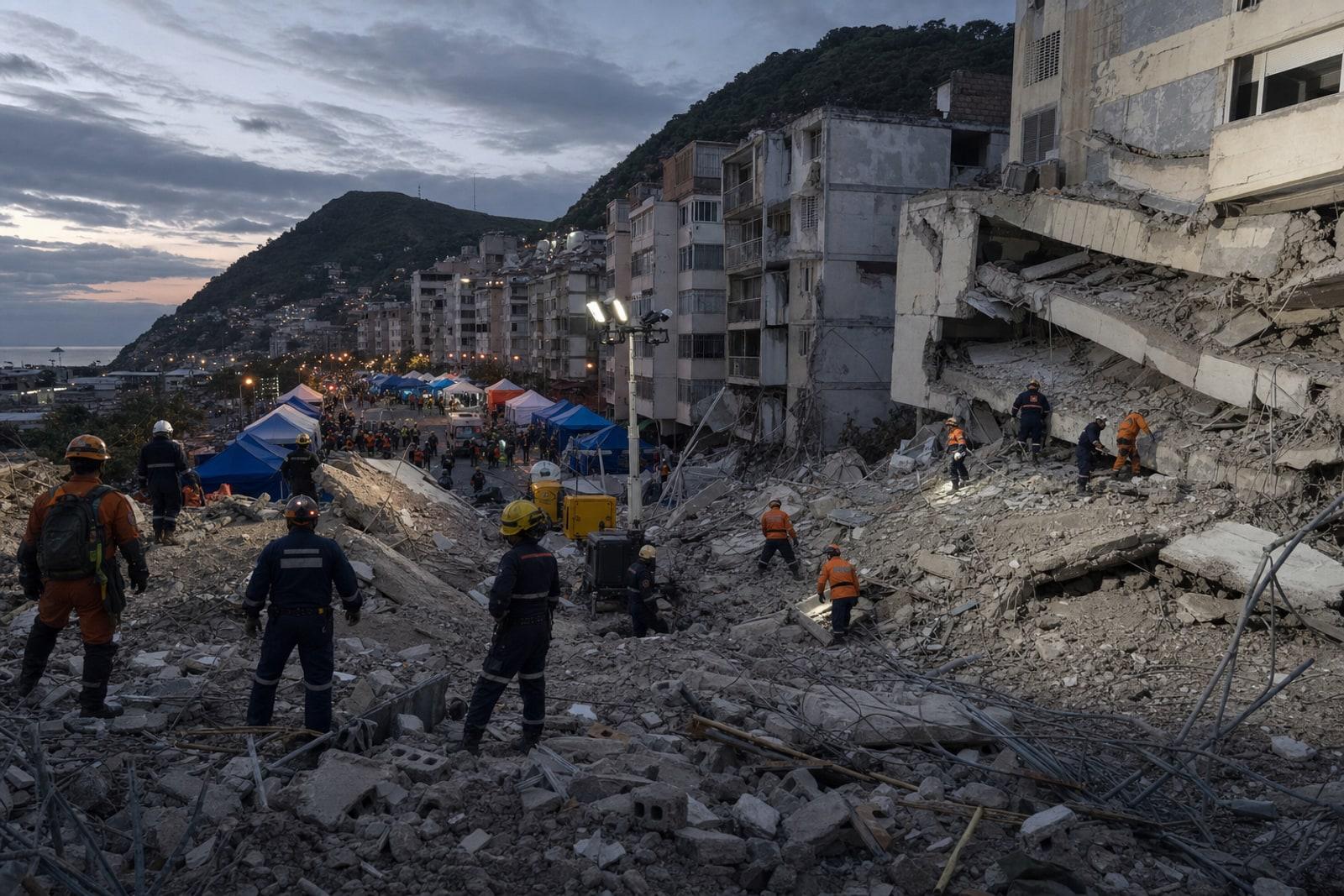
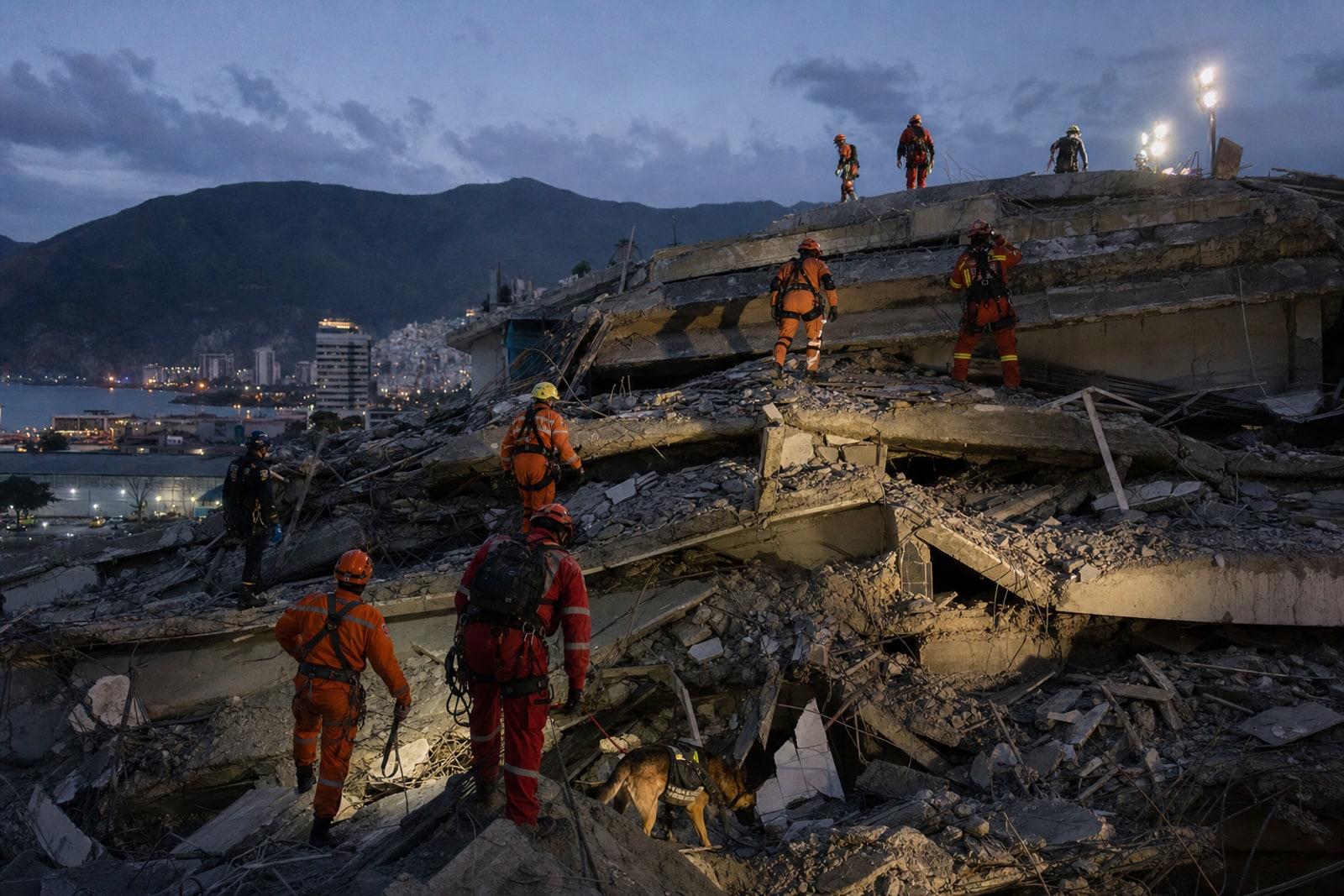
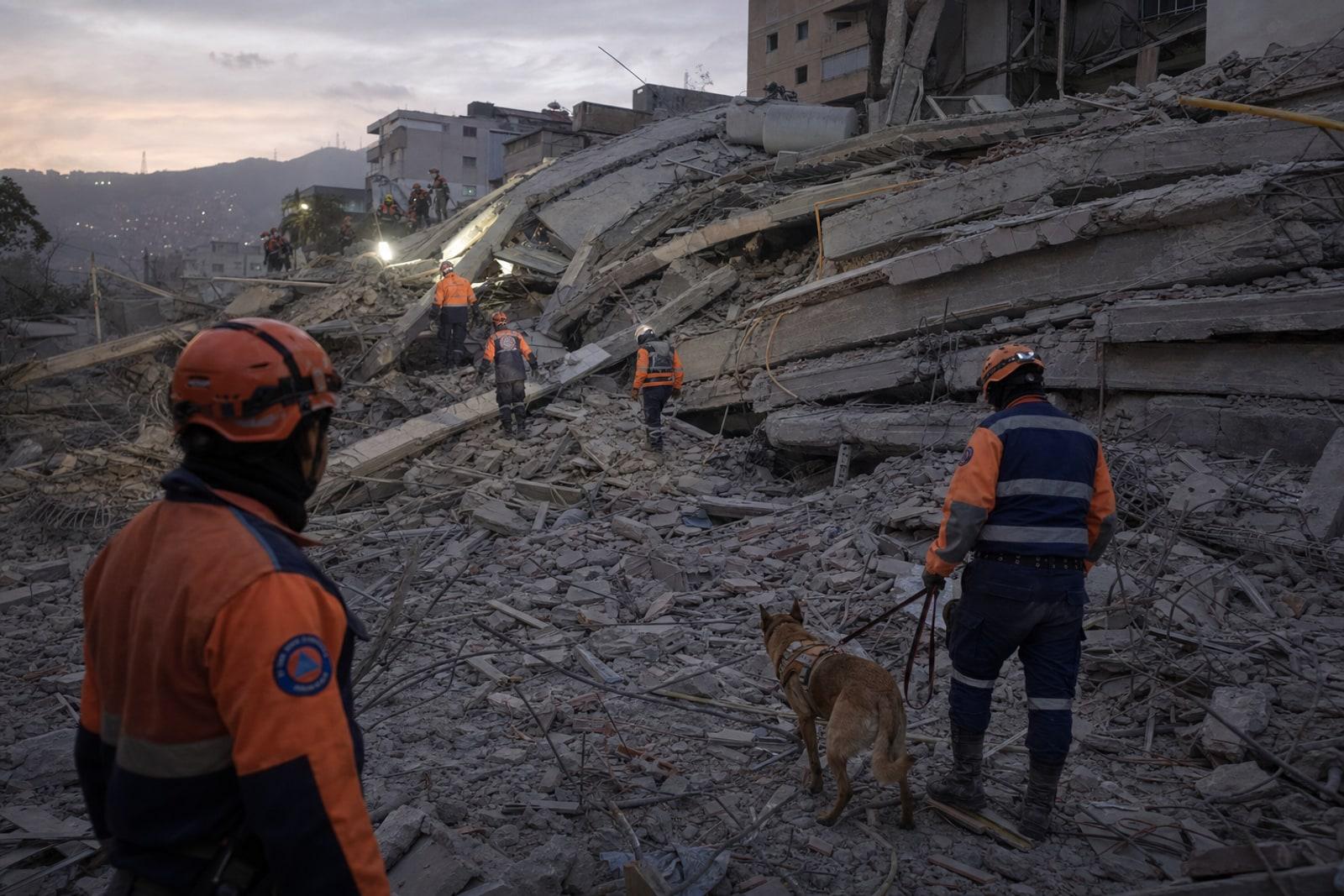
The death toll from the twin earthquakes that struck north-central Venezuela on 24 June has risen to 3,535, the country's authorities said, as tens of thousands of people remained displaced and international relief teams pressed on with the search for the missing.
Jorge Rodríguez, the president of Venezuela's National Assembly, announced the latest official tally on Monday, according to reporting by Reuters and Al Jazeera. Alongside the dead, he said, 16,740 people had been injured and 17,854 left without housing. The figures underscore the scale of one of the deadliest earthquakes in the Americas in recent memory, concentrated in and around the capital, Caracas, and the coastal state of La Guaira.
A rare double earthquake
The disaster began on the evening of 24 June, when a magnitude 7.2 tremor was followed within seconds by a magnitude 7.5 mainshock — a rare sequence seismologists call an earthquake doublet. The United States Geological Survey located the larger quake about 28 kilometres south-east of Yumare, in Yaracuy state west of Caracas, at a shallow depth of roughly 10 kilometres. It attributed the rupture to strike-slip faulting along the San Sebastián fault system, near the boundary between the Caribbean and South American tectonic plates.
Because the quakes were shallow and close to densely populated areas, shaking was severe across a wide arc of north-central Venezuela. The USGS listed strong tremors around Puerto Cabello, Maiquetía, San Felipe, Valencia, Los Teques and the capital region. A tsunami advisory was briefly issued for the southern Caribbean and then lifted; a wave of only a few centimetres was recorded in Puerto Rico.
The confirmed death toll has climbed steadily as rescuers reached collapsed buildings: it stood at around 2,295 in the immediate aftermath and passed 1,700 confirmed within days before reaching 3,535 by early July. The USGS's automated fatality modelling has warned the final figure could be far higher, and thousands of people are still listed as missing.
Homeless, injured and afraid
Beyond the dead, the human cost is measured in ruined homes. Nearly 18,000 people have lost their housing, and Venezuela's authorities said at least 12,800 were sheltering in about 80 emergency shelters across Caracas and La Guaira. A satellite analysis by researchers Corey Scher and Jamon Van Den Hoek of Oregon State University estimated that close to 59,000 buildings were likely damaged or destroyed.
Aid workers say the emergency is now shifting from rescue to a grinding recovery, with acute risks in the crowded shelters where survivors have congregated.
"Moving from having a house, from having a home, to being in a shelter or temporary accommodation is not going to be easy." That warning came from Vanessa May, head of the UN Office for the Coordination of Humanitarian Affairs in Venezuela, quoted by UN News. Medical staff have flagged a looming public-health threat as injured and displaced people remain in close quarters with limited clean water. Eugenio Cova, who heads the trauma unit at Hospital José Gregorio Hernández, told Al Jazeera that "the issue we foresee just around the corner is the infections that patients who have been exposed to the disaster for the longest time might bring."
An international response under strain
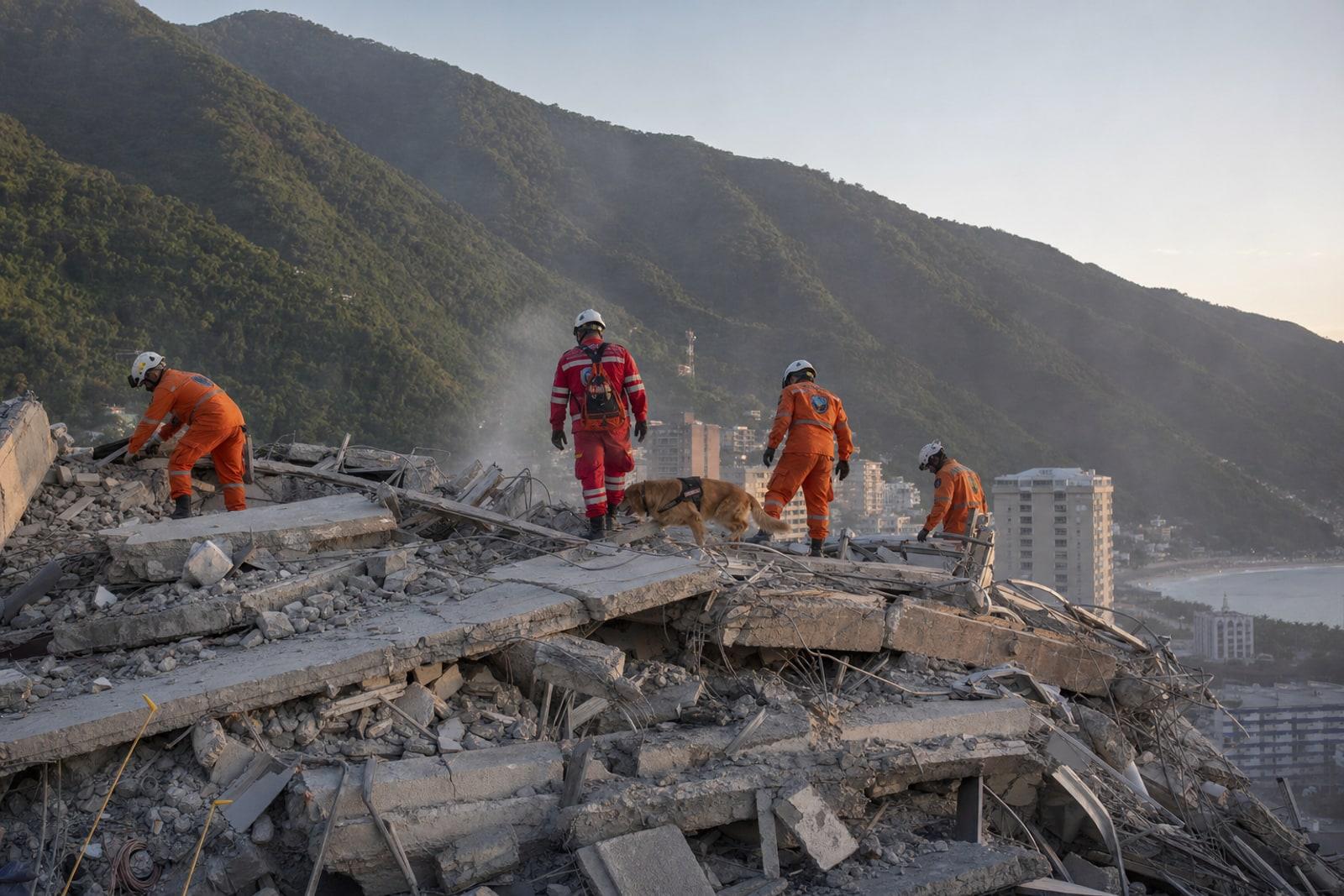
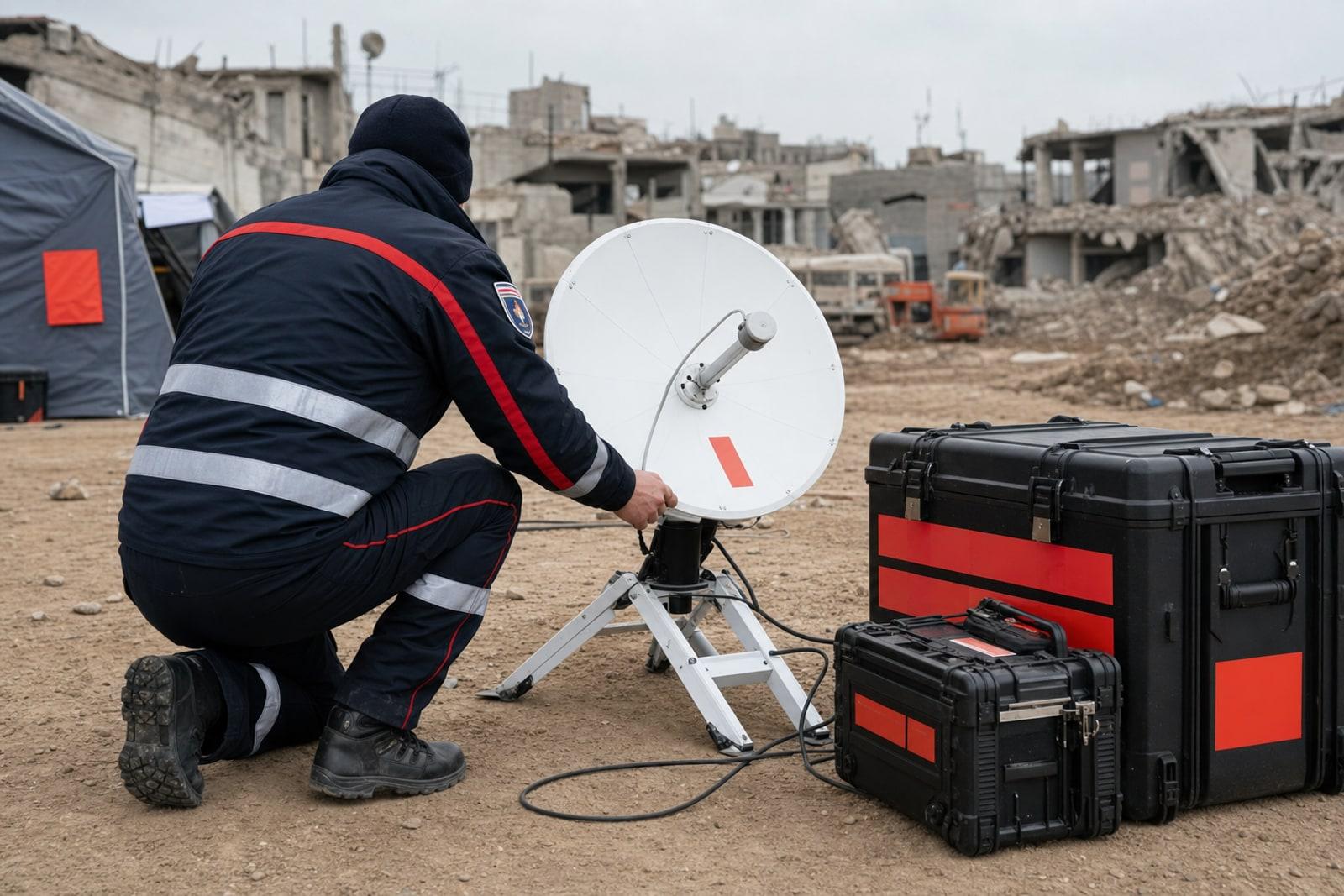
The United Nations and international partners have mounted a large operation. Reporting cited more than 2,000 rescue workers from 27 countries and scores of search-and-rescue dogs deployed across the disaster zone, with assistance centres set up in La Guaira. The Pan American Health Organization and the World Health Organization supplied body bags, mortuary equipment and technical guidance, while the UN said it and Venezuelan authorities had agreed to procure 10,000 body bags — a stark measure of the anticipated toll.
Gianluca Rampolla, the UN's resident and humanitarian coordinator in Venezuela, said aid teams were still operating in a high-risk environment. The relief effort has drawn assistance from across the Americas and Europe, with governments and organisations offering search teams, field hospitals and supplies.
Priorities identified by responders include:
- Emergency shelter and temporary accommodation for the displaced;
- Clean water, sanitation and disease prevention in overcrowded shelters;
- Medical care for thousands of injured survivors;
- Debris removal and structural assessment of damaged homes, schools and hospitals.
The catastrophe has also reignited scrutiny of the government of acting President Delcy Rodríguez, who has defended the official response amid accusations of delay. Humanitarian groups, including the International Rescue Committee, and independent analysts have questioned how quickly the state moved.
In a government in any other country, the first responder should be the state. In the case of Venezuela, the state has been the last responder.
That assessment came from Carolina Jiménez, president of the Washington Office on Latin America, speaking to Al Jazeera. As the recovery drags into its third week, officials have cautioned that both the death toll and the number of homeless could rise further before the scale of the disaster is fully known.
Frequently asked
- How many people died in the 2026 Venezuela earthquakes?
- As of early July 2026, Venezuela's National Assembly president Jorge Rodríguez put the official death toll at 3,535, with 16,740 injured, according to Reuters and Al Jazeera. Officials have warned the figure could rise as the search for the missing continues.
- Where and when did the earthquakes strike?
- The quakes hit north-central Venezuela on 24 June 2026. A magnitude 7.2 tremor was followed within seconds by a magnitude 7.5 mainshock, located by the USGS about 28 km south-east of Yumare in Yaracuy state, west of Caracas. Caracas and coastal La Guaira were hardest hit.
- How many people have been displaced?
- Authorities said 17,854 people were left without housing — nearly 18,000 — with at least 12,800 sheltering in about 80 emergency shelters. Satellite analysis estimated roughly 59,000 buildings were damaged or destroyed.
- What does the international relief effort involve?
- The UN, PAHO and WHO are coordinating aid alongside more than 2,000 rescue workers from 27 countries. Support includes search-and-rescue teams, medical care, shelter, water and sanitation, and mortuary supplies, including 10,000 body bags.
Sources(9)
- 1Venezuela earthquake toll rises to 3,535; 18,000 remain displacedReuters (via ThePrint) · theprint.in
- 2Venezuela earthquakes death toll jumps to more than 3,500Al Jazeera · aljazeera.com
- 3Venezuela's earthquake death toll reaches 3,535 as survivors look for missing relativesNBC News · nbcnews.com
- 4Venezuela earthquake death toll rises to 3,535 as thousands remain displacedCBC News · cbc.ca
- 5Venezuela earthquake death toll passes 1,700 as UN continues to scale up responseUN News · news.un.org
- 6M 7.5 - 28 km SE of Yumare, VenezuelaUS Geological Survey · earthquake.usgs.gov
- 7June 24-25, 2026 — Venezuela rocked by 7.5 and 7.2 magnitude earthquakesCNN · cnn.com
- 8Untold casualties and humanitarian needs: What to know a week from Venezuela's quakesNPR · npr.org
- 92026 Venezuela earthquakesWikipedia · en.wikipedia.org
Related by topic