Disaster response
Luxembourg joins Venezuela quake relief as death toll tops 1,400
The grand duchy has sent a CGDIS team and its emergency.lu satellite system to the disaster zone, and says 22 nationals registered in Venezuela have not sought consular help.
By Camille Reuter · · 4 min read
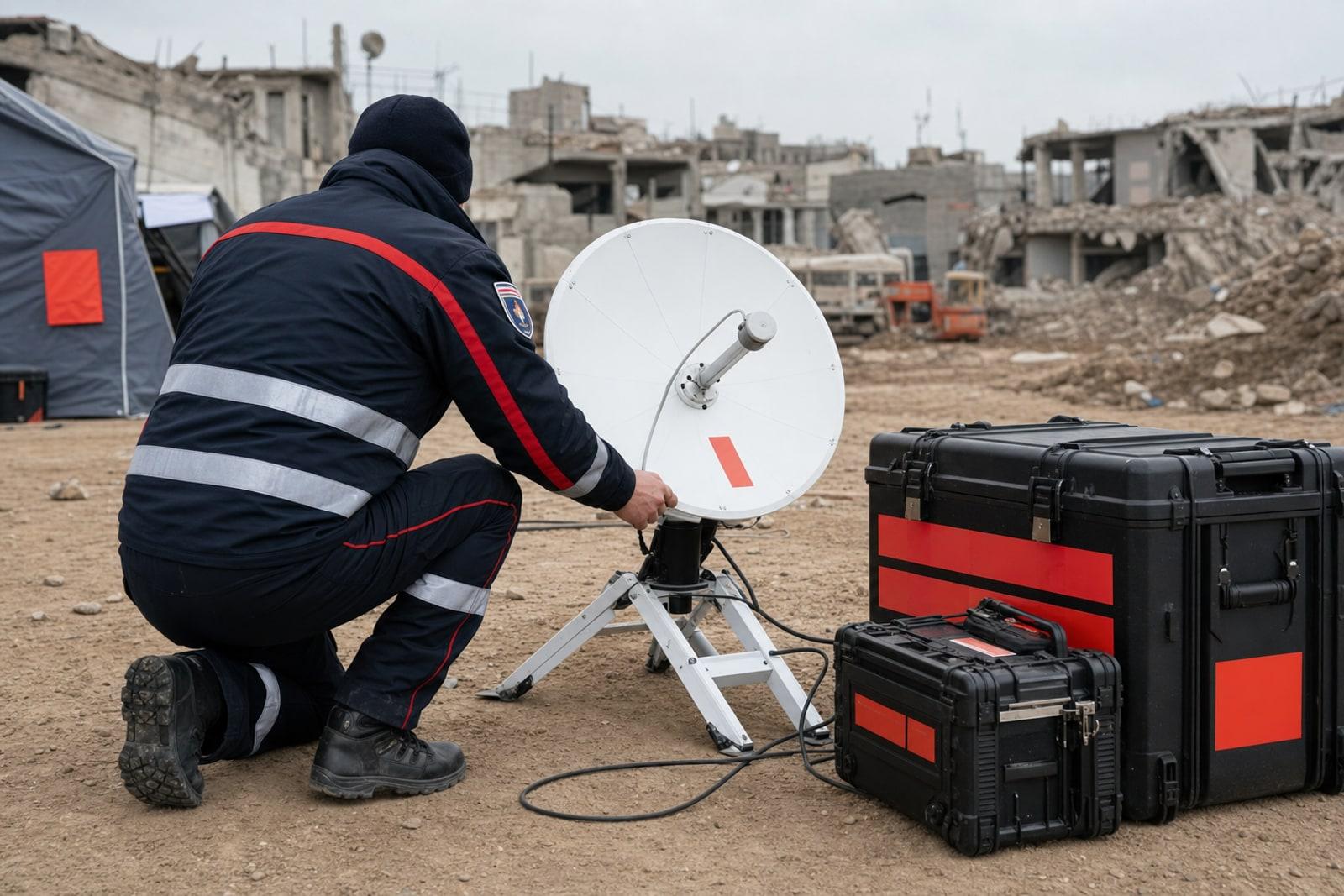
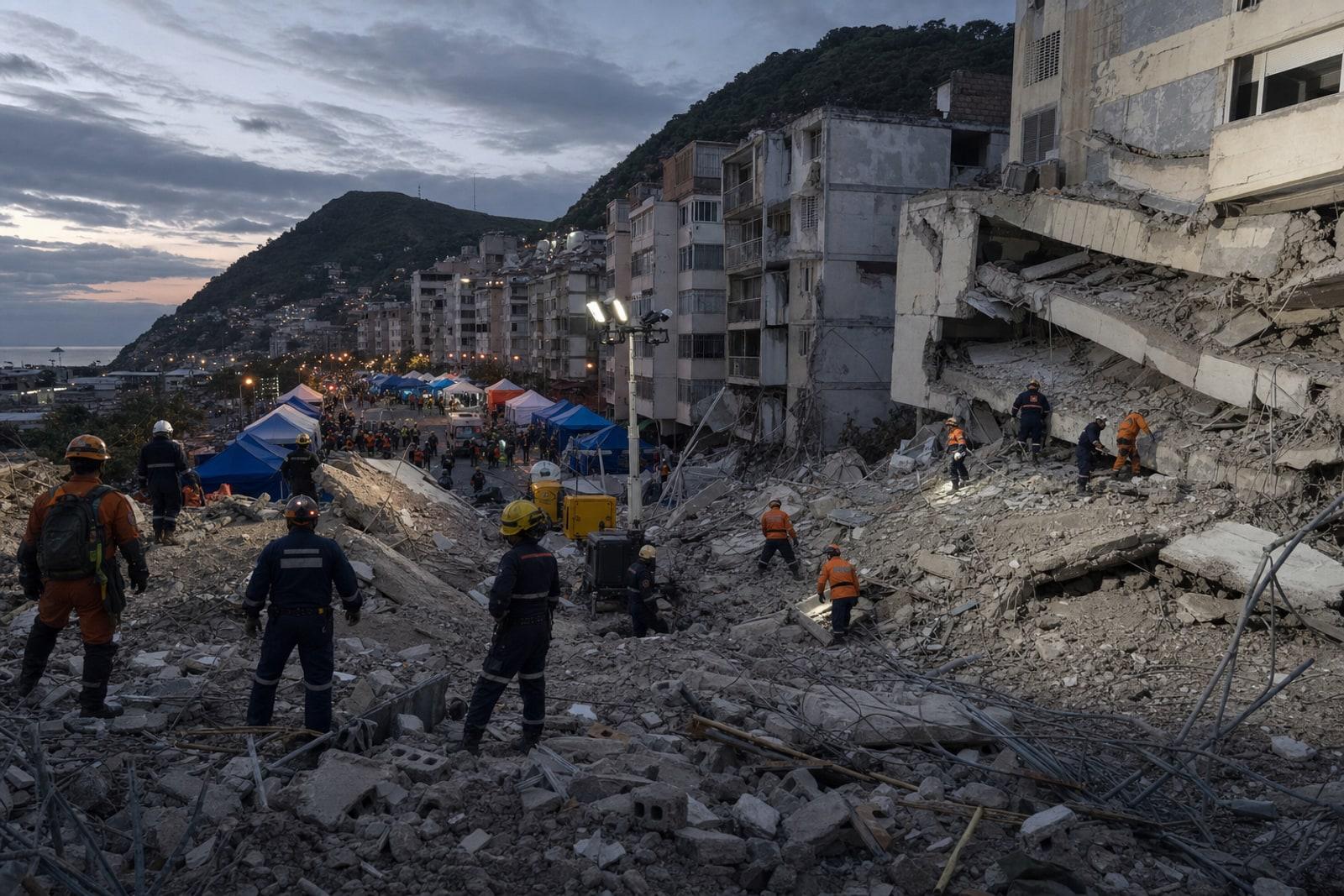
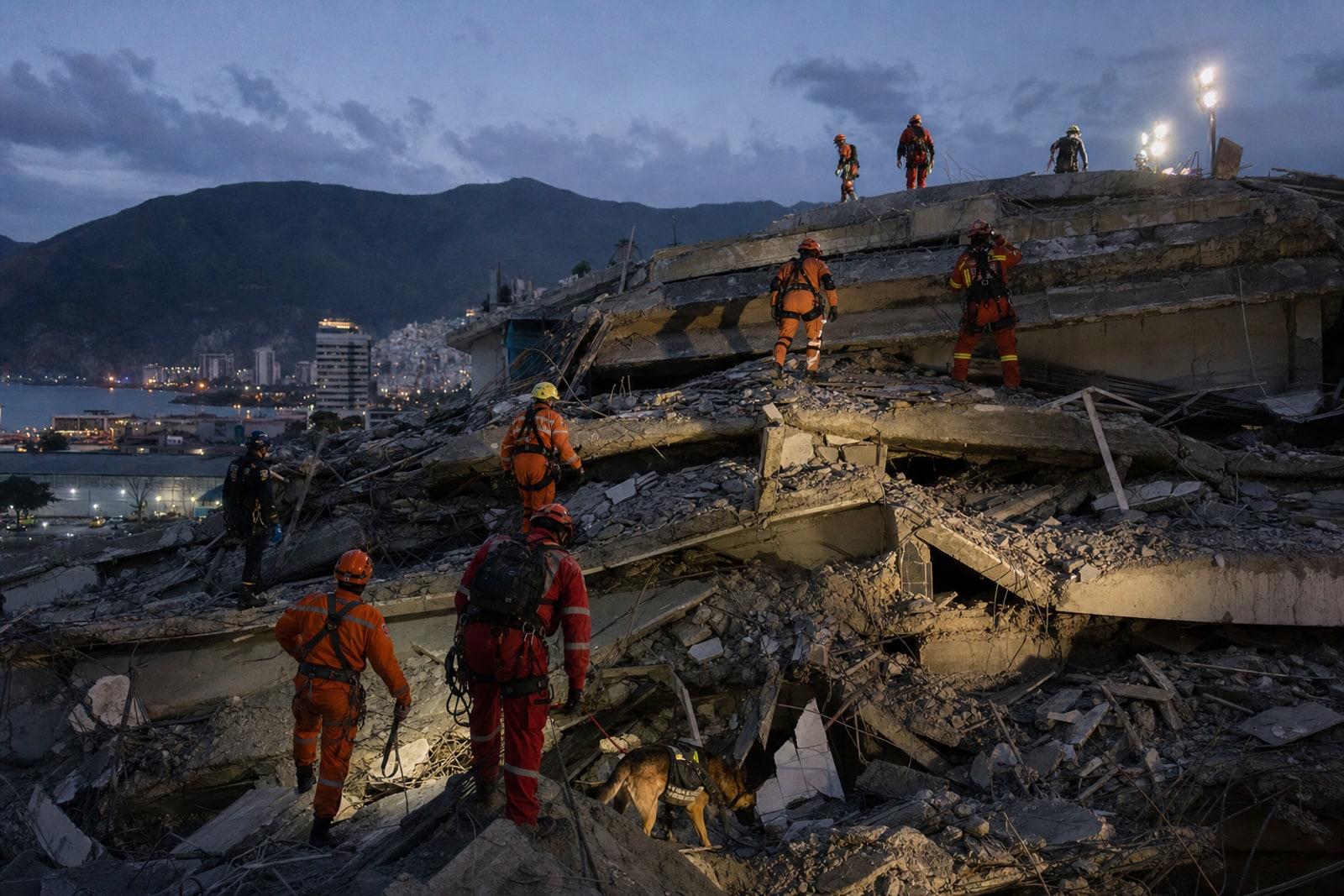
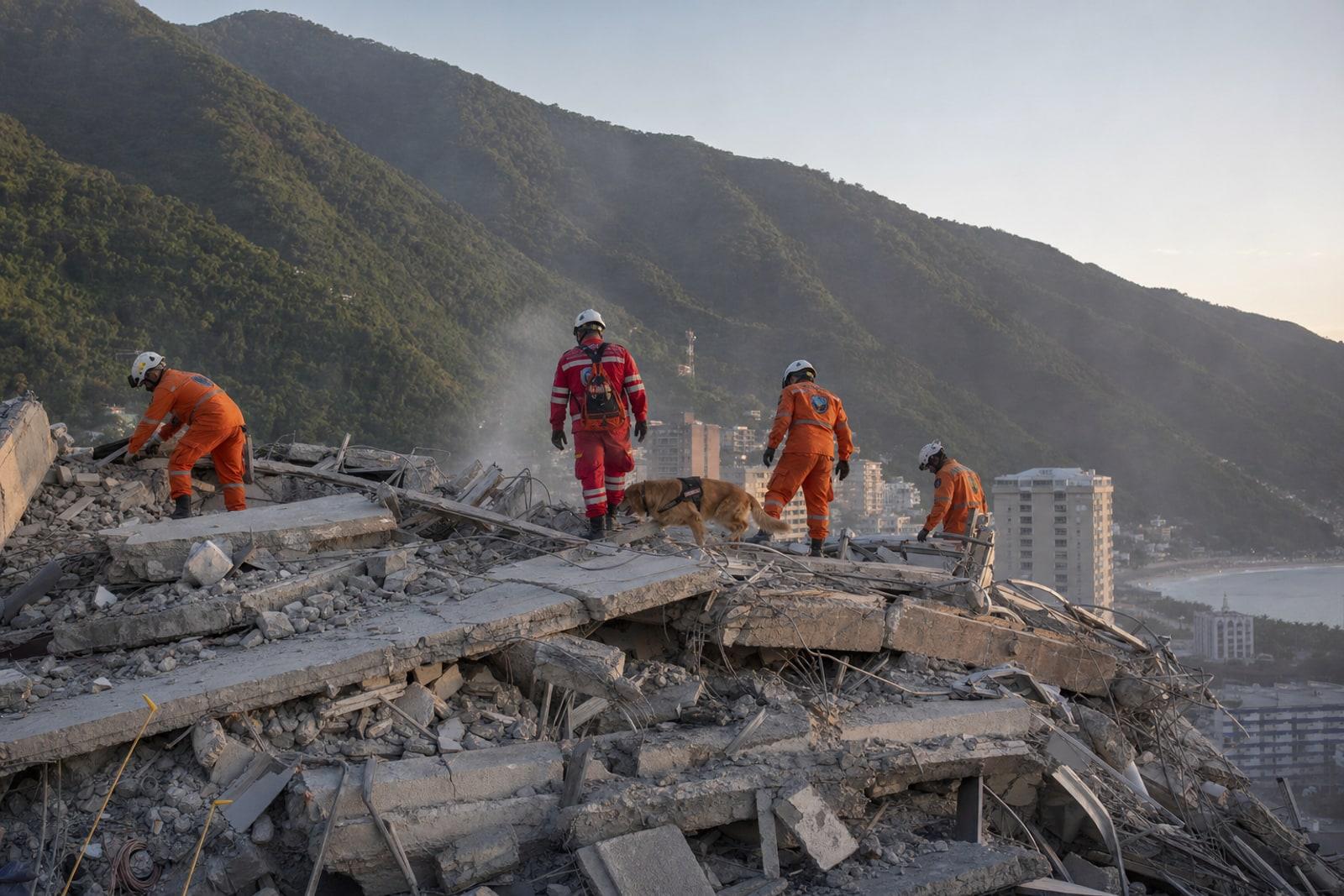
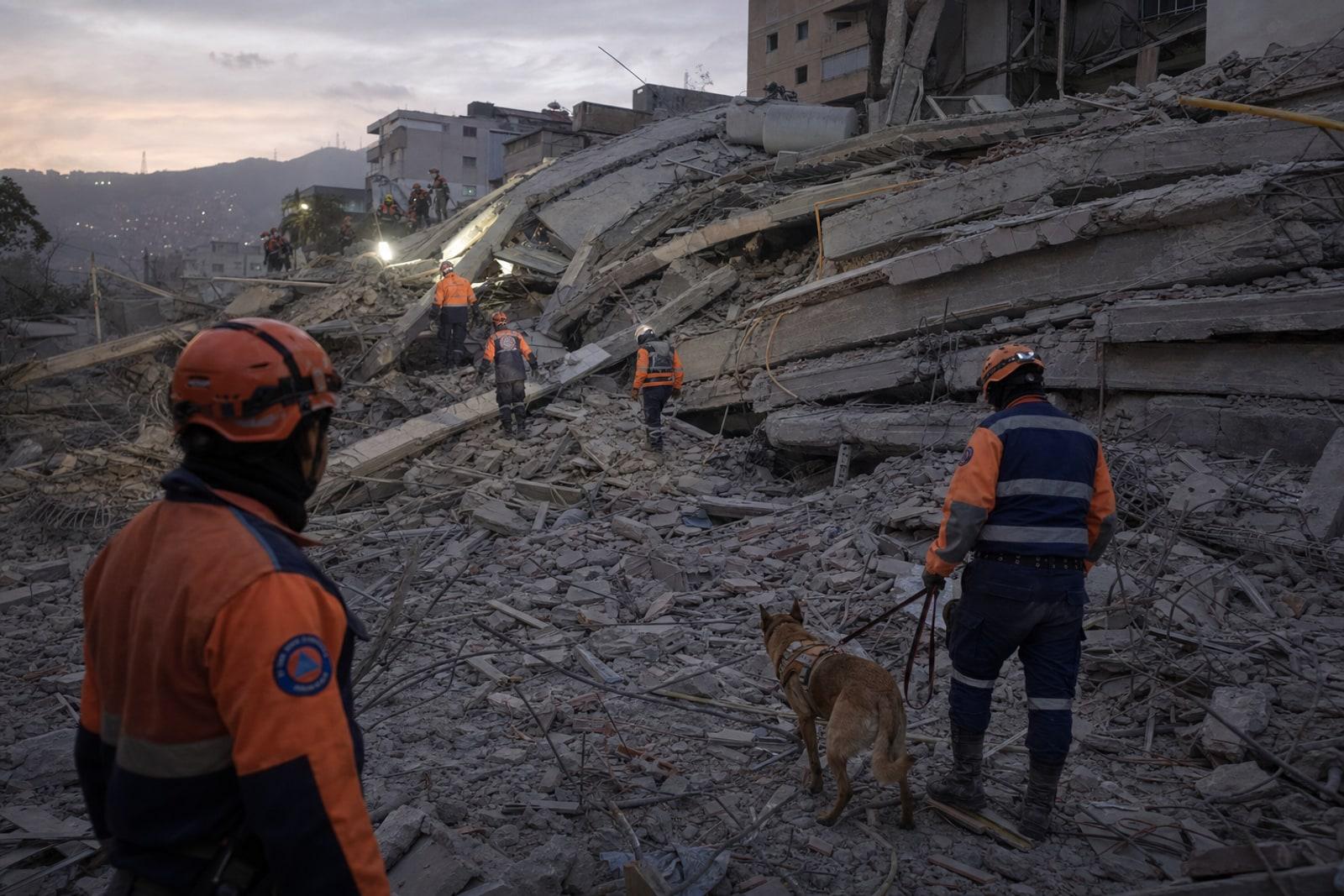
Luxembourg has joined the international relief effort in Venezuela, where twin earthquakes have killed more than 1,430 people and left tens of thousands missing, dispatching a specialist rescue team and a satellite communications system to a disaster zone where telephone and power networks have collapsed.
The grand duchy's contribution — telecommunications, shelter and energy equipment, alongside personnel from the Grand Ducal Fire and Rescue Corps (CGDIS) — is being channelled through the European Union's Civil Protection Mechanism, the bloc's framework for pooling emergency aid. Separately, the Ministry of Foreign Affairs said that 22 people registered in Luxembourg are recorded as living in Venezuela, and that none had so far contacted consular services for assistance.
A two-shock catastrophe
The disaster began on the evening of 24 June, when a magnitude 7.2 earthquake struck north-western Venezuela at 6:04 p.m. local time. Thirty-nine seconds later a larger magnitude 7.5 shock followed, with both epicentres near the city of San Felipe in Yaracuy state, according to the United States Geological Survey. The combined shaking, lasting up to two minutes, toppled hundreds of buildings across several states and was felt across northern South America and the Caribbean. A tsunami advisory issued for the Dominican Republic, Puerto Rico and the US Virgin Islands was later rescinded.
By 27 June the official death toll had climbed past 1,430, with close to 4,000 people injured, according to Venezuelan authorities and international news agencies; some counts put the dead at around 1,450. Rescuers were still searching collapsed buildings for survivors, and the United Nations said tens of thousands of people remained unaccounted for, with one tracking estimate placing the missing near 50,000 — a figure the government disputes. The UN's preliminary assessment valued the damage at between US$4.7bn and US$8.7bn, equivalent to roughly 4 to 8 percent of Venezuela's annual economic output.
Acting President Delcy Rodríguez declared a state of emergency and singled out the coastal state of La Guaira as the worst affected. "We can say that the state of La Guaira is experiencing a genuine tragedy and has become a disaster zone," she said. The UN's humanitarian chief, Tom Fletcher, noted that the quakes had hit a country already under severe strain, observing that nearly 8 million Venezuelans were in need of humanitarian support even before the ground shook.
Luxembourg's response
Vice-Prime Minister Xavier Bettel, who holds the cooperation and humanitarian action portfolio, and Home Affairs Minister Léon Gloden decided to deploy emergency.lu, Luxembourg's rapid-deployment satellite platform built precisely for crises that knock out local communications. The package the country sent comprised:
- Two members of the CGDIS humanitarian intervention team (HIT), who flew out on a Luxembourg Air Rescue aircraft with the emergency.lu satellite system to restore communications on the ground;
- Three further HIT experts to reinforce the European Commission's coordination team, travelling via Rome before an EU-chartered onward flight;
- Telecommunications, emergency shelter and power-supply equipment, with the mission co-financed 75 percent by the European Union and 25 percent by Luxembourg's directorate for development cooperation and humanitarian action.
Restoring a communications link is among the first priorities in a major disaster, allowing rescue teams to coordinate and survivors to reach relatives. Bettel framed the deployment in those terms.
It is essential that rescue teams can communicate with one another and that the population has the means to communicate. One of the greatest anxieties in these situations is being left without news of your loved ones.
Twenty-two nationals, no calls for help
The foreign ministry's tally of Luxembourg-linked residents underscores how thinly the grand duchy's diaspora is spread in Venezuela. Twenty-two people "holding a Luxembourg identity number" are registered as living there, the ministry said on the Thursday after the quakes, adding that none had contacted consular services to request any form of assistance. The figure reflects voluntary registration rather than a confirmed headcount, and the ministry did not report any Luxembourg citizen among the dead or injured. Several other governments, by contrast, have confirmed foreign nationals among the casualties.
A European and global mobilisation
Luxembourg is one of eight EU member states channelling aid through the Civil Protection Mechanism, alongside Czechia, Spain, Italy, France, Germany, Portugal and the Netherlands. More than 520 responders had been mobilised across the eight countries, the European Commission said, with Italy sending a medical team and the bloc's Copernicus satellite service switched into emergency mapping mode to guide the response.
Hadja Lahbib, the European Commissioner for preparedness and crisis management, welcomed the widening effort, saying the EU had mobilised "over 520 rescuers" from the participating states, "medical staff from Italy & telecoms equipment from Luxembourg." Beyond Europe, governments across the Americas — including Brazil, Canada, Mexico, Colombia, El Salvador, Cuba and the United States — and the United Nations have sent search-and-rescue crews and humanitarian supplies, in one of the largest disaster mobilisations the region has seen in years.
For Luxembourg, the deployment turns a distant catastrophe into an immediately domestic story: a handful of citizens abroad, a national rescue corps in the field thousands of kilometres away, and a satellite system designed in the grand duchy now carrying the voices of survivors in a collapsed Venezuelan town.
Frequently asked
- How powerful were the Venezuela earthquakes and where did they strike?
- Two strike-slip quakes hit north-western Venezuela on 24 June 2026 — a magnitude 7.2 shock followed 39 seconds later by a magnitude 7.5 mainshock — with both epicentres near San Felipe in Yaracuy state, according to the US Geological Survey.
- What is Luxembourg sending to Venezuela?
- Through the EU Civil Protection Mechanism, Luxembourg deployed two CGDIS rescuers with the emergency.lu satellite communications system and three further experts to the EU coordination team, plus telecommunications, shelter and energy equipment, with the mission co-financed 75% by the EU and 25% by Luxembourg.
- Are any Luxembourg nationals affected?
- The foreign ministry said 22 people registered in Luxembourg are recorded as living in Venezuela and that none had contacted consular services for assistance; it reported no Luxembourg citizens among the dead or injured.
- What is the death toll?
- As of 27 June 2026, authorities reported more than 1,430 dead (some counts cite around 1,450) and close to 4,000 injured, with tens of thousands of people still unaccounted for.
Sources(12)
- 12026 Venezuela earthquakesWikipedia · en.wikipedia.org
- 2June 24-25, 2026 — Venezuela rocked by 7.5 and 7.2 magnitude earthquakesCNN · cnn.com
- 3Venezuela earthquakes kill at least 188 people, injure 1,520Al Jazeera · aljazeera.com
- 4Venezuela earthquakes updates: Rescue efforts on as death toll hits 235Al Jazeera · aljazeera.com
- 5Venezuela earthquakes live updates: Death toll rises to at least 1,450 as searches continueABC News · abcnews.com
- 6Venezuela quake death toll rises to 1,430 as searches continue for survivorsEuronews · euronews.com
- 7Live updates: Venezuela earthquakes, rescue and aidNBC News · nbcnews.com
- 8EU deploys emergency assistance to Venezuela following earthquakesEuropean Civil Protection and Humanitarian Aid Operations (ECHO) · civil-protection-humanitarian-aid.ec.europa.eu
- 9Which countries have pledged aid to Venezuela after powerful earthquakes?Al Jazeera · aljazeera.com
- 10Assistance du Luxembourg au Venezuela (communiqué Bettel-Gloden)Le gouvernement luxembourgeois · gouvernement.lu
- 11Venezuela: le Luxembourg envoie un satellite et des experts après le séismeL'essentiel · lessentiel.lu
- 12Séismes au Venezuela: des Luxembourgeois pourraient se trouver sur placeL'essentiel · lessentiel.lu
Related by topic