Climate
Western Europe has hottest June on record as heat reaches Luxembourg
Copernicus data confirm Western Europe endured its warmest June on record — 3.05°C above average — as Luxembourg imposed a water-extraction ban and moved to set up a heat-response service.
By Tom Schmit · · 4 min read
Western Europe endured its hottest June since records began in 2026, the European Union's Copernicus Climate Change Service (C3S) said, as an early-summer heat that shattered national temperature records from Spain to Poland left tangible marks on Luxembourg — from a red heat alert to a ban on drawing water from its rivers.
According to the C3S monthly bulletin, Western Europe averaged 20.74°C in June, some 3.05°C above the 1991-2020 reference period and ahead of the previous record set only a year earlier, in June 2025. Globally, June 2026 ranked as the second-warmest on record — behind June 2024 — at 1.39°C above the estimated pre-industrial average, while the world's oceans registered their warmest June sea-surface temperatures on record.
A record built on two brutal heatwaves
The C3S said two distinct heatwaves rolled across the continent: the first peaking around 20 June, the second roughly a week later. The late-June episode was the more severe, driving temperatures well above seasonal norms and, in several countries, above anything previously measured.
National records fell in quick succession, according to figures compiled on the 2026 European heatwaves and corroborated by the EU service's account of records tumbling in Germany and the Czech Republic:
- Germany set an all-time national high of 41.3°C at Saarbrücken, close to the Luxembourg border, on 26 June.
- Czech Republic reached 41.9°C at Doksany on 28 June.
- France hit 44.3°C at Pissos on 23 June.
- Poland recorded a national record of 40.5°C at Słubice on 28 June.
- Spain reached 45.1°C at Andújar on 22 June.
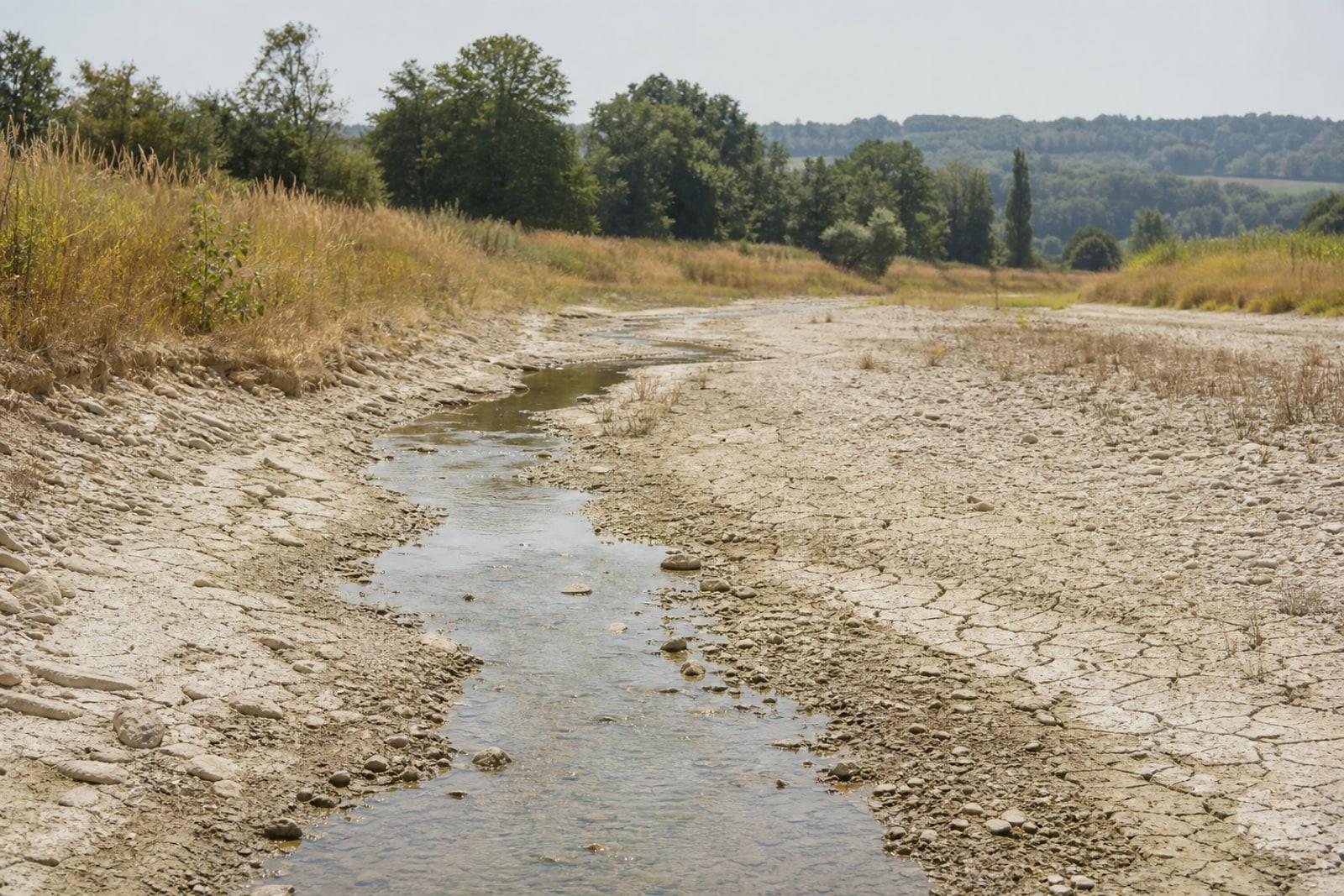
Copernicus also flagged marine heatwaves across the western Mediterranean and along Atlantic coasts, increased wildfire activity in the Iberian Peninsula and southern France, and drying soils across western and central Europe that deepened drought risk.
Scientists tie the heat to a warming climate
C3S scientists framed the month as another data point in a long-running warming trend rather than an isolated freak event. Samantha Burgess, Strategic Lead for Climate at the European Centre for Medium-Range Weather Forecasts (ECMWF), which runs the service, said the land and ocean records were connected symptoms of the same underlying shift.
Together, these records reflect a climate system continuing to accumulate heat. The result is increasingly intense heatwaves, a persistently warm ocean, and growing risks for people, ecosystems and infrastructure across Europe and beyond.
The service noted the heat also registered at the poles, with Arctic sea-ice extent running about 5% below average and Antarctic extent roughly 8% below, both among the lowest for a June in the satellite record.
How the heat landed in Luxembourg
Luxembourg felt the late-June peak acutely. MeteoLux, the national weather service, escalated to an orange alert from 19 June and then to a red heatwave warning — vigilance rouge — on 22 June, with temperatures forecast between 35°C and 40°C and little overnight relief. The government reinforced the deployment of the Grand Ducal Fire and Rescue Corps (CGDIS), activated a joint operational command post at the National Crisis Centre in Senningen, and adapted its 23 June National Day celebrations to prioritise heat prevention and protect vulnerable people.
The dry spell has not eased. On 8 July, the Water Management Administration and the Ministry of the Environment, Climate and Biodiversity announced a temporary ban, effective immediately, on removing water from rivers, streams and other surface water bodies. Officials said flow rates in most of the country's watercourses had fallen to or below their mean low-flow level, while high temperatures were warming the water and cutting dissolved-oxygen levels toward thresholds critical for the survival of aquatic wildlife. The same day, MeteoLux issued a fresh yellow heat warning for southern Luxembourg, valid from midday on 9 July.
A stress test for heat-health planning
The heatwave also became a test of Luxembourg's public-health response. During a parliamentary debate on 8 July, Health Minister Martine Deprez said the country had coped, insisting that "à aucun moment le pays se trouvait en situation de crise" — at no point was the country in a crisis situation. She said hospitals had kept at least 200 beds free and never reached capacity, though she cautioned that an observed rise in deaths still needed analysis before any share could be attributed to the heat.
Deprez announced the creation of a samu social, a mobile social-emergency service that could be deployed during future heatwaves as well as in efforts to combat drug trafficking. Family and Solidarity Minister Max Hahn said care facilities remained unevenly equipped to handle extreme heat but reported no over-hospitalisation of residents.
With forecasters warning that record-breaking heat is becoming more frequent, the measures rolling out in Luxembourg — drought curbs, tightened alerts and new outreach services — offer a close-up view of how a small country is adapting to a Europe that keeps setting new temperature records.
Frequently asked
- How much hotter was June 2026 than normal in Western Europe?
- Copernicus reported an average of 20.74°C for Western Europe, about 3.05°C above the 1991-2020 average — the highest for any June on record, surpassing June 2025.
- Was June 2026 a global record?
- Globally it was the second-warmest June on record, behind June 2024, at 1.39°C above the pre-industrial average, though the world's oceans set a new June sea-surface temperature record.
- What heat measures did Luxembourg take?
- Luxembourg issued a red heatwave alert in late June, a fresh yellow warning for the south on 9 July, banned water extraction from rivers and streams on 8 July because of low flows and falling oxygen levels, and announced a new 'samu social' service.
- Do scientists link the heat to climate change?
- Yes. Copernicus said the combined land and ocean records reflect a climate system continuing to accumulate heat, producing more intense heatwaves and a persistently warm ocean.
Sources(10)
- 1June 2026 broke heat records across Europe and oceans, EU climate data revealsEuronews · euronews.com
- 2June 2026 was Western Europe's hottest on record, second hottest globally, report findsCBS News · cbsnews.com
- 3Last month was the hottest June on record in Western EuropeSustainability Online · sustainabilityonline.net
- 4Climate BulletinsCopernicus Climate Change Service · climate.copernicus.eu
- 5Heatwave affecting Western Europe in the third decade of June 2026EU Space Support Office / Copernicus · eu-space.europa.eu
- 6Red alert: Exceptional heatwave until the end of the weekThe Luxembourg Government (gouvernement.lu) · gouvernement.lu
- 7Luxembourg Introduces Temporary Ban on Removal of Water From Rivers & StreamsChronicle.lu · chronicle.lu
- 8MeteoLux Issues Yellow Heat Warning for Southern LuxembourgChronicle.lu · chronicle.lu
- 9Canicule au Luxembourg: un Samu social sera créé pour les futures vagues de chaleurL'essentiel · lessentiel.lu
- 102026 European heatwavesWikipedia · en.wikipedia.org
Related by topic