Transatlantic security
Trump ties the future of US troops in Europe to a Greenland deal
At a NATO summit in Ankara, the US president said Washington could pull its forces from Europe if Denmark refuses to cede the Arctic island — putting a price on the American guarantee.
By Camille Reuter · · 4 min read
President Donald Trump has signalled that the future of the roughly 80,000 American troops stationed in Europe may depend on whether Denmark cedes control of Greenland, for the first time openly tying the United States' core security guarantee to a territorial demand on an ally.
Speaking to reporters around a two-day NATO summit in the Turkish capital, Ankara, on 7-8 July, Trump said Washington could "remove all of our soldiers out of Europe" and made clear that any decision would turn on the fate of the Arctic island. Pressed on whether he would order further drawdowns, he framed the answer explicitly in terms of Greenland.
"A lot's going to depend on Greenland, and a lot, lot, I think [we can] make a very good deal in Greenland, and if we don't, maybe I will," Trump told reporters, according to the Washington Examiner.
The remarks, delivered at a gathering of 32 alliance leaders that was meant to focus on defence spending, turned the summit into a test of how transactional the American commitment to Europe has become. Trump has coveted Greenland since returning to office in 2025, and the dispute escalated sharply this year after he declined to rule out the use of force and threatened tariffs on European capitals that backed Copenhagen.
Denmark and Greenland refuse
Danish Prime Minister Mette Frederiksen rejected the demand outright. "Greenland is, of course, not for sale," she said, adding that Denmark was "ready to defend every inch of NATO, including our own territory" and would rely on allies to honour their mutual-defence obligations.
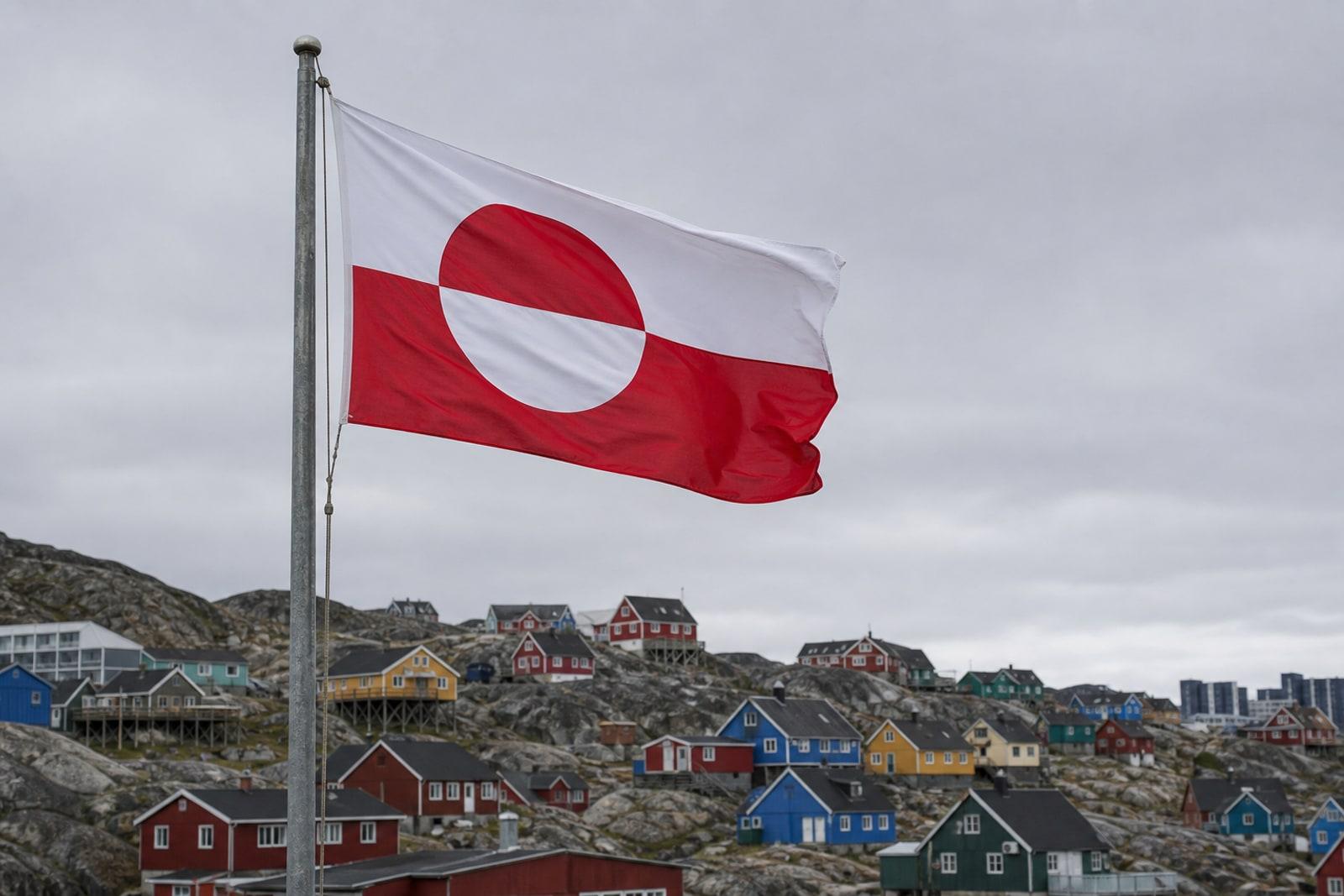
Trump was unmoved, arguing that the world's largest island mattered more to Washington than to Copenhagen. "Greenland is very important for the United States, but it's not important for Denmark," he said, describing US control as necessary "for the protection of the world." Greenland, an autonomous Danish territory of about 56,000 people, already hosts the US Pituffik Space Base in its far north-west, where roughly 150 American personnel operate missile-warning and space-surveillance systems.
The European Union closed ranks behind Denmark. European Commission President Ursula von der Leyen said the bloc would "remain united, coordinated and committed to upholding its sovereignty," while European Council President Antonio Costa said he would convene an extraordinary summit to reaffirm "solidarity with Denmark and Greenland."
A shrinking, and now conditional, presence
The threat lands on top of reductions already under way. Earlier in 2026 the Pentagon confirmed the withdrawal of about 5,000 troops from Germany following a force-posture review, and CNN reported that Trump had privately mused about cutting the European contingent by as much as a third to send a message to allies. Under US law, the military must keep at least 76,000 troops and their major equipment on the continent unless NATO allies are consulted and a drawdown is judged to be in the American interest.
The key figures behind the standoff:
- ~80,000 US troops currently stationed across Europe.
- 76,000 the legal floor below which forces cannot fall without consulting allies.
- ~5,000 troops already pulled from Germany this year.
- ~56,000 residents of Greenland; about 150 US personnel at Pituffik Space Base.
Secretary of State Marco Rubio has said there is "broad recognition that there are going to be eventually less U.S. troops in Europe than there has historically been." What is new is the linkage: rather than framing cuts as burden-sharing or a strategic pivot toward Asia, Trump has attached them to a demand that an ally surrender territory.
What it means for European defence
For planners from Warsaw to Luxembourg, the episode forces an uncomfortable calculation. The US presence — bases, air power, logistics and the nuclear umbrella — underwrites NATO's deterrent on the eastern flank facing Russia. Making that presence contingent on a bilateral bargain over Greenland puts an explicit price on a guarantee that European governments have long treated as unconditional.
EU foreign-affairs chief Kaja Kallas warned that the infighting served Europe's adversaries. "China and Russia must be having a field day," she said. "They are the ones who benefit from divisions among allies."
The practical response has been to press ahead with a "more European NATO." Denmark has committed tens of billions of kroner to Arctic defence, and during the winter escalation several European militaries deployed troops to Greenland in a show of solidarity. For smaller members such as Luxembourg, which depends wholly on the alliance for its defence, the message is that the American backstop can no longer be assumed to come without political conditions.
Whether Trump would actually withdraw the full contingent — and whether the law would allow it — remains unclear; he also praised the Ankara meeting for its "unity." But by naming Greenland as the variable, he has reframed the transatlantic bargain, leaving European capitals to plan for a security guarantee that may now come with a bill attached.
Frequently asked
- What did Trump link to a Greenland deal?
- He suggested the continued presence of US troops in Europe — about 80,000 personnel — could depend on whether Denmark agrees to cede Greenland, saying Washington could 'remove all of our soldiers out of Europe.'
- How did Denmark and the EU respond?
- Danish PM Mette Frederiksen said 'Greenland is, of course, not for sale' and pledged to defend NATO territory. The European Commission and Council voiced full solidarity with Denmark and Greenland.
- How many US troops are in Europe, and can they be withdrawn?
- Roughly 80,000. US law requires keeping at least 76,000 troops and major equipment on the continent unless allies are consulted and a drawdown is judged to be in the US interest.
- Why does this matter for European defence?
- The US presence underpins NATO's deterrent against Russia on the eastern flank. Conditioning it on a territorial demand forces Europe to treat the American guarantee as negotiable rather than assured.
Sources(11)
- 1Trump threatens troop withdrawals if deal on Greenland isn't struckWashington Examiner · washingtonexaminer.com
- 2Trump warns US could withdraw troops from Europe over Greenland disputeStars and Stripes · stripes.com
- 3Trump renews Greenland threats at NATO summit, says U.S. could remove troops from EuropeCNBC · cnbc.com
- 4Trump doubles down on push for control over Greenland as Denmark vows to defend itCNBC · cnbc.com
- 5Trump mused about cutting troops in Europe by a third to send a message to NATOCNN · cnn.com
- 6Danish PM says Greenland is 'not for sale' as Trump joins NATO leaders in TurkeyABC News / Associated Press · abcnews.com
- 7Trump turns on Spain and demands Greenland as NATO summit exposes cracksDefense News · defensenews.com
- 8NATO allies bewildered by Trump's about-face on U.S. troop moves in EuropePBS NewsHour · pbs.org
- 9Europe 'united' in face of Trump's Greenland threats, tariffs, EU chief saysABC News · abcnews.com
- 10Greenland crisisWikipedia · en.wikipedia.org
- 11Pituffik Space BaseWikipedia · en.wikipedia.org
Related by topic