EU agriculture
Luxembourg's Hansen Puts EU Protein Autonomy at Heart of New Farm Plan
Commissioner Christophe Hansen frames a forthcoming EU protein strategy as a question of strategic autonomy — with stakes for the Grand Duchy's small, grassland-dependent farming sector.
By Camille Reuter · · 4 min read
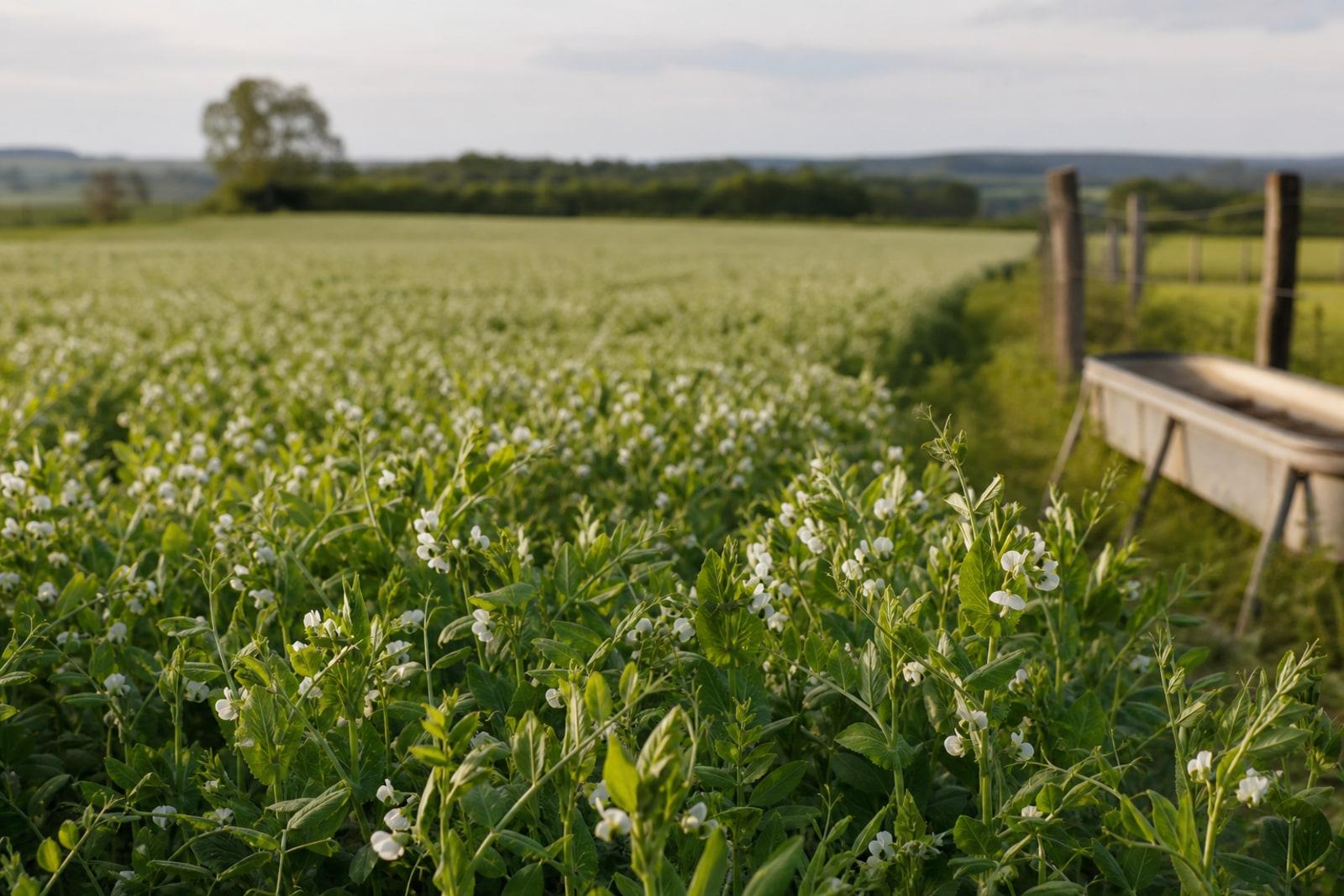
The European Union imports the overwhelming share of the protein that fattens its livestock — and Christophe Hansen, the Luxembourger who runs the bloc's farm policy, wants that to change. As the European Commission readies a long-awaited protein strategy, its agriculture and food commissioner is casting the effort less as an environmental project than as a matter of strategic autonomy in an unsettled world.
The Commission has signalled that the plan, expected in 2026 and paired with a separate long-term livestock strategy, will aim to reduce dependence on imported plant proteins, diversify supply and strengthen production inside Europe. Hansen set out the timetable in April at an event on legumes in the European Parliament, telling participants that the bloc's protein system remains, in his words, “structurally highly unbalanced.”
A dependence built on soy
The numbers behind that judgement are stark. Europe grows only a fraction of the soya it consumes: industry and research estimates put the EU's soya self-sufficiency at roughly 8 percent, with close to 90 percent of soybeans imported, mainly from the United States and Brazil and overwhelmingly destined for animal feed. EU soya imports ran to about 34 million tonnes in 2020. Domestic output covers only a sliver of the high-protein feed that dairy and meat producers need.
That structural gap has long worried policymakers. The European Parliament adopted a resolution in October 2023 urging the Commission to present an ambitious protein strategy, and farm groups have pressed for concrete action ever since. Hansen has tied the case to geopolitics, arguing that reliance on a handful of distant suppliers is a liability when trade and security are in flux.
Protein diversification is crucial for the EU's resilience and strategic autonomy.
“These dependencies create a clear vulnerability in the context of the geopolitical uncertainties we are experiencing,” the commissioner said. He has indicated that the next Common Agricultural Policy, covering the period after 2027, would offer higher income support for plant-protein production, with an emphasis on legumes, pasture management and innovation.
What the plan promises — and what it leaves open
The strategy's broad goals are clear; its hard edges are not. Hansen has described the initiative as a holistic approach spanning the whole food system, and the Commission has framed it around three aims:
- fostering domestic production to lift self-sufficiency;
- diversifying where imported protein comes from, to spread risk;
- strengthening food security across the bloc.
That has not satisfied everyone. Some members of the European Parliament have welcomed the commitment but pressed for firmer targets and a clear timeline, and for a strategy that takes plant-based foods for human consumption seriously rather than treating protein purely as livestock feed. As one MEP involved in the debate put it, a strategy that fails to address plant-based foods would be a missed opportunity. Hansen, for his part, has been careful not to tell Europeans to eat less meat, while insisting the bloc must grow more of its own protein.
Why it matters in the Grand Duchy
For Hansen's home country, the debate is more than abstract. Luxembourg's farm sector is small and grassland-heavy: STATEC counts roughly 2,600 holdings working some 132,500 hectares, of which pastures and forage crops make up well over half. More than half of active farms specialise in raising ruminants, and maize is grown largely as feed — a profile that leaves the sector exposed to swings in the price and availability of imported protein.
Luxembourg has been an early advocate for European protein independence. Martine Hansen — the country's agriculture minister since 2023, and no relation to the commissioner — pressed EU counterparts on the issue well before the Commission committed to a strategy, calling for coupled support under the CAP, stronger investment aid for protein and oilseed crops, and research to map where Europe could realistically grow more.
We must increase European production of plant protein, whether from protein and oilseed crops or from pastures.
The minister has also linked the sector's future to generational renewal. In a 2025 interview she warned that the EU's 2028–2034 budget framework risked penalising young farmers, estimating that around 400 of Luxembourg's roughly 1,700 active farmers could be affected — many of them young people trying to take over family operations. “Without young farmers,” she argued, there can be no food sovereignty.
That tension — between Europe's ambition to grow more of its own protein and the economics that have long made imported soy cheaper than home-grown legumes — is precisely what the Commission's strategy will have to confront. For a commissioner who grew up on the margins of a farming family in northern Luxembourg, the test will be whether a continent-wide plan can translate into something a small producer in the Moselle valley or the Oesling can actually bank on.
The strategy's credibility, analysts and farm groups agree, will rest on detail the Commission has yet to publish: binding targets, dedicated funding and a timetable. Until then, Hansen's pitch remains a statement of intent — that Europe's next move on food security runs through its own fields.
Frequently asked
- What is the EU protein strategy?
- It is a forthcoming European Commission plan, expected in 2026 and paired with a long-term livestock strategy, aimed at reducing the EU's dependence on imported plant proteins, diversifying supply sources and strengthening domestic production.
- Why does the EU depend on imported protein?
- Europe grows only a small share of the soya its livestock sector needs. Estimates put EU soya self-sufficiency at roughly 8 percent, with close to 90 percent of soybeans imported, chiefly from the United States and Brazil for animal feed.
- Are Christophe Hansen and Martine Hansen related?
- No. Christophe Hansen is the European Commissioner for Agriculture and Food; Martine Hansen is Luxembourg's Minister of Agriculture, Food and Viticulture. They share a surname but are not related.
- How is Luxembourg's farm sector affected?
- Luxembourg has about 2,600 mostly grassland-based holdings, with more than half specialising in ruminant livestock and maize grown for feed, leaving the sector exposed to the cost and availability of imported protein.
Sources(13)
- 1EU protein plan due in June, Hansen says it will reduce dependenciesANSA · ansa.it
- 2EU Commits to Protein Diversification Strategy, But MEPs Want 'More Concrete Steps'Green Queen · greenqueen.com.hk
- 3Incoming EU Ag Chief Toes the Line Between Livestock & Plant-Based ProteinsGreen Queen · greenqueen.com.hk
- 4Christophe Hansen — European Commissioner for Agriculture and FoodEuropean Commission · commission.europa.eu
- 5Luxembourg Agriculture Minister Stresses Importance of Plant & Animal Protein Production in EUChronicle.lu · chronicle.lu
- 6Martine Hansen : «Sans jeunes agriculteurs, pas de souveraineté alimentaire»Le Quotidien · lequotidien.lu
- 7Minus 82%: Europe Soya certified soybean meal (soy self-sufficiency factsheet)Donau Soja · donausoja.org
- 8European food sovereignty: what do the numbers say?Agriculture Strategies · agriculture-strategies.eu
- 9EU protein strategy (briefing)European Parliament (EPRS) · europarl.europa.eu
- 10Martine Hansen (biography)Wikipedia · en.wikipedia.org
- 11Christophe Hansen (biography)Wikipedia · en.wikipedia.org
- 12EU Livestock Strategy talks in EBAFEuropean Environmental Bureau · eeb.org
- 13Agriculture statistics (Luxembourg)STATEC · statistiques.public.lu
Related by topic