Russia sanctions
Luxembourg approved EU sanctions deal but has not stated position on Alekperov’s removal
The Grand Duchy approved the final package, but has not said whether it endorsed, conditioned or merely accepted the removal of the Lukoil founder.
By Camille Reuter · · 4 min read
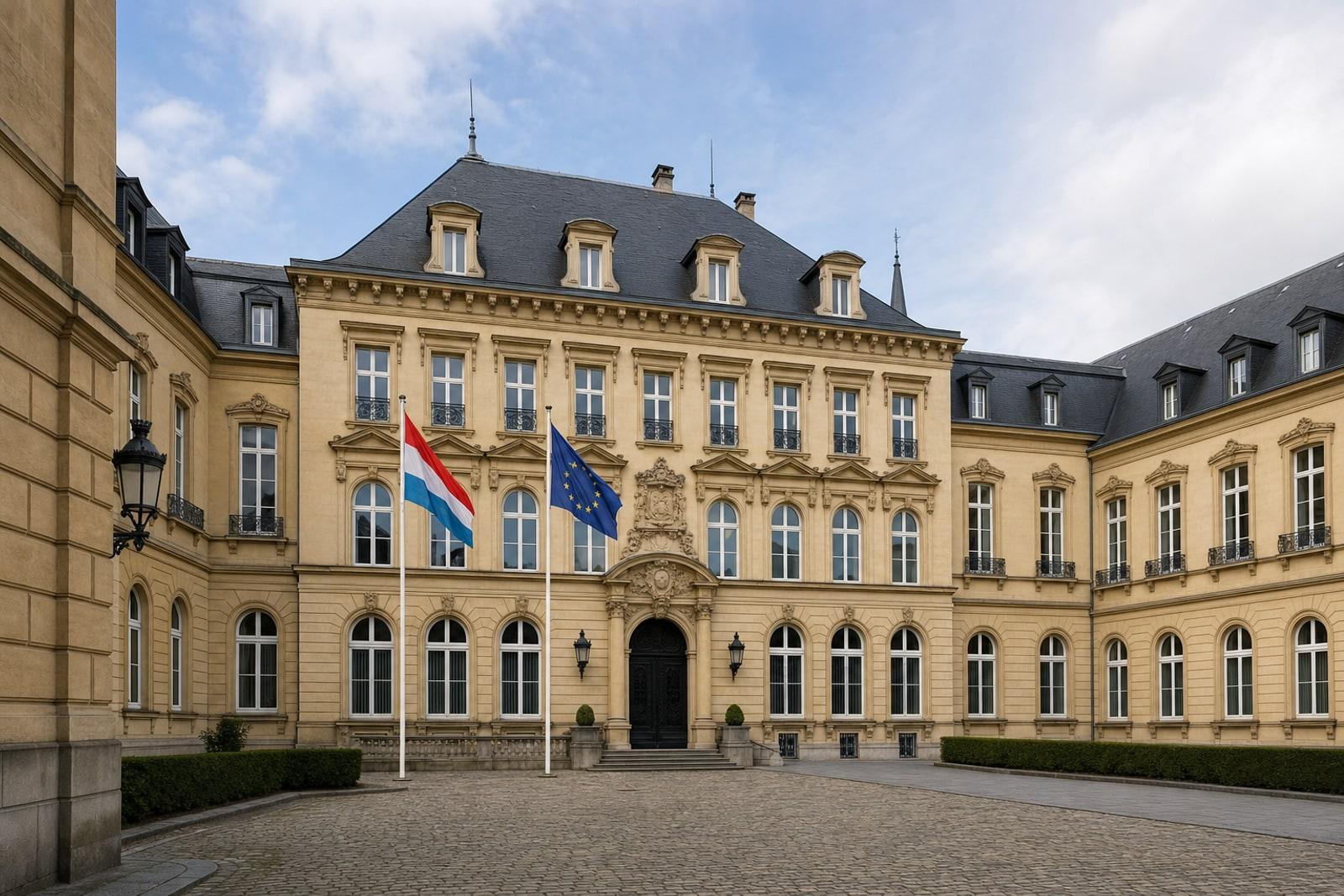
Luxembourg consented to the European Union’s latest sanctions package against Russia, but has not publicly explained its position on the removal of oil billionaire Vagit Alekperov from the proposed blacklist.
The distinction matters. EU sanctions require unanimity, so Luxembourg’s approval of the final package is established. What remains unknown is whether the Grand Duchy specifically supported Alekperov’s removal, accepted it as the price of a wider agreement, sought conditions or raised an objection in the confidential negotiations.
The government’s public account of Foreign Minister Xavier Bettel’s participation in the 13 July Foreign Affairs Council said ministers discussed Russia’s war against Ukraine. It addressed Russian athletes and other foreign-policy issues, but did not mention Alekperov or the sanctions package. No separate Luxembourg explanation was found in the public record reviewed by Status through 28 July.
Consent is clear; the reasoning is not
The Council adopted the 21st package on 23 July, adding 218 listings across the Russia and Belarus measures. The Council said these comprised 48 individuals and 170 entities. Reuters also reported that the package required unanimity.
Bulgaria was open about its bargaining position. Its government said a proposed Alekperov listing risked significant consequences for Lukoil-group companies that it described as structurally important to the Bulgarian economy. Euronews, citing several EU diplomats, reported that Bulgaria secured Alekperov’s removal during an extraordinary ambassadors’ meeting. Deutsche Welle had earlier reported that Bulgaria was the only member state objecting when Alekperov and Patriarch Kirill were proposed.
“Брюксел уважи резервите на България по отношение на три физически лица – руския патриарх Кирил, собственика на „Лукойл“ Вагит Алекперов...” — Rumen Radev. In translation: “Brussels respected Bulgaria’s reservations concerning three individuals — Russian Patriarch Kirill, Lukoil owner Vagit Alekperov...”
That public trail establishes who demanded the concession. It does not establish Luxembourg’s view of it. The strongest conclusion supported by the evidence is narrower: Luxembourg did not prevent the adoption of a final text that excluded Alekperov. Its assent to the package should not be presented as proof that it advocated the deletion.
What the removal does — and does not do
The legal consequence is more precise than the political account. Alekperov was removed from a draft; he was not deleted from an existing EU sanctions list. A negotiating proposal does not itself freeze property. Binding obligations arise from the legal acts published in the EU’s Official Journal.
Implementing Regulation 2026/1843, which contains the new individual asset-freeze targets, adds 48 people and 168 entities to Annex I of Regulation 269/2014. Alekperov’s name does not appear. The package separately lists Lukoil-Marinbunker, a Russian shipping company, underscoring that the omission is not a blanket exemption for businesses bearing the Lukoil name.
Under Article 2 of Regulation 269/2014, designation would have produced three principal consequences: an EU travel ban; a freeze on funds and economic resources belonging to, owned, held or controlled by Alekperov; and a prohibition on making funds or economic resources available to him, directly or indirectly. None of those Alekperov-specific EU obligations arose.
- No assets were released by his removal from the draft, because there was no prior Alekperov-specific EU freeze to lift.
- Luxembourg intermediaries have no EU-law duty to freeze an asset merely because Alekperov owns it or benefits from it.
- An asset must still be blocked if another listed person or entity owns, holds or controls it, or if a separate EU restriction applies to the transaction.
The outcome also does not erase sanctions imposed by non-EU jurisdictions. Institutions with exposure to other legal systems must assess those rules separately. For Luxembourg’s domestic EU-law obligation, however, the decisive documents are the adopted regulations and their annexes, not earlier drafts or press reports.
Luxembourg’s €4.7 billion compliance burden
The Ministry of Finance’s latest published tally puts assets frozen in Luxembourg under Regulation 269/2014 at precisely €4,698,231,424.09. That is an aggregate stock accumulated across the regime. It is not an estimate of Alekperov’s property and does not measure the impact of the 21st package.
The ministry says compliance is mandatory not only for banks and investment firms but for Luxembourg natural and legal persons, local branches and others operating in or through the country. Its guidance requires funds and economic resources of designated persons to be frozen without delay and the action reported to the ministry. Financial-sector firms must also copy the CSSF, which supervises their implementation of the measures.
Alekperov’s omission therefore narrows one screening outcome, but it does not remove the wider workload. Intermediaries must still update the new lists, examine ownership and control, identify indirect benefits and apply the package’s transaction bans and sectoral restrictions.
Luxembourg’s operational rules are public and detailed. Its political explanation is not. For a state whose financial centre administers billions of euros in sanctioned assets, the unanswered question is no longer whether it approved the final deal. It did. The question is why it accepted this particular concession and whether it considered the consequences before doing so.
Frequently asked
- Did Luxembourg approve Vagit Alekperov’s removal from the EU sanctions package?
- Luxembourg approved the final package, which omitted Alekperov, because adoption required unanimity. The public record does not show whether it specifically endorsed the removal, sought conditions or merely accepted the wider compromise.
- Were Alekperov’s assets in Luxembourg unfrozen?
- No Alekperov-specific EU assets were unfrozen. He was removed from a draft proposal and had not been listed under the relevant EU regime, so no binding freeze based solely on that proposal had arisen.
- Must Luxembourg banks freeze assets linked to Alekperov?
- Not merely because they belong to or benefit Alekperov under this EU regime. A freeze can still be required if another designated person or entity owns, holds or controls the assets, or if another legal restriction applies.
- How much is frozen in Luxembourg under the EU’s principal Ukraine territorial-integrity regime?
- The Luxembourg Ministry of Finance’s 30 June 2026 update reported €4,698,231,424.09 frozen under Regulation 269/2014. This is the regime-wide total, not an Alekperov figure.
Sources(18)
- 121st package of sanctions: EU hits Russian energy, financial services and crypto hardCouncil of the European Union · consilium.europa.eu
- 2EU targets Russian banks in new sanctions package over Ukraine warReuters · ca.investing.com
- 3Council Implementing Regulation (EU) 2026/1843 of 23 July 2026Official Journal of the European Union · eur-lex.europa.eu
- 4Council Regulation (EU) No 269/2014 of 17 March 2014Official Journal of the European Union · eur-lex.europa.eu
- 5EU fails again to sanction Patriarch Kirill as Bulgaria slaps vetoEuronews · euronews.com
- 6Why is Bulgaria threatening to veto EU's Russia sanctions?Deutsche Welle · amp.dw.com
- 7Government Approves Bulgaria's Position on EU's 21st Sanctions Package against Russia, BelarusBulgarian News Agency · bta.bg
- 8PM Radev: Bulgaria Will Oppose Sanctions on Lukoil Investor AlekperovBulgarian News Agency · bta.bg
- 9Дневен ред на заседание на Министерския съвет на 09.07.2026 г.Council of Ministers of Bulgaria · government.bg
- 10Премиерът Румен Радев: Тази седмица България даде своя принос за формирането на европейската външна политикаCouncil of Ministers of Bulgaria · government.bg
- 11Xavier Bettel au Conseil des affaires étrangèresLuxembourg Government · gouvernement.lu
- 12International financial sanctionsLuxembourg Ministry of Finance · mfin.gouvernement.lu
- 13International financial sanctionsCommission de Surveillance du Secteur Financier · cssf.lu
- 14Frequently asked questions regarding International Financial SanctionsCommission de Surveillance du Secteur Financier · cssf.lu
- 15Guidelines relating to the implementation of financial restrictive measures against third countries, entities or individualsLuxembourg Ministry of Finance · mfin.gouvernement.lu
- 16Sanctions contre la Russie : le Luxembourg doit refaire sa carte des risquesStatus.lu · status.lu
- 17The Board of Directors Appoints Temporary Individual Executive Body of PJSC LukoilLukoil · lukoil.com
- 18Ministry of Foreign and European AffairsLuxembourg City Tourist Office · luxembourg-city.com
Related by topic