Politics
How Luxembourg's coalition government actually works
No single party has ever governed the Grand Duchy alone. Here is how a coalition is built, and why it matters for every law that passes.
By Camille Reuter · · · 1 min read
Luxembourg has never been governed by a single party. The Chamber of Deputies has 60 seats, filled by proportional representation across four electoral districts, and the maths of that system almost guarantees that no party wins a majority on its own. Government is therefore an exercise in coalition-building, negotiated in the weeks after every election.
From ballots to seats
Voters cast as many votes as there are seats in their district, and can split them across party lists or concentrate them on individual candidates. The result is a Chamber that mirrors the country's political spread rather than handing power to a plurality winner. A party that takes a quarter of the vote takes roughly a quarter of the seats — and then has to find partners.
The formateur
After the result, the Grand Duke designates a formateur, usually the lead candidate of the largest party, to assemble a majority. Negotiations produce a coalition agreement: a detailed programme that binds the partners for the legislature. Ministries are shared out, and the government is sworn in only once the agreement is signed.
Why it matters
Because power is shared, Luxembourgish politics rewards compromise over confrontation. Big reforms — on tax, pensions, or housing — move at the speed of the slowest coalition partner, and the coalition agreement, not the campaign manifesto, is the document that actually governs. Reading it is the single best way to know what the next five years will bring.
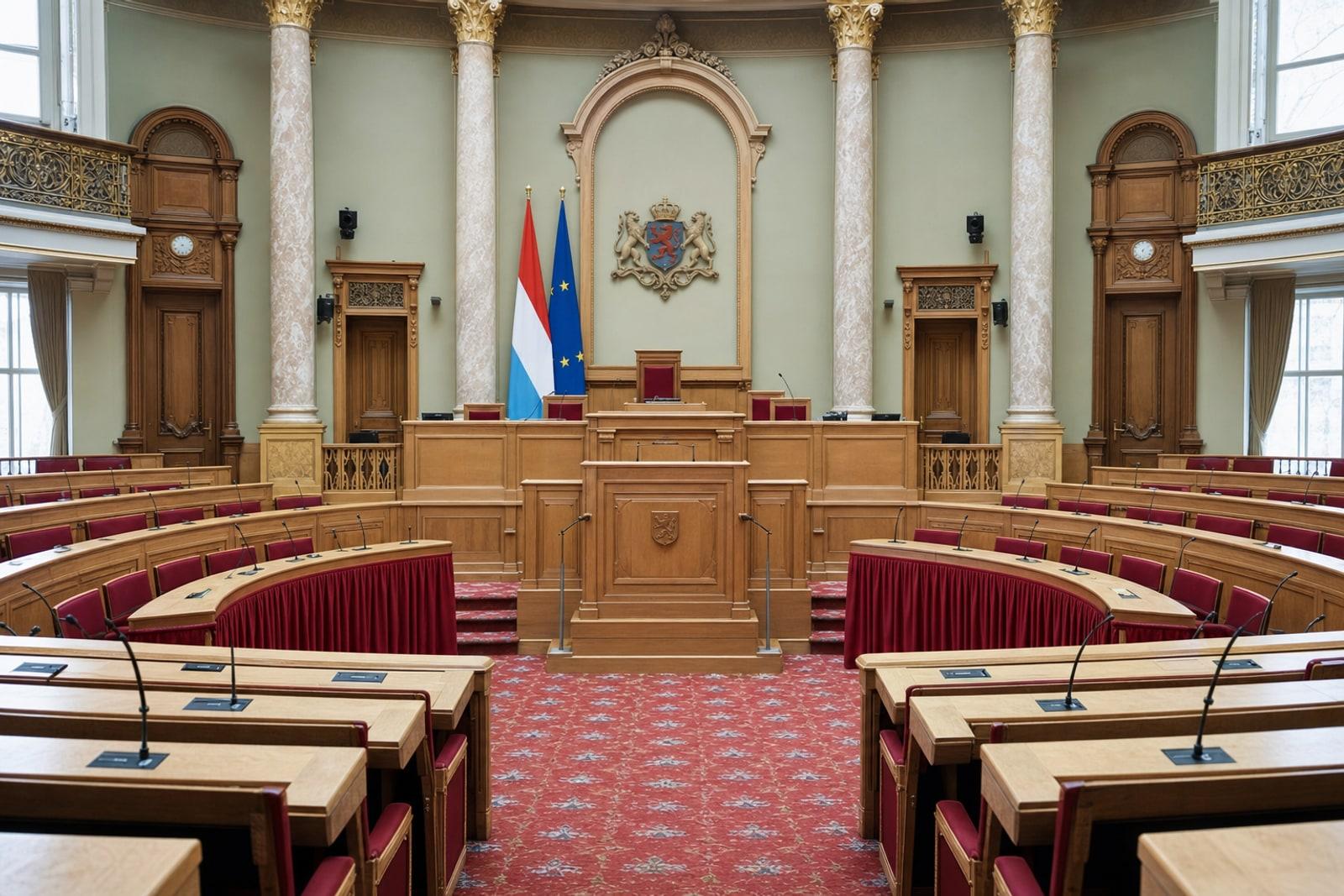
That is also why the Chamber matters more than its size suggests. Sixty deputies scrutinise the government, amend its bills, and can withdraw confidence from it. In a country where consensus is the default, the parliamentary committee room is where the real arguments happen.
Frequently asked
- How many seats are in Luxembourg's Chamber of Deputies?
- Sixty, filled by proportional representation across four electoral districts.
- Who decides who forms the government?
- The Grand Duke designates a formateur — usually the largest party's lead candidate — to assemble a majority coalition.
Sources(2)
Related by topic