Health policy
Luxembourg bill moves to end blood-donation deferral for gay and bisexual men
Lawmakers took up a measure that would screen donors by individual risk rather than sexual orientation, the latest European country to retreat from orientation-based bans.
By Léa Hoffmann · · 4 min read
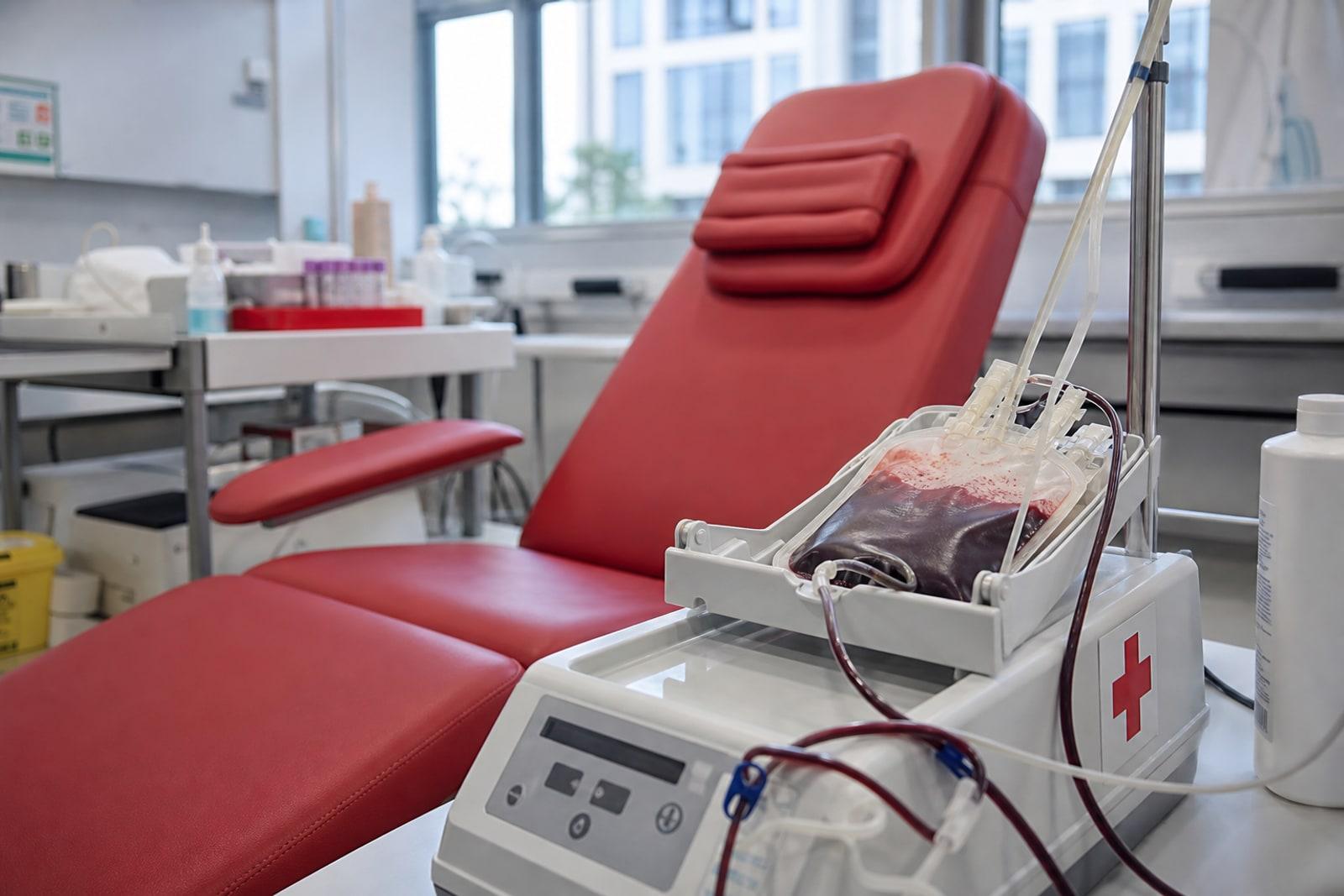
Luxembourg edged closer on Monday to scrapping the rule that keeps sexually active gay and bisexual men from giving blood, as a parliamentary committee took up a bill that would tie donor eligibility to individual risk rather than sexual orientation.
The Chamber of Deputies' Committee on Health and Social Security examined draft law No. 8738 on 29 June 2026. Filed on 28 April by the opposition Socialist (LSAP) deputy and former health minister Paulette Lenert, the text would amend Luxembourg's foundational law of 15 March 1979 on blood transfusion to forbid any exclusion from blood donation based on a donor's sexual orientation. Taina Bofferding, who leads the LSAP parliamentary group, was named rapporteur.
According to the Chamber's own summary, the bill would write into law the principle that eligibility criteria "must rest solely on an individualised medical assessment of risk behaviours, and not on the donor's sexual orientation." Its backers frame the change as serving two ends at once: widening a chronically thin donor pool and removing what campaigners have long described as a discriminatory carve-out. The measure is at committee stage and would still need a vote in the full Chamber; no date for entry into force has been set.
A deferral that outlived the last reform
Gay and bisexual men are not banned outright in Luxembourg, but a deferral has persisted. Until 2021 the donor questionnaire asked people directly about their sexual orientation and excluded men who have sex with men. That question was dropped at the start of 2021, replaced by one about recent behaviour. Yet a man who has had sex with another man in the previous 12 months still cannot give whole blood; he may instead donate plasma, which is frozen and tested before it is used.
"We no longer ask a donor whether he is homosexual or not. That is not what interests us. What he does, not what he is, is what matters." — Anne Schumacher, medical biologist and medical director of the capital's transfusion centre, in 2022
Blood collection in the Grand Duchy is run by the Centre de Transfusion Sanguine of the Croix-Rouge luxembourgeoise, the Luxembourg Red Cross. The Red Cross and the health ministry have discussed transferring the centre's activities to a public body, partly to make it easier to revise the exclusion criteria and shift toward individual risk assessment.
A government already promising change
The legislative push follows more than a year of pressure on the governing coalition. Responding to a parliamentary question from Pirate deputy Sven Clement in early 2025, Health Minister Martine Deprez, of the Christian Social People's Party (CSV), acknowledged that the rules would be revisited. Clement argued that "the current practice of categorically excluding men who have sex with men can be regarded as discrimination."
Deprez signalled openness to reform but did not commit to a timetable, telling deputies the issue would be taken up directly with the Red Cross: "This subject will be one of the discussion points that we will address in detail with the head of the Red Cross from January." The minister had told parliament in December 2024 that gay men would eventually be able to give blood, with a regulation said to be in the process of being validated. The debate has unfolded against repeated Red Cross appeals over low blood reserves.
In step with a European shift
If adopted, Luxembourg would join neighbours that have already abandoned orientation-based screening in favour of a behaviour-based model:
- France aligned the criteria for men who have sex with men with those for the rest of the population on 16 March 2022, ending all abstinence requirements after cutting the deferral to four months in 2020. Men had been excluded there since 1983.
- Germany moved to a screening system based on individual sexual behaviour rather than orientation in 2023.
- Belgium and several other states adopted a four-month deferral as a halfway step.
The common thread across these reforms is a move away from blanket exclusions tied to who a donor is, toward questions about specific recent conduct that may carry infection risk — the approach Lenert's bill seeks to anchor in Luxembourg law.
Supporters say the science and the supply argument now point the same way: every prospective donor lost to a categorical rule is a unit of blood a small country with thin reserves can ill afford. Whether the measure clears the full Chamber, and on what exact terms, remains to be decided. For now, the longstanding deferral stays on the books — but it is, for the first time, formally on the parliamentary agenda for removal.
Frequently asked
- Can gay and bisexual men donate blood in Luxembourg now?
- Partly. Since 2021 donors are no longer asked about their sexual orientation, but a man who has had sex with another man in the previous 12 months is still deferred from giving whole blood. He may donate plasma, which is frozen and tested before use.
- What would the new bill change?
- Draft law No. 8738 would amend the 1979 transfusion law so that eligibility rests solely on an individualised medical assessment of risk behaviours, not on sexual orientation. It would prohibit any exclusion from blood donation based on orientation.
- Has the change taken effect?
- No. As of 29 June 2026 the bill was at committee stage in the Chamber of Deputies and had not been adopted. It would still need a full parliamentary vote, and no entry-into-force date has been set.
- How does this compare with other European countries?
- Luxembourg would be following a wider trend. France aligned criteria for men who have sex with men with the general population in March 2022, Germany moved to behaviour-based screening in 2023, and Belgium and others adopted a four-month deferral.
Sources(11)
- 1Des propositions de loi sur l'indemnité de maternité, la couverture universelle de santé et l'accès au don de sangChambre des Députés du Grand-Duché de Luxembourg · chd.lu
- 2La semaine du 29 juin 2026 à la ChambreChambre des Députés du Grand-Duché de Luxembourg · chd.lu
- 3Le don du sang bientôt ouvert sans condition aux homosexuels ?Le Quotidien · lequotidien.lu
- 4Don du sang pour les homosexuels : le Luxembourg tempèreLe Quotidien · lequotidien.lu
- 5Ouverture du don de sang aux homosexuels au Luxembourg en 2025Tout sur la transfusion · toutsurlatransfusion.com
- 6Discrimination against homosexuals when donating blood (parliamentary question)Demokratesch Partei (DP) · dp.lu
- 7Martine Deprez - Le gouvernement luxembourgeoisGovernment of Luxembourg · gouvernement.lu
- 8Martine DeprezWikipedia · en.wikipedia.org
- 9Taina Bofferding mènera les socialistes à la ChambreL'essentiel · lessentiel.lu
- 10Les critères de don du sang par les HSH alignés sur le reste de la population mi-marsAPMnews · apmnews.com
- 11Blood donation restrictions on men who have sex with menWikipedia · en.wikipedia.org
Related by topic