Electoral reform
Luxembourg revisits votes at 16, but the road to 2028 runs through the constitution
A decade after voters rejected the idea four-to-one, lowering the voting age is back before parliament. The coalition has kept it off its reform package; Austria and Germany offer mixed evidence.
By Léa Hoffmann · · 5 min read
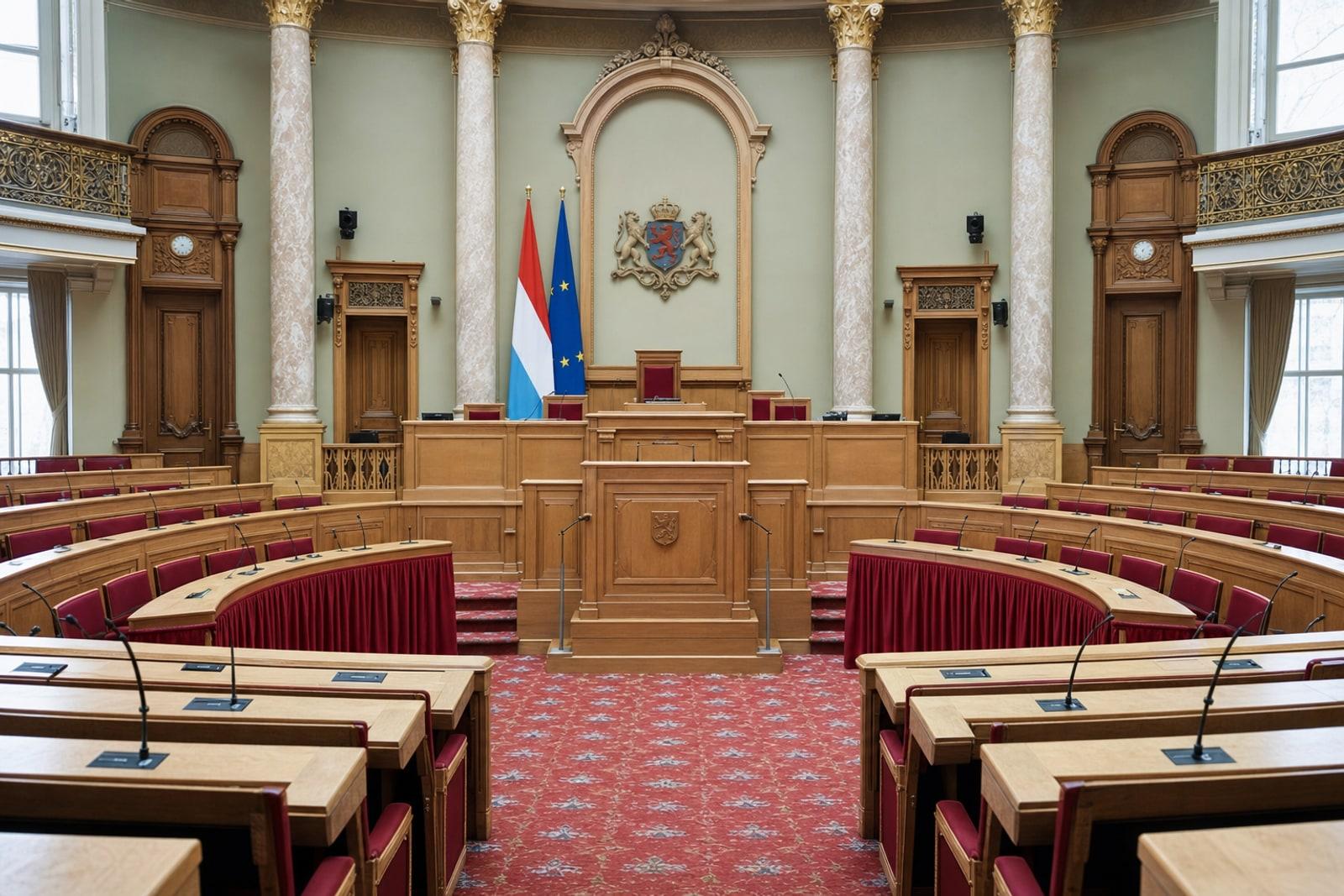
The question Luxembourg's voters dismissed by a four-to-one margin a decade ago is once more in front of their parliament. On 10 March 2025, the Chamber of Deputies' Committee on Institutions discussed lowering the voting age from 18 to 16 as part of a wider modernisation of the country's electoral law. But the early signs suggest the idea faces the same obstacle that has always stood in its way: Luxembourg's constitution.
According to the committee's own account of the meeting, deputies split along a familiar line. Members of the governing coalition favoured reforms that would not require touching the constitution, while opposition deputies pressed to reopen rules that are constitutionally fixed — among them the minimum voting age and the number of seats in parliament. One opposition member argued for letting 16- to 18-year-olds take part through voluntary, rather than compulsory, voting. The official summary named no individual deputies.
A reform built to avoid the constitution
When the committee, chaired by the CSV's Laurent Zeimet, set its roadmap on 15 September 2025, it fixed three priorities: technical adjustments to how elections are run, the digitalisation of voting, and new rules on the status and workload of deputies. Pointedly, it left several bigger questions off the table for lack of a majority — among them the four constituencies, the 60-seat size of the Chamber, and "active and passive voting rights." A further update from the committee in June 2026 confirmed that the working texts deal with electoral registers, postal voting and the rights of citizens living abroad, not the voting age.
The committee framed its task in modest terms, describing the goal as to "modernise electoral law and adapt the rules governing the organisation of elections to the reality of the 21st century." That is some distance from enfranchising teenagers.
The reason is procedural as much as political. Lowering the voting age would require a constitutional revision, and under Article 114 of Luxembourg's constitution — the revised text of which took effect on 1 July 2023 — that means two successive votes in the Chamber, each with at least three-quarters of members present and a two-thirds majority in favour. With the change absent from the coalition's package, the arithmetic for 2028 looks difficult.
The shadow of 2015
Any debate in Luxembourg starts from the result of 7 June 2015, when a consultative referendum put three constitutional questions to the public. Voters rejected all three. On lowering the voting age to 16, with optional registration for those aged 16 to 18, 80.87% voted No. A parallel question on giving long-term foreign residents the right to vote in national elections was rejected by 78.02%, and a proposal for cabinet term limits by 69.93%. Turnout, in a country with compulsory voting, was 86.99% of the 246,974 registered electors. Though the vote was non-binding, the government of the day said it would respect the outcome.
That history gives the present debate its weight. Nearly half of Luxembourg's residents — 320,726 of a population of 681,973 at the start of 2025, or about 47% — are foreign nationals who cannot vote in Chamber of Deputies elections at all. Against that backdrop, the age threshold is one of the few levers available to widen national democratic participation among citizens, which is partly why youth bodies keep pushing it. Luxembourg's Youth Parliament has called for a fresh referendum on the issue.
On veut un nouveau référendum sur le droit de vote à 16 ans. ("We want a new referendum on the right to vote at 16.")
The statement, attributed to the Youth Parliament's then-president, reflects an argument that excluding interested young people from the ballot is itself a democratic failing, and that participation should be possible but not obligatory for under-18s.
What the neighbours show
Supporters point across the borders. Austria became the first EU state to let 16- and 17-year-olds vote in national elections with its 2007 reform, and the early evidence was encouraging: turnout among the youngest first-time voters reached 88% at the 2008 general election, matching the overall rate. But the enthusiasm proved fragile, falling to 63% by 2013 — well below the roughly 80% general turnout — before recovering in 2017.
Researchers caution that the swing reflects effort as much as age. In an analysis for the Elcano Royal Institute, the authors wrote:
"The decline in voter participation between the general elections of 2008 and 2013 can be related to the fact that in the course of the second general election, politics, educational institutions and the media payed less attention to mobilising first-time voters."
Academic studies of the Austrian case generally find that 16- and 17-year-olds turn out at rates similar to or above slightly older first-time voters, and that the quality of their vote choices is comparable — with some signs that voting early can build a lasting habit.
Germany offers a second data point. For the 2024 European Parliament elections, it lowered the voting age to 16, allowing roughly 4.8 million young Germans — plus around 300,000 young EU nationals living in the country — to vote in a Europe-wide poll for the first time on 9 June 2024. Six federal states, including Brandenburg, Hamburg and Schleswig-Holstein, already let 16-year-olds vote in their regional Landtag elections.
A test, not a decision
For now, the Luxembourg debate is exactly that — a debate. The coalition under Prime Minister Luc Frieden has chosen a reform that sidesteps the constitutional bar, the opposition wants to clear it, and youth groups want voters to decide again. With no draft on the table to lower the age and a two-thirds threshold to meet, votes at 16 remain a live question rather than a likely change for 2028. What it tests is broader: how a country where outsiders already outnumber many of its electoral districts chooses to draw the lines of who belongs to its democracy.
Frequently asked
- Is Luxembourg lowering the voting age to 16 for the 2028 election?
- Not as things stand. Parliament's Committee on Institutions discussed the idea in March 2025, but the governing coalition's reform roadmap deliberately excludes changes to voting rights, and no draft to lower the age has been tabled.
- Why is it so hard to change the voting age in Luxembourg?
- The voting age is part of the constitutional framework. Lowering it requires a constitutional revision under Article 114 — two successive votes in the Chamber of Deputies, each needing a two-thirds majority — or a fresh referendum.
- What happened in the 2015 referendum?
- On 7 June 2015, voters rejected lowering the voting age to 16 by 80.87% and rejected giving long-term foreign residents the vote in national elections by 78.02%. Turnout was 86.99%; the government said it would respect the non-binding result.
- What does evidence from Austria and Germany suggest?
- Austria, which has allowed votes at 16 nationally since 2007, saw youth turnout of 88% in 2008 fall to 63% in 2013 before recovering, with studies finding vote quality comparable to older first-timers. Germany lowered the age to 16 for the 2024 EU elections and in six states' regional polls.
Sources(16)
- 1Vers une réforme de la loi électorale (Committee on Institutions, 10 March 2025)Chambre des Députés du Grand-Duché de Luxembourg · chd.lu
- 2Une feuille de route pour réformer la loi électoraleChambre des Députés du Grand-Duché de Luxembourg · chd.lu
- 3Les députés travaillent sur une modernisation de la loi électoraleChambre des Députés du Grand-Duché de Luxembourg · chd.lu
- 42015 Luxembourg constitutional referendumWikipedia · en.wikipedia.org
- 5Luxembourg: Three Referendum Questions Voted DownLibrary of Congress (Global Legal Monitor) · loc.gov
- 6Luxembourg denies foreigners right to voteAl Jazeera · aljazeera.com
- 7Constitution of Luxembourg (revision procedure, Article 114)Wikipedia · en.wikipedia.org
- 8Youth participation in representative democracy — LuxembourgEACEA Youth Wiki (European Commission) · national-policies.eacea.ec.europa.eu
- 9Elections in LuxembourgWikipedia · en.wikipedia.org
- 10Luxembourg Population Growth Slows; Reaches 681,973, Driven by MigrationChronicle.lu (citing STATEC) · chronicle.lu
- 11Demographics of LuxembourgWikipedia · en.wikipedia.org
- 12Voting at 16 in Austria: a possible model for the EU?Elcano Royal Institute · realinstitutoelcano.org
- 13Voting at 16: Intended and unintended consequences of Austria's electoral reformElectoral Studies (ScienceDirect) · sciencedirect.com
- 14Voters in Germany aged 16 get to vote in European elections for the first time in 2024Deutschland.de (German Federal Foreign Office) · deutschland.de
- 15Voting in GermanyHandbook Germany · handbookgermany.de
- 16Parlement des jeunes : «On veut un nouveau référendum sur le droit de vote à 16 ans»Le Quotidien · lequotidien.lu
Related by topic