Language
After years of workarounds, the iPhone learns to spell Lëtzebuergesch
Apple will add a native Luxembourgish keyboard in iOS 27, a small but symbolic win for a language of roughly 400,000 speakers long left to fend for itself online.
By Tom Schmit · · · 6 min read
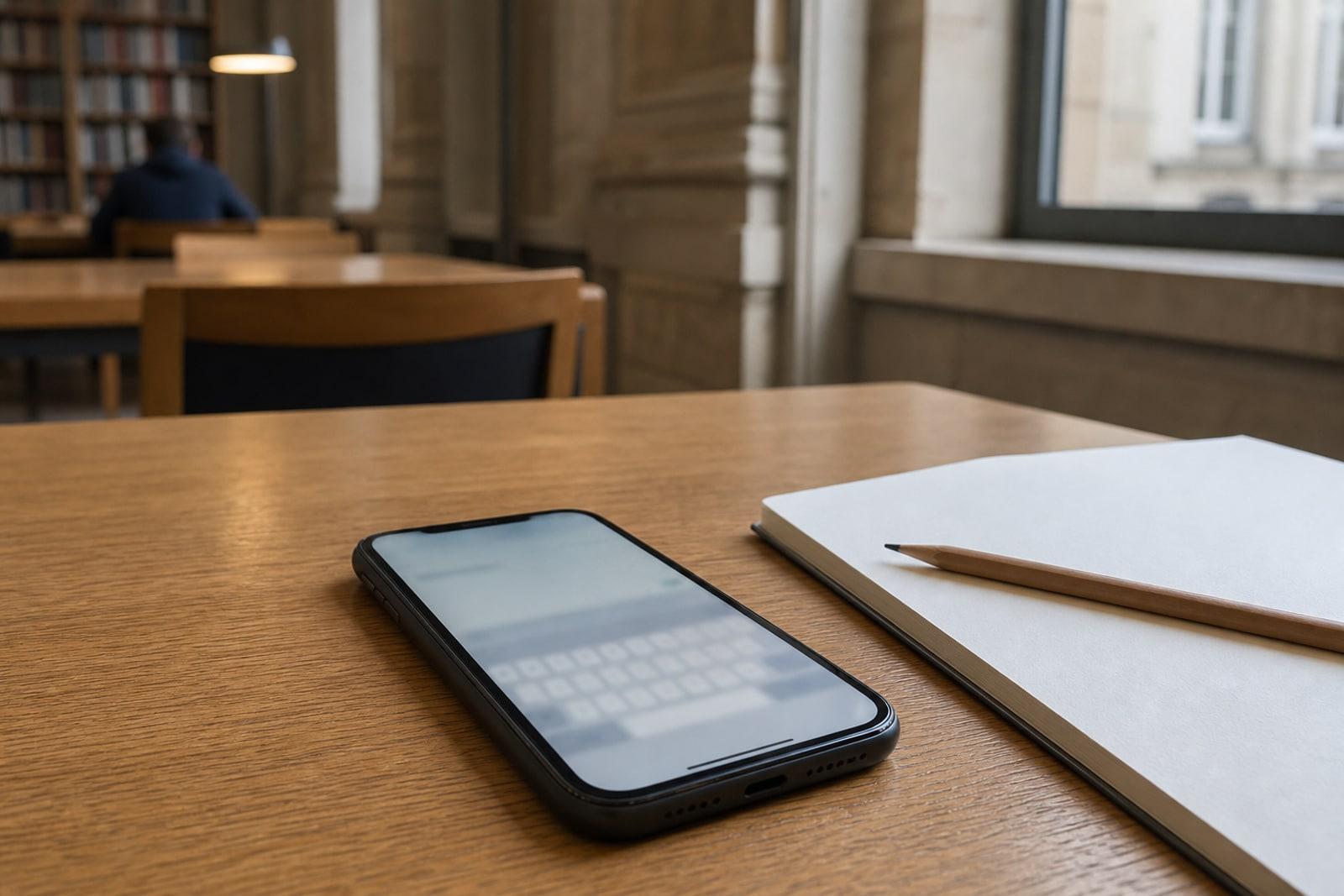
For years, writing Luxembourgish on an iPhone has been an exercise in quiet friction. The device offered slick autocorrect and predictive text in German, French and English, but the moment a user switched to Lëtzebuergesch — the everyday tongue of the Grand Duchy and, since 1984, its national language — the software fell silent. Every ä, every ë, every word governed by the notorious Eifeler Regel had to be coaxed into place by hand, against a keyboard that did not recognise the language existed.
That gap is about to close. At its Worldwide Developers Conference, which opened on 8 June 2026, Apple confirmed that iOS 27 will include a native Luxembourgish keyboard, listing the language alongside Afrikaans, Basque, Galician, Guarani, Xhosa and Zulu among new keyboard additions due across its operating systems later this year. For a language community that has spent two decades building its own digital scaffolding, the announcement reads less as a feature note than as belated recognition.
What Apple is actually adding
A native keyboard is more than a rearranged set of keys. In Apple's framework, adding a language means the system can offer Luxembourgish-aware text input: autocorrect that stops fighting the user, predictive suggestions trained on the language, and an underlying dictionary so that words are flagged as correct rather than underlined in red. In practice it should mean that typing a Luxembourgish message no longer feels like overriding the phone at every turn.
Apple, characteristically, disclosed the change without fanfare — it surfaced not in the keynote but in the dense slide of incremental improvements the company publishes alongside each release. The firm has not detailed how comprehensive the Luxembourgish dictionary will be, nor how it has handled the orthographic rules codified by the country's language authorities. Those details will matter: the value of the feature depends entirely on the quality of the linguistic data behind it.
The long campaign to put Luxembourgish online
The significance of Apple's move is easier to grasp against the backdrop of how much of the groundwork was laid without it. Because no major technology company offered Luxembourgish out of the box, speakers built the tools themselves. The most consequential effort began in 2006, when the developer Michel Weimerskirch started work on a Luxembourgish spell-checker; the resulting project, Spellchecker.lu, grew into an open-source HunSpell dictionary and thesaurus, a web checker, browser extensions, plug-ins for office software, and mobile apps for both Android and iOS.
That patchwork allowed Luxembourgish to function on computers and, to a degree, on phones — but always as something bolted on. iPhone users wanting any correction at all were typically pointed toward third-party keyboard apps from the App Store, a workaround that never matched the seamlessness of a system keyboard. The state, meanwhile, invested in reference resources of its own, chief among them the Lëtzebuerger Online Dictionnaire (LOD), a free online dictionary, and sites such as schreiwen.lu for spelling queries.
The institutional backbone for all of this is the Zenter fir d'Lëtzebuerger Sprooch (ZLS), the Centre for the Luxembourgish Language, created by the law of 20 July 2018 on the promotion of the Luxembourgish language. That statute also established a language commissioner and a 20-year action plan whose stated aims include strengthening the language's standing, advancing its standardisation and supporting its use. The ZLS maintains the LOD, issues authoritative guidance on spelling and grammar, develops linguistic tools and publishes its language data openly — the kind of standardised, machine-readable resource that makes a credible autocorrect dictionary possible in the first place.
Why it matters for a language of 400,000
Luxembourgish is spoken by roughly 400,000 people, a figure that makes it tiny by global standards even as it remains the first language of most residents of the Grand Duchy. It is the country's national language, sitting alongside French and German as the three administrative languages, yet its small speaker base has consistently placed it below the threshold at which commercial software vendors bother to offer support. In 2019, UNESCO listed Luxembourgish as a vulnerable language in its atlas of endangered tongues.
Language advocates have long argued that digital presence is now a condition of a language's everyday survival. A tongue that cannot be typed easily on the device people use most is a tongue people will increasingly write in another language — most often, in Luxembourg's case, French or German. The point was put bluntly by researchers and the EU's own institutions: the absence of a minority language from digital systems, a 2023 European Parliament study argued, should be equated with damage to the fundamental right to express oneself in one's mother tongue.
- Native autocorrect and predictive text reduce the friction that pushes speakers toward larger languages when messaging.
- A built-in dictionary stops Luxembourgish words being flagged as errors, normalising the language in writing.
- System-level support reaches every iPhone user automatically, rather than only those who seek out a third-party app.
- It lends the language the same default status on the device as French, German and English.
Google got there first
Apple is, notably, the laggard here. Google has supported Luxembourgish in Gboard, its keyboard for Android and iOS, for years, folding it into an expansion that the company says now covers more than 60 European language varieties and includes minority tongues such as Welsh, Corsican, Scottish Gaelic and Manx. Google has framed that work as part of a commitment to make technology usable in the languages people actually want to use, even where the commercial logic is thin and the linguistic data hard to assemble.
For Luxembourg, the arrival of native Luxembourgish on the iPhone slots into a larger debate about digital sovereignty — the principle that a small country and its language should not be wholly dependent on the priorities of distant technology firms. Much of what allowed Luxembourgish to survive online was built locally: by a single developer, by volunteers and by a state-funded centre painstakingly standardising the language. Apple's keyboard does not replace that effort; it rests on it. Recognition from Cupertino is welcome, but the work that made it possible was done at home.
Frequently asked
- Is Apple adding a Luxembourgish keyboard to the iPhone?
- Yes. At its Worldwide Developers Conference, which opened on 8 June 2026, Apple confirmed that iOS 27 will include a native Luxembourgish keyboard. It was listed among new keyboard languages alongside Afrikaans, Basque, Galician, Guarani, Xhosa and Zulu, due across Apple's operating systems later in 2026.
- How did people type Luxembourgish on an iPhone before this?
- Until iOS 27, Luxembourgish was not a system keyboard language, so the iPhone offered no native autocorrect or dictionary for it. Users typically installed third-party keyboard apps from the App Store, such as those built on the Spellchecker.lu dictionary, or corrected Luxembourgish words by hand.
- What is the Zenter fir d'Lëtzebuerger Sprooch (ZLS)?
- The ZLS, or Centre for the Luxembourgish Language, is the state body created by the law of 20 July 2018 on the promotion of the Luxembourgish language. It standardises spelling and grammar, maintains the Lëtzebuerger Online Dictionnaire, develops linguistic tools and publishes the language's data openly.
- How many people speak Luxembourgish?
- Luxembourgish is spoken by roughly 400,000 people. It is the national language of Luxembourg, granted that status in 1984, and one of three administrative languages alongside French and German. UNESCO classified it as a vulnerable language in 2019.
Sources(6)
- 1Here Are the 263 New Features Revealed in Apple's Massive WWDC 2026 SlideiClarified · iclarified.com
- 2Apple kicks off Worldwide Developers Conference on June 8Apple Newsroom · apple.com
- 3Strategy for the promotion of the Luxembourgish languageThe Luxembourg Government · gouvernement.lu
- 4Zenter fir d'Lëtzebuerger Sprooch - Open Data Portaldata.public.lu · data.public.lu
- 5How Gboard is helping European languages in the digital ageGoogle · blog.google
- 6LuxembourgishWikipedia · en.wikipedia.org
Related by topic