Middle East
Gulf monarchies emerge as the contested middle ground in the US-Iran standoff
As a fragile US-Iran truce frays over the Strait of Hormuz, Qatar, Saudi Arabia and the UAE are hedging between Washington and Tehran — with global energy and European security in the balance.
By Léa Hoffmann · · 5 min read
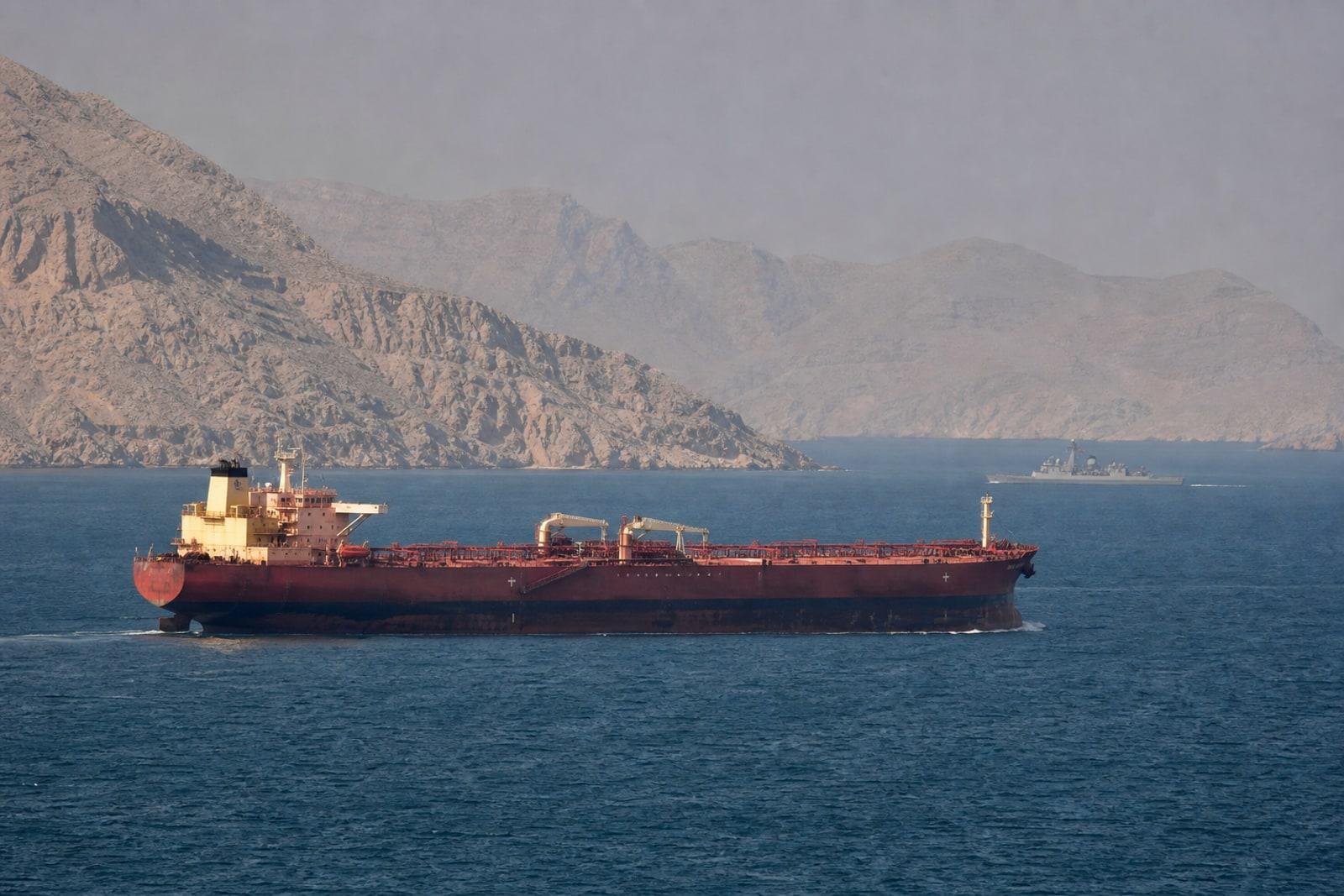
A drone strike on an oil tanker in the Strait of Hormuz and a fresh round of American retaliation have again tested the truce between Washington and Tehran, underscoring how the six Gulf Arab monarchies have become the contested middle ground in the US-Iran confrontation — courted by both sides, attacked by one, and exposed to the consequences of either.
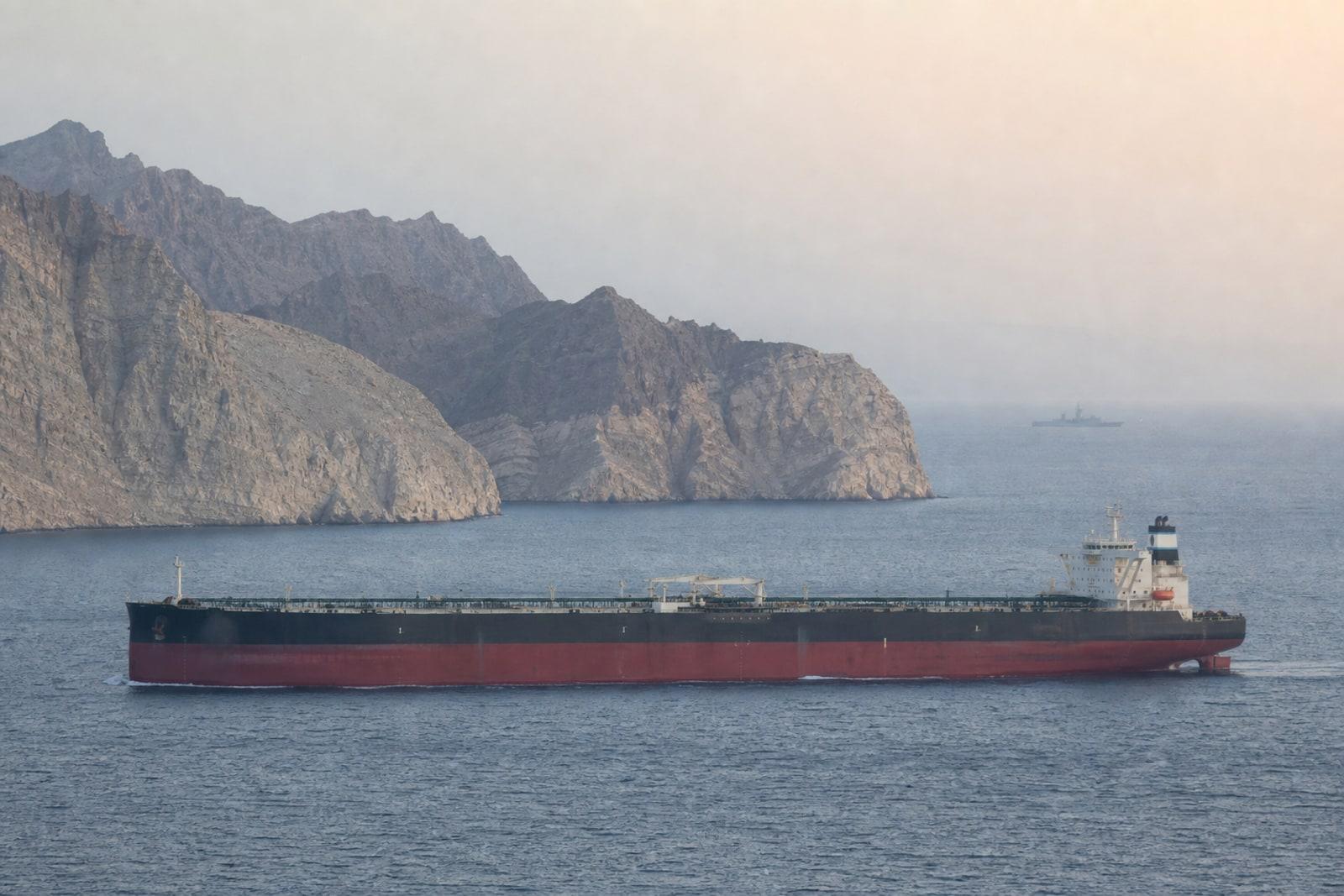
On 27 June, a Panama-flagged tanker, the Kiku, carrying more than two million barrels of crude near the strait, was struck by a one-way attack drone that damaged its bridge; the crew was unharmed and no spill was reported, according to reporting by CNBC and Bloomberg. US Central Command answered with strikes on Iranian surveillance, air-defence and drone-storage sites, the latest exchange in a war that has run since late February.
The episode laid bare the limits of a deal meant to stop exactly this. On 17 June, President Donald Trump and Iran's President Masoud Pezeshkian signed a 14-point memorandum of understanding extending a ceasefire for 60 days, reopening the Strait of Hormuz to commercial traffic toll-free and lifting a US naval blockade of Iranian ports. Each side now accuses the other of breaking it.
The Gulf as battleground
For the monarchies, the danger is not abstract. Since the US-Israeli air war on Iran began on 28 February, Iranian missiles and drones have repeatedly struck Gulf territory. On 3 June, Iranian drones hit a passenger terminal at Kuwait International Airport, killing one person — an Indian national — and wounding 63, according to NPR and Al Jazeera. US and Bahraini forces intercepted missiles and drones aimed at Bahrain, home to the US Navy's Fifth Fleet. Over the course of the war, Iranian fire has reached Manama, Kuwait, Abu Dhabi, Riyadh and Saudi Arabia's oil-rich Eastern Province.
Yet the Gulf Cooperation Council — Saudi Arabia, the United Arab Emirates, Qatar, Kuwait, Bahrain and Oman — has stayed out of direct combat. Their calculation is geographic as much as political: Iran is a permanent neighbour, and the same waterway that carries their wealth to market runs along its coast.
Hedging between Washington and Tehran
That has pushed the monarchies into an elaborate balancing act — backing US diplomacy while keeping channels open to Tehran. Qatar, despite absorbing Iranian fire, has co-mediated the talks alongside Egypt and Turkey. In an unusual measure of how far de-escalation now runs through the Gulf, Vice-President JD Vance disclosed that a US-Iran deconfliction channel will see representatives of Iran's Islamic Revolutionary Guard Corps and US Central Command sit together in Doha — a striking step given Washington still designates the IRGC a terrorist organisation.
The monarchies are also pressing their own terms. At a 25 June ministerial in Manama co-chaired by US Secretary of State Marco Rubio and Bahrain's foreign minister, the GCC and Washington declared that lasting peace required addressing Iran's ballistic missiles, drones and regional proxies, and that any trade and investment with Iran would remain "conditional and reversible." Tehran rejected the statement as interventionist.
New geopolitical facts cannot be imposed on Gulf states because of treacherous aggression against them.
That warning, from Anwar Gargash, diplomatic adviser to the UAE president, captures the Gulf posture: resist being dictated to by either side, while quietly insisting that any new order over the Strait of Hormuz include them. "Iran's national security and dignity are matters that brook no compromise or condition," an Iranian foreign ministry spokesperson countered, rejecting limits on its missiles and defence.
For all the friction, the monarchies see diplomacy as the lesser risk. Analysts say the Gulf states have positioned themselves at the centre of the bargaining precisely so that no settlement over their shared waterway can be reached without them.
Energy and European stakes
The reason the Gulf's choices matter far beyond the region sits in the strait itself. Roughly a fifth of the world's oil — about a quarter of seaborne crude — and some 20 percent of its liquefied natural gas normally pass through the narrow channel between Iran and Oman. Disruption there moves prices everywhere.
It already has. Brent crude, which traded near $80 a barrel before the war, vaulted past $100 in early March for the first time in four years and peaked at $126, a rise of about 65 percent over the month — the largest monthly jump on record, according to the World Bank, which has described the shock as among the largest oil-market disruptions in history. The Bank put March's loss of global supply at roughly 10 million barrels a day and flagged upside risk toward $95–$115 a barrel if hostilities re-escalate.
Europe, with no Gulf-scale buffer of its own, is directly exposed. Wholesale gas prices on the continent nearly doubled in the war's opening days, and a sustained closure of Hormuz would feed straight into European inflation and energy security at a moment when the bloc is still weaning itself off cheap fuel. For small, open, import-dependent economies such as Luxembourg, the transmission is immediate: prices at the pump and on power bills track a waterway thousands of kilometres away.
Gulf producers have tried to insulate themselves — Saudi Arabia rerouting crude west to the Red Sea, the UAE pumping to Fujairah beyond the strait — but neither pipeline can replace Hormuz at full tilt. With the truce holding only in fits and starts, the monarchies that least wanted this war remain its most consequential brokers, and its most exposed bystanders.
Frequently asked
- Why are the Gulf states central to the US-Iran confrontation?
- The Gulf monarchies sit between Washington and Tehran geographically and politically. They host US forces and have been hit by Iranian strikes, yet must coexist with Iran as a neighbour. Qatar is mediating, and the Strait of Hormuz that carries their oil runs along Iran's coast, making them both brokers and bystanders.
- What is the current state of the US-Iran ceasefire?
- Trump and Iran's President Pezeshkian signed a 14-point memorandum on 17 June extending a 60-day ceasefire and reopening the Strait of Hormuz toll-free. But a 27 June tanker strike and US retaliatory strikes show the truce is fragile, with each side accusing the other of violations.
- How does the standoff affect energy markets and Europe?
- About a fifth of global oil and 20% of LNG pass through the Strait of Hormuz. Brent crude peaked at $126 a barrel during the war, and European gas prices nearly doubled early on. Import-dependent economies such as Luxembourg feel the impact directly through fuel and power costs.
Sources(14)
- 1Iran, US Exchange Attacks As Tensions In Gulf RiseRFE/RL · rferl.org
- 2Hard-headed pragmatism: Israel's war backfires as Gulf backs US-Iran MoUAl Jazeera · aljazeera.com
- 3Tanker struck in Strait of Hormuz as U.S.-Iran tensions escalateCNBC · cnbc.com
- 4Tanker Struck in Hormuz as Navies Lift Threat Level to ShipsBloomberg · bloomberg.com
- 5Second ship hit in Hormuz Strait after Trump slams 'foolish' attackNewsweek · newsweek.com
- 6Kuwait says Iranian drones hit airport and killed 1 as ceasefire is tested againNPR · npr.org
- 7Iranian drone attack kills Indian citizen in Kuwait after US strikes QeshmAl Jazeera · aljazeera.com
- 8Joint Statement Following the Ministerial Meeting of the United States and the Gulf Cooperation Council (GCC)U.S. Department of State · state.gov
- 9Iran slams the GCC and the US for 'interventionist' statement: What we knowAl Jazeera · aljazeera.com
- 10Gulf states weigh living side by side with Iran as Tehran weaponises HormuzEuronews · euronews.com
- 11Vance: US-Iran deconfliction cell has IRGC, CENTCOM reps 'hanging out' in DohaThe Times of Israel · timesofisrael.com
- 12Strait of Hormuz disruption sends oil prices surgingWorld Bank Blogs · blogs.worldbank.org
- 132026 Strait of Hormuz crisisWikipedia · en.wikipedia.org
- 142026 Iran war ceasefireWikipedia · en.wikipedia.org
Related by topic