Disaster
Twin Earthquakes Strike Venezuela, Killing at Least 32 and Trapping Many in Caracas
Two quakes of magnitude 7.2 and 7.5 hit within a minute near Venezuela's north coast, collapsing buildings in the capital as rescuers dig through rubble and a nationwide state of emergency takes hold.
By Léa Hoffmann · · 4 min read
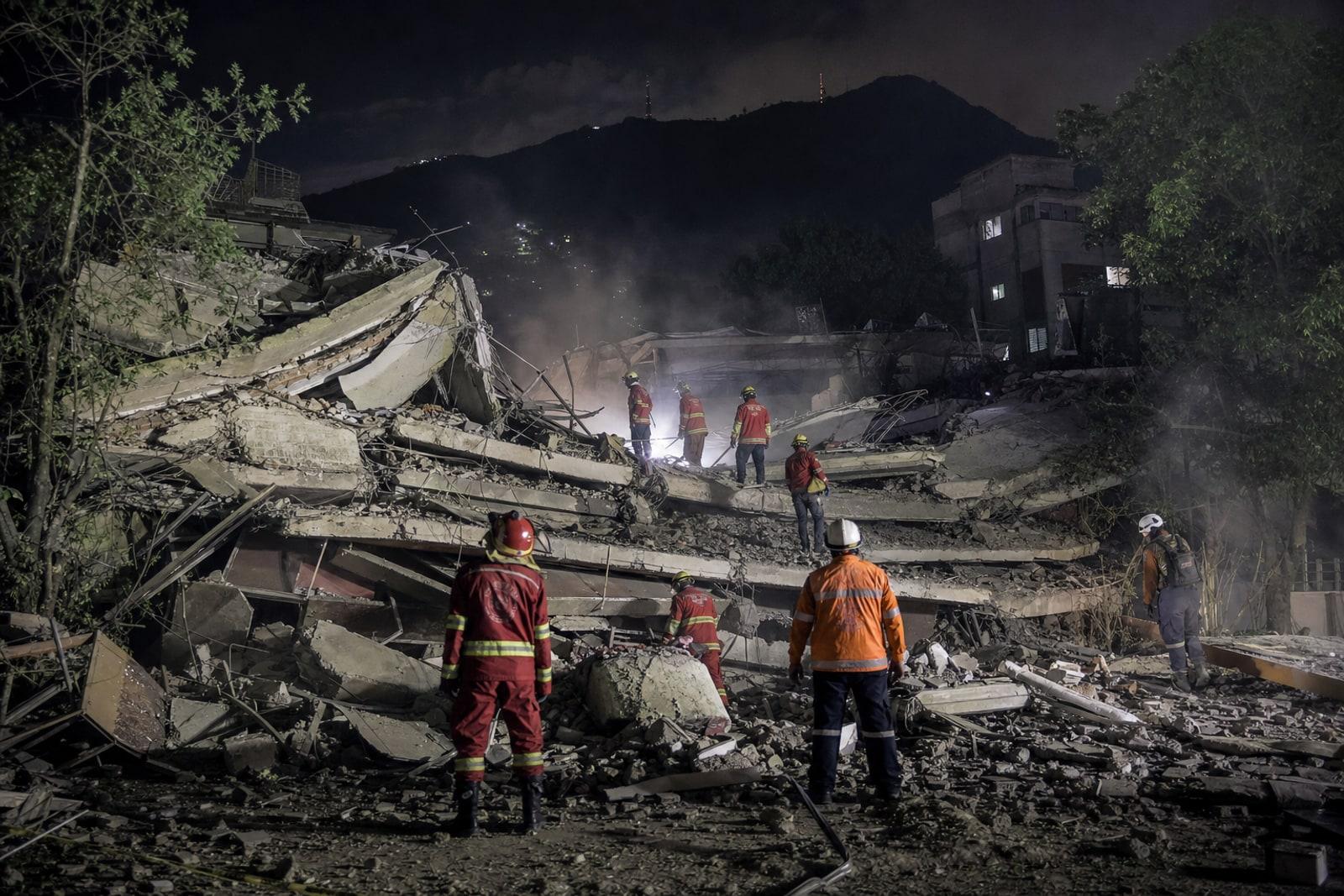
Two powerful earthquakes struck northern Venezuela within about 40 seconds of each other on the evening of 24 June, collapsing buildings in the capital, Caracas, and burying residents under concrete and rubble. Acting President Delcy Rodríguez said early on Thursday that at least 32 people had been killed and 700 injured, and warned that the toll was expected to climb as rescue teams reached flattened apartment blocks.
The United States Geological Survey (USGS) measured the first quake at magnitude 7.2 and the second, larger one at 7.5. Both struck near the town of Yumare in Yaracuy state, roughly 160 kilometres (100 miles) west of Caracas, according to the agency. Early bulletins had put the first tremor at 7.1 before the USGS settled on 7.2.
It is among the strongest earthquakes to hit Venezuela in more than a century, broadcasters including NBC News and CNBC reported. The mainshock was shallow — the USGS placed it at a depth of about 10 kilometres — a characteristic that tends to intensify shaking at the surface and helps explain the scale of the destruction so far from the epicentre.
A rare double shock
Residents described two violent jolts in quick succession. People poured out of swaying high-rises in Caracas and stayed in the streets, many visibly shaken as they watched walls give way and columns of dust rise over their neighbourhoods. A brief tsunami advisory was issued for parts of the Caribbean and then withdrawn within about an hour; no tsunami materialised, the USGS and broadcasters said.
The USGS issued two separate red alerts through its PAGER system, its highest level, signalling the potential severity of the disaster.
High casualties and extensive damage are probable and the disaster is likely widespread.
That PAGER assessment is a statistical model rather than a count of the dead. It estimated that fatalities would most likely fall in a wide range from the thousands to as many as 100,000, with the agency assigning a substantial probability to a toll of between 10,000 and 100,000. The 32 deaths confirmed by Wednesday night reflect only the earliest reports from accessible sites; officials cautioned the real figure is unknown while search-and-rescue work continues.
Caracas bears the brunt
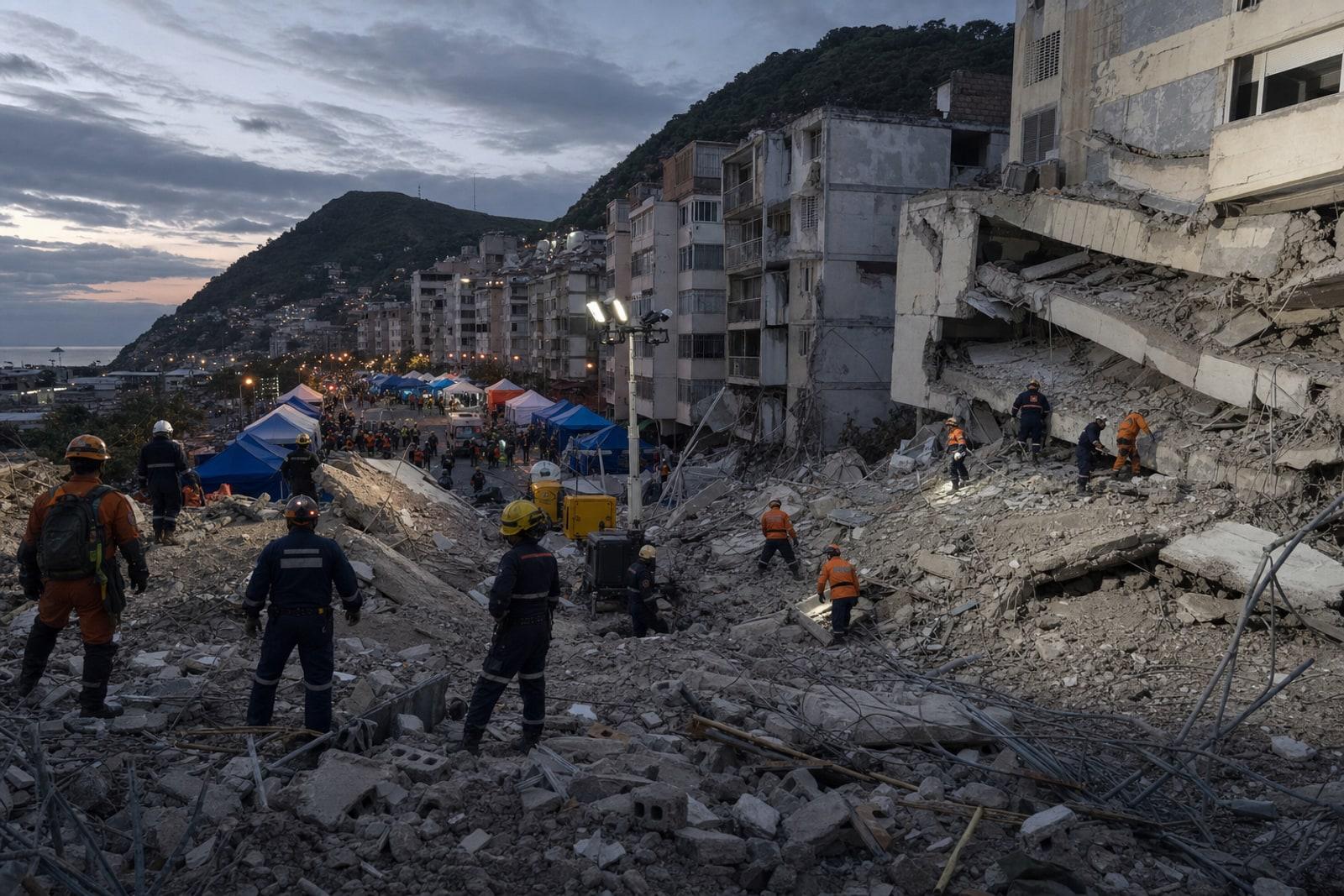
Although the epicentre lay to the west, the capital suffered some of the heaviest damage. Interior Minister Diosdado Cabello identified the affluent Los Palos Grandes and Altamira districts as the worst-affected parts of the city. Dozens of buildings collapsed across Caracas — including a bank — and in some southeastern areas high-rise blocks were heavily damaged or destroyed. Fatal collapses were reported in the Baruta and Chacao municipalities.
The shaking was felt well beyond the capital. Authorities and local media reported collapsed buildings and casualties across several states, including:
- Yaracuy, near the epicentre
- La Guaira, on the Caribbean coast, declared a disaster zone
- Carabobo, Aragua and Miranda, in the densely populated north
- Trujillo, in the Andean west, and Falcón, where people were reported trapped under debris
The capital's main gateway, Simón Bolívar International Airport, was damaged and closed, and all flights were cancelled. The Caracas Metro was suspended, the gas supply was shut off as a precaution, and telecommunications were disrupted in parts of the city.
State of emergency and a scramble to dig out survivors
Rodríguez declared a nationwide state of emergency in a televised address and announced the creation of a high-level task force to coordinate search and rescue. She appealed for calm and urged health workers across the country to report to hospitals to help treat the injured.
"We urge our population to remain calm. We urge unity," Rodríguez said.
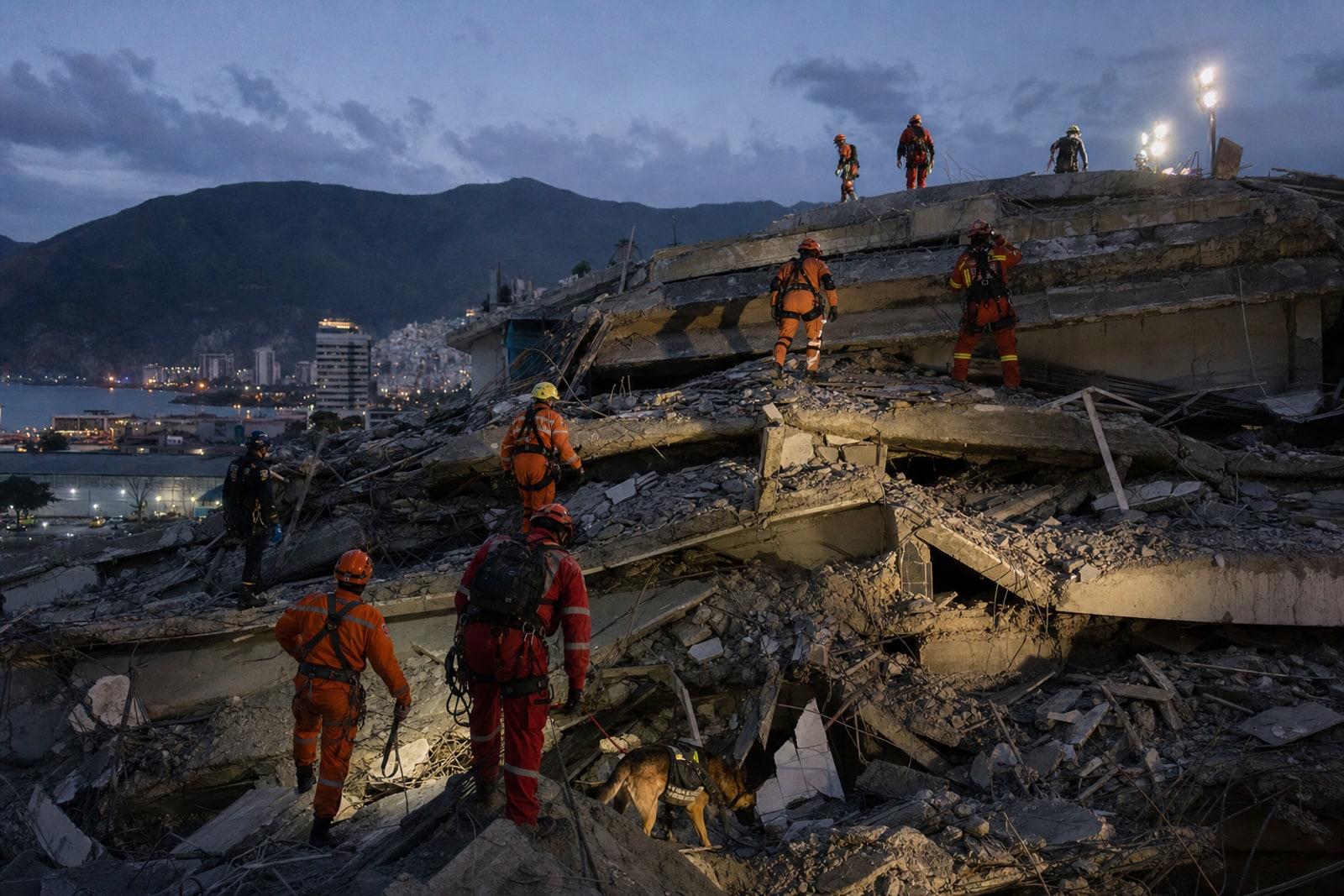
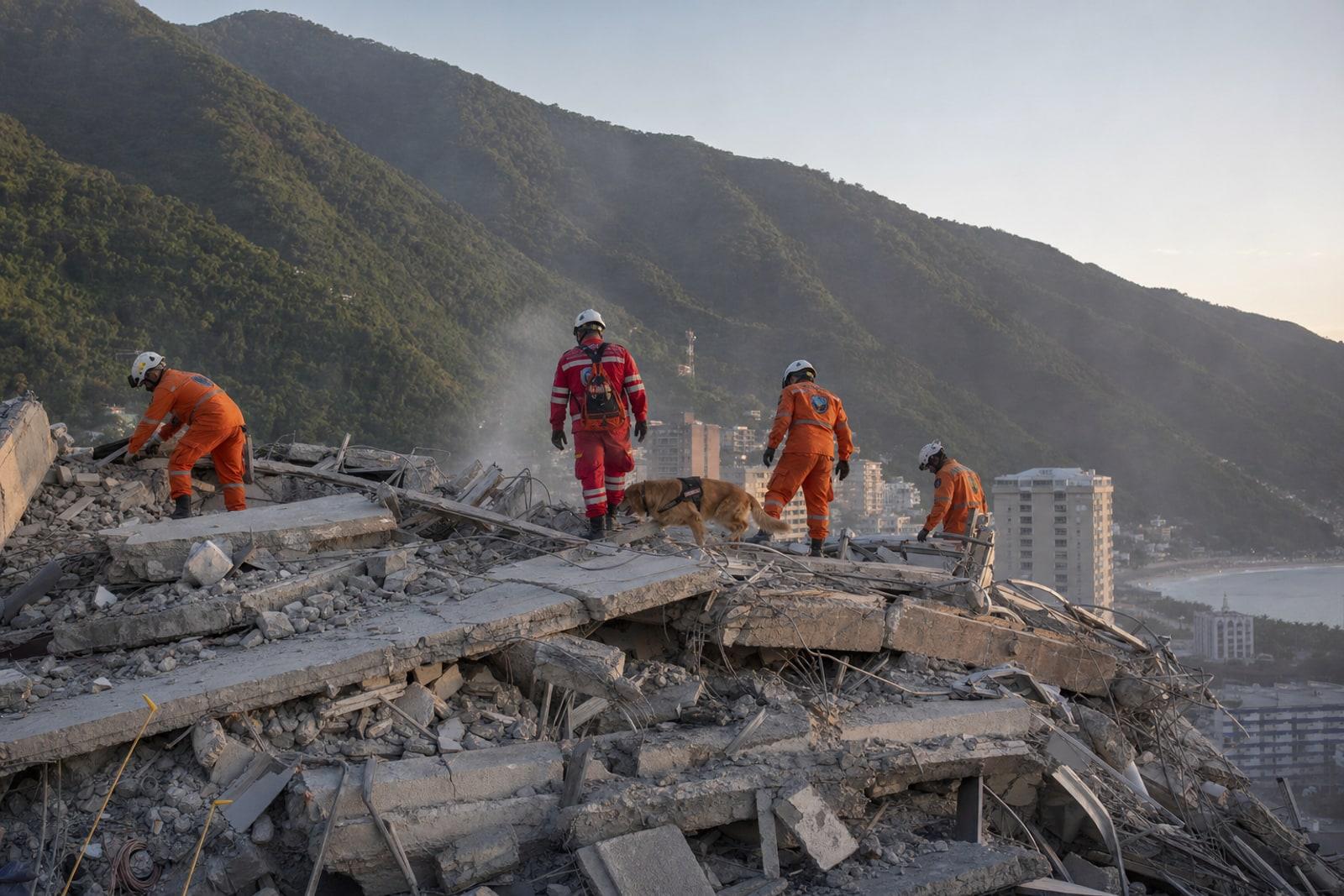
Cabello said emergency services had been fully mobilised. "The fire department, police all have been activated," he told state media. Classes were cancelled, with the education ministry saying some schools would be used as shelters and donation centres for displaced families. Hundreds of rescuers worked through the night, in places by hand and floodlight, to reach people thought to be trapped beneath collapsed structures.
Offers of help pour in
International assistance was offered within hours. The United States said it was mobilising a disaster-assistance team. Jeremy Lewin, the State Department's under secretary for foreign assistance, said Washington would coordinate support with the interim Venezuelan government.
"Working with our partners in the interim Venezuelan government, the U.S. will be sending search and rescue teams, medical and humanitarian supplies and other resources in the crucial first days after this tragic natural disaster," Lewin said. Deputy Secretary of State Christopher Landau added that the United States "stands with the Venezuelan people" after what he called "devastating earthquakes."
Several Latin American governments — among them Argentina, Bolivia, Brazil, Chile, Ecuador, El Salvador, Mexico, Panama, Peru and Uruguay — also offered rescue personnel and humanitarian aid, according to Venezuelan authorities and international reports.
With aftershocks still rattling the region and many buildings unsafe, officials warned that the picture remained fluid. The confirmed casualty figures are provisional, the rescue effort is in its earliest and most critical hours, and the full human and structural cost of the twin quakes will not be clear for days.
Frequently asked
- How strong were the Venezuela earthquakes and where did they hit?
- The US Geological Survey measured the two quakes at magnitude 7.2 and 7.5. They struck within about 40 seconds of each other near the town of Yumare in Yaracuy state, roughly 160 km (100 miles) west of Caracas, at a shallow depth of around 10 kilometres for the mainshock.
- How many people were killed or injured?
- Acting President Delcy Rodríguez said early on 25 June that at least 32 people had died and 700 were injured, and that the numbers were expected to rise. The USGS warned that high casualties were probable, but its higher estimates are a statistical model, not a confirmed count.
- What was the emergency response?
- Venezuela declared a nationwide state of emergency and set up a task force to lead search and rescue. Simón Bolívar International Airport was closed, the Caracas Metro suspended and classes cancelled. The United States and several Latin American countries offered rescue teams, medical supplies and humanitarian aid.
Sources(11)
- 12026 Venezuela earthquakesWikipedia · en.wikipedia.org
- 2Powerful twin earthquakes hammer Venezuela, collapsing buildings in the capital, CaracasNBC News · nbcnews.com
- 3Venezuela was just rocked by back-to-back earthquakes. Here's what we knowCNN · cnn.com
- 4USGS warns up to 100,000 people may be dead after quakes hit VenezuelaRadio New Zealand (RNZ) · rnz.co.nz
- 5Acting Venezuela President Rodríguez says 32 dead and 700 injured after earthquakesAssociated Press (via KVUE) · kvue.com
- 6Venezuela earthquakes live: Tremors of 7.5, 7.2 kill 32, injure hundredsAl Jazeera · aljazeera.com
- 7Two powerful earthquakes strike Venezuela, destroying buildingsABS-CBN News · abs-cbn.com
- 8Two 7+ magnitude earthquakes strike Venezuela, heavy damage reported in CaracasCBS News · cbsnews.com
- 92 major earthquakes strike northern Venezuela, near CaracasNPR · npr.org
- 10Strong back-to-back earthquakes hit Venezuela, prompting fears of heavy casualtiesCBC News · cbc.ca
- 112 powerful back-to-back earthquakes rock Venezuela, damage and injuries reportedABC News · abcnews.com
Related by topic