Organised crime
UN finds record cocaine output as Europe becomes a prime trafficking target
The UNODC's 2026 World Drug Report charts an all-time high in cocaine production and surging methamphetamine, reshaping money-laundering risk across Europe and its financial centres.
By Léa Hoffmann · · 4 min read
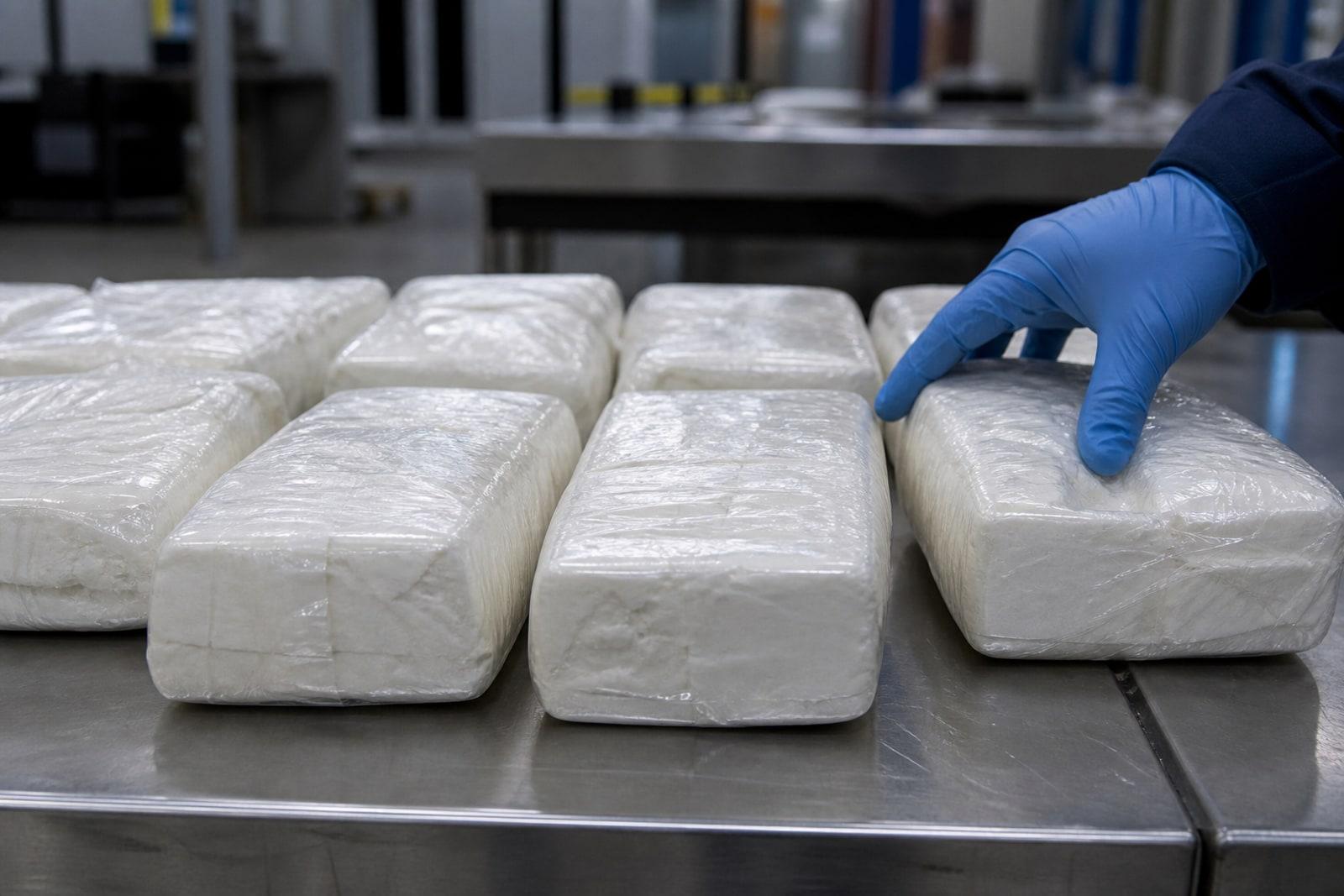
Global cocaine production has reached an all-time high and methamphetamine trafficking is expanding at double-digit rates, the United Nations said on Thursday, in a report that frames a booming illicit drug trade as an accelerating threat to Europe’s security and its financial system.
The World Drug Report 2026, published by the UN Office on Drugs and Crime (UNODC) to mark the International Day Against Drug Abuse and Illicit Trafficking, estimates that cocaine production rose to more than 4,000 tonnes in pure form in 2024 — more than four times the level of a decade earlier. The agency attributes the surge to rising productivity and an expanding area under coca cultivation, as organised-crime groups push beyond their established markets in Western and Central Europe, North America and Oceania.
An estimated 331 million people used a drug in 2024, or 6.2 percent of the world’s population aged 15 to 64, up from 5.2 percent ten years earlier, according to the report. Cannabis remained the most widely used substance, with 256 million users, followed by opioids (63 million), amphetamines (32 million), cocaine (around 25 million) and ecstasy (21 million).
A record in the fields and the labs
The UNODC said the market is fragmenting as quickly as it is growing. Researchers identified 755 new psychoactive substances in 2024, 118 of them reported for the first time, and found that the diversity of substances turning up in seizures was roughly five times greater than four years earlier. Methamphetamine trafficking, measured by seizures, is growing by about 13 percent a year, with production spreading from Myanmar to North America, West and Southern Africa and Southwest Asia.
We have seen an unprecedented spike in new types of drugs on the market, and worryingly, some are more potent or dangerous than before.
That warning came from Monica Juma, who took over as UNODC executive director in 2026. The agency cautioned that traffickers are exploiting technology, new trade routes and global instability to seed novel drugs in fresh markets faster than regulators can respond.
Europe’s growing thirst
Europe sits at the centre of that expansion. UNODC data place Western and Central Europe as the world’s second-largest cocaine market after North America, with regional seizures rising sevenfold between 2014 and 2023. The North Sea container hubs of Antwerp and Rotterdam remain principal gateways, but the report and Europe’s own drugs agency describe traffickers adapting under pressure.
The European Union Drugs Agency reported this month that cocaine seizures across the EU fell to 330 tonnes in 2024 from a record 419 tonnes in 2023. The drop was concentrated in the traditional gateways — down 64 percent in Belgium, 45 percent in Germany and 36 percent in the Netherlands — as customs tightened controls. Seizures climbed elsewhere, with Spain reporting 124 tonnes and France a record 53.5 tonnes. Investigators say the shift reflects displacement rather than retreat:
- greater use of smaller ports and coastal landing points;
- at-sea transfers between vessels, including semi-submersibles and drones;
- increasingly elaborate physical and chemical concealment.
From the docks to the books
The trade’s profits are the part that touches Luxembourg most directly. Europol has warned that organised crime is burrowing into the legitimate economy: its 2025 analysis, Leveraging legitimacy, found that 86 percent of the EU’s most threatening criminal networks exploit legal business structures to launder money and disguise their operations. Most do so by setting up their own companies, infiltrating existing ones or bribing insiders, with logistics, construction and cash-intensive sectors among the most exposed.
That assessment lands awkwardly for a country whose economy turns on cross-border finance. The Global Initiative’s Organized Crime Index notes that Luxembourg’s status as a global financial hub “has allowed powerful international criminal networks to embed themselves in its economy,” with the Italian ‘Ndrangheta implicated in laundering proceeds through Luxembourg financial infrastructure. The Grand Duchy’s exposure stems mainly from foreign predicate offences — crimes committed abroad whose money seeks shelter at home.
Luxembourg’s frontline
The physical trade is no longer a distant concern either. Luxembourg authorities intercepted more than 873 kilograms of cocaine and over two tonnes of cannabis in 2025, much of it at the Cargo Centre, as traffickers reroute shipments to dodge tighter checks at the big seaports. Officials stress the drugs are bound for redistribution across Europe rather than the domestic market.
“We have demonstrated that we are highly professional and capable of detecting large quantities of drugs,” the Minister for Home Affairs, Léon Gloden, said of the seizures, adding that “cooperation between customs and the police is also very important.”
The government has moved to shore up its defences on the financial side too. Luxembourg published a fresh National Risk Assessment of money laundering in 2025, and a sweeping reform of its anti-money-laundering framework entered into force on 19 December 2025, addressing recommendations from the country’s most recent Financial Action Task Force evaluation. Whether such measures can keep pace with a drug economy producing record volumes — and reinvesting record profits — is the question the UNODC leaves hanging over Europe.
Frequently asked
- How much cocaine is now being produced globally?
- The UNODC's 2026 World Drug Report estimates cocaine production reached more than 4,000 tonnes in pure form in 2024, an all-time high and more than four times the level recorded a decade earlier.
- Why does the report matter for Europe and Luxembourg?
- Western and Central Europe is the world's second-largest cocaine market, and Europol says 86 percent of the EU's most threatening criminal networks launder money through legal businesses. As a major financial centre and a transit point that seized over 873 kg of cocaine in 2025, Luxembourg is exposed to both the money-laundering and trafficking spillover.
- Are Antwerp and Rotterdam still the main entry points?
- They remain principal gateways, but tighter enforcement cut seizures sharply in Belgium, Germany and the Netherlands in 2024. Traffickers are shifting to smaller ports, at-sea transfers and concealment methods, with Spain and France reporting large or record seizures.
Sources(10)
- 1UNODC World Drug Report 2026: Global drug markets transforming rapidly as technology, novel drug types and instability present traffickers with new opportunitiesUNODC · unodc.org
- 2Global drug use reaches record high as increasingly potent synthetic drugs spreadUN News · news.un.org
- 3New synthetic drugs, cocaine and meth booming, warns UNAl Jazeera · aljazeera.com
- 4Europe, the world's second-largest market for cocaineUNRIC (United Nations Regional Information Centre) · unric.org
- 5Cocaine – the current situation in Europe (European Drug Report 2026)European Union Drugs Agency (EUDA) · euda.europa.eu
- 6Europol analysis reveals how criminal networks exploit legal businesses to strengthen their grip on the economy – 86% of the EU's most threatening criminal networks exploit legal business structuresEuropol · europol.europa.eu
- 7Luxembourg under pressure from drug traffickersDelano · delano.lu
- 8The Organized Crime Index – LuxembourgGlobal Initiative Against Transnational Organized Crime · ocindex.net
- 92025 National Risk Assessment of Money LaunderingMinistry of Justice – Luxembourg Government · mj.gouvernement.lu
- 10Luxembourg: Major Reform of the AML FrameworkBaker McKenzie · bakermckenzie.com
Related by topic