Cross-border labour
Germany's commuter flow to Luxembourg stalls as French numbers rise
France now supplies more than half of Luxembourg's 233,000 cross-border workers, while the German contingent stalls under the weight of a two-year recession next door.
By Jonas Thill · · 4 min read
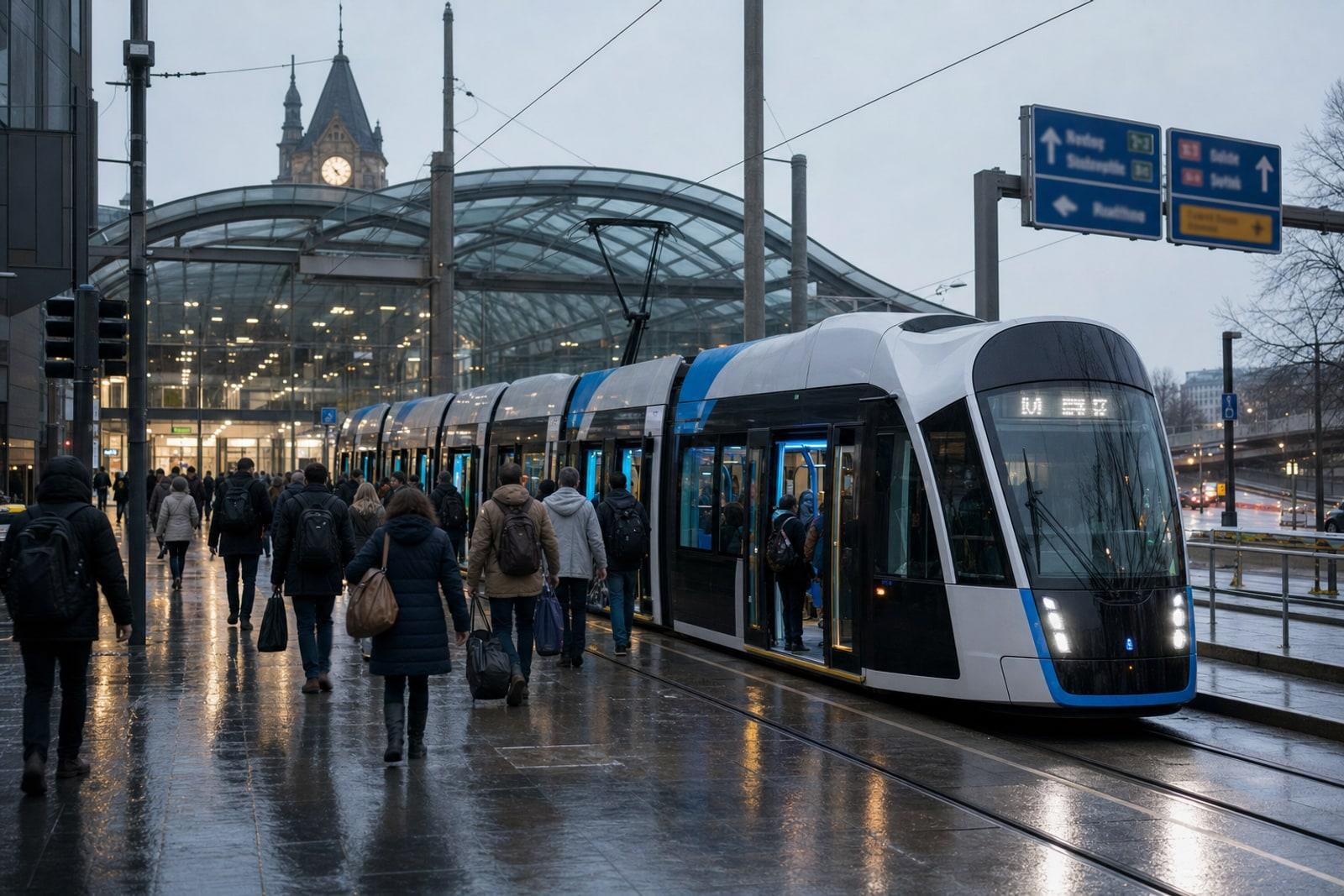
Every working morning, close to half of the people who staff Luxembourg's banks, building sites, hospitals and ministries arrive from somewhere else — Thionville and Metz in France, Arlon in Belgium, Trier in Germany. That daily tide of frontaliers is the backbone of the Grand Duchy's economy. But its composition is quietly shifting, and the direction of travel matters for a country that cannot grow without imported labour.
In 2025 Luxembourg counted roughly 233,260 cross-border workers, according to figures compiled by Les Frontaliers and the French planning agency AGURAM from STATEC and social-security data. Of those, about 126,600 live in France — some 54% of the total — against 53,360 in Germany and 53,300 in Belgium, each close to 23%. Cross-border commuters now fill an estimated 46% to 47% of all salaried jobs in the country, and only about one employee in four is a Luxembourg national.
France pulls ahead, Germany stalls
The headline numbers hide a divergence. French commuters are responsible for almost all of the recent growth, while the German pipeline has flattened and at times reversed. Les Frontaliers reported that in January 2026 the number of workers commuting from France rose 3.5% year-on-year — about 4,270 additional people — while the German contingent slipped 0.7%, or roughly 330 workers.
It is not a one-off. STATEC's quarterly data show German cross-border employment contracting by about 0.6% year-on-year in the third quarter of 2025, even as the French and Belgian flows kept rising. The pattern first surfaced in 2024. As the statistics office put it in an earlier release:
"Au deuxième trimestre, le nombre de frontaliers venus d'Allemagne (-0,3%) et de Belgique (-0,1%) a même reculé, contrairement au nombre de Français (+0,4%)." — In the second quarter, the number of commuters from Germany (-0.3%) and Belgium (-0.1%) even fell, unlike the French total (+0.4%).
That stall interrupts a long climb. The Interregional Labour Market Observatory (IBA·OIE) notes that German numbers grew so fast over two decades that they overtook Belgium: where Belgians outnumbered Germans by 7,000 in 2004, by 2023 Germans led by around 800. The recent cooling has frozen that ascent.
Why the German tap is tightening
The slowdown owes less to Luxembourg than to conditions on the German side of the border. Several forces are pulling in the same direction:
- Recession next door. Germany's economy contracted for a second straight year in 2024, with GDP down 0.2% after a 0.3% fall in 2023, according to France's Insee. A shrinking economy generates fewer of the job moves that feed cross-border hiring.
- A weaker labour market. German unemployment crossed three million in August 2025 — a level not seen since 2015 — with the jobless rate around 6.3%. German industry shed tens of thousands of posts over the year, denting the confidence that prompts workers to chase higher pay abroad.
- A narrowing wage gap. Luxembourg's pay premium is real in cash terms, but the IBA·OIE finds that once adjusted for purchasing power, Germany tops the Greater Region's minimum-wage ranking. For a worker in Trier, the after-cost advantage of commuting has eroded.
Geography compounds the effect. Almost half of Germany's cross-border workers live in or around Trier, so a regional downturn there feeds straight into Luxembourg's intake. The pool is also ageing: STATEC data cited by Chronicle.lu put the average cross-border worker at about 41 in 2025, with the German contingent ageing fastest, up four years, as fewer young recruits replace those nearing retirement.
A structural dependence
For Luxembourg, the stakes are not academic. With persistent vacancies in finance, IT and engineering and a resident population too small to fill them, the country leans on its neighbours more heavily than any other region in Europe. Prime Minister Luc Frieden made the point bluntly in March 2026, warning that the labour market would collapse without its commuters.
"Le marché du travail sans les frontaliers, c'est la fin du Luxembourg" — the labour market without cross-border workers is the end of Luxembourg — Frieden told reporters, in remarks reported by L'essentiel. He also cautioned that "la faiblesse de l'économie européenne, et notamment allemande (...), a un impact sur le Luxembourg" — the weakness of the European economy, and Germany's in particular, has an impact on Luxembourg — as he declared 2026 the "year of competitiveness."
The risk in the data is one of concentration. As the German and Belgian flows plateau, Luxembourg's growth depends ever more on a single source country. France's deep labour pool around Thionville and Metz has absorbed the slack so far, and resident jobseekers registered with the ADEM employment agency rose 9.4% year-on-year to about 21,255 by the end of January 2026 — evidence that the market is loosening at the margins even as specialised vacancies persist.
Whether the German pipeline reopens depends largely on Berlin. If Germany's recovery takes hold, the historic upward trend could resume; if the recession lingers, Luxembourg's reliance on French commuters — already more than half its imported workforce — will only deepen. Either way, the Grand Duchy's hiring squeeze is now tied as tightly to the health of its neighbours' economies as to its own.
Frequently asked
- How many cross-border workers does Luxembourg have, and where do they live?
- About 233,260 in 2025, according to Les Frontaliers and AGURAM using STATEC and social-security data: roughly 126,600 live in France (54%), 53,360 in Germany (23%) and 53,300 in Belgium (23%).
- Why is the number of German cross-border workers falling?
- Germany's economy contracted for a second year in 2024, unemployment topped three million in August 2025, and the purchasing-power wage gap with Luxembourg has narrowed — together cooling recruitment from German border towns such as Trier.
- Which country supplies most of Luxembourg's recent hiring growth?
- France. In January 2026 the French contingent rose 3.5% year-on-year (about 4,270 workers) while Germany fell 0.7% (around 330 workers), per Les Frontaliers.
- How dependent is Luxembourg on cross-border labour?
- Heavily. Commuters fill an estimated 46–47% of salaried jobs and only about one in four employees is a Luxembourg national, making the country the most labour-dependent region in Europe.
Sources(11)
- 1Emploi frontalier et évolutionIBA·OIE (Interregional Labour Market Observatory) · iba-oie.eu
- 2Luxembourg : Boom des frontaliers français, recul des AllemandsLes Frontaliers · lesfrontaliers.lu
- 3126 600 travailleurs frontaliers du Luxembourg résidant en France en 2025 (memo transfrontalier)AGURAM · aguram.org
- 4Emploi salarié : +0,5% au troisième trimestre 2025 et +1,3% sur 12 moisSTATEC / Statistics Portal Luxembourg · statistiques.public.lu
- 5Au Luxembourg, le nombre de frontaliers belges et allemands baisseL'essentiel · lessentiel.lu
- 6«Le Luxembourg n'est rien sans les frontaliers» : Luc Frieden appelle à des réformes urgentesL'essentiel · lessentiel.lu
- 7Bilan économique 2024 Grand Est : l'Allemagne en récessionInsee · insee.fr
- 8Understanding the cross-border worker phenomenonDelano / Paperjam · delano.lu
- 9Travailler en Allemagne en 2025 : le retour à 3 millions de chômeursConnexion-Emploi · connexion-emploi.com
- 10Regards 02/26 - Panorama of the Luxembourg labour market on May 1stSTATEC / Statistics Portal Luxembourg · statistiques.public.lu
- 11Luxembourg Workforce Slowly Ageing, Driven by Seniors & Cross-Border EmployeesChronicle.lu · chronicle.lu
Related by topic

Luxembourg attracts skilled workers but faces retention challenges