Human rights
UN rights chief calls for independent investigations into deaths in US immigration custody
Volker Türk says at least 52 people have died in ICE detention since 2025 and calls for prompt, impartial inquiries, as Washington insists there is no spike in deaths.
By Léa Hoffmann · · 4 min read
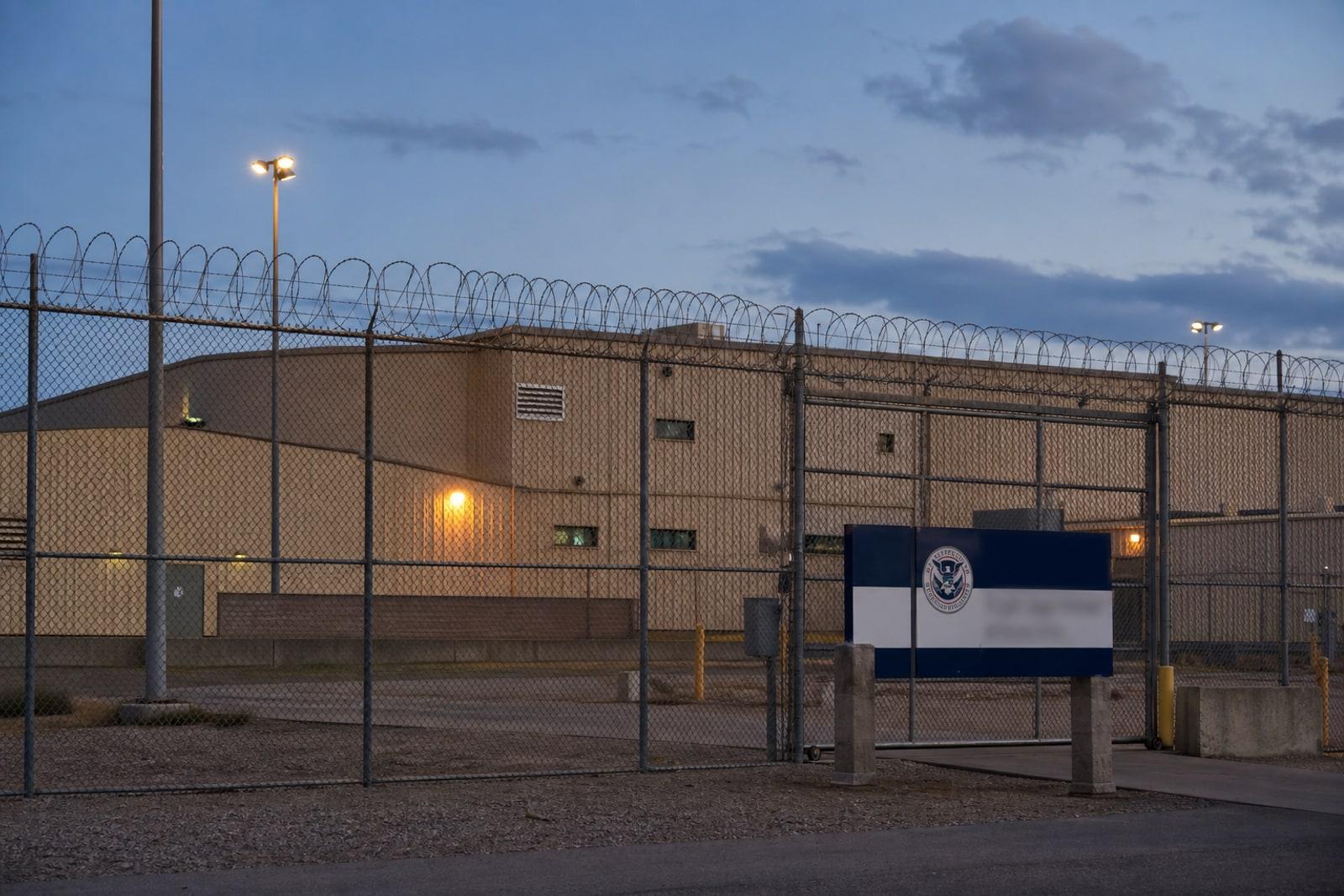
The United Nations' top human-rights official has called for independent, impartial investigations into a mounting toll of deaths in United States immigration detention, an unusually direct rebuke of a close Western ally that places Washington's enforcement drive squarely against international human-rights norms.
In a statement issued on Friday, UN High Commissioner for Human Rights Volker Türk said he was alarmed by deaths in the custody of Immigration and Customs Enforcement (ICE) and urged the US government to take urgent preventive action. His office said at least 52 people have died in ICE custody since the start of 2025, when President Donald Trump returned to office and sharply expanded immigration enforcement.
I call for prompt, independent, impartial and effective investigations into all deaths in ICE custody.
Türk said 18 people had died in the first five months of 2026, with a further death reported on 4 June. That compares with 33 deaths recorded over the whole of 2025 and 11 in 2024, according to figures cited by his office. Five of this year's deaths were officially classified as suicides.
A system expanding faster than its oversight
The deaths have come as the US detention system has grown rapidly. ICE was holding more than 60,000 people, up from roughly 40,000 in early 2025, with plans to expand capacity to 90,000 by the end of 2026, the High Commissioner's office said. The expansion has drawn on a network of private contractors and a multi-billion-dollar funding boost for immigration enforcement.
Türk pointed to a pattern of conditions he said raised serious questions about whether some deaths could have been avoided. His office cited allegations over the use of force, the reported use of solitary confinement — which the UN regards as a form of torture beyond 15 days and which is associated with a heightened risk of suicide — and what it called inhuman conditions, including inadequate healthcare and food and exposure to disease.
He also warned that a lack of transparency around the circumstances of deaths undermines accountability, and urged authorities to prioritise alternatives to detention, particularly for pregnant women, people with significant medical or mental-health conditions, and children.
All these factors exacerbate vulnerability and raise serious concerns as to whether some of these deaths in ICE custody could have been prevented.
An appeal to international law
The High Commissioner framed his appeal in the language of binding obligations rather than diplomatic concern, stressing that governments must protect the right to life of anyone deprived of their liberty. He insisted that detention facilities comply with international human-rights standards and invoked the principle of non-refoulement, the prohibition on returning people to places where they face serious harm.
Türk said accountability had to extend to the families of those who had died.
"Those responsible for violations of the law must be held to account, and the rights of the victims' families to truth, justice and reparation and guarantees of non-recurrence must be upheld," he said.
For a European audience, the intervention resonates beyond US borders. The same body of international human-rights law that Türk invoked underpins the European Union's own asylum and returns policies, and a formal UN reproach of US detention practices sharpens long-running debates about the rule of law, migration and the treatment of detainees on both sides of the Atlantic.
Washington pushes back
US authorities have rejected the suggestion of a worsening crisis. A spokesperson for the Department of Homeland Security, which oversees ICE, told NBC News that there had been "NO spike in deaths" and said ICE "is regularly audited and inspected by external agencies to ensure that all ICE facilities comply with performance-based national detention standards."
That defence sits uneasily with other official data. The DHS Office of Inspector General has announced two reviews: one examining detainee deaths in ICE custody between October 2021 and March 2026, and another into the use of force in detention. The watchdog said it had acted because deaths had risen every fiscal year since 2022. According to figures reported by the Associated Press, the in-custody death rate reached 72.32 per 100,000 detainees in 2026, up from 13.29 per 100,000 in 2022.
The use-of-force review followed an earlier inspector-general report that documented violations at a Louisiana facility, including a prohibited chokehold and a guard who used a pen to stab a detainee. Conditions inside individual centres have also fuelled unrest: Delaney Hall, an ICE facility in Newark, New Jersey, saw detainee hunger-strike protests this year.
Why it matters
The UN intervention crystallises a tension at the heart of the Trump administration's immigration agenda: a detention apparatus scaled up far faster than the safeguards meant to govern it. Whether Washington opens the independent investigations Türk has demanded — or continues to insist its system meets its own standards — will test how far an established democracy is prepared to subject its enforcement machinery to outside scrutiny, and how much weight international human-rights norms still carry when applied to a permanent member of the UN Security Council.
Frequently asked
- Who called for the investigations and when?
- Volker Türk, the UN High Commissioner for Human Rights, made the call in a statement issued on Friday 26 June 2026, urging prompt, independent, impartial and effective investigations into all deaths in ICE custody.
- How many people have died in ICE custody?
- Türk's office says at least 52 people have died in ICE custody since the start of 2025, with 18 deaths in the first five months of 2026 plus one further death on 4 June. There were 33 deaths in 2025 and 11 in 2024, and five of the 2026 deaths were classified as suicides.
- How has the US government responded?
- A Department of Homeland Security spokesperson told NBC News there had been 'NO spike in deaths' and said ICE facilities are regularly audited to ensure compliance with national detention standards. Separately, the DHS inspector general announced reviews of detainee deaths and use of force.
- Why does this matter for Europe?
- The same international human-rights law Türk invoked also underpins EU asylum and returns rules, so a formal UN rebuke of US detention practices feeds directly into transatlantic debates over migration, the rule of law and the treatment of detainees.
Sources(9)
- 1US: Türk alarmed at deaths in ICE custody, calls for urgent preventive actionOHCHR · ohchr.org
- 2Deaths in US immigration custody must be investigated: UN rights chiefUN News · news.un.org
- 3US: Türk alarmed at deaths in ICE custody, calls for urgent preventive action (mirror)GlobalSecurity.org / OHCHR · globalsecurity.org
- 4UN rights chief calls for probe into migrant deaths in US detention centresAl Jazeera · aljazeera.com
- 5UN rights chief calls for independent investigations into ICE detention deathsJURIST · jurist.org
- 6UN demands probes into US ICE custody deathsFrance 24 / AFP · france24.com
- 7DHS watchdog to review ICE detainee deaths, use of forceNBC News · nbcnews.com
- 8DHS inspector general to review ICE detainee deaths, use of forceAssociated Press via WBIR · wbir.com
- 9How understaffing and DHS policy drives rising deaths in ICE detention centersCNN · cnn.com
Related by topic