NATO
Rutte meets Trump at White House to steady NATO before Ankara summit
Two weeks before allies gather in Ankara, the secretary-general courted Trump over defence spending, Ukraine and a rift over the Iran war, with small members like Luxembourg facing the steepest climb.
By Camille Reuter · · 4 min read
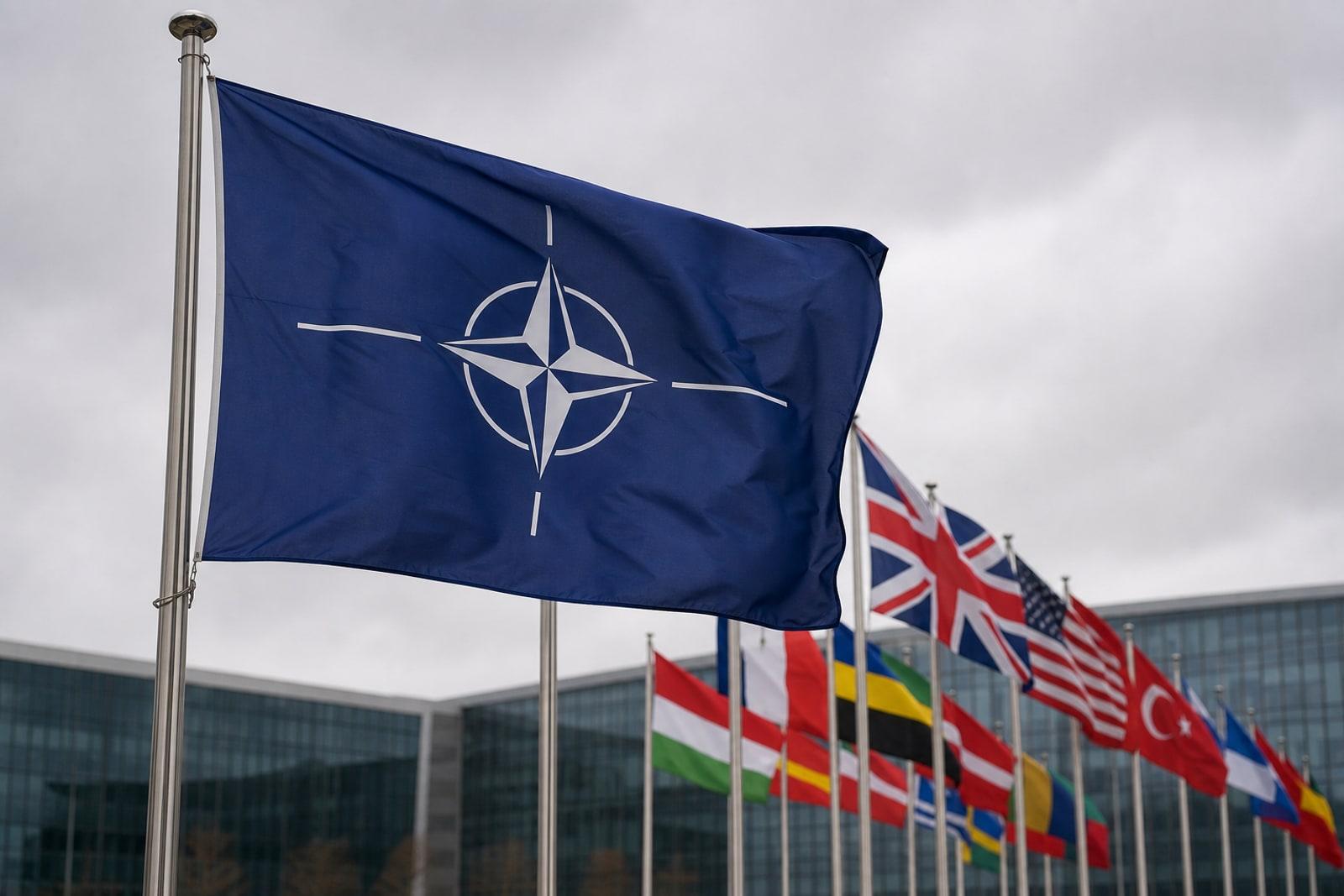
NATO Secretary-General Mark Rutte sat down with US President Donald Trump at the White House on Wednesday, opening a delicate fortnight of diplomacy designed to keep the transatlantic alliance from fracturing in public when its leaders convene in Ankara on 7-8 July.
The Oval Office meeting, attended by Secretary of State Marco Rubio and members of Congress, was the centrepiece of what officials cast as a charm offensive. Rutte, whom The Globe and Mail dubbed the alliance's "Trump whisperer," arrived armed with figures on record European defence outlays — the currency Washington most wants to see.
"European allies and Canada are really stepping up with record increases last year, over $90 billion extra in real terms compared to last year," Rutte said, according to Euronews. The message was aimed squarely at a president who has long accused Europe of free-riding on American protection.
A summit built around 5% of GDP
The Ankara meeting of all 32 member states is, above all, a progress check on the pledge struck a year ago at The Hague. There, allies agreed to lift defence and defence-related spending to 5% of GDP by 2035 — a headline figure that breaks into at least 3.5% for core military needs and up to 1.5% for broader security such as critical infrastructure, cyber defence, resilience and the defence-industrial base. Every member signed up except Spain, which secured an exemption, with progress to be reviewed in 2029.
NATO spokesperson Allison Hart said the summit would focus on how allies are delivering on commitments made last year at The Hague, "including increasing defence investment, expanding defence industrial production, and continuing support for Ukraine." Ukrainian President Volodymyr Zelensky has again been invited as a guest.
The rift Trump brought to the table
Yet the warm spending numbers sit against a sharp recent quarrel. Trump has been openly angered by European reluctance to back US operations following a 28 February US-Israeli strike on Iran that disrupted shipping through the Strait of Hormuz. Several allies restricted airbase access or airspace; US Secretary of Defense Pete Hegseth branded them "shameful."
The president has not hidden his irritation. "The numbers that we spend are so crazy on NATO, and (allies) weren't there for us," Trump told reporters before the meeting, according to Stars and Stripes, singling out several European governments for criticism.
The numbers that we spend are so crazy on NATO, and (allies) weren't there for us.
The stakes for Europe go beyond rhetoric. Hegseth has launched a six-month review of US force posture on the continent — where roughly 80,000 American troops are stationed — that could trigger reductions, after an earlier drawdown of about 5,000 troops from Germany. Trump has previously questioned the alliance's Article 5 mutual-defence guarantee and even mused about leaving NATO, lending Rutte's reassurance mission an existential edge.
Why Luxembourg has the most to prove
For the alliance's smallest members, the new benchmark is daunting. Luxembourg has long sat at the bottom of NATO's spending table as a share of national income, hovering around 0.5-0.6% of GDP through 2024. The Grand Duchy measures its effort against Gross National Income rather than GDP — a method NATO accepts — because its GNI is far smaller than its GDP, a gap driven by cross-border workers and outgoing income flows; the GNI-to-GDP ratio had fallen to roughly 65% by 2023.
Even on that more forgiving basis, the climb is steep. Following The Hague, Luxembourg committed to reaching 5% of GNI by 2035, which the government and analysts describe as a proportionally heavier lift than that facing most allies. The trajectory looks like this:
- About €1.18 billion in 2025, equal to roughly 1.3% of GNI
- An estimated €4.63 billion by 2035, equal to 5% of GNI
- A cumulative additional cost of €13.4 billion between 2025 and 2035, according to the Conseil national des finances publiques
Luxembourg's earlier coalition target of 2% of GNI by 2030 has already been brought forward, and Defence Minister Yuriko Backes has aligned the country with the new ceiling. Officials insist the money will buy capability — intelligence and surveillance, air transport, space and cyber assets — rather than headline numbers for their own sake.
A test of transatlantic glue
The Ankara summit will reset Europe's security obligations at a moment when the continent's faith in automatic American protection is wavering. That uncertainty has sharpened the European Union's debate over "strategic autonomy" — the push to build defences less dependent on Washington — even as members race to meet a target set largely to satisfy Washington.
For Rutte, Wednesday's meeting was an exercise in managing both sides of that bargain: showing Trump that allies are paying up, while shielding the alliance from a damaging clash on camera. Whether the choreography holds in Ankara will shape not only NATO's next decade of spending, but the credibility of the guarantee that underpins it.
Frequently asked
- When and where is the 2026 NATO summit?
- NATO leaders from all 32 member states meet in Ankara, Türkiye, on 7-8 July 2026. Ukrainian President Volodymyr Zelensky has been invited as a guest.
- What is the 5% defence-spending target?
- At the June 2025 Hague summit, allies agreed to spend 5% of GDP on defence and defence-related measures by 2035 — at least 3.5% on core defence and up to 1.5% on broader security such as cyber, infrastructure and the defence-industrial base. All members agreed except Spain, which won an exemption, with a review in 2029.
- How much does Luxembourg spend on defence?
- Luxembourg has long been NATO's lowest spender as a share of national income. It measures against Gross National Income rather than GDP and has committed to 5% of GNI by 2035 — about €4.63 billion, up from roughly €1.18 billion (1.3% of GNI) in 2025, a cumulative extra cost estimated at €13.4 billion.
- Why are US-NATO tensions high right now?
- President Trump is angered that European allies declined to support US operations after a 28 February 2026 US-Israeli strike on Iran disrupted the Strait of Hormuz. Washington has launched a six-month review of its roughly 80,000 troops in Europe that could lead to reductions.
Sources(13)
- 1Rutte meets Trump to defuse tensions ahead of major NATO summitEuronews · euronews.com
- 2NATO Secretary-General to meet Trump, ease tensions before July summitThe Globe and Mail · theglobeandmail.com
- 3NATO's Rutte aims to soothe Trump on White House visit ahead of July summitFrance 24 · france24.com
- 4NATO's Rutte to Meet Trump, Aiming to Ease Tensions Ahead of July SummitU.S. News & World Report / Reuters · usnews.com
- 5Ahead of NATO meeting, Trump blasts allies over Iran warStars and Stripes · stripes.com
- 6The Hague Summit DeclarationNATO · nato.int
- 7Defence expenditures and NATO's 5% commitmentNATO · nato.int
- 8Agreement on 5% NATO defence spending by 2035Wikipedia · en.wikipedia.org
- 9Experts react: NATO allies agreed to a 5 percent defense spending targetAtlantic Council · atlanticcouncil.org
- 10Defence: A budget shock of €13.4 billionPaperjam · en.paperjam.lu
- 11Defence: Luxembourg does not want to spend for spending's sakePaperjam · en.paperjam.lu
- 12Luxembourg's new defence strategy (ÉTUDES 79, 7.2)STATEC / statistiques.public.lu · statistiques.public.lu
- 13NATO Spending by Country 2026World Population Review · worldpopulationreview.com
Related by topic