Defence
Luxembourg turns to a cycling champion to fill its volunteer army
As neighbours edge back toward conscription, the Grand Duchy is courting volunteers with a slick campaign and a former WorldTour rider in uniform.
By Tom Schmit · · 4 min read
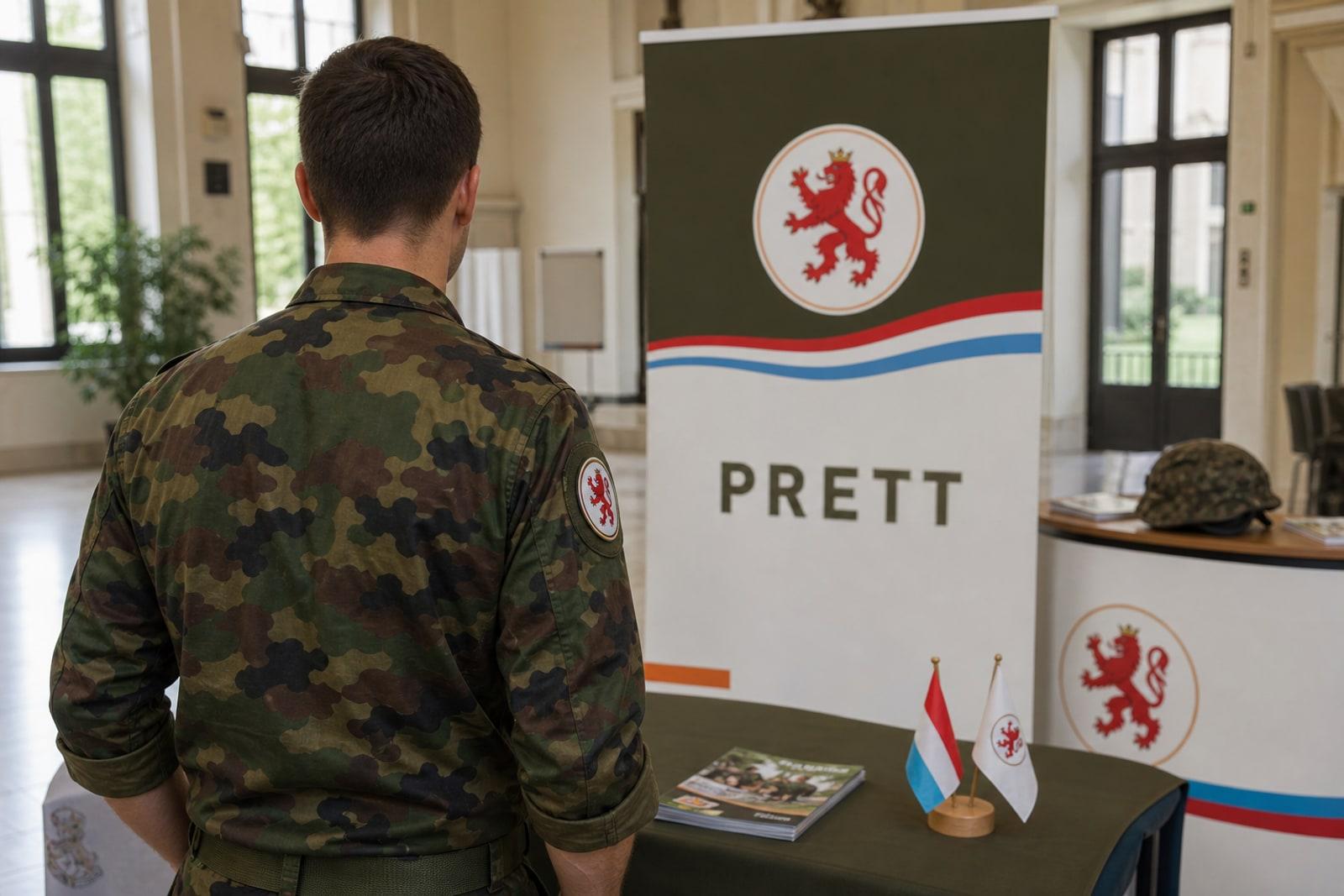
For more than a decade, Christine Majerus was one of Luxembourg's most decorated athletes, a road and cyclo-cross champion who raced at the top of the women's professional peloton before retiring in 2024. Today she wears a different uniform. As a First Lieutenant in the Luxembourg Army's recruitment and information office, a post she took up in early 2025, Majerus has become the public face of a drive to talk young people out of their assumptions about military life.
Her core message is that the clichés are decades out of date. The army, she argues, is no longer just about boots and rifles but about technicians, specialists and careers that look more like the civilian job market than many imagine.
"Many people still have a completely wrong picture of the army," Majerus told L'essentiel. "The reality today looks completely different."
A small force trying to grow
Luxembourg is one of the few European states that never blinked on conscription: compulsory service was abolished in 1967, and the Grand Duchy has relied on volunteers ever since. That makes recruitment not a political afterthought but the entire foundation of its defence.
The force it has to fill is small by any measure. Luxembourg's army numbers around 1,128 soldiers, according to figures cited by the specialist outlet Luxtoday — nearly 200 above its long-run average of roughly 900, but still tiny next to its neighbours. About 12% of personnel are women, a share commanders openly call too low.
It also wants to get bigger. To meet capability targets agreed with NATO, the army plans to add roughly 650 posts by 2035, L'essentiel reported. Yet General Steve Thull, the chief of defence, has been blunt about the obstacles: the military career does not attract enough people, and those who do sign up often leave before their costly training can be put to full use, even as missions grow more numerous and technical.
The 'PRETT' campaign
The recruitment effort now has a brand. The army's 2026 campaign, built by the Luxembourg communications firm VOUS Agency, is anchored on a single Luxembourgish word — PRETT, meaning "ready" — designed to let recruits project their own motivations onto it, whether that is technology, service to others or self-improvement. The campaign rolls out across film, outdoor advertising, press and digital channels.
The pitch is deliberately broad. Recruiters stress that the army is hiring not only soldiers but corporals, non-commissioned officers, officers and civilian specialists, in fields such as cybersecurity, satellite communications and modern information systems.
The agency frames the task as closing a perception gap. "The challenge was to narrow the gap between the traditional image of the Army and the reality of its opportunities," said André Hesse, chief executive of VOUS Agency.
Better pay, longer service
Image alone will not fill the ranks, and the government has reached for its wallet too. On 17 December 2025, the Council of Government adopted a package of measures aimed at making the army, in the words of Defence Minister Yuriko Backes, "an attractive and modern employer."
According to Chronicle.lu, the reforms include:
- A rise in volunteer soldiers' base pay of 23 index points — at least about €530 a month — lifting a first-year soldier's pay from roughly €2,166 to €2,719.
- An operational-availability bonus worth around €532 a month, plus a demobilisation payment of more than €14,000 after 48 months of service.
- An extension of the initial active phase from four to five years, and new temporary officer and non-commissioned-officer tracks.
- Eligibility opened to non-resident EU nationals, with exemptions on French or German language requirements — though Luxembourgish remains mandatory.
"Our personnel are at the centre of all our efforts," Backes said. "Their commitment to our security must be adequately compensated." The spending behind it is climbing fast: Luxembourg's defence budget, equal to 2% of gross national income in 2025, is set to reach 3.5% by 2035.
Out of step with the neighbours
Luxembourg's bet on persuasion is striking precisely because much of Europe is moving the other way. Since Russia's full-scale invasion of Ukraine, conscription has crept back onto the continent's agenda. Lithuania and Sweden have reintroduced limited service, and Latvia revived its draft in 2023.
The clearest contrast is next door. Germany's Wehrdienstmodernisierungsgesetz took effect on 1 January 2026. It keeps service voluntary for now but obliges every 18-year-old man to complete a questionnaire on his health and willingness to serve, with medical screening to follow, and builds in a "needs-based" conscription fallback — possibly by lottery — if volunteer numbers fall short. Defence Minister Boris Pistorius wants 30,000 volunteers a year, dangled with pay of around €2,600 a month. In Poland, Prime Minister Donald Tusk has pledged to make every adult male capable of being trained for war.
Against that backdrop, Luxembourg is wagering that a well-paid, modern, all-volunteer force — sold by a familiar sporting face rather than a draft notice — can still find enough people willing to serve. Whether 650 new recruits materialise by 2035 will test that proposition. For now, the Grand Duchy is choosing the carrot while many of its partners reach, however reluctantly, for the stick.
Frequently asked
- Is military service compulsory in Luxembourg?
- No. Luxembourg abolished conscription in 1967 and maintains an all-volunteer army, relying entirely on voluntary recruitment.
- Who is Christine Majerus?
- A Luxembourgish former professional cyclist and multiple national champion who retired in 2024. She now serves as a First Lieutenant in the Luxembourg Army's recruitment and information office.
- How many people does Luxembourg's army want to recruit?
- The army plans to add roughly 650 posts by 2035 to meet capability targets agreed with NATO. It currently numbers around 1,128 soldiers, about 12% of them women.
- How does this compare with Germany?
- Germany's modernised military service law took effect on 1 January 2026, screening all 18-year-old men with a needs-based conscription fallback. Luxembourg, by contrast, keeps an all-volunteer force.
Sources(10)
- 1Luxemburger Armee rekrutiert: Oberleutnantin Majerus räumt mit Klischees aufL'essentiel · lessentiel.lu
- 2Government Introduces New Measures to Strengthen Army Recruitment & Career OpportunitiesChronicle.lu · chronicle.lu
- 3Luxembourg's armed forces: army composition, recruitment and salariesLuxtoday.lu · luxtoday.lu
- 4L'Armée luxembourgeoise prête à recruter avec VOUS AgencyAdada.lu · adada.lu
- 5Christine MajerusWikipedia · en.wikipedia.org
- 6Luxembourg Armed ForcesWikipedia · en.wikipedia.org
- 7BACKES YurikoThe Luxembourg Government · gouvernement.lu
- 8Germany: Act to Modernize Military Service Enters into ForceLibrary of Congress (Global Legal Monitor) · loc.gov
- 9Federal Cabinet: Military service modernisedGerman Federal Government (bundesregierung.de) · bundesregierung.de
- 10The return of conscription? EU countries debate bringing back military serviceEuropean Newsroom · europeannewsroom.com
Related by topic