Public health
France confirms its first Ebola case as doctor returns from Congo
A humanitarian physician who worked in DR Congo is isolated in a Paris hospital. Officials and the EU's disease agency say the risk to Europe and the Greater Region is very low.
By Léa Hoffmann · · 4 min read
France has confirmed its first case of Ebola on national soil, the health ministry announced on Wednesday, after a doctor returned from a humanitarian mission in the Democratic Republic of Congo and tested positive for the virus. It is the first time the disease has been detected outside Africa since the current outbreak began this spring.
The patient is a physician working for ALIMA, The Alliance for International Medical Action, an international medical humanitarian organisation. He had been deployed to one of the zones where the virus is circulating in eastern DR Congo and flew back to Paris on a commercial flight from Kinshasa on Tuesday, according to the ministry and French media reports. He is now hospitalised in a stable condition in a specialised facility, with what the ministry described as a very low viral load.
How the case was detected and contained
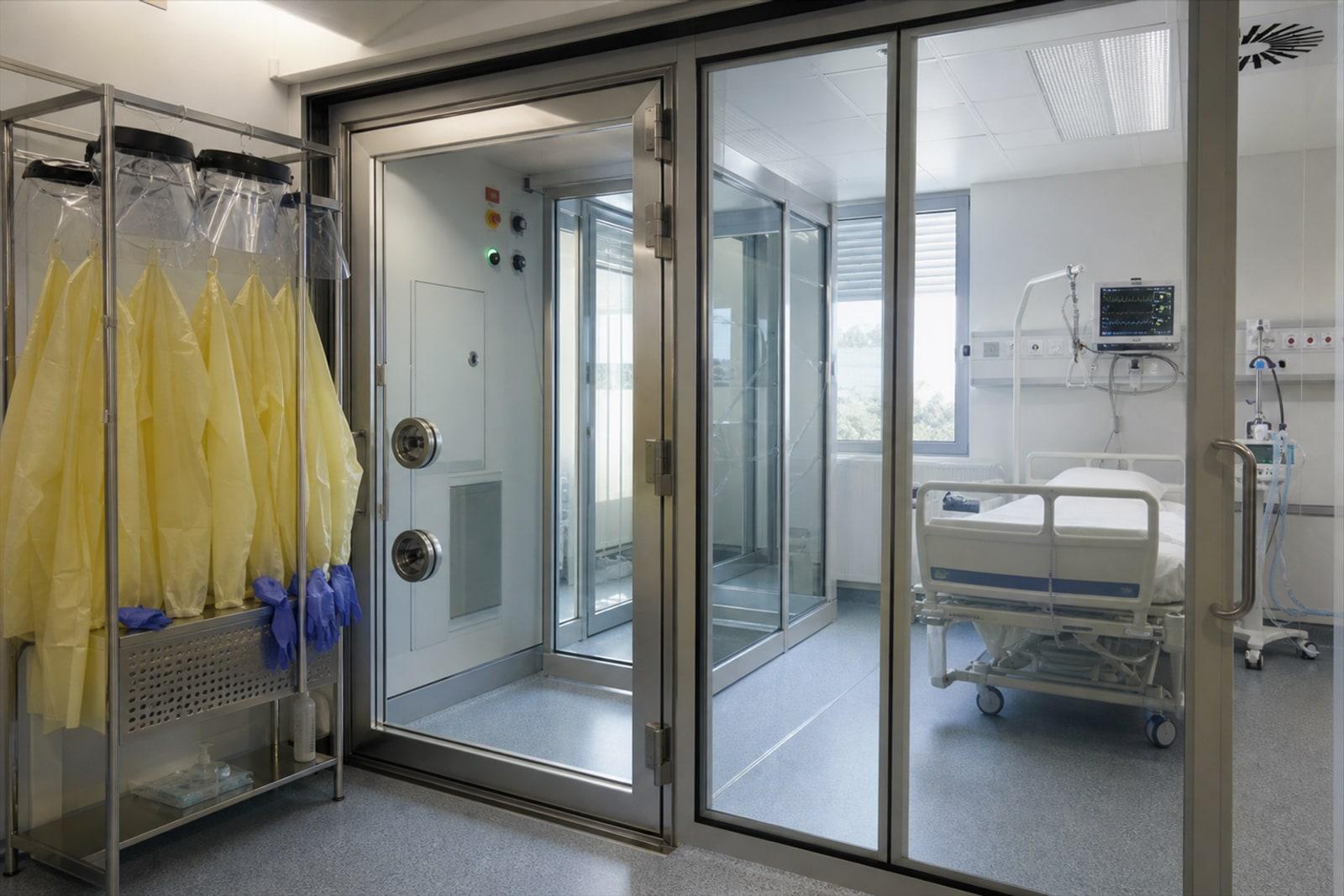
The doctor boarded his flight almost asymptomatic, with only headaches, and his condition deteriorated slightly during the journey, the ministry said. He followed health protocols in full, was isolated on arrival at the airport and then transferred to hospital into a negative-pressure isolation room — a chambre à double flux designed to stop any pathogen escaping.
“All precautionary measures, and in particular the isolation of the patient, were taken from the moment of his arrival,” the health ministry said in its statement. An epidemiological investigation is under way to trace everyone who may have been in contact with him; those identified will be asked to self-isolate at home for 21 days — the length of Ebola’s incubation period — under close medical surveillance.
Officials were at pains to stress that this is an imported case with no sign of the virus circulating in France. Ebola is not airborne: it spreads only through direct contact with the bodily fluids of a symptomatic patient, which makes onward transmission in a controlled hospital setting unlikely.
A measured response from the WHO
The World Health Organization, which has declared the Congolese outbreak a public health emergency of international concern, moved quickly to head off alarm. Its director-general noted that fewer than 30 Ebola cases have been recorded outside Africa in the past half-century.
They shouldn’t overreact, that’s what I would like to advise.
Those were the words of Tedros Adhanom Ghebreyesus, the WHO’s director-general, who told reporters that the risk to the rest of the world — “whether it’s France or other countries in Europe” — remained low. The European Centre for Disease Prevention and Control reached the same conclusion, rating the risk of infection as low for Europeans travelling to affected zones and very low for the general European population.
The outbreak behind the case
The infection traces back to DR Congo’s 17th Ebola outbreak, declared in mid-May after a cluster of unexplained deaths in the mineral-rich eastern province of Ituri. According to the latest official figures, more than 1,000 cases have been recorded, including 267 deaths — a fatality rate of around 25 percent. Neighbouring Uganda has also reported cases.
What makes this outbreak harder to fight is its strain. It is caused by the Bundibugyo species of the virus, for which — unlike the more familiar Zaire strain — there is no approved vaccine or treatment. The WHO declared the emergency on 17 May and has urged clinical trials to speed up candidate therapies.
- Patient: an ALIMA doctor back from DR Congo, isolated in a Paris-area hospital in stable condition.
- Risk: the ECDC rates the threat to the general European population as very low.
- Strain: Bundibugyo ebolavirus — no licensed vaccine or treatment.
- Outbreak: more than 1,000 cases and 267 deaths in DR Congo since mid-May.
What it means for the Greater Region
For readers in Luxembourg and the cross-border Greater Region, the case is a reminder of how interconnected public health has become — but not a cause for local concern. The single confirmed case is more than 300 kilometres away in the Paris region, isolated under hospital containment, and the EU’s own disease agency puts the risk to the wider European population in its lowest band.
The response is being coordinated at European level. Hadja Lahbib, the European Commissioner for Crisis Preparedness, acknowledged there is “neither vaccine nor approved treatment for this Ebola strain, but research and development are under way.” In Paris, the prime minister’s office said the situation was being followed “very closely”.
No Luxembourg-specific measures have been announced, and none of the European health agencies has recommended travel restrictions or border checks within the bloc. The practical guidance for the Greater Region is unchanged: the danger lies in the affected regions of central Africa, not in France’s neighbourhood — and a single, contained case in Paris does not alter that.
Frequently asked
- Is there an Ebola threat to Luxembourg or the Greater Region?
- No. The single confirmed case is isolated in the Paris region, more than 300 km away, and the ECDC rates the risk to the general European population as very low. No Luxembourg measures or EU internal border checks have been announced.
- How was the case detected and contained?
- The ALIMA doctor flew from Kinshasa to Paris almost asymptomatic, was isolated on arrival at the airport and moved into a negative-pressure hospital isolation room. His contacts are being traced and asked to self-isolate for 21 days.
- How does Ebola spread, and how dangerous is this strain?
- Ebola is not airborne; it spreads only through direct contact with the bodily fluids of a symptomatic person. This outbreak involves the Bundibugyo strain, for which there is no approved vaccine or treatment, unlike the Zaire strain.
Sources(11)
- 1France confirms first Ebola case in doctor returning from DR Congo missionFrance 24 · france24.com
- 2France confirms first Ebola case in doctor returning from DR CongoAl Jazeera · aljazeera.com
- 3France detects first Ebola case outside Africa in current outbreakMedical Xpress / AFP · medicalxpress.com
- 4Un premier cas d'Ebola a ete identifie en France chez un medecin de retour de RDCLe Temps · letemps.ch
- 5Epidemie d'Ebola : un premier cas identifie en France, chez un medecin de retour de RDCEurope 1 · europe1.fr
- 6Virus Ebola : un premier cas identifie en France, le patient a ete isole depuis son retour de RDCRTBF · rtbf.be
- 7Ebola : un tout premier cas detecte en France, la situation suivie de tres presToute l'Europe · touteleurope.eu
- 8French health ministry confirms Ebola virus in doctor who worked in CongoThe Washington Post · washingtonpost.com
- 9Epidemic of Ebola Disease caused by Bundibugyo virus determined a public health emergency of international concernWorld Health Organization · who.int
- 102026 Ebola epidemicWikipedia · en.wikipedia.org
- 11Ebola disease outbreak in the Democratic Republic of the Congo and UgandaECDC · ecdc.europa.eu
Related by topic