Afghanistan
EU receives Taliban envoys in Brussels, reigniting Europe's gender-apartheid debate
European officials and 15 member states received a Taliban delegation in Brussels for the first time, reviving a moral dilemma that Luxembourg's Grand Duchess Maria Teresa has long confronted.
By Léa Hoffmann · · 4 min read
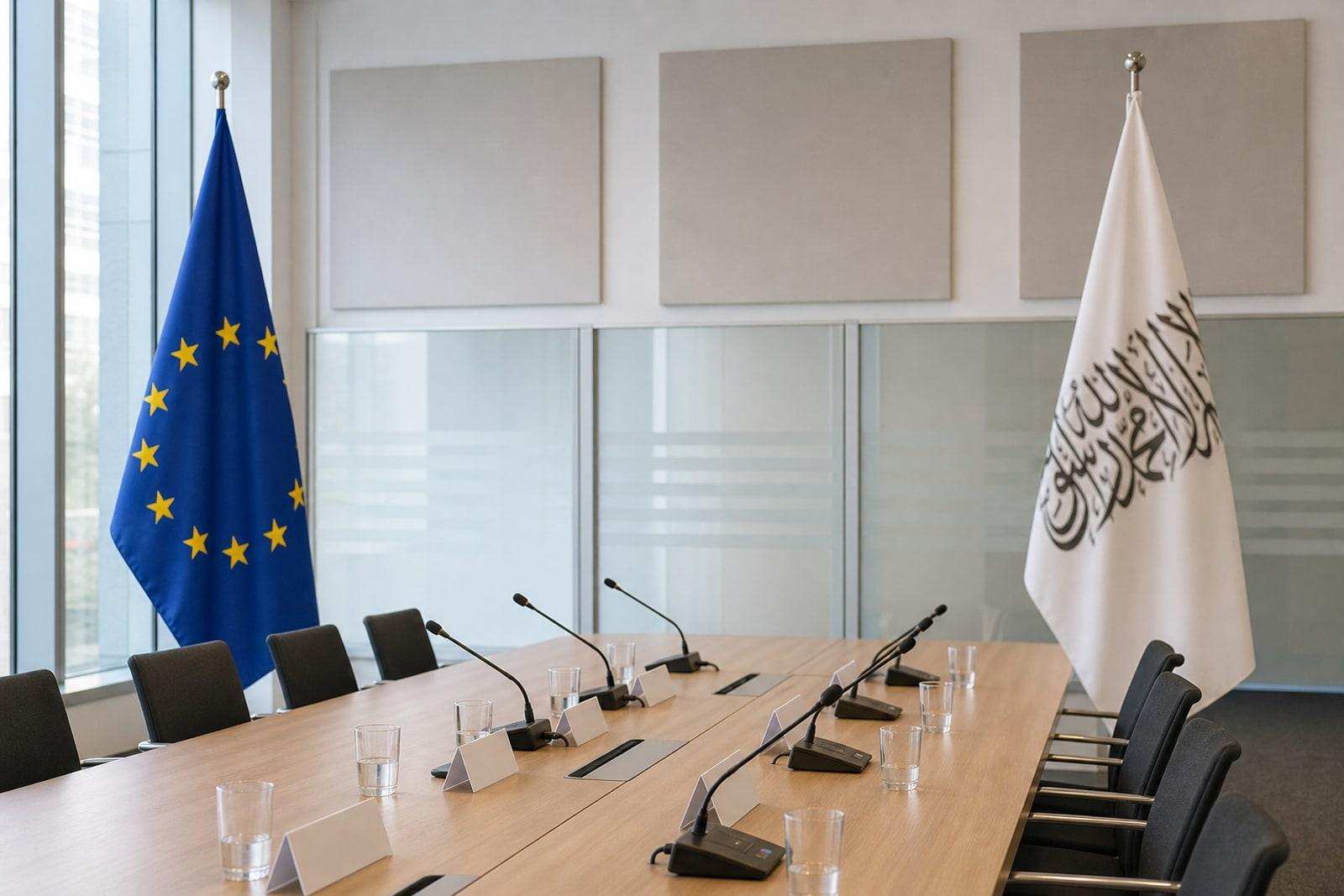
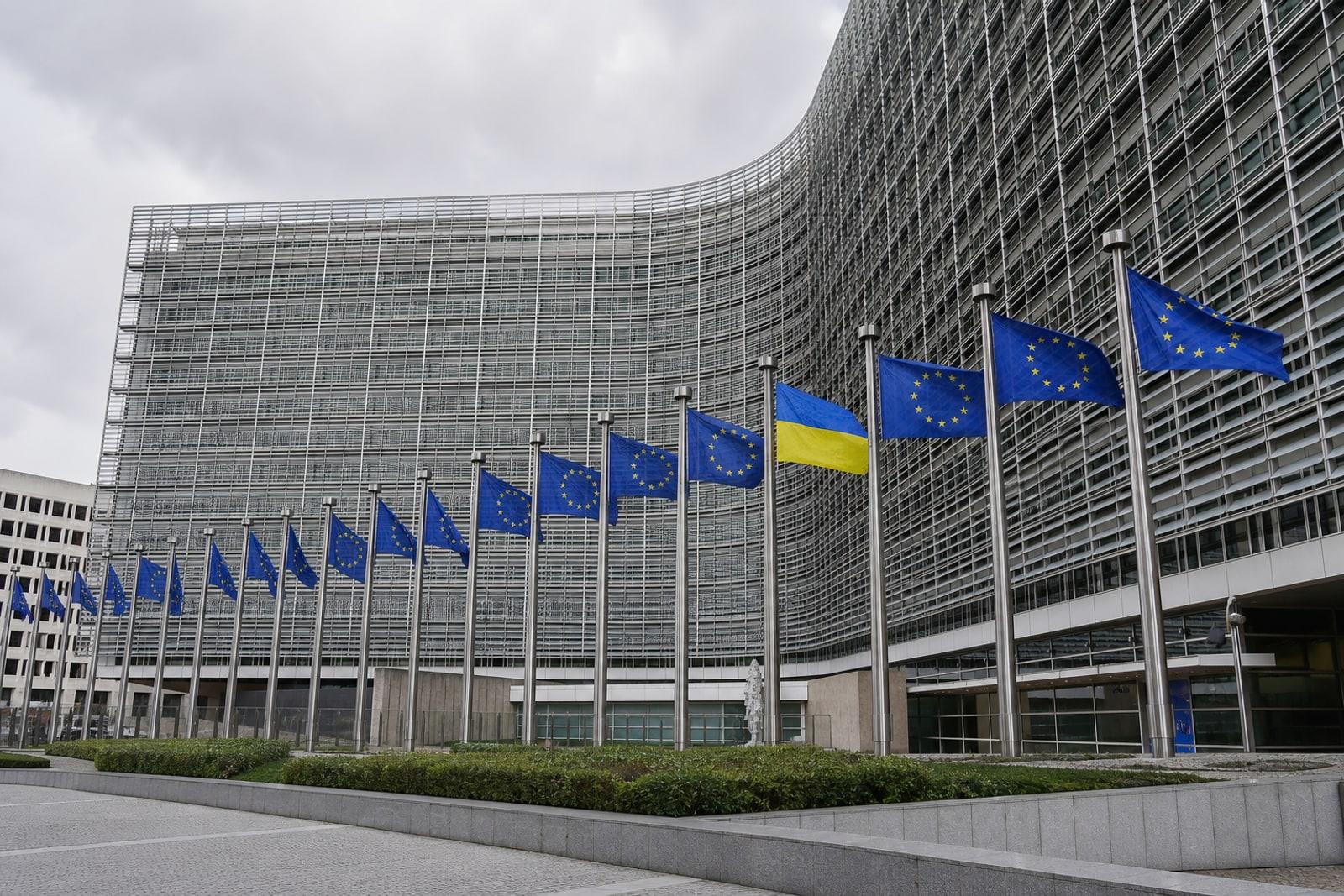
For the first time since the Taliban returned to power in Kabul in 2021, European officials sat across a table from the movement's envoys. On 23 June, services of the European Commission and representatives of 15 EU member states received a five-member Taliban delegation in Brussels for technical talks on returning Afghans who have no legal right to remain in Europe — a meeting co-chaired by Sweden that the Afghan side hailed as historic and that human-rights groups denounced as a moral surrender.
The encounter, held away from the Commission's institutional premises and disclosed only in outline, crystallised a question Europe has avoided for nearly five years: how, if at all, to deal with a government that the United Nations and the European Parliament accuse of enforcing "gender apartheid" against Afghan women and girls. For Luxembourg, the dilemma carries a familiar voice — that of Grand Duchess Maria Teresa, the Grand Duchy's most prominent campaigner for Afghan women.
A first at the table
The Commission confirmed the meeting in deliberately spare terms. "The Commission services and Sweden co-chaired a technical-level meeting today in Brussels with technical-level representatives of the de facto authorities of Afghanistan responsible for return and readmission," a spokesperson said — the careful phrasing Brussels uses to avoid recognising the Taliban as Afghanistan's legitimate government.
The Taliban framed it more expansively. Abdul Qahar Balkhi, spokesperson for the movement's foreign ministry and head of the delegation, called the visit historic, the first time Afghan envoys had held talks with the European Commission and EU nations. He said the agenda reached beyond deportations to the resumption of consular services for Afghans in Europe and the fate of those whose asylum claims had been refused.
"It is hoped that this visit will open new avenues for positive interactions," Balkhi said. According to French news agency AFP, five Taliban officials had obtained authorisation to enter Belgium for the talks.
A continent divided
Outside the Commission's headquarters, rights campaigners protested into the late afternoon. Inside Europe's political class, the reaction was sharper still. Cecilia Strada, a Socialist member of the European Parliament, accused EU governments of lending legitimacy to a government she said systematically strips women of their rights.
"This is a shameful chapter for Europe," said Cecilia Strada, charging that the meeting granted standing to "a regime that tramples on the rights of women and girls and imposes a system of gender apartheid."
Green MEP Saskia Bricmont called it "unacceptable" to host representatives of a regime "that systematically oppresses women, suppresses all opposition, denies fundamental freedoms." Ludovic Laus of Amnesty International Belgium was blunter: "We are beyond scandal," he said, accusing the EU of "compromising with a completely authoritarian regime that tramples human rights every day." The Nobel laureate Malala Yousafzai said she was shaken by the visit and warned that "Europe must not legitimise a regime responsible for one of the worst human rights crises."
The European Parliament had already signalled its opposition. In May it adopted a resolution by 480 votes to five, with 83 abstentions, that:
- expressed regret at the EU's decision to invite the Taliban to Brussels;
- urged member states to maintain non-recognition and non-normalisation of the Taliban;
- called on the EU to formally recognise slavery, gender apartheid and forced child marriage as crimes against humanity.
Supporters of engagement counter that Europe cannot return rejected asylum seekers without some working channel to Kabul. "It is incredibly important that these criminals are deported. And that is not possible today," said Sweden's migration minister, Johan Forssell, whose country co-chaired the meeting. The visit also drew a legal complaint to the Belgian federal prosecutor, the Swiss daily Le Temps reported.
Luxembourg's voice for Afghan women
No European royal has tied her name more closely to the cause of Afghan women than Maria Teresa. Cuban-born and married to former Grand Duke Henri — who abdicated in October 2025 in favour of their son, Guillaume — she has spent years building Luxembourg's most visible platform against the erasure of women under Taliban rule.
In 2019 she launched Stand Speak Rise Up!, an association dedicated to ending sexual violence in fragile and conflict settings, co-founded with the Franco-Afghan former diplomat Chékéba Hachemi. A UNESCO goodwill ambassador of long standing, she has pressed for gender apartheid to be recognised as a crime against humanity and has repeatedly described the condition of Afghan women as intolerable. Her advocacy has drawn international notice: the UN's special representative on sexual violence in conflict, Pramila Patten, has praised the Grand Duchess's "audacity" in refusing to let outrage settle into silence, the Luxembourg daily L'essentiel reported.
That principle is precisely what the Brussels meeting tests. Since seizing power, the Taliban have barred girls from education beyond primary school, pushed women out of most paid work and confined them under escalating restrictions that UN experts liken to apartheid. For campaigners who, like Maria Teresa, have made those women their life's work, a negotiating table in Brussels is not a technicality but a threshold — the moment at which managing migration risks becoming, in practice, the normalisation of a regime Europe once vowed never to legitimise. How the EU answers that charge in the months ahead will determine whether 23 June is remembered as pragmatism or as capitulation.
Frequently asked
- What happened in Brussels on 23 June 2026?
- Services of the European Commission and 15 EU member states, with Sweden co-chairing, held a technical-level meeting with a five-member Taliban delegation — the first time the EU's executive and member states formally received Afghanistan's de facto authorities. The talks centred on returning Afghans with no legal right to stay, and the Taliban side also raised consular services.
- Why is the meeting controversial?
- Critics — including MEPs Cecilia Strada and Saskia Bricmont, Amnesty International Belgium and Malala Yousafzai — say engaging the Taliban lends legitimacy to a regime that bars girls from education beyond primary school and is accused by the UN and the European Parliament of enforcing gender apartheid. Supporters argue Europe needs a channel to Kabul to deport rejected asylum seekers.
- What is Grand Duchess Maria Teresa's connection to the issue?
- Luxembourg's Grand Duchess Maria Teresa is a long-standing campaigner for Afghan women. She founded the Stand Speak Rise Up! association in 2019 to end sexual violence in conflict settings and has urged that gender apartheid be recognised as a crime against humanity, making her a prominent Luxembourg voice in the debate the Brussels meeting reopened.
Sources(8)
- 1EU hosts Taliban officials for the first time in talks on deportationsAl Jazeera · aljazeera.com
- 2EU officials discreetly meet Taliban in Brussels to speed up Afghan deportationsEuronews · euronews.com
- 3À Bruxelles, une rencontre inédite entre responsables talibans et l'UE sur l'immigration (AFP)Orange Actualités / AFP · actu.orange.fr
- 4EU Officials Meet Taliban In Brussels For First Time Despite Outcry From ActivistsRadio Free Europe/Radio Liberty · rferl.org
- 5European Parliament Condemns Taliban Rights Abuses, Opposes Brussels TalksKabulNow · kabulnow.com
- 6La venue de talibans à Bruxelles provoque une polémique et fait l'objet d'une plainte auprès du parquet belgeLe Temps · letemps.ch
- 7Maria Teresa, Grand Duchess of LuxembourgWikipedia · en.wikipedia.org
- 8Lutte contre les violences: L'ONU salue «l'audace» de la Grande-DuchesseL'essentiel · lessentiel.lu
Related by topic