Property market
Luxembourg home prices steady after turbulent year as rents keep climbing
Official figures show sale prices levelling off at the end of 2025 after a tax-driven swing, even as advertised rents accelerate and squeeze tenants locked out of ownership.
By Sophie Klein · · 4 min read
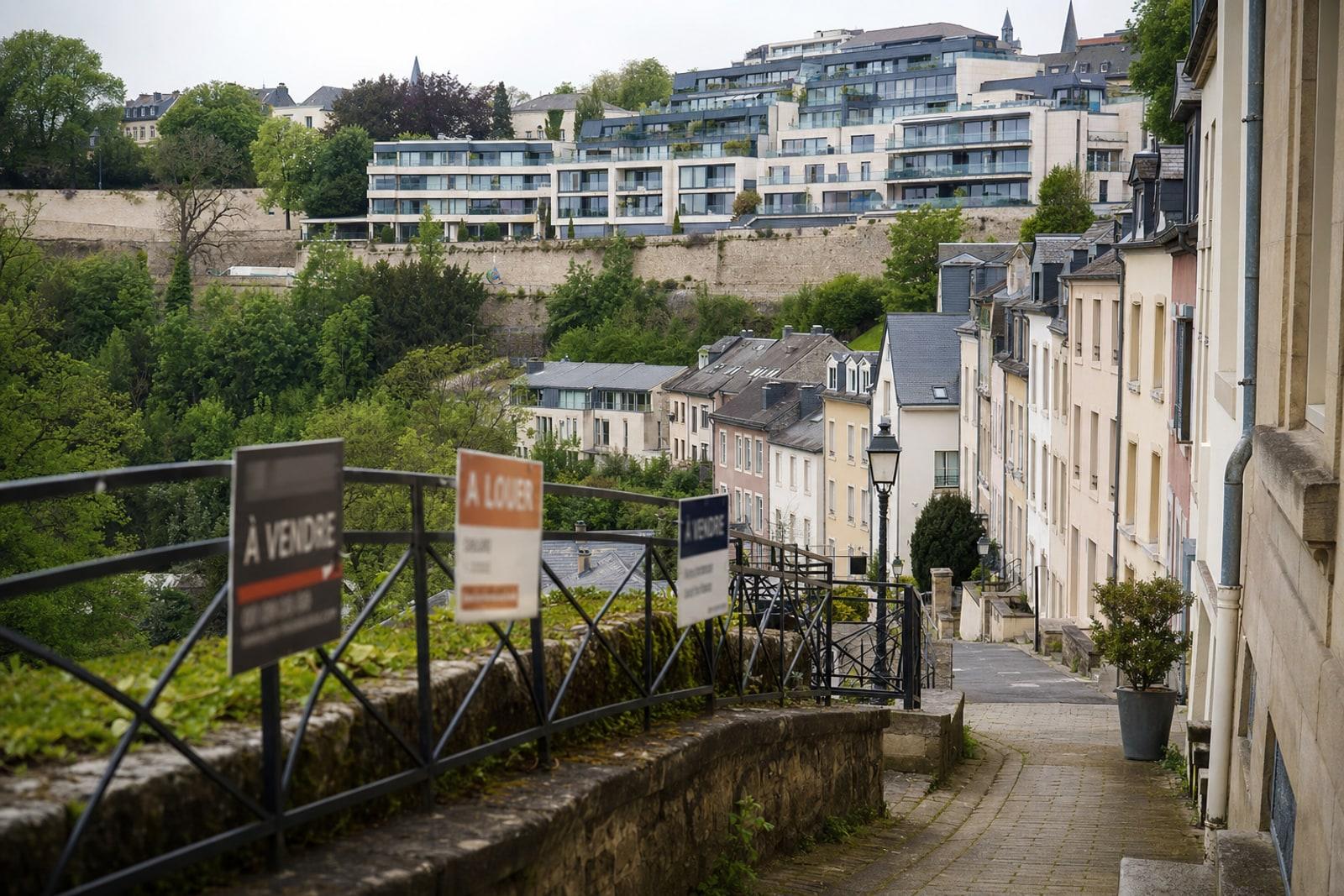
Luxembourg's housing market ended 2025 on an uneasy plateau. After two years of falling sale prices and a sharp, tax-driven swing in the middle of the year, official figures show home values broadly flat — while the cost of renting kept climbing, tightening the squeeze on tenants who cannot buy.
The latest quarterly report from STATEC and the Observatoire de l'Habitat, the country's Housing Observatory, found that the overall index of sale prices rose just 0.4% in the fourth quarter of 2025 and was virtually unchanged over the year, up only 0.1% from the same period in 2024. For a market that fell 9.1% in 2023 and a further 5.2% in 2024, that near-zero reading marks a tentative bottom rather than a recovery.
Prices find a floor after a violent year
The headline stability masks a turbulent twelve months. Sale prices jumped 4.4% in the second quarter as buyers rushed to complete deals before a temporary cut in the property registration fee — reduced to 3.5% — expired at the end of June 2025. The window pulled demand forward and pushed buyers to accept higher prices. When it closed, the market gave much of that back: STATEC's hedonic index of sale prices fell 3.1% in the third quarter, with declines across every segment.
By the close of the year the wild swings had washed out.
Following the sharp rise observed in the second quarter of 2025 (+4.4% compared with the previous quarter), and the subsequent decline in the third quarter (-3.5%), the trend in house prices in the fourth quarter of 2025 confirms a period of stabilisation.
The picture differs by property type. Over the year to the fourth quarter, prices for existing apartments edged up 0.2% and apartments still under construction rose 2.0%, while existing houses slipped 1.0%. Across the full correction since 2022, the Observatoire notes prices for existing flats have fallen by roughly 11% in Luxembourg City and by as much as 18% in some towns — a meaningful repricing, even if values remain among the highest in Europe.
Buyers came back, then stepped away
Transaction volumes tell the same stop-start story. The third quarter saw a burst of activity: 1,052 existing apartments changed hands, up 5.6% on a year earlier and close to pre-crisis norms, while sales of existing houses surged 27.7% and off-plan new-build apartments — known locally as VEFA — more than doubled, up 125%. Much of that reflected deals racing the tax deadline rather than a durable revival in confidence.
Once the fiscal incentive lapsed, momentum faded. Activity slipped again in the fourth quarter, with sales of new-build apartments dropping to 149 from 326 the quarter before. The Observatoire described the established-property market as more resilient, but the overall message was of a market still feeling for solid ground rather than one off to the races.
Rents accelerate as the squeeze shifts to tenants
While sale prices flatlined, rents moved the other way. Advertised apartment rents rose 3.0% over the year to the fourth quarter, a slight acceleration that brought them close to Luxembourg's headline inflation rate of 2.9%.
The strain falls unevenly. STATEC's rent index — which tracks what sitting tenants on existing leases actually pay — rose just 1.4% over the same period, well below both advertised rents and inflation. The gap captures a familiar trap: established tenants are partly shielded, but anyone forced onto the open market, whether a newcomer, a cross-border worker or a household that has to move, confronts asking prices rising far faster.
The official figures, drawn from the Q4 2025 publication, put the rental trajectory plainly:
- Advertised apartment rents: +3.0% year-on-year, versus +1.2% a quarter earlier
- STATEC rent index (sitting tenants): +1.4% year-on-year
- National consumer-price inflation: +2.9%
- Sale-price index: +0.1% year-on-year
The divergence is the heart of the story. With borrowing costs still high relative to the cheap-money era, many would-be buyers remain priced out of a purchase even as values stop falling — and that frustrated demand spills into a rental market where supply is tight and asking prices keep rising.
Why the split matters
Housing is Luxembourg's defining cost-of-living pressure, for residents and for the roughly 200,000 cross-border workers who commute in from France, Belgium and Germany. A stabilising sale market does little for affordability if it simply locks people into renting at accelerating prices.
That tension is now driving policy. The Observatoire, which has documented how Luxembourg residential prices have multiplied more than 29-fold in nominal terms since 1974, published a fresh set of studies on rent regulation presented at a June 2026 seminar. Under Housing Minister Claude Meisch, the government is weighing reforms to the system that caps rents at 5% of a property's revalued invested capital, including a proposed ceiling on how much rents can move each year. A survey for a planned rental registry, or cadastre des loyers, has already canvassed 30,000 multi-property owners.
For now, the numbers leave Luxembourg's households in an awkward in-between: prices no longer falling fast enough to bring ownership within reach, and rents rising fast enough to keep the pressure on. Whether late-2025's calm in sale prices hardens into a genuine floor — or proves another pause before the next move — will shape the choices facing buyers and tenants through 2026.
Frequently asked
- Are Luxembourg house prices still falling in 2025?
- No. After steep declines in 2023 and 2024, the overall sale-price index was essentially flat at the end of 2025, up just 0.1% year-on-year in the fourth quarter, which STATEC and the Observatoire de l'Habitat describe as a period of stabilisation.
- How fast are rents rising in Luxembourg?
- Advertised apartment rents rose 3.0% in the year to the fourth quarter of 2025, close to the 2.9% inflation rate. Tenants already on existing leases saw a smaller rise of 1.4%, according to STATEC's rent index.
- Why did house prices spike then fall during 2025?
- A temporary cut in the property registration fee to 3.5% expired at the end of June 2025, prompting buyers to rush deals and accept higher prices. Sale prices jumped 4.4% in the second quarter, then fell about 3% in the third once the incentive lapsed.
Sources(7)
- 1Housing in figures in the fourth quarter of 2025STATEC / Observatoire de l'Habitat (Statistics Portal Luxembourg) · statistiques.public.lu
- 2Housing figures for the second quarter of 2025STATEC / Observatoire de l'Habitat (Statistics Portal Luxembourg) · statistiques.public.lu
- 3House prices down 3.1% in the third quarterPaperjam · en.paperjam.lu
- 4Luxembourg Housing Market Slows in Q3 2025Chronicle.lu · chronicle.lu
- 5Luxembourg Housing Market Sees Continued Decline in Q4 2025Chronicle.lu · chronicle.lu
- 6Réforme du bail à loyer: l'Observatoire de l'habitat publie trois nouvelles études sur la régulation des loyers au LuxembourgThe Luxembourg Government (gouvernement.lu) · gouvernement.lu
- 7Luxembourg Property Market Q3 2025: What the STATEC Data Actually ShowsZeas.immo · zeas.immo
Related by topic