Moving to Luxembourg
Cost of Living in Luxembourg: Monthly Budgets and Key Costs
A practical, source-backed guide to Luxembourg rent, utilities, food, transport, childcare, health cover and the income needed to budget safely.
By Jonas Thill · · 5 min read
Luxembourg is expensive, mainly because rent is high. A single person should plan around €1,700 to €2,400 a month for a modest independent life, while a couple commonly needs roughly €2,900 to €3,800 and a family more than €4,200 before any substantial private childcare. These are transparent planning scenarios, not official household averages: the decisive choice is the size and location of the home. Build your budget from net pay, actual advertised rent and a cash buffer rather than from one national “cost of living” number.
How much does it cost to live in Luxembourg each month?
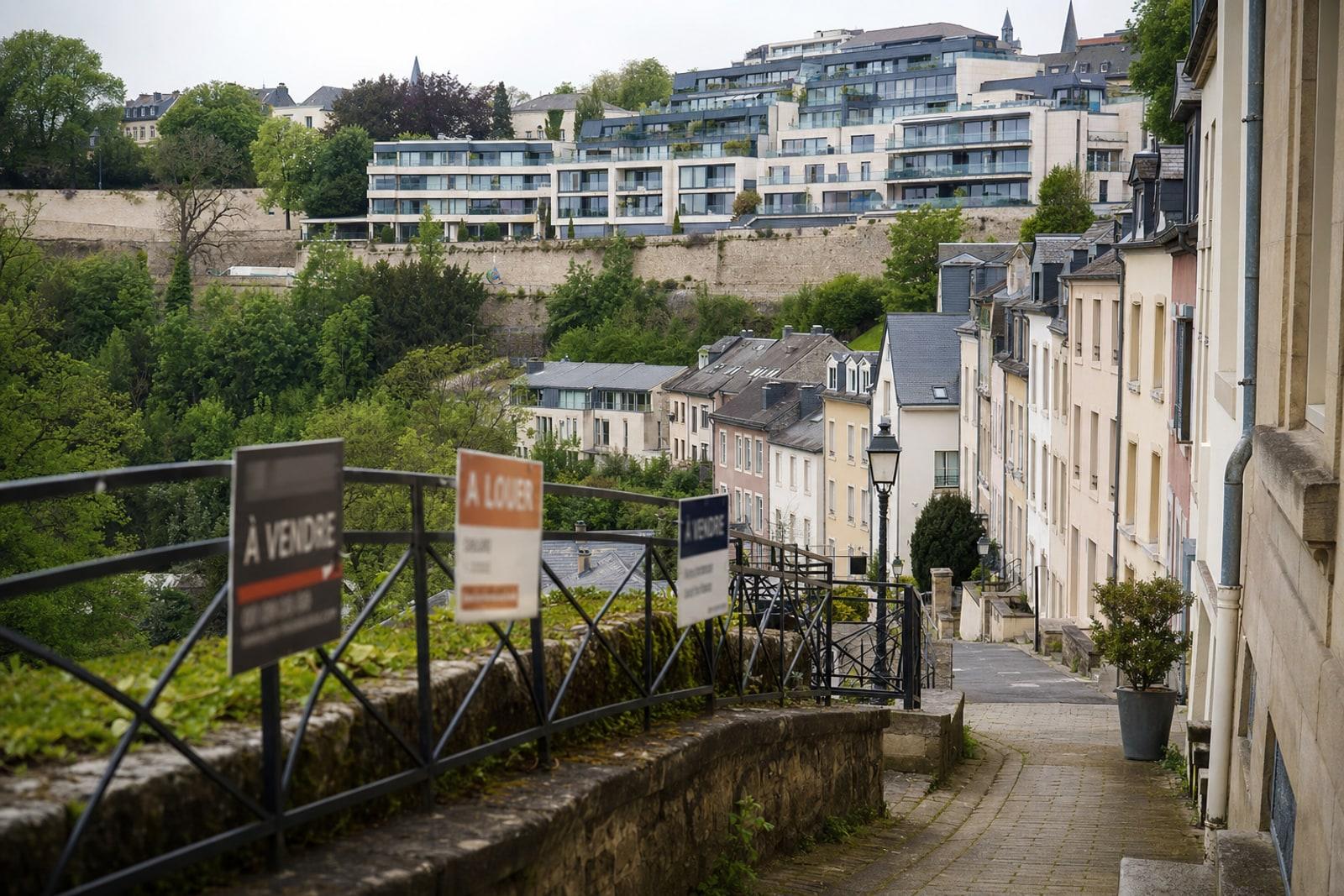
Start with housing. The Ministry of Housing’s current rent database was updated in June 2026 and covers asking rents advertised from April 2025 to March 2026; it warns that these are offers before negotiation, not necessarily rents written into leases. Its published zone benchmarks show why Luxembourg City and the north produce very different budgets. For existing apartments, the 2024 reference levels were €29.45 per m² in Luxembourg City and €16.53 per m² in the north.
That makes a useful first model: 35 m² at the published city benchmark is about €1,031 monthly before charges, compared with about €579 in the north. At 50 m², the same calculation is about €1,473 versus €827; at 80 m², €2,356 versus €1,322. Check the latest municipal rent dataset and live listings for the precise commune and property, especially because condition, furnishing, parking and energy performance move the price.
- Single person: plan roughly €1,700–€2,400 monthly if renting alone. A lean plan normally requires a small home outside the capital or shared accommodation; a city studio quickly pushes the total upward.
- Couple: plan roughly €2,900–€3,800 monthly before childcare. Sharing one home reduces rent per person, but a larger two-person apartment costs more in absolute terms.
- Family: plan at least €4,200 monthly before a full private-care bill. A larger home, food, clothes and child-related spending matter, but childcare availability and the applicable subsidy can change the result most.
- Cross-border worker: do not treat this as a Luxembourg resident budget. Luxembourg-side domestic second-class transport costs €0, but rent, local transport, health arrangements and taxes in the country of residence must be budgeted there.
For food, avoid a false-precision allowance. Eurostat puts Luxembourg food and non-alcoholic beverage prices at 24% above the EU average in 2024, while shopping habits and cross-border purchases vary widely. Give groceries, household goods, phone, eating out and leisure their own monthly envelope, then test it against receipts after the first two months.
What are rent, utilities and settling-in costs?
Ask whether the advertised rent excludes charges, what those charges cover and how they are reconciled. Electricity is only one line: the government’s 2026 example for a household using 3,900 kWh a year is about €1,006 annually after support, or about €84 monthly. It is a consumption example, not a promise for a one-person flat or electrically heated family home. Heating, water, building charges, internet and mobile service must be quoted for the particular address and contract.
The move-in cash requirement is often much higher than the first month’s budget. A landlord may require a security deposit of up to two months’ rent, excluding charges. Add the first rent payment, moving costs, basic furniture and any agency or connection costs before signing. A state rental-deposit guarantee exists for eligible households, but it is not automatic and has income, residence and other conditions.
“Public transport is free in 2nd class for domestic journeys.” — Guichet.lu
This makes a car optional for many residents, but it does not make all journeys free: first-class and cross-border travel are charged. A cross-border commuter should price the paid segment from the border separately and ask whether the employer contributes.
How much childcare and health cover cost in Luxembourg
Do not insert a single “daycare price” into a family budget. The chèque-service accueil scheme calculates the parental contribution individually from household income, family composition, the number of children, provider and hours. State participation is capped at 60 hours a week and €7 an hour at an eligible education and care service or mini-crèche, or €5.40 with an eligible childminder; any cost above those caps is the parents’ responsibility. Children aged one to four receive 20 free collective-care hours, while school-age children have free care and main meals during school periods under the scheme’s conditions. Obtain the written CSA contract before relying on a monthly figure.
For an employee, health insurance is not normally a separate private monthly premium. The employer registers the employee with the CCSS; the employee share includes health, pension and long-term-care contributions. For private-sector employees, the competent fund is the CNS, and qualifying family members can be co-insured. Healthcare is covered subject to the statutory rules, so retain a modest out-of-pocket provision for items and services not fully reimbursed rather than assuming every expense is free.
What salary is needed to live comfortably in Luxembourg?
There is no responsible universal gross-salary answer. From gross pay, an employee contribution of 2.80% for health benefits in kind, 0.25% for cash benefits, 8% pension and 1.40% long-term care is withheld, then wage tax depends on the tax card, marital status, children, deductions and other income. Residents and cross-border workers can therefore have very different disposable income on the same gross salary.
A sound rule is to target monthly net income above your chosen scenario plus savings and irregular costs. For a single renter in the city, test whether your payslip leaves at least €2,000 after deductions before treating the move as comfortable; a household with childcare should model both salaries and the exact CSA quote. Check the tax card issued through the ACD, keep the employer’s payroll estimate, and revise the plan when rent, energy tariffs or household circumstances change.
Frequently asked
- Is Luxembourg expensive to live in?
- Yes, particularly for renters. Luxembourg City’s published existing-apartment benchmark was €29.45/m², compared with €16.53/m² in the north; housing location changes a budget more than most other choices.
- How much money does one person need to live in Luxembourg?
- A practical independent-renter plan is around €1,700–€2,400 a month, depending chiefly on rent. It is a planning range, not an official average; shared housing or a cheaper commune can reduce it.
- Is public transport free in Luxembourg?
- Domestic public transport is free in second class. First-class and cross-border journeys can require a ticket.
- Does an employee need private health insurance in Luxembourg?
- Private-sector employees are compulsorily registered with Luxembourg social security and normally receive health cover through the CNS. Private cover can be optional, but statutory contributions are already deducted from salary.
Sources(12)
- 1Advertised residential rents by municipalityMinistry of Housing and Spatial Planning – Observatoire de l'Habitat · data.public.lu
- 2Public-private affordable-housing partnership rental benchmarksMinistry of Housing and Spatial Planning · logement.public.lu
- 3State aid to reduce electricity billsMinistry of the Economy · meco.gouvernement.lu
- 4Using public transport in LuxembourgGuichet.lu · guichet.public.lu
- 5Receiving childcare service vouchersGuichet.lu · guichet.public.lu
- 62026 childcare-service voucher parental-contribution scaleMinistry of Education, Children and Youth · guichet.public.lu
- 7Payment of social contributions for employeesGuichet.lu · guichet.public.lu
- 8Residential lease agreements between tenants and landlordsGuichet.lu · guichet.public.lu
- 9Registration for social security of a non-resident employeeGuichet.lu · guichet.public.lu
- 10Comparative price levels for consumer goods and servicesEurostat · ec.europa.eu
- 11Annual inflation rate stable in FebruarySTATEC · statistiques.public.lu
- 12Employee tax cardGuichet.lu · guichet.public.lu
Related by topic


EU proposes slower carbon-market cap reductions and more industry support