Europe's climate test
EU proposes slower carbon-market cap reductions and more industry support
Brussels says the plan protects investment and the 2040 target. Critics see a weaker cap; Luxembourg faces a separate fuel-price test and portfolio risk.
By Camille Reuter · · 5 min read
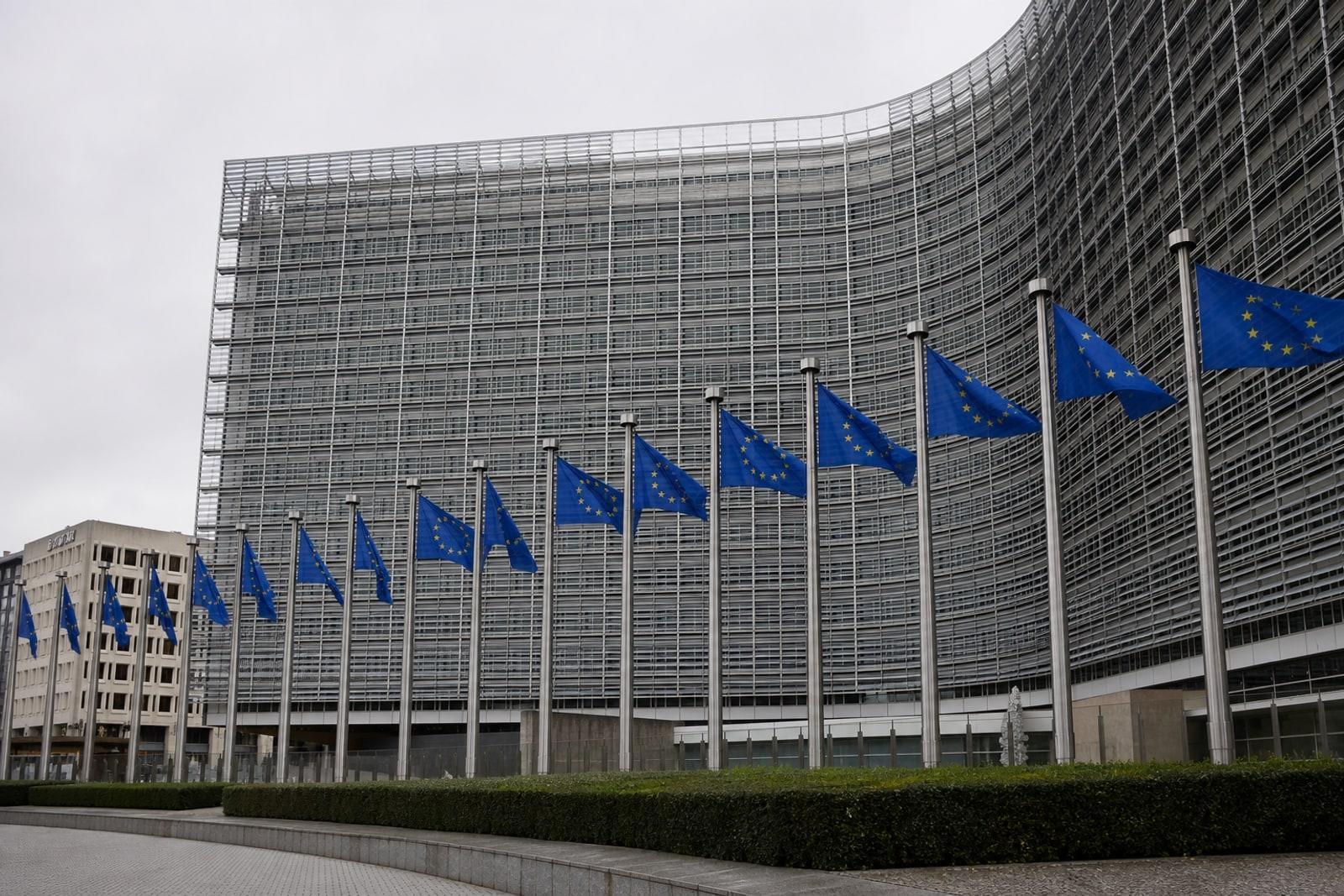
BRUSSELS — The European Commission has proposed slowing the tightening of Europe's carbon market, giving energy-intensive companies more free pollution permits and almost another decade before the system approaches full industrial decarbonisation.
The package presented on 17 July is designed to preserve manufacturing and mobilise clean investment. It also marks a retreat from the trajectory previously written into law. The central political question is whether more time and money will help factories transform inside Europe — or simply postpone emissions cuts and weaken the carbon price that was meant to force them.
The answer matters because the Emissions Trading System, or ETS, is the EU's largest climate instrument. It requires covered companies to surrender one allowance for every tonne emitted, while a shrinking cap limits supply. The system covers roughly 40% of EU emissions, and emissions from its power and industrial sectors have fallen by about half since 2005, according to the European Parliament's research service and reporting on the new proposal by The Guardian.
A looser cap, with investment conditions
The Commission says its redesign remains consistent with the EU's legally binding target to cut net greenhouse-gas emissions by 90% by 2040 from 1990. But the proposal changes how much of that work covered industries must do and how quickly.
- The annual reduction in the allowance cap would slow to 3.7% in 2031-2035 and 1.7% from 2036, rather than continuing at the 4.4% rate due from 2028.
- The Market Stability Reserve's adjustment rate would be halved from 24% to 12%, leaving more allowances available when supply and demand diverge.
- From 2036, international carbon credits could cover 2% of the reductions assigned to ETS sectors. Permanent removals, including direct-air capture with durable storage, could also enter the system.
- Free allowances for sectors exposed to the EU's carbon border charge would continue until 2038, four years longer than planned. Companies would receive 80% after adopting a European decarbonisation plan and the final 20% after making the investment.
- Municipal waste incineration would enter the ETS progressively from 2031 to 2034, while aviation and maritime coverage would expand.
The changes were confirmed independently by Reuters and Agence Europe. They mean industry receives a larger carbon budget than under the present path, even as the scheme reaches more activities.
These numbers are completely climate-law proof.
That was Climate Commissioner Wopke Hoekstra's defence. Critics counter that the arithmetic works only by shifting more of the 2040 burden to sectors outside ETS1 and by using foreign credits and removals. The EU's scientific climate advisers have warned that international credits can weaken domestic investment and put the 2050 neutrality goal at risk.
Who pays — and who receives relief
The proposal combines lower near-term pressure with more directed spending. Its distributional effects are therefore as important as the headline cap.
- Heavy industry gains the clearest relief: longer free allocation and about €6 billion of additional free permits for 2026-2030. The trade-off is tighter investment conditionality.
- National governments would have to direct at least half their ETS auction revenue to industrial decarbonisation instead of retaining full budgetary discretion.
- Industrial transition projects would gain a 400-million-allowance investment booster, valued by the Commission at about €30 billion, followed by a further €70 billion from 2031.
- Airlines, shipping companies and waste operators face wider coverage. Their compliance costs may ultimately reach passengers, freight customers and local waste systems.
This is not an unqualified gift to incumbents: clean-investment conditions and dedicated funding could accelerate projects that companies otherwise cannot finance. But a softer cap also reduces scarcity. Agora Energiewende warned that the resulting signal could deter early movers, create oversupply and leave agriculture and other non-ETS sectors to make faster cuts.
Luxembourg's test is on the road
Luxembourg joined six other member states before the proposal in opposing a weaker ETS. Its domestic exposure to ETS1 is comparatively small: national data put covered industrial emissions at 831,000 tonnes in 2024. The country's larger challenge lies in the separate ETS2 for road fuels, buildings and smaller industries, which remains scheduled to become fully operational in 2028.
Transport accounted for 59.1% of Luxembourg's effort-sharing emissions in 2024, according to the Environment Administration. The European Parliament's Luxembourg assessment estimates that about 70% of transport emissions come from fuel sold to non-residents, reflecting lower pump prices and transit traffic.
Luxembourg has chosen full participation in ETS2, which will impose the obligation upstream on roughly 20 fuel suppliers, while retaining a complementary levy on fossil road fuels. The national carbon price already reached €45 a tonne in 2026. The eventual household and business cost will therefore depend on the market price, supplier pass-through and how the national levy is recalibrated.
That structure creates an unusual result: an EU-wide price may reduce Luxembourg's fuel-price gap less than a unilateral national increase would. The country's Social Climate Plan consequently stresses coordination with Belgium, France and Germany. Residents dependent on cars, tenants in inefficient homes and fuel-intensive small businesses remain the groups most exposed.
A carbon signal for the financial centre
For Luxembourg finance, the reform is both a trading rule and a portfolio signal. ESMA says banks and investment firms supply liquidity, hedge compliance risks and connect industrial companies to the allowance market. Changing the cap can therefore affect prices, derivatives and collateral as well as factory investment decisions.
The deeper exposure lies in financed emissions. A Luxembourg central-bank study found that almost half the corporate exposures of domiciled banks and funds were to carbon-intensive sectors; an earlier OECD review put bank lending to high or very high emitters at just over 40%.
A slower transition may reduce immediate stress on borrowers, but it can also postpone adjustment and increase the danger of a sharper repricing later. The Commission's proposal now goes to the European Parliament and member states. The negotiations will determine whether Europe's carbon price remains a credible investment compass or becomes another climate rule repeatedly softened when its costs become visible.
Frequently asked
- What is the main change proposed for the EU carbon market?
- The Commission would slow the annual decline in available allowances to 3.7% in 2031-2035 and 1.7% from 2036, while extending conditional industrial support.
- Does the proposal strengthen or weaken EU climate policy?
- It adds funding, investment conditions and new covered sectors, but weakens the core emissions-cap trajectory and permits limited foreign credits. Its net effect depends on whether the added investment produces faster real-world decarbonisation.
- Will Luxembourg motorists pay more?
- ETS2 will put a market price on road-fuel emissions from 2028. Luxembourg already applies a €45-per-tonne national carbon price, so the eventual effect depends on the ETS2 market price, supplier pass-through and the complementary national fuel levy.
- Why does the reform matter to Luxembourg finance?
- Luxembourg banks and funds finance carbon-intensive companies, while financial intermediaries trade and hedge EU allowances. Changes in the carbon-price signal therefore affect credit, valuation and transition risks.
Sources(17)
- 1Commission boosts Europe's competitiveness, decarbonisation and independence with Electrification Action Plan and ETS reviewEuropean Commission · ec.europa.eu
- 2Questions and Answers on the review of the EU Emissions Trading SystemEuropean Commission · ec.europa.eu
- 3Factbox: The EU's plan to overhaul its carbon marketReuters via WTAQ · wtaq.com
- 4With revision of Emissions Trading System, European Commission opts to scale back ambition of EU carbon budgetAgence Europe · agenceurope.eu
- 5Europe's most effective tool to cut greenhouse gas emissions 'risks being weakened'The Guardian · theguardian.com
- 6A statement on the EU ETS reform proposal and the EU Electrification Action PlanAgora Energiewende · agora-energiewende.org
- 7Revision of the EU emissions trading systemEuropean Parliamentary Research Service · europarl.europa.eu
- 82040 climate target: Council gives final green lightCouncil of the European Union · consilium.europa.eu
- 9EU's 2040 climate target a key milestone, but flexibilities could jeopardise 2050 climate neutralityEuropean Scientific Advisory Board on Climate Change · climate-advisory-board.europa.eu
- 10SEQE 2: le Luxembourg renforce son engagement climatique en adhérant au ETS-2 à partir de 2028Luxembourg Ministry of the Environment, Climate and Biodiversity · mecb.gouvernement.lu
- 11Bilan provisoire des émissions de gaz à effet de serre de l'année 2024Luxembourg Environment Portal · environnement.public.lu
- 12Luxembourg Social Climate PlanGovernment of Luxembourg · environnement.public.lu
- 13Luxembourg's climate action strategyEuropean Parliamentary Research Service · europarl.europa.eu
- 14New in 2026Government of Luxembourg · mecb.gouvernement.lu
- 15Financial firms keep EU carbon markets movingEuropean Securities and Markets Authority · esma.europa.eu
- 16Climate risk exposures of the financial sector in Luxembourg and climate stress testingBanque centrale du Luxembourg · bcl.lu
- 17Securing a dynamic and green economy: OECD Economic Surveys — Luxembourg 2022OECD · oecd.org
Related by topic


Luxembourg attracts skilled workers but faces retention challenges