Economy
Luxembourg's economy stalls in first quarter as euro area shrinks
STATEC's national accounts show zero quarterly growth in early 2026, leaving the Grand Duchy flat while the euro area contracted — and casting a shadow over this year's forecast and budget.
By Jonas Thill · · 4 min read
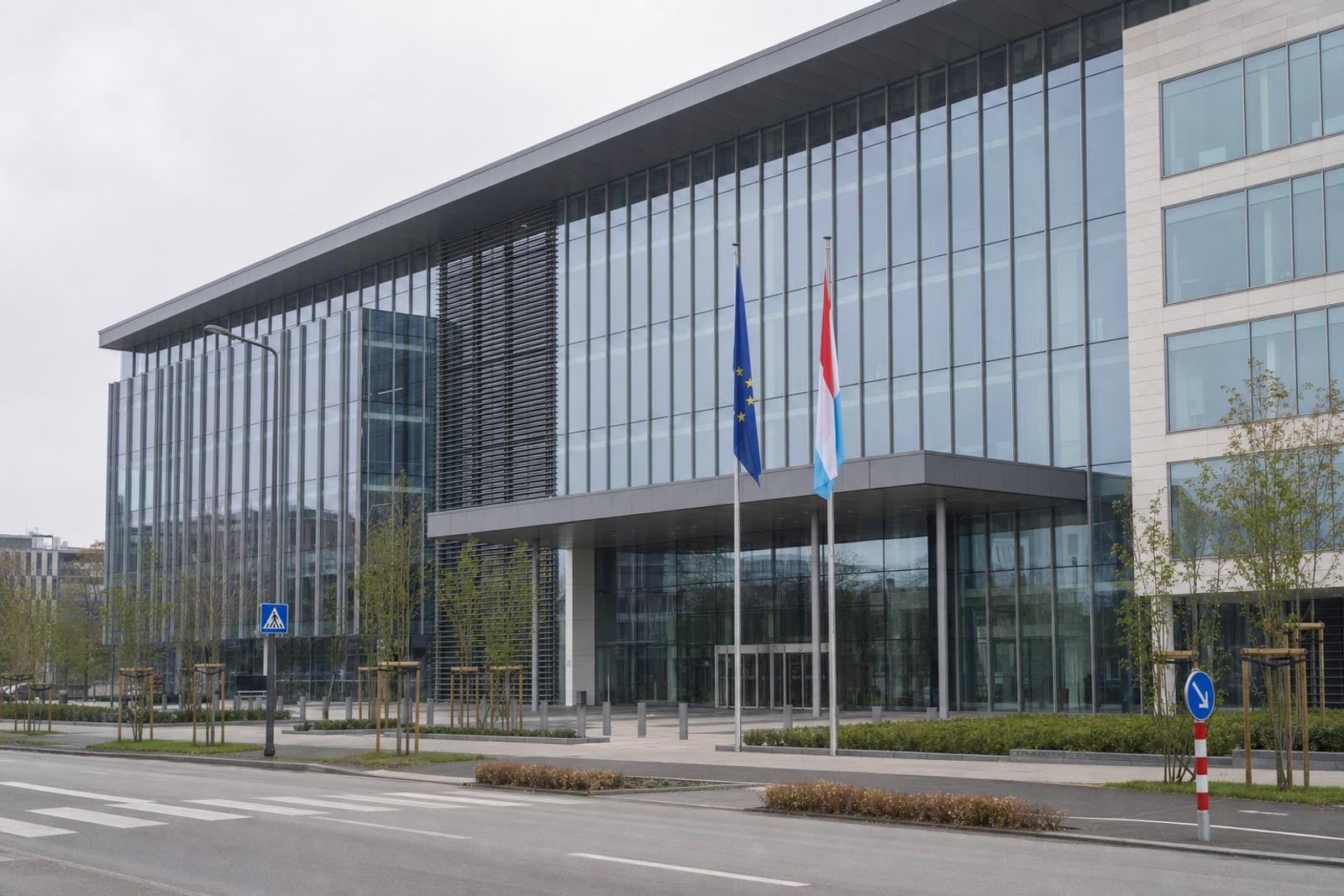
Luxembourg's economy ground to a standstill at the start of 2026, recording zero growth from the previous quarter even as it outperformed a euro area that slipped into contraction, according to figures published on 5 June by STATEC, the national statistics institute.
Real gross domestic product was unchanged — 0.0% — in the first quarter compared with the final three months of 2025, and stood 1.6% higher than in the same period a year earlier, STATEC said in its quarterly national accounts. The flat reading still left the Grand Duchy ahead of the wider currency bloc: Eurostat, reporting the same day, said euro-area GDP fell 0.2% on the quarter and the wider European Union shrank 0.1%.
The euro-area print was a downgrade from the statistical office's earlier flash estimate of mid-May, and marked the bloc's first quarterly contraction in more than three years. Much of the deterioration was concentrated in Ireland, whose multinational-heavy and notoriously volatile data plunged 12.1% on the quarter, while France edged down 0.1%.
Flat at home, red ink abroad
Against that backdrop, standing still counted as relative resilience. But the detail of Luxembourg's accounts pointed to an economy struggling for momentum. Measured by the production approach, total value added across the economy actually fell 0.3% over the quarter, the result of sharply diverging fortunes between sectors.
STATEC said the steepest drags came from two pillars of the Luxembourg economy:
- the manufacturing industry, and
- financial and insurance activities, the sector that anchors the country's outsized services economy.
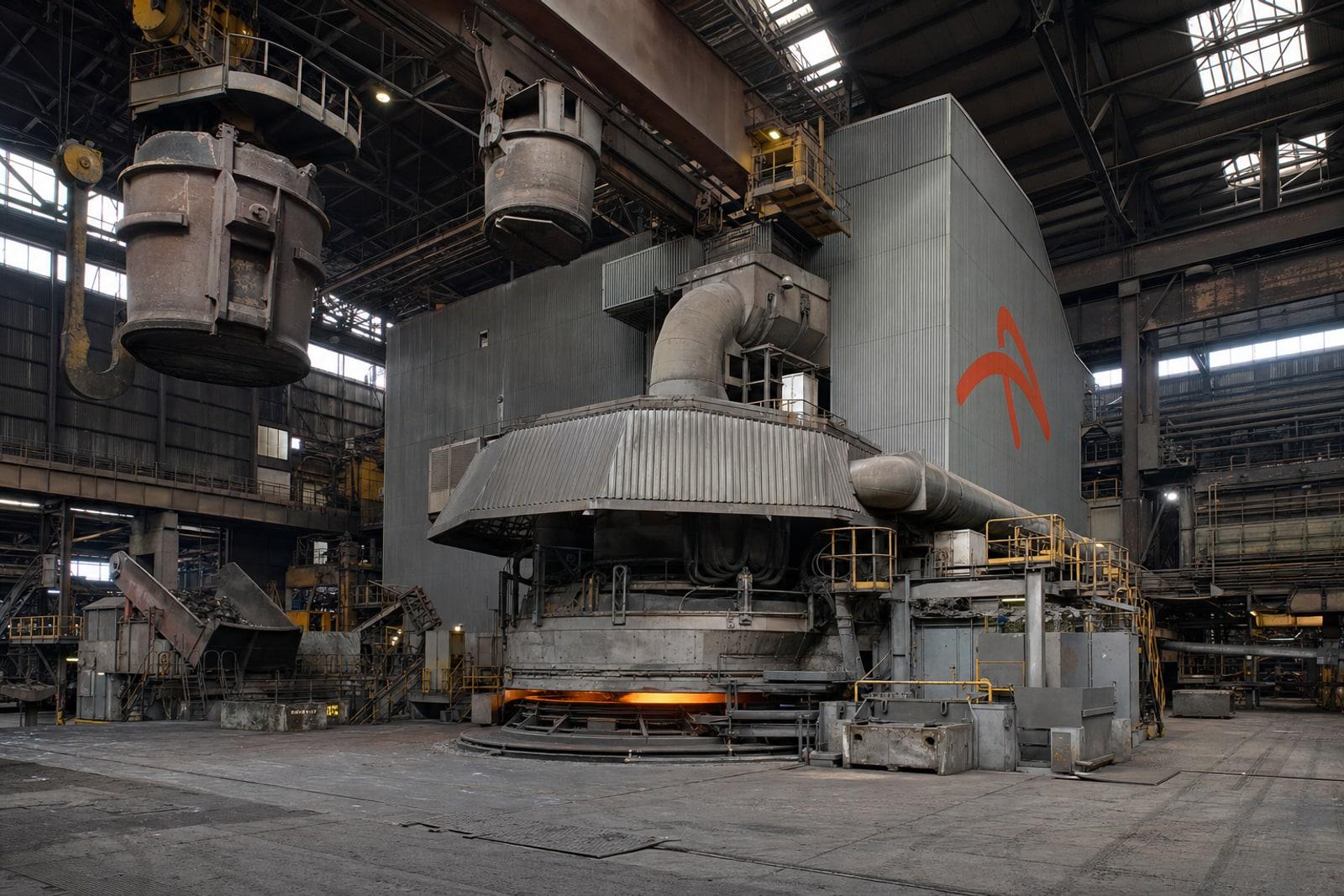
Pulling in the other direction were transport and storage, public administration, education and construction, which STATEC said contributed positively. "The most negative contributions come from the manufacturing industry and financial and insurance activities," the institute said.
Investment props up the quarter
On the expenditure side, the economy was kept level by capital spending and the public purse. Gross fixed capital formation — investment — and general-government consumption both added to growth. STATEC attributed the rise in investment mainly to a larger volume of non-residential construction work and to purchases of machinery and metal products.
Households, by contrast, retrenched. Final consumption spending by households fell over the quarter, with STATEC noting that residents bought fewer health and catering services and made fewer car-related purchases. The external balance also weakened, in an economy where trade flows are large relative to output.
Exports (both exports of goods and exports of services) fell more sharply than imports.
That deterioration in net trade, alongside softer household demand, was enough to cancel out the gains from investment and government spending and leave headline growth at zero. STATEC also revised down its estimate of fourth-quarter 2025 annual growth, to 2.1% from 2.4%.
A weak run, and a forecast under pressure
The stagnation extends a stretch of subdued growth. STATEC's preliminary estimate put full-year 2025 expansion at just 0.6%, a marginal pickup from 0.1% in 2023 and 0.4% in 2024 but a fraction of the roughly 2.5% annual average Luxembourg enjoyed over the 2010-2019 decade.
That run of weakness has forced the statisticians to temper their expectations. In its June 2025 economic outlook, STATEC had pencilled in 2.0% growth for 2026; by its March 2026 Conjoncture Flash it had cut that to 1.7% and cautioned that the figure was likely to be revised down further given a deteriorating international backdrop. The first-quarter standstill, and the euro area's slide into contraction, do little to ease that pressure.
The stakes reach well beyond the growth tables. Output is the number that underpins Luxembourg's budget, its labour market and the politically charged question of when wages are next adjusted for inflation. STATEC has projected that the next automatic wage indexation — the tranche indiciaire that lifts salaries and pensions in line with prices — would be triggered in the third quarter of 2026.
Public finances are also turning. After a balanced budget in 2025, STATEC's June 2025 forecast envisaged a deficit of around 0.9% of GDP in 2026 as revenue growth slowed and spending rose; the European Commission's spring 2026 forecast was gloomier still, projecting a shortfall closer to 1.2% of GDP and a rising public-debt ratio. With the financial sector — the government's most important source of tax revenue — among the quarter's biggest drags, a prolonged period of flat growth would squeeze the room for manoeuvre just as the euro-area economy turns down around it.
For now, Luxembourg's policymakers can take some comfort from having held their ground while neighbours slipped. Whether that is the floor of a soft patch or the start of a longer plateau will not be clear until the second-quarter accounts land later in the year.
Frequently asked
- How much did Luxembourg's economy grow in the first quarter of 2026?
- According to STATEC, real GDP grew 0.0% compared with the previous quarter — effectively flat — and was 1.6% higher than in the first quarter of 2025.
- How did that compare with the euro area?
- Eurostat reported that euro-area GDP fell 0.2% on the quarter and EU GDP fell 0.1%, so Luxembourg outperformed the wider bloc, which recorded its first contraction in more than three years.
- Which sectors dragged on Luxembourg's growth?
- STATEC said the most negative contributions came from the manufacturing industry and from financial and insurance activities, while transport and storage, public administration, education and construction contributed positively.
- What does this mean for STATEC's 2026 forecast?
- STATEC had already trimmed its 2026 growth forecast to 1.7% from 2.0% and warned of possible further downgrades. It expects a budget deficit in 2026 and the next automatic wage indexation in the third quarter.
Sources(8)
- 1STATEC Estimates Luxembourg GDP Growth at 0% for 1st Quarter of 2026Chronicle.lu · chronicle.lu
- 2GDP down by 0.2% and employment up by 0.1% in the euro area (Q1 2026)Eurostat · ec.europa.eu
- 3GDP and employment both up by 0.1% in the euro area (flash estimate, Q1 2026)Eurostat · ec.europa.eu
- 4STATEC Reports Luxembourg GDP Growth Slows to 0.6% in 2025Chronicle.lu · chronicle.lu
- 5Conjoncture Flash March 2026: Growth remains weak in 2025… and fears loom for 2026STATEC (Statistics Portal, Luxembourg) · statistiques.public.lu
- 6Luxembourg GDP to grow 1% in 2025, indexation in Q3 2026: StatecDelano · delano.lu
- 7Luxembourg GDP to grow 1% in 2025, indexation in Q3 2026: StatecPaperjam · en.paperjam.lu
- 8Economic forecast for LuxembourgEuropean Commission, Economy and Finance · economy-finance.ec.europa.eu
Related by topic