Justice
Five Luxembourg railway-station officers convicted over cell beating and cover-up
The capital's district court handed prison terms of two and three years, several suspended, to officers of the former Gare police station over a 2023 beating in custody and its concealment.
By Léa Hoffmann · · 4 min read
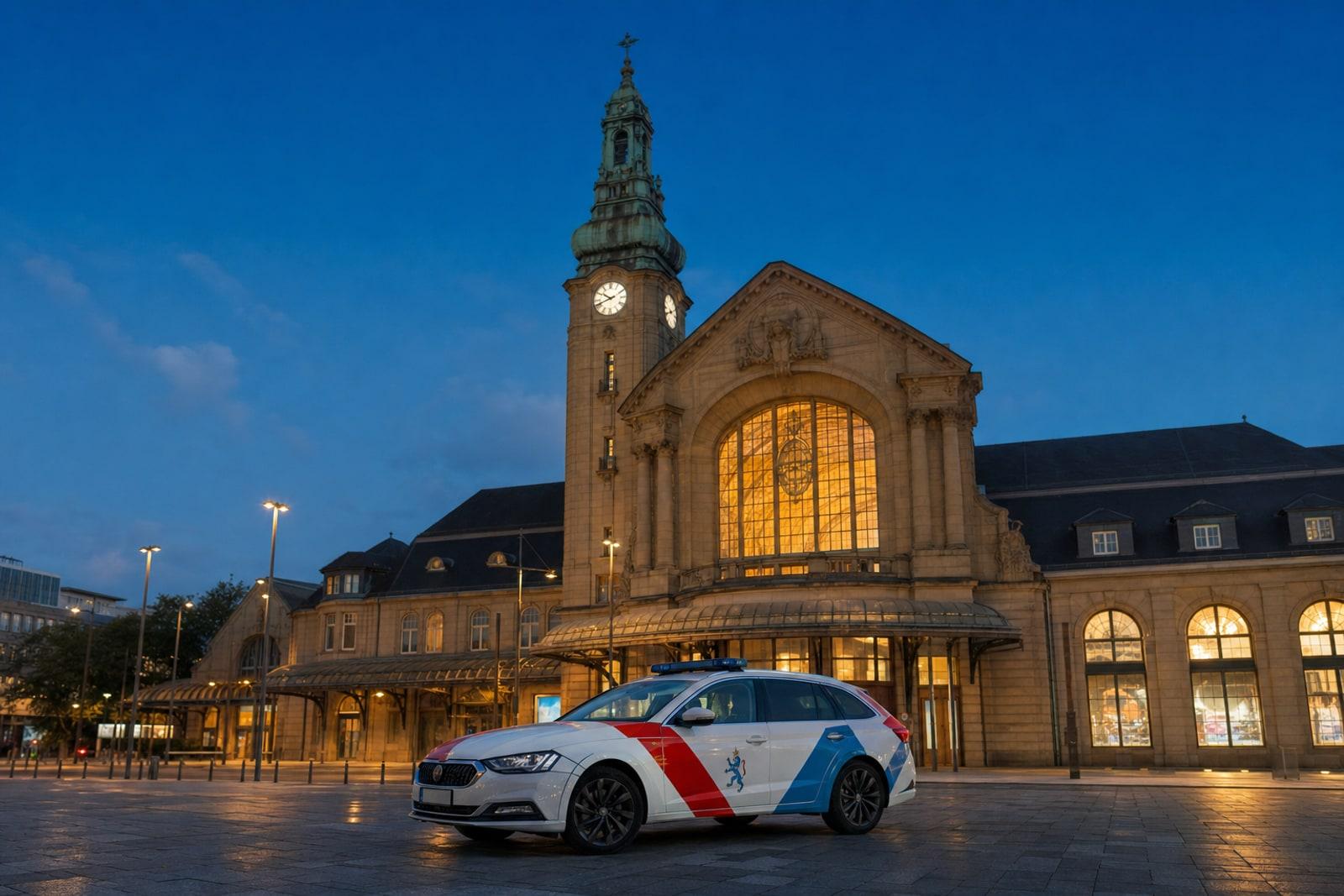
Five police officers from Luxembourg City's former railway-station unit were convicted on Thursday of charges stemming from the beating of a man in a holding cell and an effort to conceal it, in a rare criminal reckoning for serving members of the Grand Ducal Police.
The 12th criminal chamber of the Luxembourg District Court (Tribunal d'arrondissement) handed down prison terms of two and three years and fines of €2,000 and €5,000, several of them wholly or partly suspended, according to the daily Le Quotidien. The sentences fell short of the punishments sought by prosecutors, who had asked for terms of up to six years.
What happened in the cell
The case centres on the night of 20 May 2023, when a man identified in court only as Fernando, a former Luxair employee, was held in a cell at the Gare district station, known by its call sign CR3. Prosecutors said one officer, referred to in proceedings as Tom and aged 36, struck him repeatedly in the face and ribs, leaving him with eye and rib injuries and two weeks of certified incapacity.
A colleague was accused of kicking the detained man; a supervisor was charged with co-authoring a falsified report to disguise what had happened; and another officer was accused of staying silent about violence he had witnessed. A young officer who saw the aftermath described the scene in stark terms.
"Il y avait beaucoup de sang dans la cellule" — There was a lot of blood in the cell.
That account, from an officer identified as Mikeal, was reported by L'essentiel. In closing arguments, the state prosecutor argued that the assault met the legal threshold for torture, telling the court that "la torture est une violence utilisée dans un but précis, dans le cas présent pour intimider et servir d'exemple" — torture is violence used for a specific purpose, in this case to intimidate and to set an example.
How it came to light
The misconduct surfaced because a recruit refused an order. Told by a superior to write an incident report favourable to his colleagues, the young officer instead reported what he had seen, exposing what investigators and reporters described as "unorthodox" practices at the station, including the humiliation of detainees and junior officers.
The Inspection générale de la Police (IGP), the force's independent oversight body, opened an investigation and arrested several officers in the summer of 2023. Reporting on the case has pointed to a unit that escaped effective hierarchical control for years, with allegations of suspected drug use among officers and questionable initiation rituals for newcomers.
A district under scrutiny
The verdict lands on the most contested terrain in Luxembourg policing. The Gare quarter, around the capital's central station, has for years been the focus of debate over drugs, street crime and the conduct of officers deployed there. Coverage of the trial traced internal warnings about the station going back two decades.
Over eight days of hearings, the presiding judge, Marc Thill, returned repeatedly to the question of supervision. "S'il y avait eu un contrôle, nous ne serions pas ici aujourd'hui" — if there had been oversight, we would not be here today — he said, according to Reporter.lu. The unit is now referred to as the "former" Gare commissariat, having been reorganised since the events.
Prosecutors had sought significantly heavier penalties when they made their closing arguments in May. Their requests, as reported by L'essentiel and Reporter.lu, were:
- Six years for the officer accused of the beating, on a torture charge;
- Five years each for the colleague said to have kicked the detainee and for the supervisor accused of falsifying the report;
- Three years for the officer accused of obstructing justice by failing to report what he saw.
Accountability and what comes next
The convictions are unusual: criminal sentences against serving police officers are rare in Luxembourg, and the case has become a test of whether the institutions meant to hold the Grand Ducal Police to account can do so. With most of the prison terms suspended, none of the officers faces immediate incarceration on the basis of the sentences as reported, though the convictions and fines stand.
It was not immediately clear whether any party would appeal. Under Luxembourg procedure, both the convicted officers and the prosecution may challenge the verdict before the Court of Appeal. Neither the Grand Ducal Police nor the Ministry for Home Affairs, which oversees the force, issued an immediate public reaction to the ruling; the force had referred the original allegations to the IGP.
For the man at the centre of the case, the verdict closes a chapter that began with a night in a cell and a recruit who chose to tell the truth rather than file a false report. For the police, it leaves open the harder question the trial repeatedly raised: how a unit policing the capital's busiest district was left, for so long, without the oversight that might have stopped it.
Frequently asked
- Which court convicted the officers and when?
- The 12th criminal chamber of the Luxembourg District Court (Tribunal d'arrondissement) delivered the verdict on 25 June 2026.
- What sentences did the five officers receive?
- Prison terms of two and three years and fines of €2,000 and €5,000, several of them wholly or partly suspended, according to Le Quotidien — below the up-to-six-year terms prosecutors had requested.
- What were the charges?
- They spanned abuse of authority through violence and voluntary assault and battery for the beating, and obstruction of justice and falsification of official documents for the cover-up; prosecutors had pressed torture charges against the two lead officers.
- How did the case come to light?
- A young recruit ordered to write a false incident report instead reported what he had witnessed, leading the police oversight body (IGP) to investigate and arrest officers in 2023.
Sources(6)
- 1Cinq policiers de la gare condamnés pour violencesLe Quotidien · lequotidien.lu
- 2Violences policières: jusqu'à 6 ans de prison requis contre 4 policiersL'essentiel · lessentiel.lu
- 3Procès à Luxembourg: «Il y avait beaucoup de sang dans la cellule»L'essentiel · lessentiel.lu
- 4Procès pour violence policière: Compte rendu d'un échec collectifReporter.lu · reporter.lu
- 5Exclusif: Les excès toxiques des policiers de la gareReporter.lu · reporter.lu
- 6Exklusiv: Die Akte BahnhofswacheReporter.lu · reporter.lu
Related by topic