Mobility & Technology
Luxembourg drafts a legal home for self-driving cars
A new bill would set the rules for testing and deploying automated vehicles in the Grand Duchy, covering liability, registration and how they fit the EU's still-unwritten rulebook.
By Marc Weber · · 5 min read
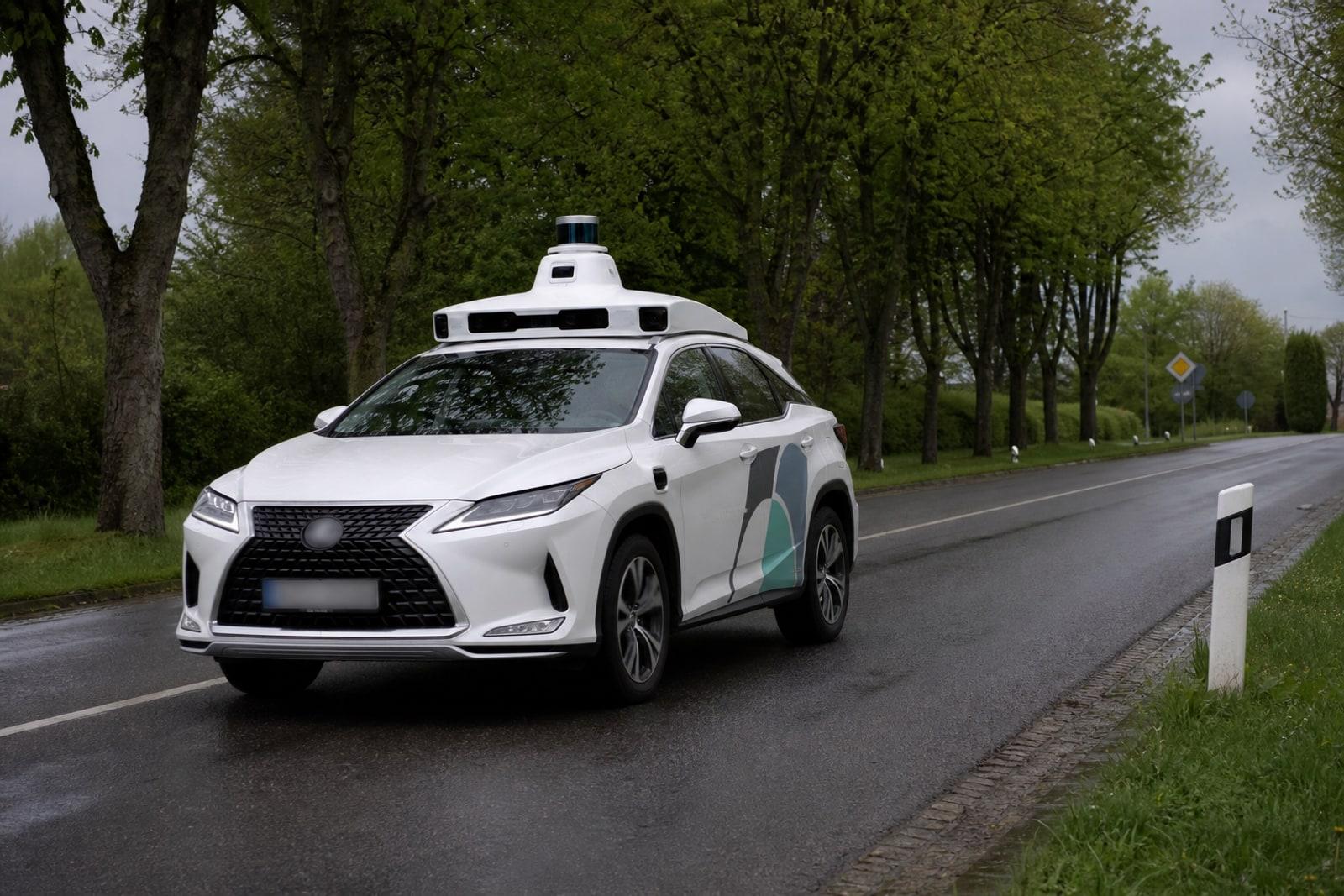
Luxembourg has moved to give self-driving cars something they still lack almost everywhere in Europe: a clear place in the law. On 25 June, senior officials presented the content of a draft bill to the Chamber of Deputies' Committee on Mobility and Public Works that would set out, for the first time, how automated road vehicles can be approved, registered, driven, operated and supervised in the Grand Duchy — and who is responsible when something goes wrong.
The text is still an avant-projet de loi, an early draft that had not yet been formally deposited in parliament or assigned a bill number when it was outlined to deputies. But it marks one of the European Union's first concrete attempts to write a comprehensive national rulebook for the technology, rather than waiting for Brussels to act. According to the parliament's own account, the draft introduces 22 new legal definitions to anchor the regime.
Two classes of automation, two sets of rules
The bill divides automated vehicles into two categories according to how much they can do without a human. The first covers “conditionally automated” vehicles, which keep obligations on a human driver who must be ready to take back control — broadly the level the automotive industry classifies as SAE Level 3. The second covers “highly automated” vehicles, closer to SAE Level 4, which can run without a driver in the seat but must be overseen through remote management.
A guiding principle runs through both: an automated system must behave on the road like “a normally prudent and competent human driver,” in the words of the draft. In its initial phase the framework targets M1 passenger vehicles — ordinary cars seating up to eight people — with other categories to be added later by grand-ducal regulation.
Félicie Weycker, a senior official at the Ministry of Mobility and Public Works, told deputies the law would reach back up the supply chain as well as out to the road.
The draft bill provides for obligations on the manufacturer, as well as specific conditions relating to type-approval, registration and entry into circulation.
On the question that has dogged the technology — who is liable in a crash — the bill clarifies responsibility between the operator and the driver and sets out their criminal-liability regime, alongside the manufacturer obligations Weycker described. It also restates the ethical principles drawn from Germany's 2017 expert commission: property damage takes precedence over personal injury, no algorithm may discriminate between people, and the system must always minimise risk.
A small country betting on being first
The bill is the legislative spine of a broader strategy, “Automatiséiert Fueren 2028,” presented in October 2025 by Mobility Minister Yuriko Backes and Economy Minister Lex Delles. Its stated ambition is striking for a country of fewer than 700,000 people: to make Luxembourg the first EU member state with a complete legal framework for the everyday use of automated vehicles by 2028.
Built on six structural axes — from regulation and skills to international cooperation — the strategy sets five priority use cases to reach by 2027:
- robotaxis;
- last-mile automated shuttles;
- valet and automated parking in restricted environments;
- automation in logistics;
- driver-assistance systems for safer motorway travel.
The government frames its method as a sequence — regulate, test, certify, deploy — rather than a single switch being flipped. Luxembourg's compact, dense road network, its trilingual workforce and its cross-border traffic with France, Germany and Belgium are pitched as advantages, turning the whole country into a manageable laboratory.
Backes has been candid that the opportunity comes with conditions. “A chance for Luxembourg,” she said of the technology, “but only on condition that the questions of liability, safety and ethics are properly built in.”
Filling a gap the EU has left open
Part of the rationale is that there is, as yet, no EU-wide regulation governing self-driving vehicles — only a patchwork of type-approval rules and national experiments. Luxembourg is trying to fill that gap while keeping its framework compatible with a future European regime. The draft's reliance on type-approval and registration is designed to dovetail with the bloc's existing vehicle-homologation system rather than cut across it.
On 8 June, Backes and 16 EU counterparts signed a joint declaration committing to build large-scale cross-border testing corridors and to harmonise homologation, safety and operating rules — an effort that traces back to a pioneering Luxembourg–France–Germany test corridor opened in 2017. The same day, Backes and Belgium's Jean-Luc Crucke rode an automated vehicle operated by Pony.ai at the coach firm Voyages Emile Weber in Canach.
That demonstration was not a one-off. In March 2025, Luxembourg granted Pony.ai Europe its first permit for scientific testing of Level 4 vehicles on public roads, in partnership with Emile Weber, with trials running around Lenningen and Canach; the University of Luxembourg's SnT research centre has tested on the Kirchberg plateau since 2022. A human safety driver still remains mandatory in every case.
Jobs, timing and the road ahead
The draft is not without friction. During the committee hearing, deputies raised the potential impact on roughly 11,000 professional drivers in Luxembourg and the risk that cheap automated rides could pull passengers away from public transport. Backes has anchored the case for change in safety, citing the roughly 20,000 people killed on EU roads each year.
On timing, the government wants to send the avant-projet to the Council of Government before the summer break, with the minister hoping for a parliamentary vote in 2027 once the required advisory bodies have weighed in. If the calendar holds, Luxembourg could have its rules in place well before most of its neighbours — and before the EU writes its own.
Frequently asked
- What does Luxembourg's automated-driving bill cover?
- The draft law sets the rules for type-approval, registration, use, operation, supervision and the criminal-liability regime of automated road vehicles, starting with M1 passenger cars. It introduces 22 new legal definitions and requires that an automated system behave like 'a normally prudent and competent human driver.'
- Which levels of self-driving does it allow?
- It defines two categories by degree of automation: 'conditionally automated' vehicles that keep obligations on a human driver (broadly SAE Level 3) and 'highly automated' vehicles that can run without a driver in the seat but must be overseen through remote management (broadly SAE Level 4).
- When could the law take effect?
- As of late June 2026 it was still an early draft (avant-projet) not yet deposited in parliament. The government wants to send it to the Council of Government before the 2026 summer break, with Minister Yuriko Backes hoping for a parliamentary vote in 2027.
- How does it fit EU rules?
- There is no EU-wide regulation for autonomous driving yet, so Luxembourg is writing its own while keeping it compatible with the EU's vehicle type-approval system. On 8 June 2026, 17 member states signed a declaration to build cross-border test corridors and harmonise homologation and safety rules.
Sources(9)
- 1Vers un cadre légal pour la conduite automatiséeChambre des Députés du Grand-Duché de Luxembourg · chd.lu
- 2Le Luxembourg trace la voie de la mobilité autonomeL'essentiel · lessentiel.lu
- 3Conduite automatisée - faire du Luxembourg un laboratoire européen de la mobilité de demainLe gouvernement luxembourgeois · gouvernement.lu
- 4Luxembourg Unveils National Strategy for Automated DrivingChronicle.lu · chronicle.lu
- 5Automatiséiert Fueren 2028 — the Luxembourg Strategy for Automated Driving (brochure)Le gouvernement luxembourgeois · gouvernement.lu
- 6Pony.ai obtains Luxembourg permit for Level 4 robotaxi testingJust Auto · just-auto.com
- 7Conduite autonome : le Luxembourg en route pour devenir un «leader»Le Quotidien · lequotidien.lu
- 8First autonomous cars to be tested on Luxembourg roadsLuxembourg Trade & Invest · luxembourgtradeandinvest.com
- 9Autonomous vehicles legislation progressDelano · delano.lu
Related by topic