Middle East
Lebanon edges toward internal crisis as Hezbollah rejects US-brokered disarmament deal
A framework signed in Washington ties Israel's withdrawal to disarming Hezbollah. The movement calls it a surrender — and one of its lawmakers has invoked civil war.
By Camille Reuter · · 4 min read
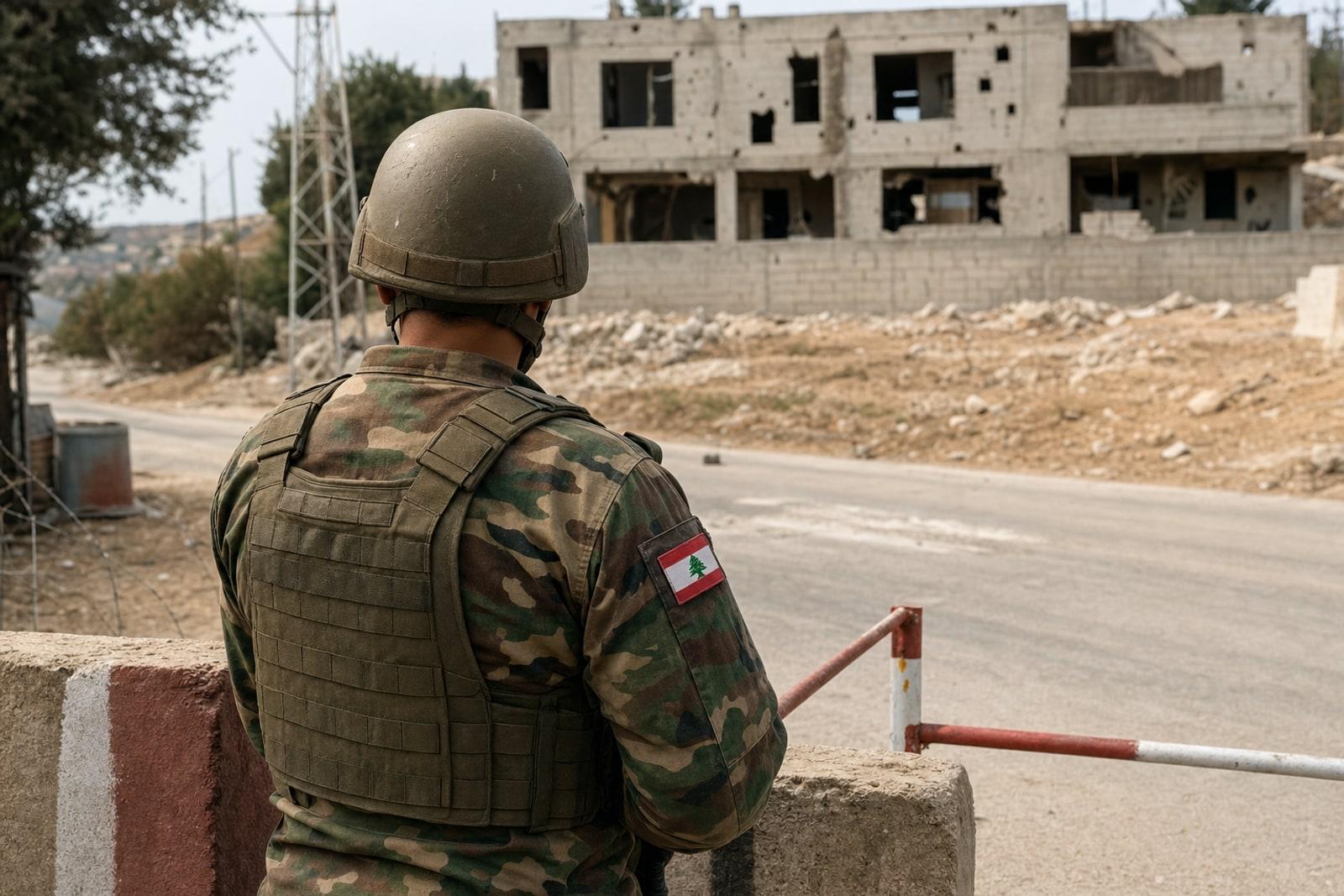
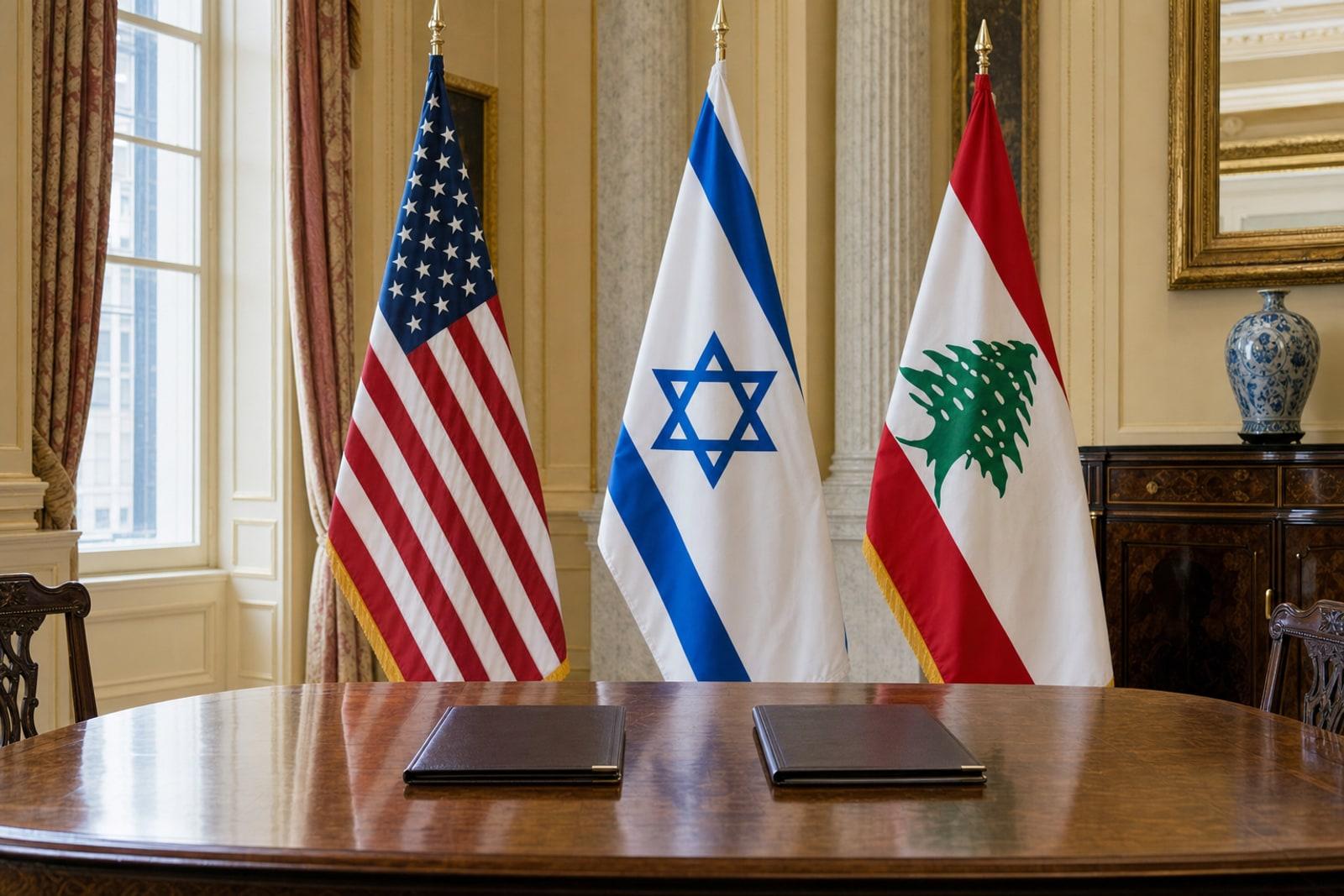
BEIRUT — A US-brokered agreement meant to draw a line under Lebanon's latest war has instead laid bare the country's deepest internal fracture in a generation. The 14-point framework signed in Washington on 26 June ties any Israeli withdrawal from southern Lebanon to the verified disarmament of Hezbollah — a demand the Iran-backed movement has rejected outright, raising the spectre of confrontation between the armed group and the Lebanese state.
The text commits the government to a "rigorous, performance-based program" enabling the Lebanese Armed Forces (LAF) to assert full military control and disarm non-state groups. In return, Israel would pull back progressively through two initial "pilot zones," with a confidential security annex governing the sequence. Hezbollah's leadership branded the deal a surrender; its supporters took to the streets of Beirut's southern suburbs.
The deal that lit the fuse
The framework lands on a country still reeling. Fighting reignited on 2 March 2026, days after the assassination of Iran's supreme leader, when Hezbollah fired projectiles into northern Israel and Israel launched a broad air and ground campaign. By the time a US-announced truce took hold on 16 April, more than 4,200 people had been killed and over 1.2 million displaced — more than a fifth of the population — according to Lebanese health authorities and tallies compiled by international media.
President Joseph Aoun, the former army chief who has staked his presidency on restoring state authority, called the agreement "the first step on the path to restoring Lebanon's sovereignty." Prime Minister Nawaf Salam said it was aimed at securing Israel's withdrawal from all Lebanese territory. Hezbollah saw it very differently.
"Linking the Israeli withdrawal to the disarmament of the resistance throughout Lebanon is a very dangerous proposition that crosses all red lines." — Naim Qassem, secretary-general of Hezbollah
Qassem called the Washington framework "humiliating, shameful, and a surrender of sovereignty" and declared it "nonexistent" from his movement's standpoint. More ominously, Hezbollah parliamentarian Hassan Fadlallah warned that the authorities could impose the deal only if they were prepared to "go to civil war" — an explicit invocation of the 1975–1990 conflict that still scars the country.
A weakened movement that will not lay down its arms
Hezbollah enters this standoff materially diminished. Two rounds of war with Israel — in 2024 and again this spring — killed swathes of its commanders, and the fall of Bashar al-Assad in Syria in late 2024 severed its principal arms corridor from Iran. The killing of Iran's supreme leader in February further unsettled the network of patronage that long sustained it.
Yet weakened is not the same as finished. The group remains the most heavily armed actor in the country and retains a disciplined base. The Lebanese army has reported completing a first disarmament phase south of the Litani River, but Hezbollah insists the ceasefire applies only there and has refused to surrender weapons farther north. Beirut's government, which has formally banned the group's military activities, must now enforce a far harder second phase that the cabinet itself estimated would take at least four months.
How close is the brink?
For all the alarm, most analysts and conflict monitors still judge a full relapse into civil war unlikely in the near term. The Armed Conflict Location & Event Data Project (ACLED) assesses outright civil war as a "distant prospect" that "cannot be ruled out," while warning that sustained unrest — protests, riots and localised clashes — is the more probable scenario. The single greatest stabiliser, analysts agree, is the LAF: a rare cross-sectarian national institution that commands public trust and foreign backing.
The fault lines are nonetheless real:
- Sectarian: the displacement of Shia communities into mixed areas, alongside the ban on Hezbollah's military wing, has sharpened communal friction in Beirut, the Bekaa and around Sidon.
- Institutional: any LAF move to seize Hezbollah arms risks clashes — and even fractures within an army that includes Shia soldiers sympathetic to the group.
- Economic: a state bankrupt since its 2019 financial collapse cannot fund a reconstruction the World Bank has costed at roughly $11 billion, leaving rival foreign patrons to buy loyalty.
"It would be a grave mistake to assume Hezbollah is finished," cautioned Michael Young of the Carnegie Middle East Center, who nonetheless argues that exhaustion and Iranian restraint make internal war improbable for now.
Why Europe is watching
The crisis carries direct consequences for the Mediterranean's northern shore. Gulf and Western reconstruction money is being explicitly conditioned on keeping funds away from Hezbollah — the framework binds Beirut and Washington to block financing reaching non-state armed groups — turning aid into both leverage and a potential trigger. At the same time, the UN peacekeeping force UNIFIL, which has policed the south since 1978, is winding down: the Security Council set its mandate to expire on 31 December 2026, with withdrawal stretching through 2027. France and Italy are weighing a successor coalition to fill the gap.
A renewed collapse in Lebanon would reverberate through Europe's security and migration calculus, with fresh displacement pressing on a continent already strained. For now the country sits in an uneasy interval — too exhausted for war, too divided for peace — with a disarmament clock ticking and no faction willing to be the first to blink.
Frequently asked
- What does the June 2026 agreement actually require?
- Signed in Washington on 26 June 2026, the 14-point framework ties a progressive Israeli withdrawal from southern Lebanon to the verified disarmament of Hezbollah and other non-state groups, commits the Lebanese army to assert full control, and binds Lebanon and the US to block reconstruction funds from reaching armed factions. A detailed security annex was not made public.
- Is Lebanon about to slide back into civil war?
- Most analysts and conflict monitors judge a full civil war unlikely in the near term, citing the cohesion of the Lebanese Armed Forces, but they warn that sustained unrest and localised clashes are a real risk. A Hezbollah lawmaker has warned the state could only enforce the deal at the cost of 'civil war.'
- Why does this matter for Europe?
- A new collapse in Lebanon would affect the Mediterranean's security and migration picture. UNIFIL's UN mandate expires at the end of 2026, France and Italy are weighing a successor force, and Western and Gulf reconstruction funding is being conditioned on Hezbollah's disarmament.
Sources(13)
- 1Israel-Lebanon deal ties ceasefire to Hezbollah disarmament: Will it work?Al Jazeera · aljazeera.com
- 2In Lebanon, framework agreement signed with Israel spurs protest, criticismAl Jazeera · aljazeera.com
- 3Hezbollah demands Israel leave Lebanon 'unconditionally' amid talks in USAl Jazeera · aljazeera.com
- 4Lebanon's deal with Israel requires Hezbollah to disarm. That might be difficultPBS NewsHour (Associated Press) · pbs.org
- 5Lebanon's deal with Israel requires Hezbollah to disarm. That might be difficultThe Washington Times (Associated Press) · washingtontimes.com
- 6Is civil unrest poised to escalate in Lebanon?ACLED (Armed Conflict Location & Event Data Project) · acleddata.com
- 7A new Lebanese civil war is unlikely, despite how things may look nowThe National · thenationalnews.com
- 82026 Lebanon warWikipedia · en.wikipedia.org
- 9Lebanon sets four months for second phase of Hezbollah disarmamentAl Jazeera · aljazeera.com
- 10Lebanon army says phase one of disarming non-state groups in south completeAl Jazeera · aljazeera.com
- 11Lebanon and the end of UNIFIL's mandate in 2026UK House of Commons Library · commonslibrary.parliament.uk
- 12UN Security Council votes to wind down UNIFIL mission in Lebanon after 2026Al Jazeera · aljazeera.com
- 13Lebanon Is Disarming Hezbollah. The U.S. and Israel Can Do More to Help.Foreign Policy · foreignpolicy.com
Related by topic