Trade defence
Brussels builds a 50% wall around its steel. Luxembourg's furnaces wait to see if it holds
The EU has finalised its toughest steel trade defence in years to fend off Chinese overcapacity. For ArcelorMittal's home country, the stakes are 3,520 jobs and a Greater Region steel cluster.
By Jonas Thill · · · 4 min read
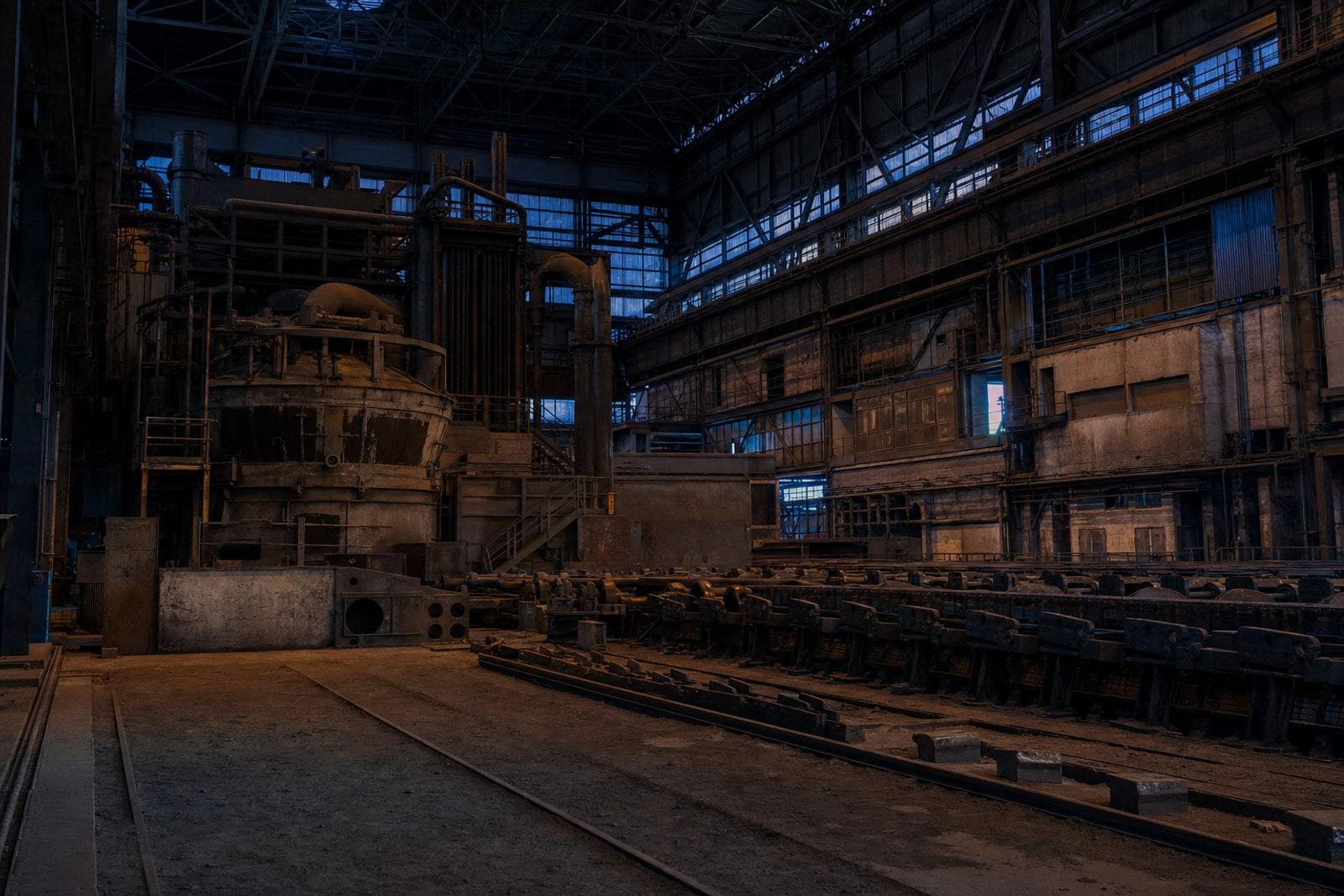
For two decades, Europe's steelmakers have watched cheap imports eat into a market they once dominated. On 8 June, the European Union finally raised the wall. Ministers in the Council gave final approval to a regulation that cuts the volume of steel that can enter the bloc duty-free by almost half and doubles the tariff on everything above that line to 50%. It takes effect on 1 July, the day after the EU's existing safeguard expires.
Nowhere in the bloc is the outcome watched more closely than in Luxembourg. The Grand Duchy is home to ArcelorMittal, the largest steelmaker outside China, and to a cross-border workforce whose furnaces and rolling mills are directly exposed to the same import surge Brussels is trying to stem. It also holds one of the 27 votes in the Council that signed the measure into law.
A higher wall around the single market
The new regulation tightens almost every dial of the system it replaces. According to the Council and corroborating trade analyses, it:
- caps tariff-free imports at about 18.3 million tonnes a year — a 47% cut against 2024 quota levels;
- raises the out-of-quota duty to 50%, up from 25%;
- widens the product scope from 28 to 30 categories;
- introduces a “melt-and-pour” rule that traces where steel was first melted and cast, to stop importers re-routing through third countries;
- lets unused quota carry over between quarters within the same year, and adds a reinforced review mechanism.
The European Parliament had approved the text on 21 May by 606 votes to 16, with 39 abstentions, after a provisional deal between Parliament and Council in mid-April. The Commission first proposed the overhaul in October 2025.
“An industrial future for Europe is impossible without a vibrant and resilient steel industry.” — Stéphane Séjourné, European Commission Executive Vice-President for Prosperity and Industrial Strategy
Why China sits behind the numbers
Officials are careful to frame the measure as a defence against “global overcapacity” rather than a single country, but the arithmetic points east. The Commission estimates worldwide excess steel capacity at more than five times the EU's annual consumption, rising from roughly 600 million tonnes now toward 721 million tonnes by 2027. China produces more than half the world's steel and heavily subsidises its mills.
The pressure on European producers is already visible. Imports supply about a third of EU steel demand, and the bloc's mills ran at roughly two-thirds of capacity in 2024 — far below the 80% or more the industry says it needs to be viable. The sector employs around 300,000 people directly and some 2.5 million more indirectly, according to Commission figures.
Industry groups welcomed the vote but pressed for rigorous enforcement. “At a time of growing geopolitical uncertainty and market distortions, this sends an important signal that the EU is prepared to act to defend its industrial base, security and autonomy,” said Axel Eggert, director general of the steel association EUROFER, after the Parliament's approval.
Luxembourg's steel anchor
The Grand Duchy has a particular stake. ArcelorMittal keeps its global headquarters in Luxembourg City and was the country's second-largest employer at the start of 2025, with 3,520 staff, according to the statistics office STATEC. Its local long-products operations span Belval, where an electric-arc furnace and rolling mills turn out steel sheet piles; Differdange, known for jumbo beams; and Rodange, which makes rails.
That anchor has been straining. In March, the State, the company and the unions LCGB and OGBL signed a tripartite agreement, dubbed “LUX2029,” after talks that began in October 2025. It manages about 300 full-time-equivalent reductions through early retirement, partial unemployment, voluntary departures, internal transfers and natural attrition rather than forced layoffs. In return, ArcelorMittal committed to invest between €290.5 million and €334.5 million across its Luxembourg sites through 2029 — including maintenance, a possible renovation of the Belval “Train 2” mill and a cybersecurity centre — and to keep its headquarters in the country. The deal was signed by economy minister Lex Delles, labour minister Marc Spautz and finance minister Gilles Roth.
For the company, the EU measure and the domestic deal are two halves of the same survival plan. “ArcelorMittal and the European steel producers have been heard,” ArcelorMittal Europe chief executive Geert Van Poelvoorde said when the Commission unveiled its proposal. “Today, we can breathe a sigh of relief, with the European Commission's announcement of the new, strengthened tariff quota proposal.”
Speaking for the Council presidency as ministers adopted the regulation, Cyprus's Michael Damianos called steel “indispensable to Europe's industrial base, its green transition and its security.”
What is still unsettled
The wall is up, but several bricks are loose. Country-by-country quota allocations remain under negotiation as the Commission works to keep the regime compatible with World Trade Organization rules. The melt-and-pour traceability obligation needs implementing rules before importers must furnish proof, with that requirement phasing in later in 2026. And a 50% tariff invites the risk of retaliation amid a broader trade confrontation in which the EU has been internally divided over how hard to push.
For Luxembourg, the test is concrete: whether tighter quotas lift utilisation and prices enough to make the LUX2029 investments pay off — and to keep the Greater Region's steel jobs from thinning further. Brussels has bought its steelmakers time. The Belval furnaces will show whether it was enough.
Frequently asked
- What exactly did the EU decide on steel?
- The Council gave final approval on 8 June 2026 to a regulation that, from 1 July, cuts tariff-free steel imports by about 47% to roughly 18.3 million tonnes a year and raises the duty on imports above the quota to 50%, up from 25%. It replaces the safeguard measure expiring on 30 June.
- How is this connected to China?
- Brussels frames the measure as a response to global overcapacity worth more than five times EU consumption and projected to reach 721 million tonnes by 2027. China produces more than half the world's steel and subsidises its mills, driving the cheap exports the EU wants to curb.
- What does it mean for Luxembourg and ArcelorMittal?
- ArcelorMittal is headquartered in Luxembourg and employed 3,520 people there in early 2025. Under the March 2026 LUX2029 deal it is cutting about 300 posts via early retirement and other voluntary measures while investing €290.5m–€334.5m through 2029. Tighter EU quotas are meant to lift prices and utilisation enough to stabilise those sites.
- Is the measure fully in force?
- It applies from 1 July 2026, but country-specific quota allocations are still being negotiated for WTO compatibility, the melt-and-pour proof requirement phases in later in 2026, and the higher tariff carries a risk of retaliation.
Sources(13)
- 1Steel overcapacity: Council greenlights new rules to protect the EU steel market from global overcapacityCouncil of the EU (Consilium) · consilium.europa.eu
- 2Council and European Parliament strike deal to protect EU's steel industry from global overcapacityCouncil of the EU (Consilium) · consilium.europa.eu
- 3Steel overcapacity: Council adopts mandate on new rules to protect EU steel industry from global overcapacityCouncil of the EU (Consilium) · consilium.europa.eu
- 4Commission proposes plan to protect EU steel industry from unfair impacts of global overcapacityEuropean Commission Representation in Cyprus · cyprus.representation.ec.europa.eu
- 5EU doubles steel tariffs to 50% to curb surge of cheap Chinese importsFrance 24 · france24.com
- 6European Parliament approves steel safeguard replacement measureEUROMETAL · eurometal.net
- 7EU tariffs on steel: what the new safeguard regulation means for importers and exportersBird & Bird · twobirds.com
- 8New trade measure is major leap forward to save EU steel and hundreds of thousands of jobsEUROFER · eurofer.eu
- 9ArcelorMittal: EU's proposal for stronger trade defense measures crucial for steel industry survivalEUROMETAL · eurometal.net
- 10New 'LUX2029' agreement signed to secure the steel industry's future in LuxembourgThe Luxembourg Government (gouvernement.lu) · gouvernement.lu
- 11300 departures planned at ArcelorMittal LuxembourgEUROMETAL · eurometal.net
- 12The main employers in Luxembourg on January 1, 2025STATEC · statistiques.public.lu
- 13ArcelorMittal Luxembourg: workers unite in opposing job cutsindustriAll Europe · news.industriall-europe.eu
Related by topic