Energy transition
Solar overtakes wind as Luxembourg's biggest home-grown power source
The regulator ILR says photovoltaic output led the Grand Duchy's domestically generated electricity for the first time in 2025 — though imports still cover about seven in ten kilowatt-hours consumed.
By Marc Weber · · 4 min read
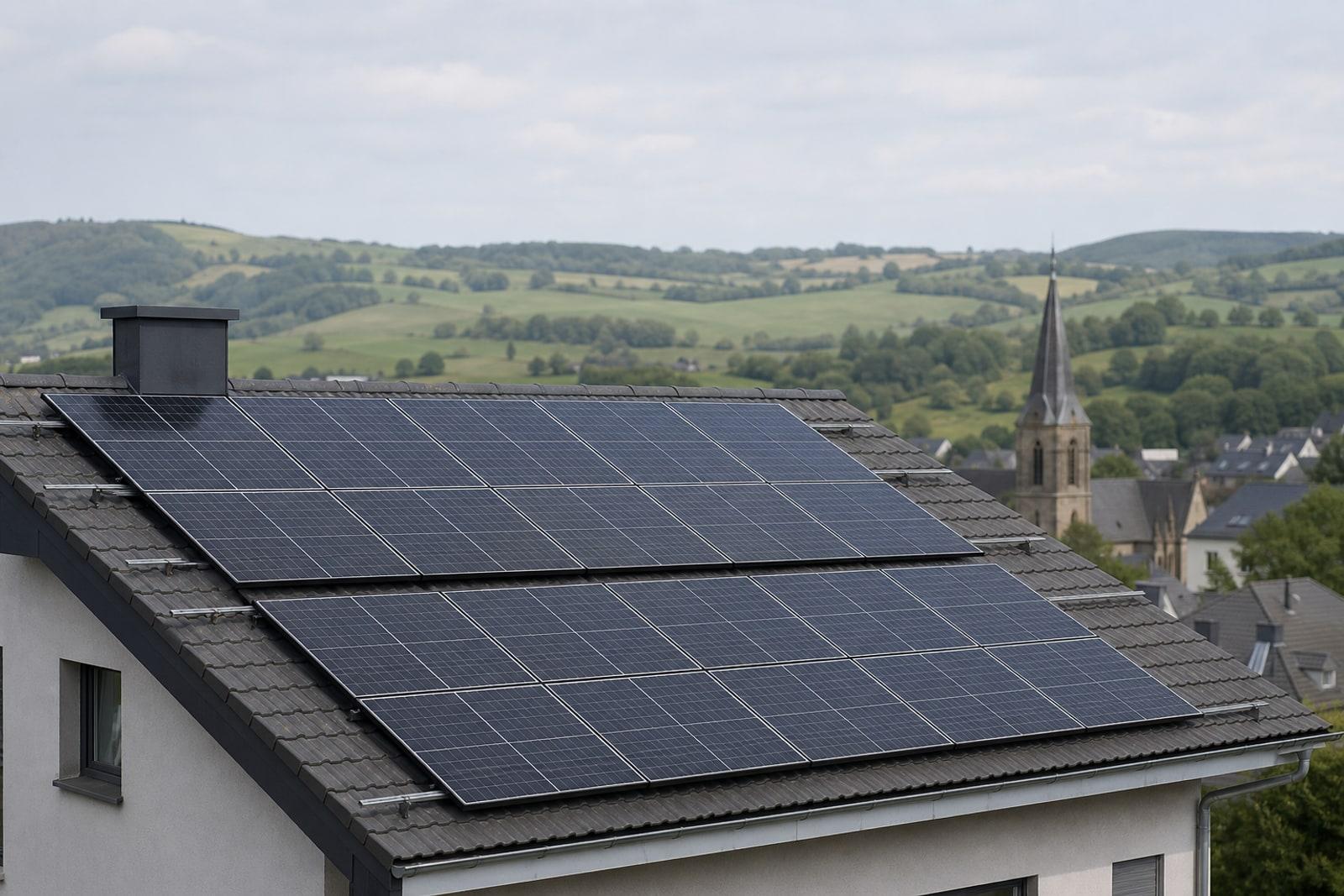
Solar power became the single largest source of electricity generated inside Luxembourg in 2025, the national regulator said, a structural milestone for a Grand Duchy that has long relied on its neighbours to keep the lights on. Photovoltaic installations produced 627 gigawatt-hours (GWh) over the year — a 74.3% jump on 2024 — overtaking wind for the first time, according to figures presented by the Institut Luxembourgeois de Régulation (ILR).
The shift is modest in absolute terms but symbolically significant. Luxembourg generates only a fraction of the electricity it uses, and for decades that domestic sliver was dominated by wind, waste-to-energy plants and gas. Now rooftops have taken the lead, the clearest sign yet that the country's energy mix is tilting toward decentralised, home-grown renewables.
A reshuffled generation mix
Total electricity generated within Luxembourg rose 20.8% to 1,826 GWh in 2025, the ILR reported. Broken down by source, the domestic picture now reads:
- Solar (photovoltaic): 627 GWh, up 74.3% year on year
- Wind: 467 GWh
- Wood waste and biomass: 398 GWh
- Gas cogeneration: 63 GWh
Hydropower and other sources account for the small remaining balance. Roughly 94% of the electricity produced inside the country came from renewable sources, ILR director Luc Tapella said. The regulator attributed the overall increase to expanding solar, wind and biomass output.
For the first time, production from solar panels has exceeded that of wind turbines.
That assessment, delivered by Tapella, was echoed by the ILR's head of statistics and market monitoring, Marc Kohll. "Production increased thanks to photovoltaic, wind turbines and biomass," Kohll said, speaking in French. "It is intensifying." He described the solar surge as "a deliberate trend, and we are starting to measure its scale."
The build-out behind the numbers was rapid. Installed photovoltaic capacity climbed 35.8% to 746 megawatts, while the number of solar installations grew by 10,694 — a 47.3% rise — to 33,304 by year-end. Battery storage spread in parallel: Luxembourg counted 9,843 storage systems with a combined capacity of about 101 megawatt-hours, the overwhelming majority of them small residential units.
Still an import-dependent grid
For all the momentum, the milestone comes with a heavy caveat: Luxembourg remains one of Europe's most import-reliant electricity markets. Purchases from abroad still covered about 72% of the electricity the country consumed in 2025, the ILR said — a meaningful fall from 80% in 2020, but a reminder that domestic generation meets only a minority of demand.
The regulator framed the change as a gradual rebalancing rather than a break. The share of domestically produced electricity coming from renewable sources rose from 16% in 2020 to 26% in 2025. A more telling signal of a decentralising system was the surge in electricity generated and consumed on site, or shared locally, instead of bought through the grid: those volumes more than doubled, rising 122% to 444 GWh, and now represent about 7% of what final consumers use.
Even so, the ILR was blunt about the limits. Tapella cautioned that it is "difficult to imagine Luxembourg becoming self-sufficient," pointing to the small size of a country with little land for large-scale generation. Kohll made a similar point about gas, where 98.5% of supply is imported: reducing dependence, he said, means consuming less, "since we cannot produce it locally."
Measured against the 2030 targets
The solar milestone lands as Luxembourg pushes toward binding climate commitments. The country's updated National Energy and Climate Plan (PNEC) sets a target of a 37% share of renewables in gross final energy consumption by 2030 — a measure that spans heating and transport as well as electricity, and a steep climb from 14.4% in 2023. Officials have acknowledged that Luxembourg will likely need to buy renewable energy from other countries through so-called statistical transfers to close the gap, given its limited domestic potential.
Against that backdrop, solar's ascent is both encouraging and a study in scale. Photovoltaic output is growing fast enough to reorder the domestic hierarchy, yet the volumes involved remain small next to a national appetite of more than 6,500 GWh a year. The economics were also shifting in 2025: the average residential electricity price rose to 266.5 euros per megawatt-hour from 202.7 euros a year earlier, an increase the ILR linked to higher network charges and reduced state support.
The direction of travel, however, is unmistakable. A grid that a decade ago was almost entirely fed from abroad is steadily generating more of its own power, and doing so from panels on roofs rather than a handful of large plants. Whether that is fast enough to meet 2030 is a separate question — but 2025 marked the year the sun moved to the front of Luxembourg's own generation.
Frequently asked
- Did solar really become Luxembourg's largest source of electricity in 2025?
- Solar became the largest source of electricity generated within Luxembourg in 2025, overtaking wind, according to the ILR. It is not the largest source of electricity consumed, because imports still cover roughly 72% of national demand.
- How much solar electricity did Luxembourg generate in 2025?
- Photovoltaic installations produced 627 GWh, a 74.3% increase on 2024, compared with 467 GWh from wind, 398 GWh from wood waste and biomass, and 63 GWh from gas cogeneration.
- How dependent on imports is Luxembourg's electricity supply?
- Imports covered about 72% of the electricity Luxembourg consumed in 2025, down from 80% in 2020. Total domestic generation reached 1,826 GWh, up 20.8% on the year.
- What is Luxembourg's 2030 renewable energy target?
- Its updated National Energy and Climate Plan (PNEC) targets a 37% share of renewables in gross final energy consumption by 2030, up from 14.4% in 2023, partly through statistical transfers of renewable energy from other countries.
Sources(6)
- 1Solar Becomes Luxembourg's Largest Electricity Source in 2025, ILR ReportsChronicle.lu · chronicle.lu
- 2L'énergie solaire, première source d'électricité produite au LuxembourgPaperjam · paperjam.lu
- 3ILR: le Luxembourg produit plus d'électricité mais les prix grimpent en 2025L'essentiel · lessentiel.lu
- 4Énergie : les prix grimpent, les habitudes changentLe Quotidien · lequotidien.lu
- 5Luxembourg's integrated national energy and climate plan for the period 2021-2030 (PNEC)The Luxembourg Government (gouvernement.lu) · gouvernement.lu
- 6Luxembourg: National Energy and Climate Plan (NECP)Klima-Agence · klima-agence.lu
Related by topic