Literature
After 33 years, Op der Lay closes a chapter in Luxembourgish literature
The small Esch-sur-Sûre publisher devoted to the national language stops on 1 September, reviving worries about a literature with few readers.
By Tom Schmit · · · 5 min read
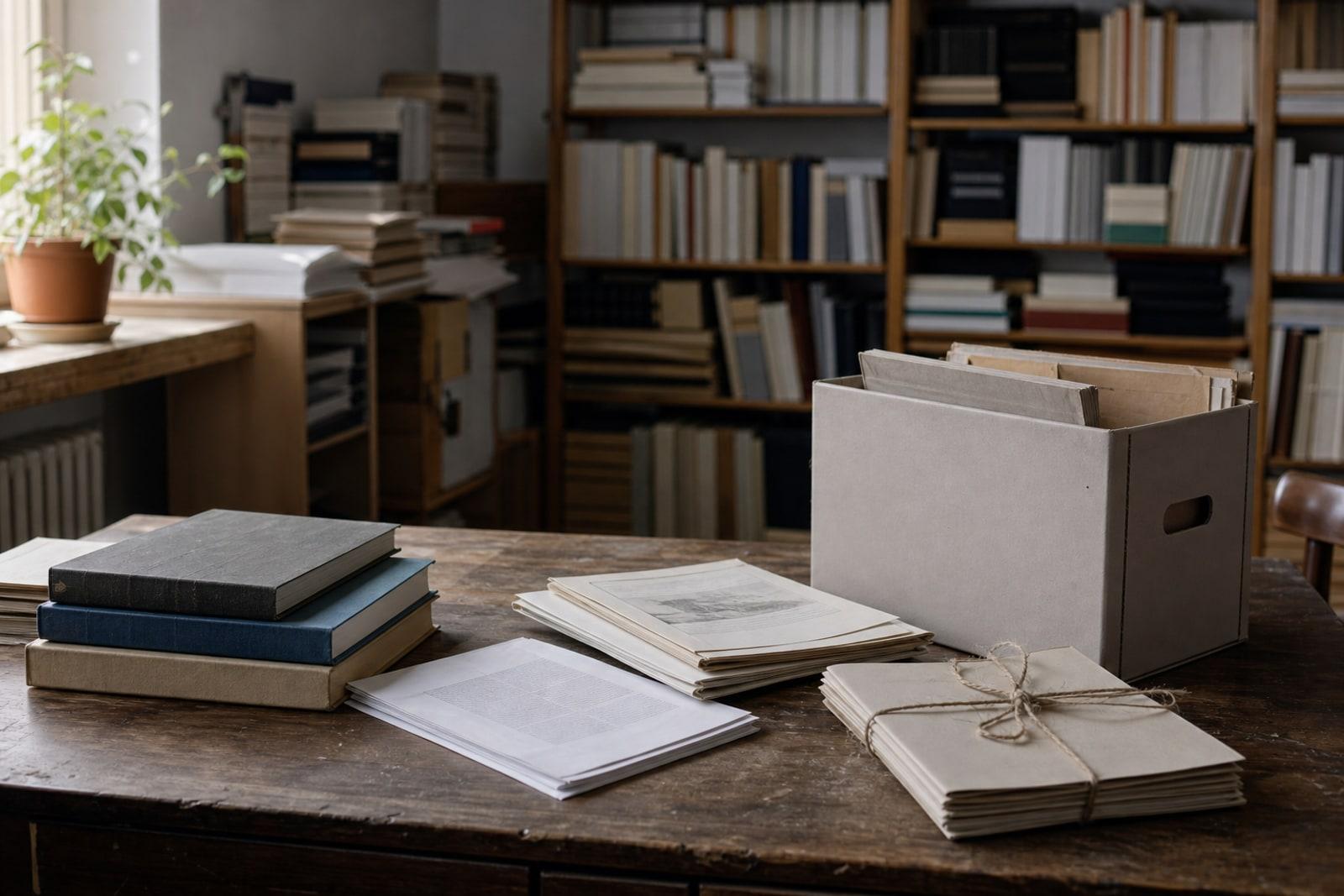
For more than three decades the name Op der Lay appeared on the spines of slim volumes of poetry, on crime novels set in the Ardennes, on picture books for children learning to read in their mother tongue, and on the occasional recording. Run from the village of Esch-sur-Sûre, the publisher was never large. Yet within Luxembourg it occupied an outsized place: it was one of the few houses willing, year after year, to print literature in Lëtzebuergesch, the language most of the country speaks but comparatively few read on the page.
That work is now ending. Op der Lay will close on 1 September 2026, after 33 years, its managers Doris Bintner and Eric Steffen announced. Orders through the publisher's own shop can be placed until 31 July; thereafter its catalogue will live on, as the house put it, "in bookshops, libraries or second-hand." The announcement, posted under the heading Een neit Kapitel — "A New Chapter" — closed with a simple line of thanks for "33 years of publishing work in Luxembourg."
A house built around a language
The story of Op der Lay begins with the writer, teacher and songwriter Robert "Gollo" Steffen, who first issued books under the imprint in Esch-sur-Sûre in 1987. The publishing house proper was founded in 1993 together with the illustrator Renée Weber, whose cover art and animal stories for children would become part of its identity. From the start, according to the Luxemburger Autorenlexikon maintained by the Centre national de littérature, the house made a point of being open to young and untested authors — a deliberately accommodating stance in a market where few could expect to recoup a print run.
Op der Lay's output was modest in volume but wide in range: roughly four to five titles a year, new work and reprints alike, spanning prose, poetry, theatre, comics, children's and youth literature, non-fiction and music. Most appeared in Lëtzebuergesch or German, with some French and English. Over the years its list gathered an unusually broad cross-section of the country's writers, among them Roland Meyer, Guy Rewenig, Marco Schank, Cosimo Suglia and Antoine Pohu.
Ownership shifted gradually. Renée Weber stepped back in 2004, when Doris and Jean-Marc Bintner came in; Eric Steffen, Robert Steffen's son, joined in 2018, and the founder himself withdrew the following year. The house marked its quarter-century with a collective volume, Eng Rees am Krees, to which many of its authors contributed.
A literary home lost
The reaction within Luxembourg's literary community has been a mixture of sadness and understanding. The most pointed response came from the novelist Claudine Muno, who has published with Op der Lay since the mid-1990s and won the Prix Servais in 2004 for her novel frigo. "I am losing my literary home," she told the Tageblatt. "We have worked together for 30 years. I am grateful and sad." Her most recent Op der Lay title, Dëst ass net däi Liewen, took the Lëtzebuerger Buchpräis in 2023 — a reminder that the house was still publishing prize-winning work as it prepared to close.
That tension runs through the responses: an awareness that the decision is reasonable, set against the recognition that a small ecosystem cannot easily absorb the loss of a publisher with three decades of relationships and a back catalogue to match. For authors who write in Luxembourgish, the number of houses that will take their manuscripts is not large, and each closure narrows it further.
The arithmetic of a small language
Op der Lay has not framed its closure as a financial collapse; the language of Een neit Kapitel is that of a chapter ending rather than a business failing, and the house had latterly been run part-time. But the closure inevitably draws attention to the structural problem that shadows all publishing in Lëtzebuergesch: the readership is simply small.
Luxembourg's roughly 680,000 inhabitants are spread across three written languages — French, German and Luxembourgish — and a large share of the population are residents and cross-border workers who do not read Luxembourgish at all. The language was for most of its history a spoken one; the novel arrived late, with Guy Rewenig's Hannert dem Atlantik in 1985 generally cited as the first written in it. Sales figures stay correspondingly modest: Roger Manderscheid's childhood trilogy of 1988 was considered a notable success at around 3,000 copies. For most titles the numbers are far smaller, and the economics rest heavily on cultural commitment, public support and the unpaid hours of the people involved.
The challenges of sustaining such a literature are familiar:
- A capped market. Even a bestseller in Luxembourgish reaches an audience that a mid-list title elsewhere would consider negligible, leaving little room to cover editing, printing and distribution.
- Limited export. Work in the national language rarely travels without translation, which the Arts Council Kultur | lx supports but which adds another step and cost.
- Few hands. Small houses often depend on one or two people working part-time, making succession — rather than profit — frequently the decisive question.
None of this is unique to Luxembourg; minority-language publishers across Europe face the same arithmetic. But the closure of Op der Lay makes the stakes concrete. The institutional scaffolding for Luxembourgish writing — the Centre national de littérature, the national book prize, public reading and translation support, and a handful of remaining independent houses such as Kremart Edition and Éditions Guy Binsfeld — endures. What is harder to replace is a particular publisher's accumulated trust: the willingness to gamble on a first book, the long author relationships, the conviction that a literature for a few hundred thousand people is worth printing at all. For 33 years, Op der Lay supplied that conviction. Its closing leaves the question of who will furnish it next.
Frequently asked
- When and why is Op der Lay closing?
- Op der Lay will close on 1 September 2026 after 33 years. Its managers, Doris Bintner and Eric Steffen, framed it as opening 'a new chapter' rather than a financial failure; the house had latterly been run part-time. Orders through its own shop can be placed until 31 July 2026.
- Who founded Op der Lay?
- The publisher was founded in 1993 by the writer, teacher and songwriter Robert 'Gollo' Steffen together with the illustrator Renée Weber, based in Esch-sur-Sûre. Books had appeared under the imprint since 1987. Eric Steffen joined in 2018 and Robert Steffen withdrew in 2019.
- What did Op der Lay publish?
- About four to five titles a year, new works and reprints, spanning prose, poetry, theatre, comics, children's and youth literature, non-fiction and music. Most appeared in Luxembourgish or German, with some French and English, by authors including Claudine Muno, Roland Meyer, Guy Rewenig and Marco Schank.
- Why is publishing in Luxembourgish difficult?
- Luxembourg's roughly 680,000 inhabitants read across French, German and Luxembourgish, and many residents do not read Luxembourgish at all, so even successful titles reach a small audience. The novel in Luxembourgish emerged only in the 1980s, and sales of a few thousand copies count as a strong result, leaving publishers reliant on cultural commitment and public support.
Sources(6)
- 1Verlag Op der Lay hört am 1. September aufTageblatt · tageblatt.lu
- 2So reagiert die Luxemburger Literaturszene auf die Schließung von „Op der Lay"Tageblatt · tageblatt.lu
- 3Op der Lay — Een neit Kapitel (closing announcement)Op der Lay · opderlay.lu
- 4Robert Steffen — Luxemburger AutorenlexikonCentre national de littérature · autorenlexikon.lu
- 5Renée Weber — Luxemburger AutorenlexikonCentre national de littérature · autorenlexikon.lu
- 6Literature of LuxembourgWikipedia · en.wikipedia.org
Related by topic