Heritage
Luxembourg's National Archives leave the capital for a new home at Belval
On 24 June, on the eve of National Day, the country's documentary memory opens to readers in a purpose-built repository on a reclaimed steel site.
By Camille Reuter · · · 5 min read
For more than half a century, the records of the Luxembourg state have been stored behind the thick walls of a former military barracks on the Plateau du Saint-Esprit, a bluff above the capital's lower town. From 24 June, the day before National Day, researchers will instead consult them at Belval, the reclaimed steel site on the country's southern edge, where the Archives nationales de Luxembourg (ANLux) open a purpose-built reading room. The move, first promised more than two decades ago and repeatedly postponed, ends what archivists long described as a slow suffocation by lack of space.
The choice of date is not accidental. By opening on the eve of the fête nationale on 23 June — the first to be celebrated under Grand Duke Guillaume, who acceded in October 2025 — the institution frames the relocation as an act of national stocktaking. The formal inauguration of the wider site is planned for the autumn, but the public threshold is crossed in June.
Centuries of paper, scattered across the capital
The archive's holdings reach back well before the modern state. The institution traces its formal origins to 1840 and the creation, under the first director Louis Deny, of the Archives du gouvernement grand-ducal, though its documents span far earlier centuries of administration, justice, the Church and economic life. Today the collections amount to roughly 45 linear kilometres of records, alongside tens of thousands of microfilms, organised across ancient, modern, contemporary, administrative, economic and iconographic sections.
The problem has not been the archive's age but its dispersal. Since 1968 the headquarters has occupied the Saint-Esprit barracks, but as the volume of records produced by a growing administration outpaced the building, holdings spilled across the capital and its outskirts. The government described the deposits as split across six separate locations — a fragmentation that complicated conservation, retrieval and public access alike.
A repository built for a century
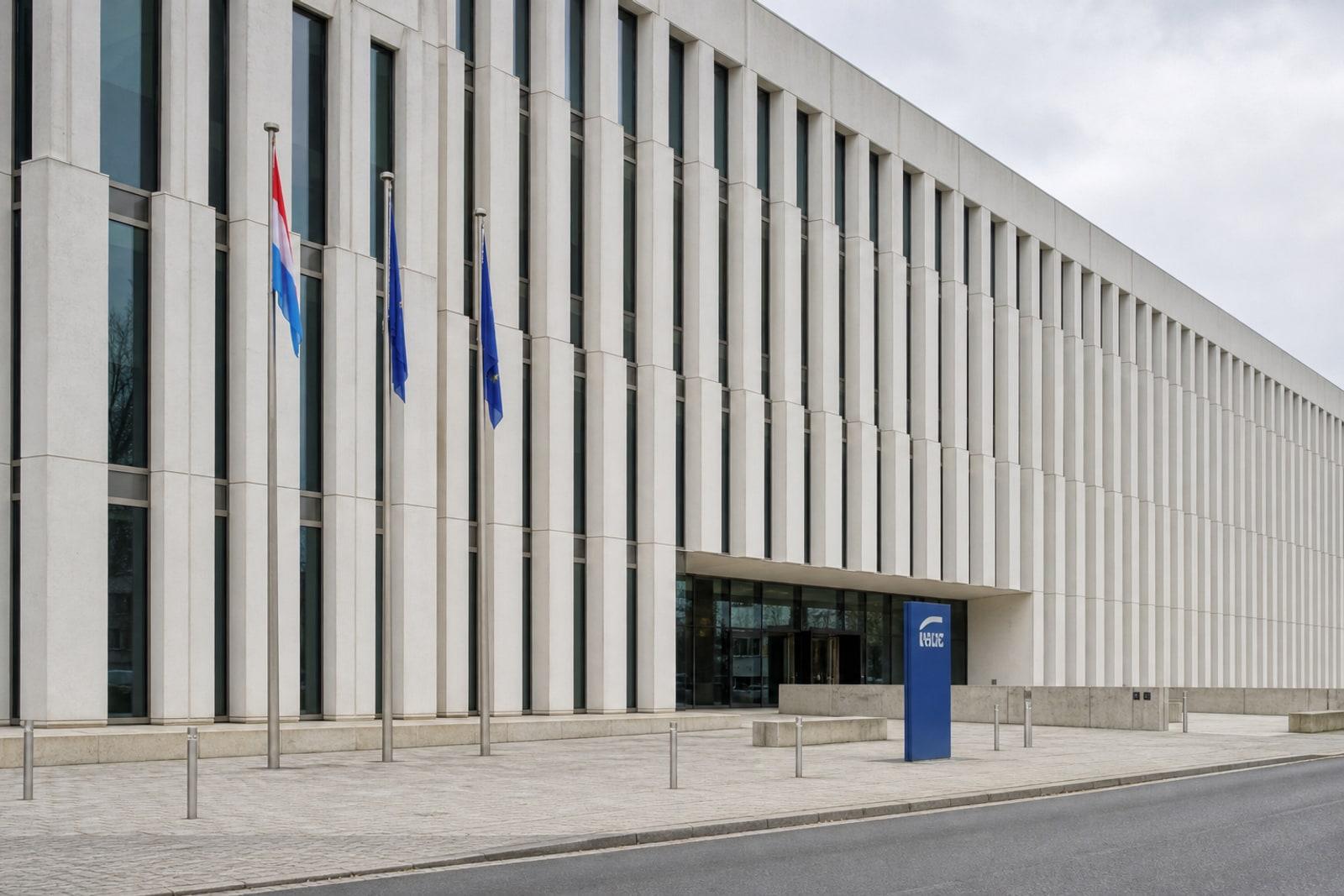
The new building, designed by the Luxembourg firm Paul Bretz Architectes following an international competition won back in 2003, consolidates administration and collections on a single site. Ground was broken in March 2022. According to figures published by ANLux and the government, the facility offers:
- 105 linear kilometres of shelving, more than double the current holdings — capacity the Ministry of Culture estimates will meet the archive's needs for 25 to 30 years;
- some 17,224 m² of net floor area (close to 25,800 m² gross), rising over seven storeys in two distinct volumes, with 56 storage depots;
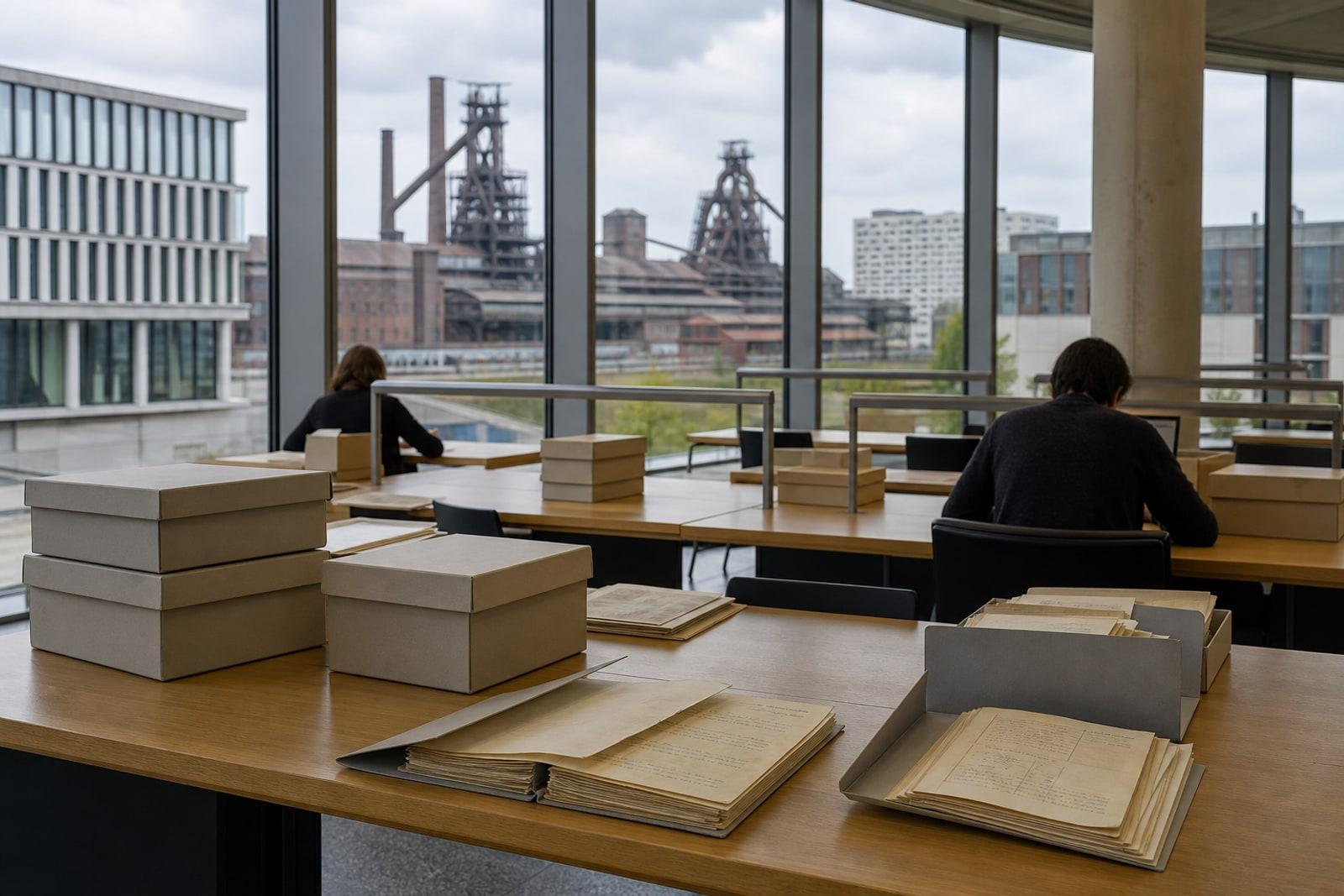
- a reading room with 48 workstations for original documents, a 12-seat multimedia room for digitised material, and several individual and group research cabinets;
- improved conditions of temperature, humidity, security and fire and flood compartmentalisation, meeting international conservation standards.
The project carries a price tag of about €77.3 million including VAT. Its designers have also pitched it as an energy-positive building, wrapping roughly 5,700 m² of photovoltaic panels across roof and façade and drawing on geothermal probes, so that it is expected to generate more energy over a year than it consumes.
The minister for culture, Eric Thill, called the project “a strategic investment by the Luxembourg State for national memory, democratic transparency and making documentary heritage available to citizens, researchers and institutions.” The minister for mobility and public works, Yuriko Backes, whose department oversaw the construction, said modern archival infrastructure was “essential for safeguarding our collective memory,” describing archives as “a fundamental pillar of any democratic society, ensuring traceability of public decisions.”
From blast furnace to knowledge campus
The site itself carries a heavy history. Belval was for most of the twentieth century the domain of ARBED, the Aciéries Réunies de Burbach-Eich-Dudelange, whose steelworks at Esch-sur-Alzette once employed thousands. Blast furnace B, fired up in 1970, was the last operating furnace in Luxembourg; it was shut down in July 1997, leaving roughly 120 hectares of brownfield behind.
Rather than demolish the ruin, the state preserved two of the rusted furnaces as listed monuments and built around them. Through the public developer Fonds Belval, the wasteland was reimagined as the Cité des Sciences, a science and culture quarter that since 2015 has hosted the main campus of the University of Luxembourg. The archive now joins that constellation, sitting opposite the furnaces at the corner of the avenue du Rock'n'Roll and the avenue des Hauts-Fourneaux, within reach of the university's libraries and research centres.
The proximity is the point. By placing the national memory beside the institutions that study it, the government hopes to forge what officials call synergies between archivists, historians and genealogists. For the south of the country — the old steel basin that once forged Luxembourg's industrial wealth — it also marks another step in a long second act, from the heat of the furnaces to the quieter work of conservation.
What changes for readers
For the public, the practical break is sharp. The reading room on the Plateau du Saint-Esprit closed permanently in early May 2026, and the relocation of administration, funds and collections is expected to run in phases from April 2026 into early 2027. Readers will therefore find a larger, brighter and better-equipped facility at Belval, but should expect that not every box will be immediately retrievable while the vast move is completed. The archive has meanwhile continued to expand free online access to digitised records through its search portal.
The departure from the capital is, in its way, a symbolic one: the records of the Grand Duchy leaving the fortress city for the industrial periphery it long overlooked. On the eve of the national holiday, that relocation reads less as a logistical footnote than as a statement about where, and how, a small country chooses to keep its past.
Frequently asked
- When does the new National Archives building at Belval open to the public?
- The reading room in the new building at Esch-Belval opens on 24 June 2026, the day before Luxembourg's National Day. A formal inauguration of the wider site is planned for autumn 2026.
- Where were the National Archives located before the move?
- Since 1968 the archive's headquarters occupied a former military barracks on the Plateau du Saint-Esprit in Luxembourg City, but its holdings had grown to be spread across six separate locations.
- How large is the new archive and what does it hold?
- The new building offers 105 linear kilometres of shelving and about 17,224 m² of net floor area over seven storeys. The archive's holdings, currently around 45 kilometres of records dating back centuries, cover administrative, judicial, ecclesiastical, economic and family papers.
- What is Belval and why was the archive built there?
- Belval is a former ARBED steelworks at Esch-sur-Alzette, where the last Luxembourg blast furnace closed in 1997. The 120-hectare brownfield was redeveloped by Fonds Belval into the Cité des Sciences, home since 2015 to the main campus of the University of Luxembourg, creating synergies with researchers and historians.
Sources(6)
- 1ANLux.BelvalArchives nationales de Luxembourg · anlux.public.lu
- 2Yuriko Backes et Eric Thill en visite sur le chantier du nouveau bâtiment des Archives nationales à BelvalLe gouvernement luxembourgeois · gouvernement.lu
- 3New National Archives Building in Belval to Open in 2026Chronicle.lu · chronicle.lu
- 4Archives nationales de LuxembourgWikipédia · fr.wikipedia.org
- 5Belval, LuxembourgWikipedia · en.wikipedia.org
- 6Luxembourg National DayVisit Luxembourg · visitluxembourg.com
Related by topic