Critical infrastructure
Luxembourg has no coast. Its economy still rides the contested seabed
The Grand Duchy lands no cable of its own, yet its banks, funds and data centres depend on undersea links now cut and shadowed in a covert NATO–Russia contest.
By Marc Weber · · 4 min read
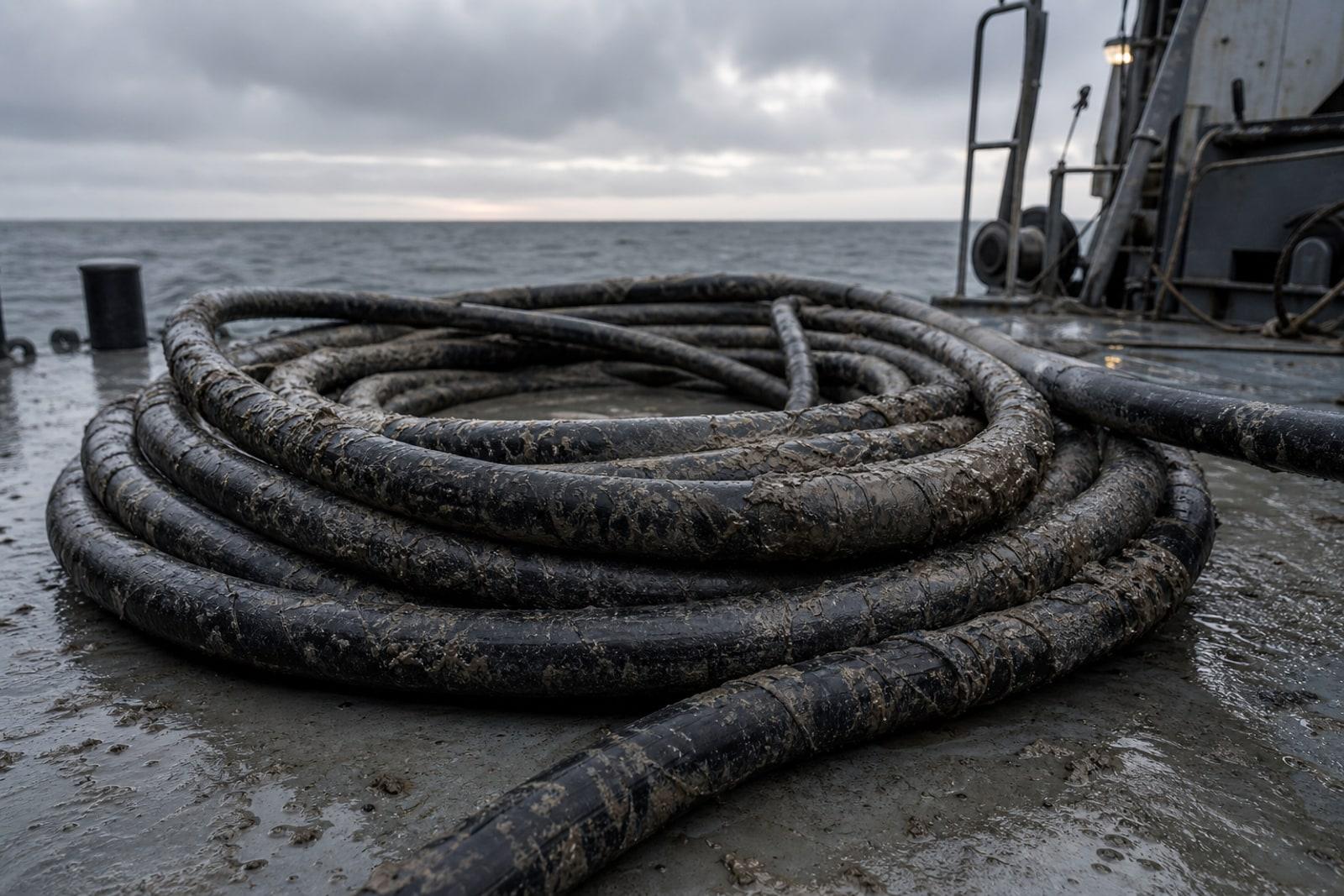
Luxembourg has no coastline, no navy and no submarine cable touching its soil. Yet the Grand Duchy's banks, investment funds and data centres run on undersea links that are now being cut, shadowed and fought over in a covert contest stretching from the Baltic seabed to the Mediterranean. The cables that carry the world's money and data have become, in NATO's framing, a front line — and a landlocked financial centre is squarely exposed.
The vulnerability is structural. Submarine cables carry about 99% of intercontinental internet traffic, the European Commission says, and much of the cross-border financial messaging that underpins Luxembourg's economy rides the same fibre. When NATO Secretary-General Mark Rutte launched the alliance's Baltic Sentry mission on 14 January 2025, he put the stakes in stark numbers.
More than 95% of internet traffic is secured via undersea cables, and 1.3 million kilometers of cables guarantee an estimated $10 trillion worth of financial transactions every day.
A contest on the seabed
The trigger was a run of incidents in late 2024. In November, the Chinese-flagged bulk carrier Yi Peng 3, which had sailed from the Russian port of Ust-Luga, was suspected of dragging its anchor across the BCS East-West cable between Sweden and Lithuania and the C-Lion1 cable between Finland and Germany, severing both inside 24 hours, according to investigators cited by CNN and the Lieber Institute. On 25 December, the tanker Eagle S — linked to Russia's sanctions-busting "shadow fleet" — allegedly dragged its anchor for nearly 90 kilometres, damaging the Estlink 2 power cable and several telecom lines between Finland and Estonia, NPR reported.
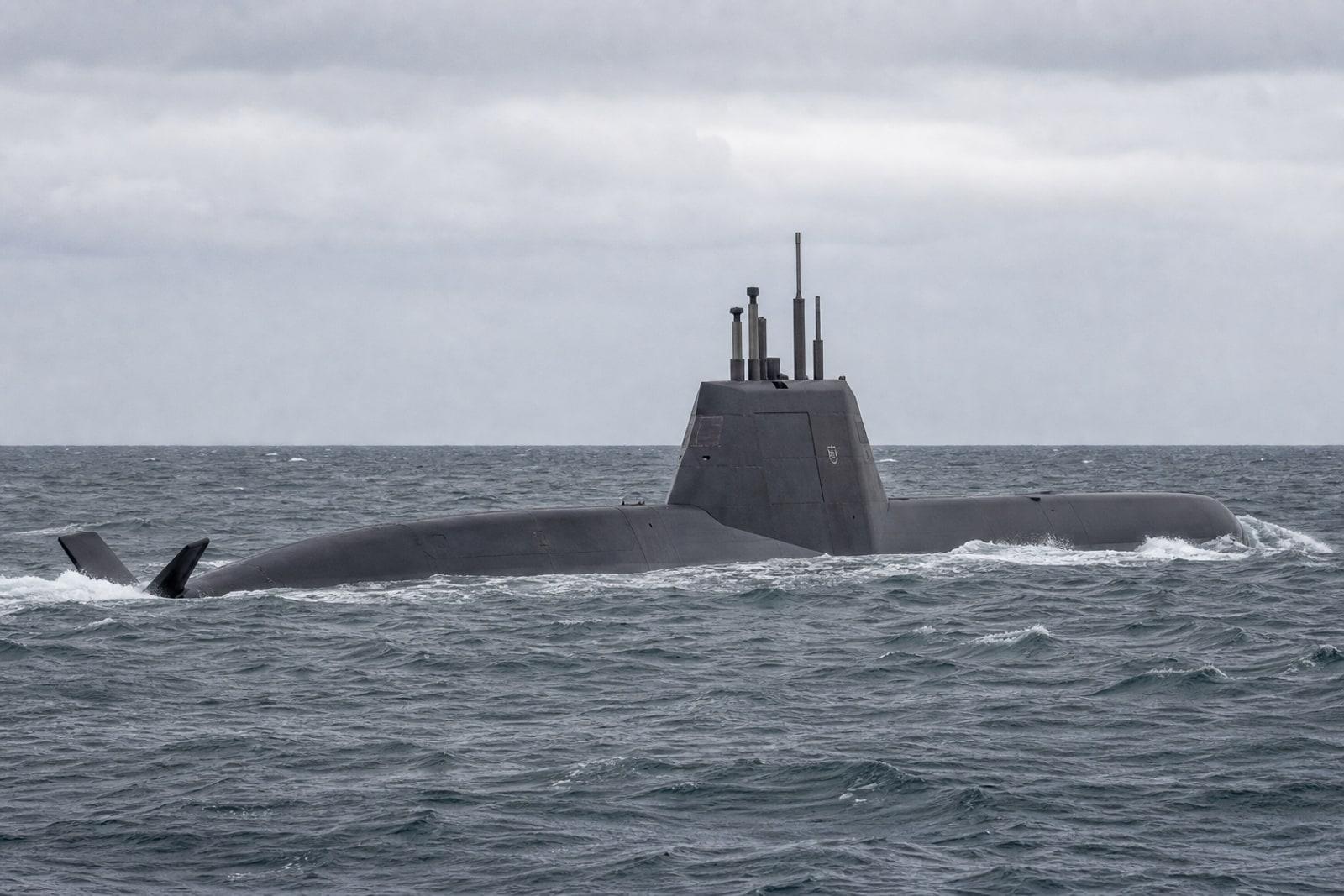
Baltic Sentry answered with frigates, maritime patrol aircraft and naval drones, coordinated by NATO's Allied Maritime Command and a new undersea-infrastructure cell. But the limits of deterrence are already visible. In October 2025, a Finnish court dismissed the criminal case against the Eagle S officers, ruling it lacked jurisdiction because the damage occurred outside territorial waters and fell, under the UN Convention on the Law of the Sea, to the ship's flag state. The court found the crew had caused aggravated damage; the law let them sail on — a gap that, for governments, makes prevention more attractive than prosecution.
Why a landlocked country is exposed
Luxembourg's distance from the sea offers no insulation. Its finance industry — roughly a quarter of GDP — depends on uninterrupted, low-latency links to trading and clearing hubs. Luxembourg-domiciled investment funds held some €7.3 trillion in assets in early 2025, the International Monetary Fund noted, and the industry's daily operations are inseparable from connectivity.
That connectivity is terrestrial fibre that ultimately joins the global subsea grid abroad. The state-owned operator LuxConnect runs a backbone of around 1,800 kilometres and offers about a dozen cross-border interconnection points toward hubs such as Frankfurt, Amsterdam, Paris and London — the very places where Europe's intercontinental cables come ashore. The Internet Society ranks Luxembourg among the most resilient networks in Western Europe, but resilience inside the country still rests on chokepoints beyond it.
- Dependency: no cable lands in Luxembourg; its data and finance reach the world via fibre routes to coastal landing stations.
- Concentration: a small set of cross-border corridors carries the traffic of a centre handling trillions in assets.
- Regulation: Luxembourg has transposed the EU's NIS2 cybersecurity directive, with the national regulator, the ILR, designated competent authority for critical entities including telecoms.
Luxembourg's bet: rules and satellites
Brussels has moved to close the gap. On 21 February 2025 the European Commission and High Representative Kaja Kallas adopted an EU Action Plan on Cable Security spanning prevention, detection, response and deterrence, backed by additional funding for digital infrastructure including "smart" cables. As a member state, Luxembourg is bound by the plan and by the broader push to treat cables as strategic assets.
Recent attacks against underwater cables underline this clearly. This is vital infrastructure that keeps us connected online and our energy flowing.
Luxembourg's most concrete contribution, though, is in orbit. In 2023 its parliament approved a €195 million, ten-year MEO Global Services programme that draws on home-grown operator SES and its O3b mPOWER satellites to provide resilient communications for Luxembourg and NATO, procured through the NATO Support and Procurement Agency. The logic is redundancy: a sovereign link that keeps working if cables or terrestrial networks are cut. SES chief executive Steve Collar has called the system "fundamental for high-performance, resilient communications for Europe and NATO."
The bill comes due
The defence spending is rising in step. Luxembourg told NATO it would reach the alliance's 2% of gross national income benchmark by the end of 2025, years ahead of its own timetable, after Deputy Prime Minister Xavier Bettel relayed the plan to allies in Antalya. The country's public-finance council estimates the new 5% target will cost an additional €13.4 billion between 2025 and 2035.
For a state whose prosperity is built on moving data and money rather than goods, the seabed contest is not a distant maritime drama. It is infrastructure policy — and, increasingly, national-security policy — for a country that has much to lose if the network goes dark.
Frequently asked
- Does Luxembourg have its own submarine cables?
- No. Luxembourg is landlocked and no submarine cable lands on its territory. Its data and financial traffic travel over terrestrial fibre to coastal hubs such as Frankfurt, Amsterdam, Paris and London, where intercontinental cables come ashore — which is why distant seabed incidents still affect it.
- What is Baltic Sentry?
- Baltic Sentry is a NATO mission launched on 14 January 2025 to protect critical undersea infrastructure in the Baltic Sea, using frigates, maritime patrol aircraft, naval drones and surveillance assets after a series of cable and pipeline incidents in 2024.
- What happened with the Eagle S tanker?
- The Eagle S, a tanker linked to Russia's 'shadow fleet,' allegedly dragged its anchor on 25 December 2024, damaging the Estlink 2 power cable and telecom lines between Finland and Estonia. In October 2025 a Finnish court found aggravated damage but dismissed the case for lack of jurisdiction, as the incident occurred outside territorial waters.
- What is Luxembourg doing about the risk?
- Luxembourg is bound by the EU Action Plan on Cable Security and has transposed the NIS2 directive (with the ILR as regulator). Its signature contribution is satellite redundancy: a €195 million, ten-year programme using SES's O3b mPOWER system to provide resilient communications for Luxembourg and NATO.
Sources(24)
- 1NATO's Baltic Sentry steps up patrols in the Baltic Sea to safeguard Critical Undersea InfrastructureNATO Allied Maritime Command · mc.nato.int
- 2NATO launches new Baltic Sea mission to protect undersea cablesAl Jazeera · aljazeera.com
- 3NATO Announces a New Mission to Protect Undersea Cables in the Baltic Sea RegionMilitary.com / Associated Press · military.com
- 4NATO launches Baltic Sentry for subsea cable securityData Center Dynamics · datacenterdynamics.com
- 5NATO strengthens cooperation with industry to protect critical undersea infrastructureNATO · nato.int
- 6European Commission and EU High Representative present strong actions to enhance security of submarine cablesEuropean Commission · ireland.representation.ec.europa.eu
- 7EU Action Plan on Cable Security (Joint Communication JOIN/2025/9)EUR-Lex / European Union · eur-lex.europa.eu
- 8What to know about Finland, Russia's 'shadow fleet' and a severed undersea cableNPR · npr.org
- 9Finnish Court Dismisses Case against Eagle S — Alleged Sabotage of Cables in the Baltic SeaSubmarine Networks · submarinenetworks.com
- 10Finnish court drops Eagle S cable damage case over lack of jurisdictionHelsinki Times · helsinkitimes.fi
- 11Finnish Court Case on Russian Cable-Cutting Sabotage ConcludesForeign Policy · foreignpolicy.com
- 12Accident or sabotage? American and European officials disagree as key undersea cables are cutCNN · cnn.com
- 13The Baltic Sea Cable-Cuts and Ship Interdiction: The C-Lion1 IncidentLieber Institute, West Point · lieber.westpoint.edu
- 14LuxConnectWikipedia · en.wikipedia.org
- 15LuxConnectICT Luxembourg · ictluxembourg.lu
- 16Indexing Internet Resilience in LuxembourgInternet Society Pulse · pulse.internetsociety.org
- 17Luxembourg Parliament Approves MGS, Enabling NATO's Access to SES's O3b mPOWER SystemSES · ses.com
- 18Luxembourg Parliament approves MGS valued at €195M, enables NATO's access to SES's O3b mPOWER SystemSatNews · news.satnews.com
- 19Space — Directorate of DefenceThe Luxembourg Government · defense.gouvernement.lu
- 20Luxembourg Informs NATO of Plans to Meet 2% of GNI Defence Spending Target by End of YearChronicle.lu · chronicle.lu
- 21Defence: A budget shock of €13.4 billionPaperjam · en.paperjam.lu
- 22Frequently asked questions about NIS2 (FAQ)Institut Luxembourgeois de Régulation (ILR) · ilr.lu
- 23Luxembourg: Staff Concluding Statement of the 2025 Article IV MissionInternational Monetary Fund · imf.org
- 24Digital connectivity in LuxembourgEuropean Commission — Shaping Europe's digital future · digital-strategy.ec.europa.eu
Related by topic