Civil protection
Nearly half of Luxembourg residents unsure how to act in a crisis, survey finds
The government's first national survey on risk perception finds high awareness but shaky readiness, as the EU presses households to be self-sufficient for 72 hours.
By Léa Hoffmann · · 4 min read
Luxembourg's residents feel well informed about the dangers facing the Grand Duchy — but asked what they would actually do when disaster strikes, almost one in two admit they would not know. That is the central finding of the country's first national survey on the perception of risks and threats, presented on 1 July by Prime Minister Luc Frieden as part of the National Resilience Strategy.
The poll, carried out by the research institute Ilres among a representative sample of 1,500 residents, was commissioned by the government to gauge how the population perceives risks, how well it is informed, and how far individuals have organised themselves for a possible crisis. Its verdict is a paradox that officials say now shapes their agenda: awareness is high, but preparedness lags behind.
Frieden presented the results alongside Home Affairs Minister Léon Gloden, Defence Minister Yuriko Backes and High Commissioner for National Protection Guy Bley. The survey is a first stocktake for a strategy the government launched in October 2025 under the banner "Lëtz prepare!", designed to spread responsibility for readiness beyond the state and into households.
What residents fear most
Asked to rate the likelihood of different threats, respondents put cyberattacks at the top: 89% considered them probable or very probable. Flooding followed at 83% and extreme weather at 81% — tangible hazards Luxembourg and its Greater Region have already lived through in recent years.
The ranking shifted when respondents weighed potential severity rather than likelihood. An economic or financial crisis was seen as the most damaging scenario, cited by 76%, ahead of cyberattacks at 71%. A nuclear accident — with the Cattenom plant just across the French border a perennial local concern — was judged probable by 69%. Military conflict and nuclear incidents were regarded as less likely, but potentially catastrophic.
Informed, but not ready
The survey's most striking numbers concern the gap between knowing and doing. Some 85% of residents said they regularly seek out information, yet for no single risk did a majority say they knew how to respond. Readiness was highest for extreme weather, where 41% felt they would know what to do, and lowest for geopolitical threats and armed conflict, at just 14%.
Basic domestic precautions were described as relatively widespread but insufficient for a major crisis. The survey found 71% of households have a smoke detector, but food and water reserves, torches, first-aid training and fire extinguishers remain far less common. The national warning and public-information system, LU-Alert, needs greater visibility, officials acknowledged.
La résilience n'est pas le devoir seulement de l'État, il faut que la société soit prête. (Resilience is not the state's duty alone; society must be ready.) — Prime Minister Luc Frieden
There were reassuring signals too. Trust in public institutions to keep essential services running stood at 83%. And residents signalled a strong willingness to pitch in: 86% said they would help a neighbour, and 60% would consider volunteering for a civil-protection, healthcare or military reserve.
Europe's 72-hour push
The findings land as the European Union presses citizens to take more responsibility for their own safety in the first hours of an emergency. In March 2025 the European Commission unveiled its Preparedness Union Strategy — a package of 30 key actions — urging households across the bloc to be able to fend for themselves for at least 72 hours if cut off from essential services, an approach inspired by the Nordic countries.
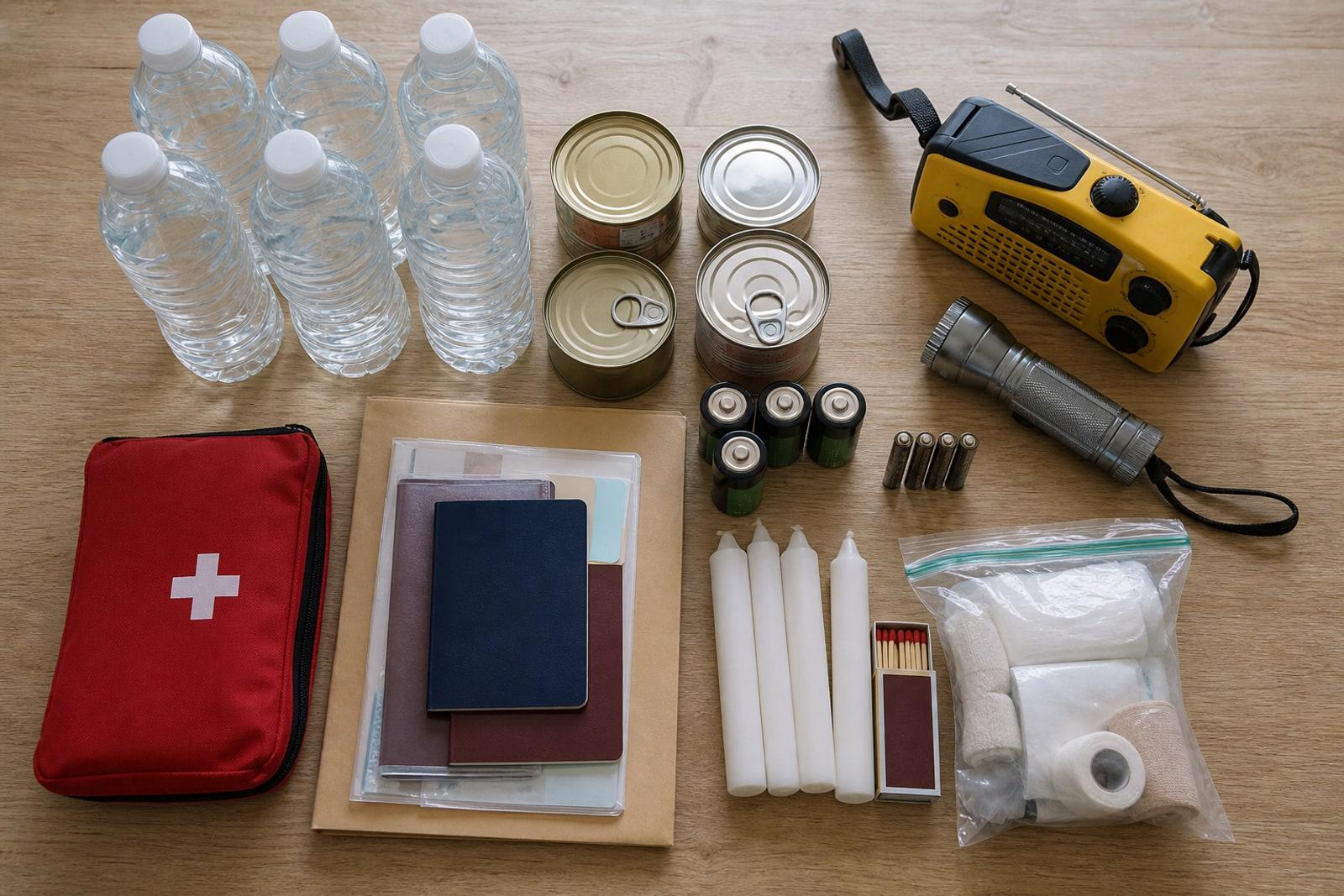
Hadja Lahbib, the EU's Commissioner for Preparedness and Crisis Management, said at the launch that "preparedness must be woven into the fabric of our societies — everyone has a role to play." The recommended 72-hour kit typically includes water, non-perishable food, medicines, a torch, identity documents and a battery-powered radio.
From strategy to sports halls
Luxembourg's response is built around the National Resilience Strategy, branded "Lëtz prepare!". A citizens' guide of the same name — offering practical advice on assembling a 72-hour kit, understanding LU-Alert and acting during an emergency — is due to reach households later in 2026, alongside awareness campaigns aimed particularly at vulnerable groups.
Gloden pointed to more concrete levers, including rewarding municipalities that build shelter capacity into public buildings. "Si nous construisons un hall de sport par exemple, il y aurait des subventions bonus si le hall peut abriter des gens pendant 72 heures," he said — a sports hall able to shelter people for 72 hours would qualify for bonus subsidies. The government has also folded a national reserve of specialised capabilities into the country's civil-protection service.
For all the alarm around cyberattacks, floods and geopolitical instability, the survey's message to policymakers is narrower and more practical: the country's problem is not indifference but a know-how gap. Closing it, ministers argue, is what will turn a well-informed population into a genuinely prepared one.
Frequently asked
- Who conducted the Luxembourg crisis-preparedness survey and how big was it?
- The research institute Ilres conducted it for the government among a representative sample of 1,500 residents. Results were presented on 1 July 2026 as the country's first national survey on the perception of risks and threats.
- What did the survey find about how ready residents are?
- Awareness is high but readiness is low: almost one in two said they would not know exactly how to act in a crisis. For no risk did a majority know how to respond — 41% for extreme weather at best, 14% for armed conflict at worst.
- What is the EU's 72-hour preparedness recommendation?
- In March 2025 the European Commission's Preparedness Union Strategy, a package of 30 key actions, urged households to be self-sufficient for at least 72 hours if cut off from essential services, with a kit of water, food, medicine, a torch, ID documents and a battery radio.
- What is 'Lëtz prepare!'?
- It is the brand of Luxembourg's National Resilience Strategy, launched in October 2025. A citizens' guide of the same name, due later in 2026, explains how to build a 72-hour kit, how LU-Alert works and what to do in an emergency.
Sources(6)
- 1Survey Finds Nearly Half of Luxembourg Residents Unprepared for CrisesChronicle.lu · chronicle.lu
- 2«La résilience n'est pas le devoir seulement de l'État»Le Quotidien · lequotidien.lu
- 3Conférence de presse: présentation des résultats de l'enquête nationale sur la perception des risques et menacesLe gouvernement luxembourgeois · gouvernement.lu
- 4EU Preparedness Union Strategy to prevent and react to emerging threats and crisesEuropean Commission — Civil Protection and Humanitarian Aid · civil-protection-humanitarian-aid.ec.europa.eu
- 5"Lëtz prepare!": Luc Frieden presents the National Resilience StrategyThe Luxembourg Government · gouvernement.lu
- 6Brussels calls for EU households to prepare 72-hour survival kitsFrance 24 · france24.com
Related by topic