Cost of living
Luxembourg tops the wealth tables. Why does daily life feel harder?
The country posts the world's richest output per head, yet housing, commuting and healthcare pressures are forcing a re-examination of what its quality-of-life rankings really measure.
By Tom Schmit · · · 5 min read
Few countries wear their statistics as conspicuously as Luxembourg. By Eurostat's most recent reckoning, the Grand Duchy's gross domestic product per capita stood at 245 in 2024, where the European Union average is set at 100 — comfortably the highest figure in the bloc and, by most international measures, the world. Survey houses tend to follow the money: Numbeo placed Luxembourg first in Europe on its quality-of-life index for 2025, the United Nations-backed World Happiness Report ranked it ninth globally, and Mercer's Quality of Living survey put the capital 17th out of 241 cities worldwide.
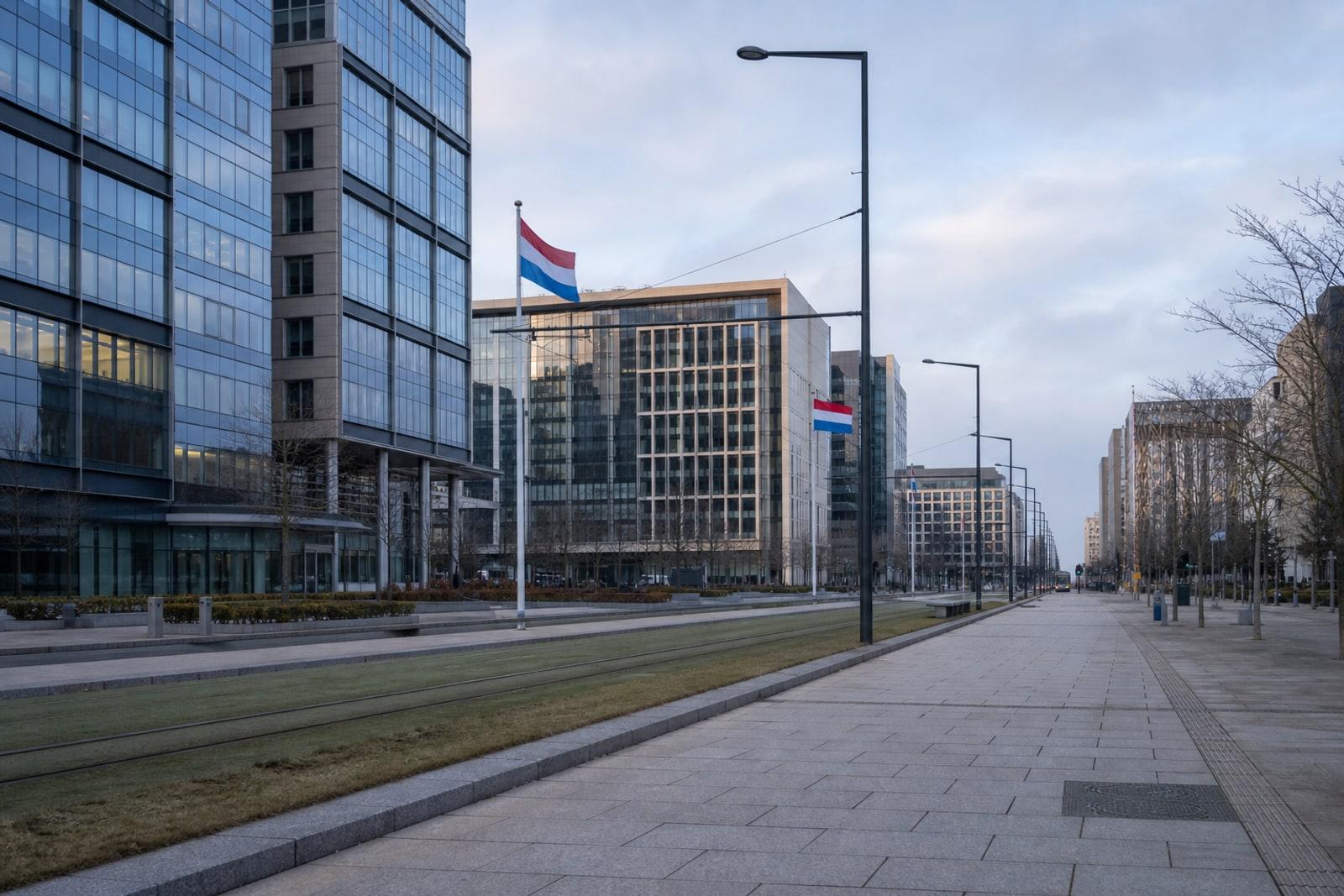
And yet, increasingly, residents and analysts alike are asking what those rankings actually capture. The headline wealth figure, in particular, flatters the country in a way few of its inhabitants would recognise from their bank statements. Roughly 220,000 to 230,000 cross-border workers stream into Luxembourg each working day from France, Belgium and Germany, generating output that is counted in the numerator of GDP per capita but, because they live abroad, never appear in the denominator. The result is a number that measures the intensity of economic activity far better than it measures how comfortably people live.
The gap the headline number hides
A more honest gauge of material welfare is what Eurostat calls actual individual consumption — the goods and services households actually use. On that measure Luxembourg scored 146 in 2024, still the highest in the EU but roughly 100 points below its GDP figure. The collapse between the two indices is the statistical signature of an economy whose prosperity is real but unevenly experienced.
Prices erode the advantage further. Eurostat found that the price level for household consumption in Luxembourg sat at 133 percent of the EU average in 2024, behind only Denmark and Ireland. High salaries — the average gross wage approached €76,000 in 2025, and an automatic indexation raised pay and pensions by 2.5 percent on 1 May 2025 — are partly absorbed by the cost of living they help sustain. Purchasing power remains higher than in neighbouring countries, but the cushion is thinner than the raw wealth figure implies.
Housing: the crisis behind the comfort
Nowhere is the disconnect sharper than in housing, consistently cited by residents as the country's foremost problem. After a decade of near-uninterrupted appreciation that priced a generation out of ownership, the market finally cracked: STATEC, the national statistics office, recorded house-price falls of 9.1 percent in 2023 and 5.2 percent in 2024. The correction has steadied rather than reversed the affordability problem. By the third quarter of 2025, prices were up 1.2 percent year on year, with the quarterly path lurching between a 4.4 percent rise in spring and a 3.1 percent fall over the summer — a market the agency describes as stabilising at a high level.
For renters, relief has been similarly elusive. STATEC's rent index rose 1.2 percent in the year to the third quarter of 2025, while advertised rents in the capital remained punishing — commonly above €1,700 a month for a one-bedroom flat in the city centre. The OECD's Better Life Index, which ranks Luxembourg highly overall and records the highest average household net wealth in the organisation, nonetheless notes that households spend around a fifth of disposable income on housing. That average masks the experience of younger and lower-income residents, for whom the share is far steeper.
The commute that prosperity built
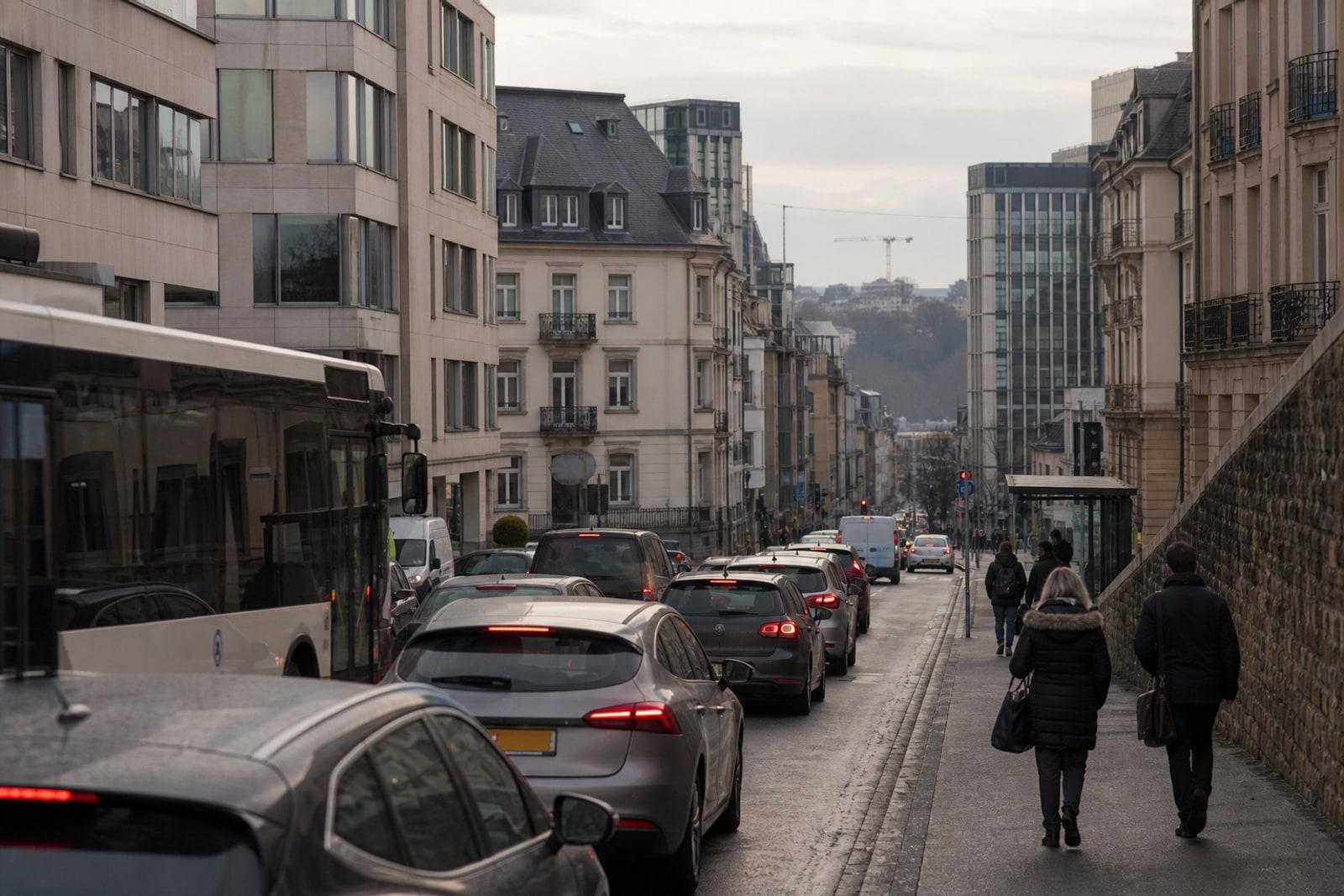
The same cross-border workforce that inflates the wealth statistics endures the country's most visible daily strain. Luxembourg abolished fares on public transport in 2020, the first country in the world to do so, yet around 70 percent of work journeys were still made by car as of 2026. Rail and bus links from the French and Belgian hinterlands have not kept pace with the dispersal of housing pushed ever further from the capital by its own prices. The 2025/26 TomTom Traffic Index estimated that drivers in Luxembourg City lose roughly 75 hours a year to congestion. Free transport, in other words, has not bought free-flowing roads; the bottleneck is capacity, not cost.
A health system under quiet strain
Healthcare presents a subtler version of the same story. Access is broad and largely reimbursed, and waiting times for general practitioners remain modest by European standards. But the system is ageing at the top: industry bodies warn that Luxembourg could lose up to a fifth of its doctors within five years, as retirements outpace new entrants, with shortages already acute in several specialties and in mental-health provision. A small country that imports much of its medical workforce is acutely exposed to any squeeze in supply.
What the rankings miss
None of this amounts to a refutation of Luxembourg's standing. It remains safe, green, well-governed and genuinely wealthy, and its work-life-balance metrics are among the best in Europe. The more precise conclusion is that the indices most often cited — weighted heavily toward income, safety and institutional quality — are poorly tuned to the frictions that now define daily life: the price of a home, the length of a commute, the resilience of a hospital rota. The gap between Luxembourg's data and its mood is not evidence that the rankings are wrong, but a reminder of what they were never built to measure.
Frequently asked
- Why is Luxembourg's GDP per capita so high if life there feels expensive?
- Luxembourg's GDP per capita (245 on the EU=100 scale in 2024) is boosted by 220,000-230,000 cross-border commuters whose output counts toward GDP but who are not counted in the resident population. A truer measure of household welfare, actual individual consumption, was 146 in 2024 - still the EU's highest, but far lower than the GDP figure.
- How bad is the housing situation in Luxembourg?
- After years of steep rises, STATEC recorded house-price falls of 9.1% in 2023 and 5.2% in 2024 before prices stabilised at a high level in 2025. Affordability remains a leading concern, with city-centre one-bedroom rents commonly above EUR 1,700 a month and households spending around a fifth of disposable income on housing.
- Did free public transport solve Luxembourg's traffic problem?
- No. Luxembourg made public transport free in 2020, but around 70% of work journeys were still made by car as of 2026, and the 2025/26 TomTom Traffic Index estimated drivers in the capital lose about 75 hours a year to congestion. The constraint is transport capacity and housing dispersal rather than fares.
- How does Luxembourg rank on quality-of-life indices?
- Highly. Numbeo placed it first in Europe for quality of life in 2025, the World Happiness Report ranked it ninth globally, and Mercer's Quality of Living survey put Luxembourg City 17th of 241 cities. Critics argue these indices weight income, safety and governance heavily and capture housing, commuting and healthcare pressures less well.
Sources(6)
- 1Household material welfare varies widely in the EUEurostat · ec.europa.eu
- 2Household consumption: price levels in 2024Eurostat · ec.europa.eu
- 3Luxembourg Housing Market Slows in Q3 2025Chronicle.lu / STATEC · chronicle.lu
- 4Luxembourg's Free Public Transport Revolution: How It's Reshaping Travel in 2026 and Why It's Still Facing Major HurdlesTravel And Tour World · travelandtourworld.com
- 5Lux: greater chance to tackle doctor shortage than UKDelano · delano.lu
- 6Wage indexation on 1 May 2025STATEC · statistiques.public.lu
Related by topic