Telecoms and energy
Luxembourg turns to AI to trim the hidden power bill of its mobile network
A Luxembourg research institute and operator Orange want to cut mobile-network energy use by at least a tenth with AI — a test case for one of the digital economy's fastest-growing power demands.
By Marc Weber · · 4 min read
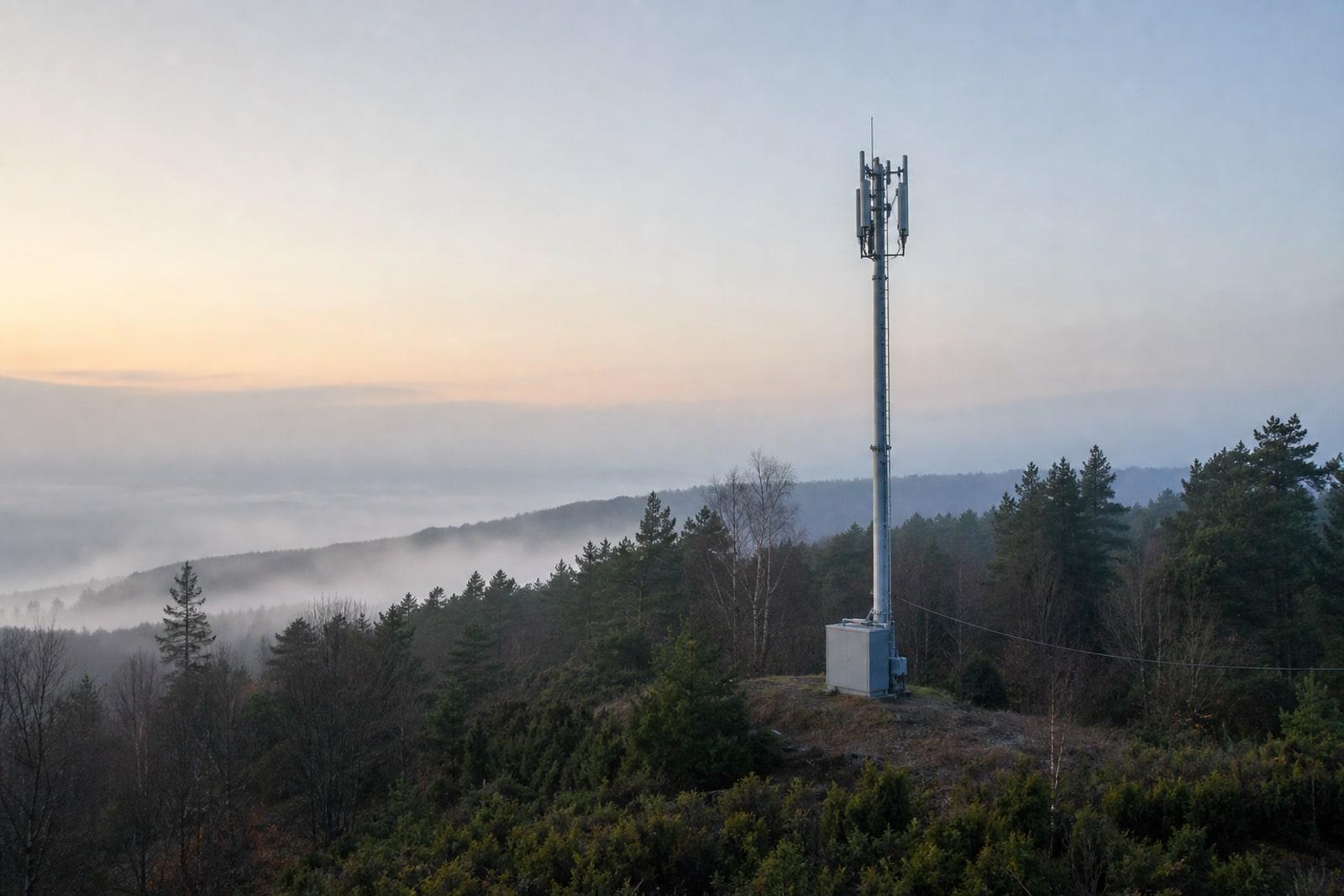
The antennas and base stations that carry every call, message and video stream in Luxembourg are also a quiet, growing drain on the power grid. A new research project wants to use artificial intelligence to shrink that drain — by at least a tenth, and without anyone noticing a weaker signal.
On 16 June, the Luxembourg Institute of Science and Technology (LIST) and operator Orange Luxembourg announced the launch of RAISE — short for Radio Access Intelligence for Saving Energy — a 36-month project to cut the energy consumption of the country's mobile network by at least 10% through AI, while leaving service quality untouched. The work is co-financed by the Luxembourg National Research Fund (FNR) and the Ministry of the Economy, with a budget of about €1.3 million.
Targeting the network's biggest energy sink
RAISE zeroes in on the Radio Access Network, or RAN — the layer of antennas and base stations that links phones and devices to the wider network. According to the project partners, the RAN accounts for more than three-quarters of a mobile operator's energy consumption, making it the single most promising place to look for savings.
Rather than experiment on the live network that millions of connections depend on, the researchers will build a "digital twin": a virtual replica of Orange Luxembourg's network, fed with real operational data such as traffic volumes, energy readings and technical performance logs. That sandbox lets them test energy-saving measures safely before anything is switched on for real customers.
With RAISE, we are taking AI out of the simulation laboratory and putting it to work on one of the most energy-intensive parts of our daily digital lives.
So said Sébastien Faye, who heads the Distributed & Intelligent Connectivity research group at LIST. He argued that the use of genuine operator data is what separates the project from purely academic work: "Working with real data from an active operator makes all the difference: the solutions we develop will work in practice once deployed, not only in theory."
How the AI is meant to save power
The plan is not a single algorithm but a suite of AI tools, each handling a specific job. Among them, the partners describe:
- A forecasting tool that predicts network activity over the coming 24 hours, anticipating quiet and busy periods.
- A second tool that decides when antennas can safely drop into a low-power or sleep mode — for example overnight, when demand collapses.
- A third that manages batteries installed at certain sites, charging them when electricity is cheap and drawing on them during costly peak hours.
The intended payoff is threefold: lower electricity bills, reduced carbon emissions and, the partners hope, a template that other operators in Europe could copy. Christophe Van Yck, Head of Network & Strategic Projects at Orange Luxembourg, framed it as part of a broader corporate direction: "This initiative reflects our commitment to a more responsible and sustainable digital future."
A small country, a continental problem
The energy appetite of mobile networks is far from a niche concern. The information and communications technology sector as a whole consumes roughly 4% of global electricity — on the order of 1,100 terawatt-hours in 2024. Mobile operators alone used around 290 terawatt-hours in 2023, close to 1% of the world's electricity, according to estimates from industry body the GSMA. As 5G spreads and data traffic keeps climbing, holding that figure down has become a sector-wide preoccupation.
That makes Luxembourg's experiment more than a local efficiency drive. Orange Luxembourg is one arm of the Orange group, a pan-European carrier present in 26 countries that connects some 340 million customers and has pledged to reach net-zero carbon by 2040, with a 45% cut across all emissions by 2030. A method proven on Luxembourg's compact network could, in principle, be scaled across far larger markets.
It also dovetails with European policy. Under its Digital Decade strategy, the EU has set a goal of climate-neutral and highly energy-efficient data centres and electronic communications networks by 2030 — language that puts the energy bill of mobile infrastructure squarely on the regulatory agenda alongside coverage and speed.
One of nine bets on AI and computing
RAISE did not emerge in isolation. It was one of nine projects selected under a joint "High-Performance Computing and Artificial Intelligence" call launched in spring 2025, the results of which were announced in February 2026 by Lex Delles, Minister of the Economy, SMEs, Energy and Tourism. Together the nine winners share €11.587 million in public co-financing, with the FNR and innovation agency Luxinnovation as partners. The selected projects span healthcare, climate technology and industry, with RAISE representing the telecoms-and-energy strand.
For now, the work remains in the modelling phase, with the first results expected on the virtual copy of the network before any tool touches a live antenna. The project is scheduled to run until 2029. Whether the 10% target holds up once theory meets the messy reality of weather, traffic spikes and ageing equipment is exactly the question RAISE is designed to answer — and, its backers hope, to answer in a way the rest of Europe can use.
Frequently asked
- What is the RAISE project?
- RAISE (Radio Access Intelligence for Saving Energy) is a 36-month research project by LIST and Orange Luxembourg, announced on 16 June 2026, to cut the energy use of Luxembourg's mobile network by at least 10% using AI, without reducing service quality.
- Who funds it and how much does it cost?
- It is co-financed by the Luxembourg National Research Fund (FNR) and the Ministry of the Economy, with a budget of about €1.3 million. It was one of nine projects selected under a joint HPC and AI call that share €11.587 million in co-financing.
- How will the AI actually save energy?
- A suite of AI tools will forecast network activity 24 hours ahead, decide when antennas can switch to low-power mode, and manage on-site batteries — charging them when electricity is cheap and using them at peak times. The tools are first tested on a 'digital twin' of Orange's network.
- Why does mobile-network energy use matter globally?
- The ICT sector uses roughly 4% of global electricity, and mobile operators alone consumed about 290 TWh in 2023. The EU's Digital Decade strategy targets energy-efficient electronic communications networks by 2030, making Luxembourg's project a wider test case.
Sources(9)
- 1LIST, Orange Launch AI Project to Cut Mobile Network Energy UseChronicle.lu · chronicle.lu
- 2Orange Luxembourg targets 10% cut in mobile network energy use with AI-driven optimisationTelecompaper · telecompaper.com
- 3Nine AI and HPC projects co-funded in LuxembourgPaperjam · en.paperjam.lu
- 4Results of the joint call for projects aimed at accelerating the use of artificial intelligence and/or high-performance computing within the Luxembourg innovation ecosystemThe Luxembourg Government · gouvernement.lu
- 5From Healthcare To Climate Tech: Nine Projects Win Luxembourg's HPC-AI BRIDGES CallSilicon Luxembourg · siliconluxembourg.lu
- 6Communication on Europe's digital decade: 2030 digital targetsEuropean Parliament · europarl.europa.eu
- 7Net zero carbon by 2040Orange S.A. · orange.com
- 8Our presence in EuropeOrange S.A. · orange.com
- 9Global electricity usage of ICT network operatorsEricsson · ericsson.com
Related by topic